Text size

() ·

A painting made for you, by hand

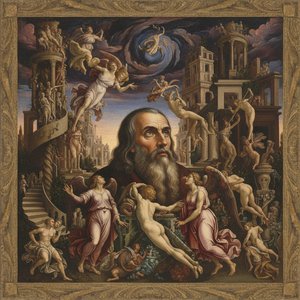
The Annunciation (detail)

Hand Made Oil Reproduction

Hand-painted oil on canvas in your size and frame, made to order by our artists. ( Switch to Print Switch to Digital Image)

Collectible Description

El Greco's 'The Annunciation (detail)' showcases his unique blend of Byzantine and Venetian styles. Witness the divine encounter between Gabriel & Mary, rich with symbolism & emotion – a masterpiece from 1597.

Artist Biography

Explore El Greco's dramatic art! Discover Mannerist masterpieces, religious scenes & elongated figures. A pioneer of Expressionism & Cubism – view his iconic paintings!

from ·

Chapter 1

How large should it be?

Slide to change the size; the picture on the left shows the frame at its real width. The proportions of the original are kept.

Standard
custom
CM
INCH

Pick from our preset sizes that match the artwork's original proportions.

width
height

Type the width and the height you need, to fit your frame or your wall. This is hand-painted, so for a size with a different shape the artist can paint a bit more around the picture, or cut a bit — you choose. We send you a digital mockup to approve before the painting starts. The picture shown on this page does not show the real result — only the mockup does.

Chapter 2

How should it arrive?

Choose the edges of the stretched canvas

Choose your frame

Corner sample of the WhiteWrap canvas edge finish, stretched on solid wood bars
White $1
Corner sample of the BlurSideWrap canvas edge finish, stretched on solid wood bars
Blurside $1
Corner sample of the ExtendedWrap canvas edge finish, stretched on solid wood bars
Extended $1
Corner sample of the P118B picture frame: moulded polystyrene, 5 cm wide and 3 cm thick
P118B $10
Corner sample of the P118H picture frame: moulded polystyrene, 5 cm wide and 3 cm thick
P118H $10
Corner sample of the P118W picture frame: moulded polystyrene, 5 cm wide and 3 cm thick
P118W $10
Corner sample of the P438Z picture frame: moulded polystyrene, 5.5 cm wide and 3.5 cm thick
P438Z $10
Corner sample of the P508JH picture frame: moulded polystyrene, 7 cm wide and 3.5 cm thick
P508JH $12
Corner sample of the P508YH picture frame: moulded polystyrene, 7 cm wide and 3.5 cm thick
P508YH $12
Corner sample of the P805H picture frame: moulded polystyrene, 5 cm wide and 3.5 cm thick
P805H $10
Corner sample of the P805Z picture frame: moulded polystyrene, 5 cm wide and 3.5 cm thick
P805Z $10
Corner sample of the P919BZ picture frame: moulded polystyrene, 7 cm wide and 3.5 cm thick
P919BZ $10
Corner sample of the P919G picture frame: moulded polystyrene, 7 cm wide and 3.5 cm thick
P919G $10
Corner sample of the P919XJ picture frame: moulded polystyrene, 7 cm wide and 3.5 cm thick
P919XJ $10
Corner sample of the P959ZH picture frame: moulded polystyrene, 5 cm wide and 3 cm thick
P959ZH $10
Corner sample of the P968JZ picture frame: moulded polystyrene, 6 cm wide and 4 cm thick
P968JZ $12
Corner sample of the W106C picture frame: solid wood, 5 cm wide and 3 cm thick
W106C $8
Corner sample of the W218G picture frame: solid wood, 5 cm wide and 3 cm thick
W218G $10
Corner sample of the W218JH picture frame: solid wood, 5 cm wide and 3 cm thick
W218JH $8
Corner sample of the W218Y picture frame: solid wood, 5 cm wide and 3 cm thick
W218Y $10
Corner sample of the W307PJ picture frame: solid wood, 6 cm wide and 3 cm thick
W307PJ $10
Corner sample of the W316G picture frame: solid wood, 6 cm wide and 3 cm thick
W316G $10
Corner sample of the W316PJ picture frame: solid wood, 6 cm wide and 3 cm thick
W316PJ $8
Corner sample of the W316Y picture frame: solid wood, 6 cm wide and 3 cm thick
W316Y $10
Corner sample of the W398PJ picture frame: solid wood, 5 cm wide and 3 cm thick
W398PJ $8
Corner sample of the W4111J picture frame: solid wood, 6.5 cm wide and 3.5 cm thick
W4111J $10
Corner sample of the W500HY picture frame: solid wood, 7 cm wide and 5 cm thick
W500HY $15
Corner sample of the W500JH picture frame: solid wood, 7 cm wide and 5 cm thick
W500JH $15
Corner sample of the W692G picture frame: solid wood, 8 cm wide and 4 cm thick
W692G $12
Corner sample of the W849H picture frame: solid wood, 5 cm wide and 3 cm thick
W849H $8
Corner sample of the W940BG picture frame: solid wood, 7.5 cm wide and 4.5 cm thick
W940BG $15
Corner sample of the W953PJ picture frame: solid wood, 6 cm wide and 3.5 cm thick
W953PJ $8
Corner sample of the H24-GOLD picture frame: carved wood with gesso, 10 cm wide and 6 cm thick
H24-GOLD $30
Corner sample of the H24-SILVER picture frame: carved wood with gesso, 10 cm wide and 6 cm thick
H24-SILVER $30
Corner sample of the H36-GOLD picture frame: carved wood with gesso, 15 cm wide and 6.5 cm thick
H36-GOLD $45
Corner sample of the H36-SILVER picture frame: carved wood with gesso, 15 cm wide and 6.5 cm thick
H36-SILVER $45
Frame preview
Framed

Moulding: . Overall size with the frame: .

Chapter 3

Who paints it, and should anything change?

Examples of what can be changed: Replace face with customer photo; Add pet (e.g., replace cat with dog); Include hidden message in background; Change background landscape or elements.
After order, OriginalUniqueArt.com team will email client for instructions and provide a mockup preview

Worldwide Delivery () in 3/4 weeks instead of standard 5 weeks. (2 November). No compromise on quality.

Chapter 4

The finishing touches

A nameplate, as in a museum?

Engraved Bronze Plaque Details

This elegant plaque features the artist's name and the title of the artwork, finely engraved for a timeless presentation.

It is made from bronze with a refined, elegant finish. The text is precisely laser-engraved for a sharp and permanent result. Measuring 9x2 cm, the plaque is compact yet easy to read. It's built to be durable and scratch-resistant, offering a professional, museum-quality look. Mounting is simple thanks to the included adhesive backing.

Transparent Acrylic Plaque Details

The plaque includes essential engraved details such as the artist's name, the title of the artwork, the date it was created, the type of media used-like oil on canvas or watercolor-a brief description of the piece, and a QR code that links to the complete artwork information.

It is crafted from clear acrylic, offering a sleek, modern appearance. The text is UV-engraved in black to ensure strong visual contrast. With a size of 10x15 cm, it ensures optimal readability. It comes equipped with two metal hooks for secure wall mounting. The plaque is designed to be weather-resistant, making it suitable for various environments, and it includes interactive features that work seamlessly with smartphone scanning.

Black Acrylic Plaque Details

This elegant plaque includes engraved information such as the artist's name, the title of the artwork, the date it was created, the type of media used (like oil on canvas or watercolor), a short description of the artwork, and a QR code for quick access to more information.

The plaque itself is made from refined black acrylic with a premium finish. The text is laser-engraved in white for high contrast and readability. Its size is 10x15 cm, designed to be easy to read. It comes with two metal hooks for professional mounting. The design is sleek and fits any interior style. It is also weather-resistant and durable, with built-in digital integration for mobile compatibility.

A protective varnish?

When do you need it?

Chapter 5

Your painting, as you ordered it

The Annunciation (detail)

Reproduction Medium

Reproduction Size

-

Elite Senior Artist

More detail, finesse, and extra production time

-

Reproduction Frame

-

-

For artworks or reproductions larger than 105 cm (approximately 41 inches) on any side, the frame will be shipped as a kit, disassembled. This method ensures safe delivery and prevents damage during transport.

Professional assembly required - this is not a DIY product.
The kit must be assembled and the canvas stretched by an experienced professional framer, using wood glue (not supplied), a canvas stretching plier and clamps to hold the bars square while the glue dries. Incorrect assembly or uneven canvas tension can permanently damage the artwork and is not covered by our warranty.

  • All solid wood bars are included, precisely cut to size.

  • Assembled with the screws provided, plus wood glue for the corner joints, which is not supplied and must be sourced by your framer.

  • Professional tools are required and not included: a canvas stretching plier (tensioner) and clamps to hold the bars square while the glue dries.

Important:
The corner joints require wood glue, the bars must be held with clamps until the glue is fully dry, and tightening the canvas on the assembled frame requires a canvas stretching plier. None of these are included in the kit. Please arrange an experienced professional framer before ordering this size.

Nameplate

-

-

Protective Varnish

Glossy Varnish (enhances colors, protects against light/moisture)

-

Customize My Artwork

Examples of what can be changed: Replace face with customer photo; Add pet (e.g., replace cat with dog); Include hidden message in background; Change background landscape or elements.

-

Urgent

Worldwide Delivery () in 3/4 weeks instead of standard 5 weeks. (2 November). No compromise on quality.

-

Express Shipping

Worldwide Delivery () in 5 weeks. (9 November).

Included

Total Price

$ 300

Total Price $ 300

Glass option is only available in size under 110 CM

Included with every order

  • Free Worldwide Express Shipping
  • High-Quality Linen Canvas
  • Full Shipping Insurance
  • Customs Tax Refund Guarantee
  • True Color Matching Guarantee
  • 100-Day Return Policy (Defects Only)
  • 100% Money-Back Guarantee
  • Bulk Discount Offer

The Annunciation (detail)

Doménikos Theotokópoulos, universally known as El Greco (meaning “the Greek”), stands as one of the most singular figures in the history of Western art. His dramatic and intensely emotional works bridged the gap between the Renaissance and the Baroque periods, while simultaneously forging a distinctly personal style—a style that continues to fascinate scholars and artists alike.

The Annunciation, painted by El Greco in 1597, resides at the Museo Thyssen-Bornemisza in Madrid, Spain. This monumental canvas offers an unparalleled glimpse into the artist’s mastery of Byzantine influences blended with innovative Venetian techniques—a testament to his transformative journey through Europe.

The Composition and Symbolism

At its core, the painting depicts a pivotal biblical scene: the visitation of the Archangel Gabriel to Mary, announcing her divine conception. El Greco meticulously arranges figures within a shallow courtyard setting bathed in diffused light—a characteristic feature of his Venetian period. The angel on the left side holds a book, symbolizing divine knowledge and scripture, while gazing upwards towards Mary. Simultaneously, he gestures with his right hand, conveying reassurance and blessing.

Mary kneels reverently before Gabriel, her gaze fixed upward in contemplation—a gesture laden with spiritual significance. Her posture embodies humility and acceptance of God’s will. The angel’s robe is adorned with intricate drapery folds that contribute to the painting's ethereal atmosphere. Notably, a flaming rose bush sits beneath Mary’s lectern, representing her virginity and symbolizing divine grace.

Artistic Style and Evolution

El Greco’s artistic style underwent considerable evolution throughout his career, profoundly shaped by his formative years in Crete and subsequent explorations of Venice and Toledo. His early works demonstrate a pronounced adherence to Byzantine conventions—precise detail, hierarchical composition, and vibrant color palettes—reflecting the traditions of his homeland.

However, El Greco’s Venetian period witnessed a decisive shift toward Mannerism, characterized by elongated figures, stylized poses, and exaggerated expressions. He skillfully incorporated elements from Titian and Tintoretto's oeuvre, adopting their masterful use of chiaroscuro—the dramatic interplay between light and shadow—to heighten emotional impact.

The Annunciation exemplifies El Greco’s Venetian style, showcasing his ability to synthesize disparate influences into a cohesive visual language. The elongated figures are rendered with remarkable fluidity and dynamism, conveying an inner turmoil that transcends mere representation.

Historical Context and Significance

Painted during the Counter Reformation—a period marked by religious fervor and artistic conservatism—The Annunciation stands as one of El Greco’s “most pleasing” early works. Its composition enhances the painting's otherworldly quality, capturing a moment of profound spiritual revelation.

Acquired by Baron Hans Heinrich Thyssen-Bornemisza in 1975 and subsequently housed at Museo Nacional Thyssen-Bornemisza, The Annunciation continues to inspire admiration for its artistic innovation and emotional depth. Scholars recognize El Greco as a precursor of Expressionism and Cubism—artists who would later revolutionize the visual arts.

Furthermore, numerous paintings on this subject were recorded in El Greco’s inventories drawn up upon his death in 1614 and during the marriage celebration of his son Jorge Manuel—providing invaluable insight into the artist's artistic legacy. The painting’s enduring appeal lies in its ability to convey a timeless message of faith and divine grace.

Conclusion

El Greco’s Annunciation remains an unparalleled masterpiece—a testament to his singular vision and unwavering commitment to artistic excellence. Its significance transcends mere stylistic innovation; it embodies the artist's profound engagement with spiritual themes, cementing its place as a cornerstone of Western art history.

Questions & Answers

Why is "The Annunciation (detail)" by El Greco recommended as a gift?

"The Annunciation (detail)" carries a mysterious feeling, and its recorded gift recommendation is wedding.

How strong is the contrast in "The Annunciation (detail)" by El Greco?

"The Annunciation (detail)" by El Greco shows a statement contrast between its light and dark areas.

What are the reproduction rights of "The Annunciation (detail)" at the Thyssen-Bornemisza Museum?

"The Annunciation (detail)" by El Greco, held at the Thyssen-Bornemisza Museum, is in the public domain - its copyright has expired. This status determines whether reproductions of the image may be made.

More about this painting

Preview AR preview Switch to Print Switch to Digital Image Send
Details Guide Add to favorites Download Similars X-Ray Diaporama Q&A Stats

In numbers

  • 1597the year it was painted
  • 29frames to choose from
  • standard sizes, in its own proportions
  • 5weeks to paint and deliver it
El Greco

El Greco

1541 - 1614, Greece

Quick facts about El Greco

  • Artistic Movement Or Style: Mannerism, Baroque
  • Artists Or Movements Influenced By This Artist:
    • Expressionism
    • Cubism
  • Artists Who Influenced This Artist:
    • Titian
    • Tintoretto
  • Date Of Birth: 1541
  • Date Of Death: 1614
  • Full Name: Doménikos Theotokópoulos
  • Nationality: Greek-Spanish
  • Notable Artworks:
    • Burial of the Count of Orgaz
    • View of Toledo
    • El Espolio
    • St. Sebastian
  • Place Of Birth: Crete, Greece

Artist Biography

A Life Forged in Faith and Fire

Doménikos Theotokópoulos, known to the world as El Greco – “the Greek” – was a painter whose life and work defied easy categorization. Born in 1541 on the island of Crete, then under Venetian rule, his artistic journey led him through Venice and Rome before finding its ultimate expression in the spiritual heartland of Spain: Toledo. El Greco wasn’t merely a product of these places; he synthesized their influences into something wholly unique, a style that anticipated the emotional intensity of Expressionism and the fragmented forms of Cubism centuries later. His early training within the Byzantine tradition instilled in him a meticulous attention to detail and a profound understanding of religious iconography. This foundation, however, wouldn’t confine him. He signed his works in Greek, often appending “Krḗs” – Cretan – as a proud declaration of his origins, even as he ventured into new artistic territories. The seeds of his distinctive style were sown not just in technique but also in the fervent religious climate of his homeland and the rich tapestry of Venetian art.

From Venice to Toledo: A Transformation

The move to Venice around 1567 marked a pivotal moment. Immersed in the vibrant artistic scene, El Greco studied the masters – Titian, Tintoretto, Veronese – absorbing their mastery of color, composition, and dramatic lighting. He learned to loosen his brushwork, to embrace the sensuality of oil paint, and to depict figures with a newfound dynamism. This Venetian influence is visible in early works like *St. Sebastian* (1600), where anatomical detail blends seamlessly with an almost theatrical use of light and shadow. A subsequent sojourn in Rome exposed him to Mannerism, a style characterized by elongated forms, distorted perspectives, and sophisticated compositions. While he demonstrated considerable talent, El Greco found it difficult to gain widespread recognition in the competitive Roman art world. It was his relocation to Toledo in 1577 that finally allowed his singular vision to flourish. The city, then a center of religious fervor during the Counter-Reformation, provided both patronage and an atmosphere conducive to his intensely spiritual paintings.

A Style Unlike Any Other

El Greco’s artistic style is instantly recognizable – and utterly captivating. His figures are often dramatically elongated, their bodies stretched and contorted in poses that convey a sense of spiritual ecstasy or profound anguish. This isn't mere stylistic affectation; it’s an attempt to depict the unseen, the emotional and spiritual realities that lie beyond the surface of things. He masterfully employed color – not necessarily realistic color, but vibrant, often unnatural hues – to heighten the emotional impact of his work. Dramatic lighting, with stark contrasts between light and shadow, creates a theatrical effect, drawing the viewer into the heart of the scene. The Burial of the Count of Orgaz (1586-1588), considered his masterpiece, exemplifies these qualities perfectly. The painting depicts a miraculous event – the descent of saints to bury a pious nobleman – with remarkable realism in the portrayal of contemporary figures juxtaposed against ethereal, elongated forms representing divine intervention. He blended Byzantine traditions with Italian Renaissance techniques, forging a style that was both innovative and deeply personal. His later works became increasingly mystical, reflecting his own profound religious beliefs and a growing detachment from conventional artistic norms.

Legacy and Rediscovery

Despite achieving considerable success during his lifetime – receiving important commissions from churches and monasteries in Toledo – El Greco’s work fell into relative obscurity after his death in 1614. For centuries, he was largely overlooked by art historians, dismissed as an eccentric or a provincial artist. It wasn't until the 20th century that his genius began to be fully appreciated. Artists like Picasso and Braque recognized him as a precursor to modern art, particularly Cubism, admiring his distorted forms and unconventional perspectives. His expressive style resonated with the Expressionists, who sought to convey emotional intensity through bold colors and dramatic compositions. Today, El Greco is celebrated as one of the most important figures in Western art history – a visionary painter whose work continues to captivate audiences with its spiritual depth, emotional power, and unique artistic vision. His paintings are not merely representations of religious scenes; they are windows into the soul, testaments to the enduring power of faith, and celebrations of the human spirit’s capacity for transcendence.

Notable Works

  • The Burial of the Count of Orgaz (1586-1588): His undisputed masterpiece, a monumental work blending realism and spiritual intensity.
  • View of Toledo (1596-1600): A dramatic landscape showcasing the city in a swirling, atmospheric style, capturing its essence with an almost visionary quality.
  • The Opening of the Fifth Seal (1608-1614): Part of a series inspired by the Book of Revelation, this painting exemplifies El Greco’s apocalyptic vision and his mastery of dramatic composition.
  • St. Sebastian (1600): A powerful depiction of the saint, blending anatomical detail with theatrical lighting and emotional intensity.
  • El Espolio (The Disrobing of Christ) (1577-1579): An early work showcasing his Venetian influences and dramatic use of color and light.

Quick Facts

  • Title: The Annunciation
  • Influences: Early Byzantine art; Modena Triptych
  • Year: 1597
  • Artist: El Greco
  • Movement: Italian Renaissance

Art Quiz

There is only one correct answer for each question.

Question 1:
What artist is credited with creating "The Annunciation"?
Question 2:
In which museum can you find this masterpiece?
Question 3:
The painting depicts a biblical scene featuring two angels. What is the primary event being portrayed?
Question 4:
El Greco's style evolved throughout his career, influenced by Crete, Venice and Toledo. Which artistic approach characterizes his early works?
Question 5:
From what earlier artwork does "The Annunciation" derive its model?