 Preview
 Send
Send Share
Share
 Details
 Guide
Guide

 Download
 Similars
 X-Ray
X-Ray Diaporama
 Q&A
Q&A Stats
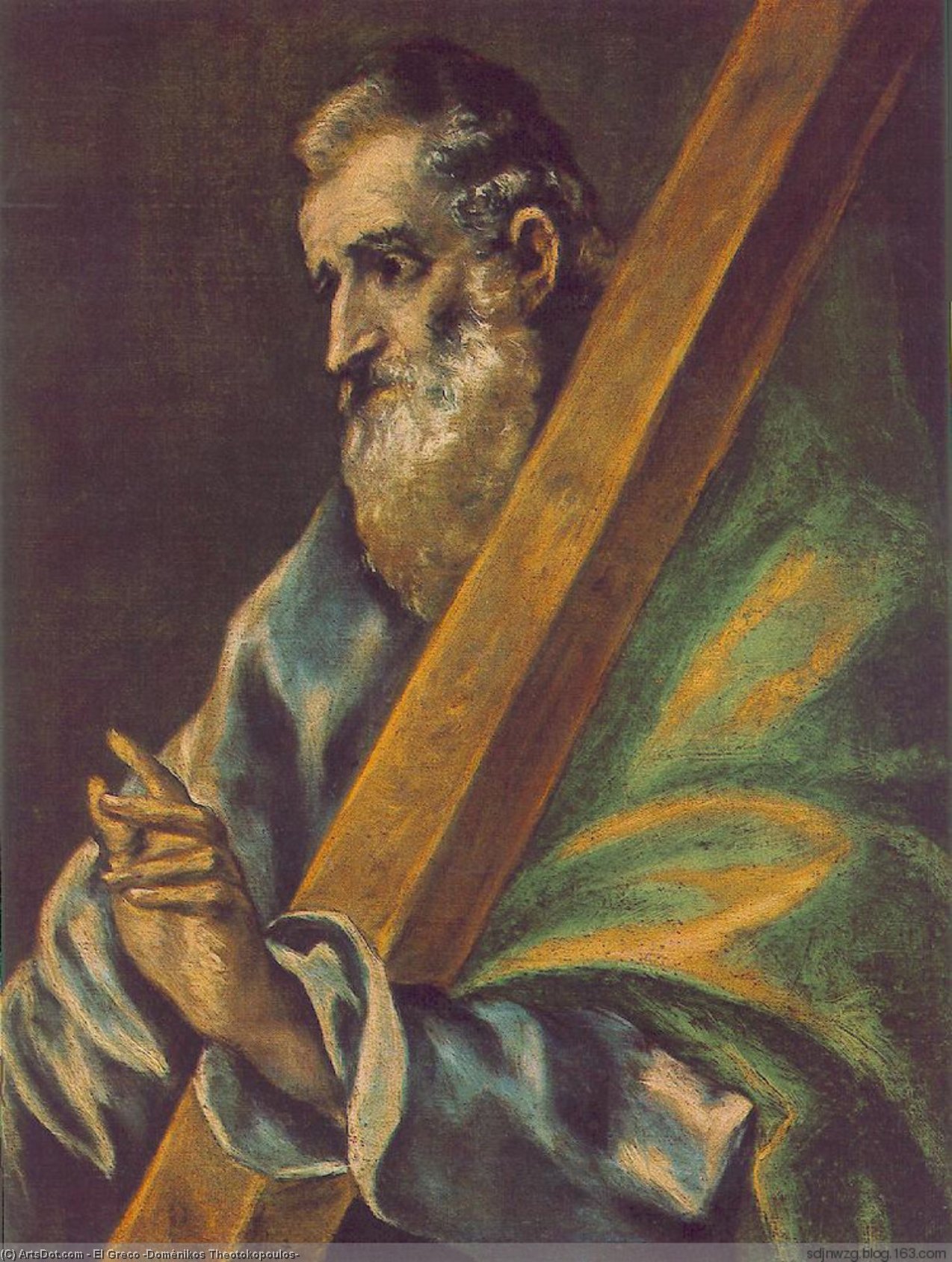
StatsApostle St Andrew

- 70.0 x 53.0 cm


 Read More
Giclée / Art Print
Museum-quality giclée or canvas print with fast production and flexible finish options. ( Buy Hand Made Painting Switch to Digital Image)




P118B $10

P118H $10

P118W $10

P438Z $10

P508JH $12

P508YH $12

P805H $10

P805Z $10

P919BZ $10

P919G $10

P919XJ $10

P959ZH $10

P968JZ $12

W106C $8

W218G $10

W218JH $8

W218Y $10

W307PJ $10

W316G $10

W316PJ $8

W316Y $10

W398PJ $8

W4111J $10

W500HY $15

W500JH $15

W692G $12

W849H $8

W940BG $15

W953PJ $8




Pick from our preset sizes that match the artwork's original proportions.

Type the width and the height you need, to fit your frame or your wall. A print can only be cut, never made bigger than the picture, so a size with a different shape loses a part of the image. We send you a digital mockup to approve before we print anything. The picture shown on this page does not show the real cut — only the mockup does.
Worldwide Delivery () in 2 weeks instead of standard 4/5 weeks. (10 November)

Free Worldwide Express Shipping

High-Quality Linen Canvas

Full Shipping Insurance

Customs Tax Refund Guarantee

True Color Matching Guarantee

100-Day Return Policy (Defects Only)

100% Money-Back Guarantee

Bulk Discount Offer
 Glass option is only available in size under 110 CM

Apostle St Andrew
Giclée / Art Print
Reproduction Size
-


Total Price
$ 81
A Deep Dive into El Greco’s “Apostle St Andrew”
Doménikos Theotokópoulos, universally known as El Greco – “the Greek” – stands apart from his contemporaries as a painter whose artistic vision transcended conventional boundaries. Born in Crete in 1541, under Venetian dominion, his journey through Venice and Rome ultimately solidified his indelible mark on the artistic landscape of Spain: Toledo became his spiritual home and the crucible for his revolutionary style. El Greco wasn’t merely absorbing influences; he masterfully synthesized them—Byzantine solemnity blended seamlessly with Western Renaissance dynamism—resulting in an aesthetic that foreshadowed movements like Expressionism and Cubism centuries ahead of their time. His formative years within the Byzantine tradition instilled a meticulous attention to detail and a profound understanding of religious iconography, shaping his approach to portraying sacred subjects. Yet, he refused to be confined by dogma, actively pursuing new artistic horizons. He signed his canvases in Greek – “Krḗs” – proudly asserting his Cretan heritage while simultaneously embracing the stylistic currents circulating throughout Europe. The genesis of El Greco’s distinctive style can be traced back to a pivotal moment: witnessing the devastation wrought by the Lisbon earthquake of 1755, which profoundly impacted him emotionally and spurred him to experiment with innovative compositional strategies.The Artist's Singular Style: Long Lines and Vibrant Color
El Greco’s artistic signature is instantly recognizable—characterized by elongated figures rendered in luminous hues against backgrounds imbued with a palpable sense of mysticism. “Apostle St Andrew” exemplifies this approach perfectly. The artist employs dramatic foreshortening, elongating the saint’s body to convey spiritual intensity and conveying an ethereal quality rarely achieved during his era. His palette explodes with rich blues and golds—a deliberate choice reflecting Venetian artistic traditions but infused with a uniquely El Greco sensibility. These colors aren't merely decorative; they serve as conduits for emotion, amplifying the solemn grandeur of the scene. The artist’s technique is equally noteworthy: he utilizes impasto – thick brushstrokes – to sculpt texture onto the canvas surface, creating palpable depth and enhancing the visual impact of the composition. This textural richness contributes significantly to the painting's expressive power.Symbolism Embodied in Light and Gesture
The central element—the cross held by St. Andrew—is laden with symbolic significance. It represents his martyrdom and underscores his unwavering faith, mirroring the broader Christian narrative of sacrifice and redemption. The saint’s gaze is directed upwards, conveying humility and reverence – a gesture that speaks to the spiritual core of Byzantine art. Furthermore, the drapery surrounding St. Andrew is rendered with meticulous detail, capturing folds and creases that convey movement and dynamism—a stylistic departure from more static depictions prevalent in earlier periods. The subtle interplay of light and shadow further enhances the painting’s dramatic atmosphere, guiding the viewer's eye toward the focal point and amplifying the saint’s solemn presence.Historical Context: Venetian Influence Meets Andalusian Spirit
El Greco’s artistic trajectory was shaped by the cultural currents of his time—particularly the influence of Venice, where he honed his skills during a formative period. However, he wasn't merely imitating Venetian aesthetics; he transformed them into something wholly original, reflecting the spiritual fervor of Andalusia and forging an artistic identity that resonated across Europe. His work stands as testament to the enduring power of tradition blended with innovation—a legacy that continues to inspire artists today. To appreciate El Greco’s genius fully, a visit to The Museum Szépmûvészeti Múzeum (Budapest, Hungary) offers invaluable insight into his oeuvre and its broader artistic context.Questions & Answers
How do movement and era meet in "Apostle St Andrew" by El Greco?
"Apostle St Andrew" belongs to the Baroque movement, and its creator worked in the Renaissance era.
Is "Apostle St Andrew" free of copyright?
"Apostle St Andrew" by El Greco is in the public domain - its copyright has expired. This status governs how the image of the work may be reproduced.
What is the recommended use of a print of "Apostle St Andrew"?
The suggested use for "Apostle St Andrew" by El Greco is accent. It can serve other purposes as well.
Artist Biography
The Cretan Foundation
Doménikos Theotokópoulos, known to history as El Greco, began his life in 1541 on the island of Crete. At that time, the island was a Venetian possession, a fact that would later allow him to bridge the gap between Eastern and Western traditions. He was trained as an icon painter within the Byzantine tradition, a discipline that demanded a meticulous attention to detail and a focus on the spiritual essence of a subject rather than mere physical likeness. This early immersion in the Cretan school provided him with a sense of symbolic precision that would remain a constant, even as his style underwent radical transformations.
By the age of twenty-six, he moved to Venice, seeking to expand his understanding of the natural world. In the Venetian Republic, he encountered the works of Titian and Tintoretto, absorbing their mastery of color and the use of light to define form. He learned to move away from the rigid lines of his youth, embracing a more fluid brushwork and a sense of dynamism. This period was not a rejection of his roots but an expansion of them, as he began to blend the disciplined iconography of his Greek heritage with the atmospheric sensuality of the Italian Renaissance.
The Toledo Transformation
After a period in Rome, where he encountered the elongated forms and sophisticated compositions of Mannerism, El Greco settled in Toledo, Spain, in 1577. This move proved decisive. Toledo was a center of intense religious fervor during the Counter-Reformation, providing a landscape perfectly suited to his increasingly mystical vision. It was here that his style reached its most distinctive phase, characterized by figures that appeared stretched and contorted, as if pulled by an unseen spiritual force. He used color not to mimic reality, but to heighten emotional impact, often employing unnatural hues to depict the divine.
His work in Spain was marked by a tension between the earthly and the ethereal. In The Burial of the Count of Orgaz (1586-1588), he juxtaposed the realistic portrayal of contemporary figures with elongated, celestial forms, creating a visual bridge between the mortal and the divine. His ability to manipulate light and shadow allowed him to create a sense of drama that felt both theatrical and deeply personal. He did not merely paint scenes; he attempted to render the emotional and spiritual realities that exist beyond the surface of the physical world.
A Legacy of Form and Light
The later years of his life saw a move toward even greater abstraction and mysticism. His compositions became more complex, and his figures more distorted, reflecting a growing detachment from conventional artistic norms. While he achieved success and received significant commissions from churches and monasteries in Toledo, his influence was not immediately felt by the broader art world after his death in 1614. For a long period, he was viewed as an eccentric, his work largely overlooked by the mainstream of art history.
It was not until the 20th century that his importance was fully recognized. Modernists found in his work a precursor to the expressive and fragmented styles of the future. His ability to distort proportion and use bold, emotive color resonated with those seeking to convey internal psychological states. Today, his paintings are viewed as windows into the human spirit, celebrated for their unique ability to capture the intensity of faith and the struggle for transcendence.
Notable works include:
- The Burial of the Count of Orgaz (1586-1588)
- View of Toledo (1596-1600)
- The Opening of the Fifth Seal (1608-1614)
- St. Sebastian (1600)
- El Espolio (1577-1579)

El Greco
1541 - 1614 , Greece
Related Articles

The Dramatic Flourish: Exploring the Baroque Movement's Enduring Legacy in Art History
Explore the dramatic world of Baroque art! Discover iconic artists like Caravaggio & Rubens, defining techniques, and its lasting impact on art history. Expert insights for collectors & enthusiasts at OriginalUniqueArt.
El Greco: Spirituality, Style & Innovation – A Renaissance Master's Legacy
Explore the captivating world of El Greco! Discover his unique style, spiritual intensity, and lasting impact on art history. Learn about this Renaissance master's life, iconic paintings & legacy.

The Golden Age Reforged: Dramatic Realism & Religious Zeal in Spanish Baroque Art
Explore the dramatic world of Spanish Baroque art! Discover masters like Zurbarán & the powerful influence of religious zeal on painting techniques – a guide for collectors and enthusiasts.

Mastering the Divine: The Top 25 Most Iconic Artworks by El Greco
Explore 25 iconic El Greco masterpieces and his Mannerist genius. Discover the full collection online at OriginalUniqueArt.com.

Baroque Masterpieces: 10 Paintings That Defined an Era |
Journey through the drama & grandeur of Baroque art! Explore 10 masterpieces by Caravaggio, Rembrandt, Rubens & more. Discover stunning oil paintings, rich colors & timeless stories. Find museum-quality reproductions at .


