Preview
 Send
Send Share
Share
 Details

 Download
 Similars
 X-Ray
X-Ray Diaporama
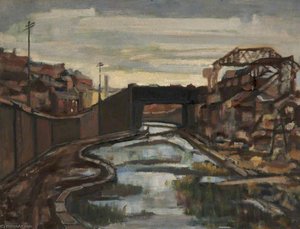
Canal Scene
 Other
Other 66.0 x 41.0 cm
 Salford Museum - Art Gallery
 Read More
Hand Made Oil Reproduction
Hand-painted oil on canvas in your size and frame, made to order by our artists. ( Buy Print Buy Image)




P118B $10

P118H $10

P118W $10

P438Z $10

P508JH $12

P508YH $12

P805H $10

P805Z $10

P919BZ $10

P919G $10

P919XJ $10

P959ZH $10

P968JZ $12

W106C $8

W218G $10

W218JH $8

W218Y $10

W307PJ $10

W316G $10

W316PJ $8

W316Y $10

W398PJ $8

W4111J $10

W500HY $15

W500JH $15

W692G $12

W849H $8

W940BG $15

W953PJ $8




Pick from our preset sizes that match the artwork's original proportions.

You may enter your own dimensions to fit a specific frame or space. If your selected size does not match the original image's proportions, we will either crop the artwork or extend the painting with additional hand-painted elements. A digital mockup will be sent for your approval before production begins.
Please note that the on-screen preview does not reflect the actual cropping or extension. Only the mockup will accurately show the final composition.
While custom sizes are available, we recommend selecting a dimension from the predefined list to preserve the original proportions.
After order, OriginalUniqueArt.com team will email client for instructions and provide a mockup preview
Worldwide Delivery () in 3/4 weeks instead of standard 5 weeks. (23 August). No compromise on quality.

Free Worldwide Express Shipping

High-Quality Linen Canvas

Full Shipping Insurance

Customs Tax Refund Guarantee

True Color Matching Guarantee

60-Day Return Policy (Defects Only)

100% Money-Back Guarantee

Bulk Discount Offer
 Glass option is only available in size under 110 CM

Canal Scene
Reproduction Medium
Reproduction Size
-


Total Price
$ 300
Artist Biography
The Visionary of Rural England: The Life and Legacy of Edward William Finley
Edward William Finley (1907–1979) remains a singular, evocative figure in the annals of British landscape painting. While many of his contemporaries sought to capture the grandeur of sweeping vistas or the drama of historical epics, Finley turned his gaze toward the quiet, the humble, and the overlooked. His work serves as a profound meditation on the essence of rural life, transforming simple cottages nestled among rolling hills, winding village processions, and the somber stillness of cemeteries into canvases imbued with deep emotion and subtle symbolism. To view a Finley landscape is to be invited into a rhythmic, bygone England, where the beauty of simplicity is elevated through an unwavering dedication to observation and a soulful connection to the land.Formative Years and the Convergence of Influences
Finley’s artistic journey began far from the misty landscapes of the British Isles. His formative years were spent in Washington, D.C., where he received a rigorous classical education that laid the foundation for his technical mastery. He honed his craft under the guidance of distinguished instructors at Howard University and the Yale School of Fine Arts, an experience that provided him with a robust understanding of both structure and light. During this period, he began to absorb the transformative influences of Impressionism and Neo-Romanticism. These movements, which prioritized the capture of fleeting atmospheric moments and emotional resonance over photographic precision, became central to his developing aesthetic. The intellectual landscape of Finley’s work was further enriched by the profound impact of John Ruskin. The writings of Ruskin, particularly regarding social justice and the necessity of moral contemplation through nature, resonated deeply with Finley’s sensibilities. This connection drew him toward the tenets of the Pre-Raphaelite Brotherhood, a movement that rejected rigid academic conventions in favor of vibrant color palettes and meticulous, reverent detail. By blending Ruskinian ethics—the idea of depicting nature with honesty and reverence—with a Pre-Raphaelite eye for texture, Finley developed a style that was uniquely his own: a delicate balance between tonal harmony and textural contrast.A Technique of Light, Texture, and Emotion
The mastery of Finley’s technique lies in his ability to manipulate light and texture to evoke specific moods. He eschewed the harshness of stark realism, preferring instead a deliberate blending of tones that could capture the soft glow of an afternoon sun or the damp, heavy atmosphere following a rainfall. His landscapes, such as the serene Welsh Cottage or the evocative After Rain, demonstrate a sophisticated use of color to suggest depth and movement. Through his brushwork, he was able to breathe life into the inanimate, making the stone of a cottage wall or the surface of a canal feel tangible and alive. His thematic repertoire often focused on the cyclical nature of life and the quiet dignity of the English countryside. His works frequently explored:- The Pastoral Ideal: Capturing the peaceful coexistence of man and nature through scenes of rural dwellings and lush parklands.
- Communal Traditions: Documenting the spirit of village life, such as the rhythmic movement found in May Day processions.
- Contemplative Solitude: Utilizing landscapes like cemeteries or quiet canal scenes to invite the viewer into moments of introspection and peace.
Historical Significance and Enduring Appeal
The historical significance of Edward William Finley lies in his ability to act as a bridge between eras. Through his paintings, he preserved the spirit of a Victorian-era sensibility within the context of the twentieth century. His work does not merely document landscapes; it preserves a way of life that was rapidly vanishing under the pressures of modernization. By focusing on the "small" moments—the texture of a path, the light hitting a village square—he created a lasting testament to the enduring power of the English landscape. Today, his paintings continue to resonate with collectors and art enthusiasts alike, offering a timeless escape into a world defined by grace, simplicity, and an exquisite reverence for the natural world.
edward william finley
1907 - 1979
Quick Facts
- Artistic Movement Or Style: British Landscape Art
- Artists Or Movements Influenced By This Artist: ['']
- Artists Who Influenced This Artist: ['']
- Date Of Death: 1979
- Full Name: Edward William Finley
- Nationality: American
- Notable Artworks: ['The Grapes Hotel']
- Place Of Birth: Dubuque, Iowa
Related Articles

John Constable's Masterpieces: Explore 25 Iconic Landscapes for Your Home
Journey through John Constable's 25 most celebrated landscapes. Explore Romanticism, Dedham Vale & his masterful use of light in iconic paintings like 'Hay Wain'. Find museum-quality art reproductions and elevate your home decor on OriginalUniqueArt.com.

Sir Alfred Munnings' Masterpieces: 25 Paintings That Define Equine Art | OriginalUniqueArt
Explore 25 iconic Sir Alfred Munnings paintings! Discover the beauty of British Impressionism, equine art & rural England. Find museum-quality reproductions and elevate your home decor with OriginalUniqueArt. Explore the full collection online.

Philip Connard: A Study in British Impressionism & the Evocation of Rural England
Explore the captivating world of Philip Connard (1875-1958), a leading British Impressionist painter renowned for his decorative landscapes and wartime artistry. Discover his life, legacy & available artworks at OriginalUniqueArt.

David Cox the Elder: Landscape, Light & the Romantic Vision of Rural England
Explore the captivating landscapes of David Cox the Elder, a pivotal figure in British Romanticism. Discover his masterful watercolour techniques, enduring legacy & find timeless art for your home at OriginalUniqueArt.

Cultivating Visions: A Historical Journey Through Rural Landscapes in Art
Explore the rich history of rural landscape painting with OriginalUniqueArt. Discover Impressionist masterpieces, key artists & movements. Find your perfect serene artwork and bring nature's beauty home.