Preview
 Send
Send Share
Share
 Details
 Guide
Guide

 Download
 Similars
 X-Ray
X-Ray Diaporama
 Stats
StatsPreview slide, The Kid


 Read More
The artwork displayed on this page is protected by copyright law, which means we cannot legally create or sell an identical reproduction. This protection is enforced under international agreements such as the Berne Convention and by national laws, including those outlined by the U.S. Copyright Law - Title 17.
This method fully complies with copyright regulations because it does not involve copying or duplicating the protected artwork. Instead, it is a creative reinterpretation - a new painting that is influenced by the original but not identical to it.
Giclée / Art Print
Museum-quality giclée or canvas print with fast production and flexible finish options. ( Buy Hand Made Painting Switch to Digital Image)




P118B $10

P118H $10

P118W $10

P438Z $10

P508JH $12

P508YH $12

P805H $10

P805Z $10

P919BZ $10

P919G $10

P919XJ $10

P959ZH $10

P968JZ $12

W106C $8

W218G $10

W218JH $8

W218Y $10

W307PJ $10

W316G $10

W316PJ $8

W316Y $10

W398PJ $8

W4111J $10

W500HY $15

W500JH $15

W692G $12

W849H $8

W940BG $15

W953PJ $8




Pick from our preset sizes that match the artwork's original proportions.

Type the width and the height you need, to fit your frame or your wall. A print can only be cut, never made bigger than the picture, so a size with a different shape loses a part of the image. We send you a digital mockup to approve before we print anything. The picture shown on this page does not show the real cut — only the mockup does.
Worldwide Delivery () in 2 weeks instead of standard 4/5 weeks. (21 October)

Free Worldwide Express Shipping

High-Quality Linen Canvas

Full Shipping Insurance

Customs Tax Refund Guarantee

True Color Matching Guarantee

100-Day Return Policy (Defects Only)

100% Money-Back Guarantee

Bulk Discount Offer
 Glass option is only available in size under 110 CM

Preview slide, The Kid
Giclée / Art Print
Reproduction Size
-


Total Price
$ 81
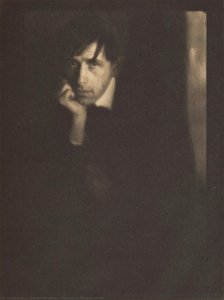
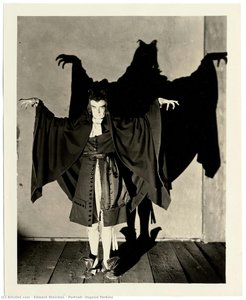
Edward Steichen’s “The Kid” (1921): A Snapshot of Silent Cinema Charm
Edward Steichen's "The Kid," produced in 1921 for the film starring Charles Chaplin and Jackie Coogan, stands as a quintessential example of Art Deco poster design—a bold declaration of cinematic excitement frozen in time. More than just an advertisement, it’s a meticulously crafted visual narrative that captures the spirit of its era.
Composition & Visual Elements: Geometric Precision Meets Rustic Texture
The image centers around Chaplin and Coogan against a monumental black background—a deliberate choice reflecting the theatrical grandeur of silent films. White text dominates, punctuated by stylized decorative elements reminiscent of Art Deco’s geometric obsession. A brick wall serves as an understated yet crucial backdrop, introducing textural contrast that grounds the scene in tangible reality.
- Lines: Typography and architectural details—the bricks—employ linear precision, emphasizing structure and order.
- Shapes: Rectangles define the poster’s frame and delineate the figures' poses; circles appear as decorative accents, adding visual harmony.
- Textures: The brick wall provides a rough surface that contrasts with the relatively flat printing style, enhancing depth and realism.
Lighting & Perspective: Capturing Movement Through Static Imagery
Artificial lighting—likely studio-based—highlights Chaplin’s attire and text, simulating the illumination of a film set. Perspective is simplified, prioritizing a frontal view of the subjects to maximize impact and convey immediacy. Despite its stillness, Steichen skillfully uses visual cues to evoke the dynamism inherent in cinematic storytelling.
Symbolism & Artistic Influences: Chaplin's Dignity Versus Innocence
"The Kid" embodies several symbolic layers. Chaplin represents artistic dedication—the tireless pursuit of creative expression—while Coogan embodies youthful innocence and vulnerability. Steichen’s stylistic choices draw heavily from Pictorialism, a movement that championed photographic artistry as an equivalent to painting, influenced by artists like Alfred Stieglitz who explored tonal richness and atmospheric depth.
Technique & Reproduction: Preserving the Essence of Vintage Cinema
The artwork utilizes photographic printing on paper—a technique common in the 1920s—resulting in a slightly flattened appearance. However, high-quality reproductions faithfully recreate Steichen’s masterful composition and textural nuances. OriginalUniqueArt.com offers exceptional prints that allow you to experience this iconic piece of cinematic history firsthand.
Questions & Answers
How does the subject of "Preview slide, The Kid" relate to Edward Steichen's usual themes?
Among Edward Steichen's recorded themes - steichen's photographic vision, american modernism influence, film industry promotion, social commentary subtle, family & innocence theme, early 20th century ads, showcase of chaplin's star - "Preview slide, The Kid" brings its own focus on silent film era, chaplin poster art, vintage advertising, art deco design, film promotion, 1920s cinema, character illustration.
Can I see "Preview slide, The Kid" by Edward Steichen on my own wall before buying?
The AR Preview page of "Preview slide, The Kid" by Edward Steichen uses augmented reality to show the artwork in your own space, on a compatible device.
What feeling does "Preview slide, The Kid" by Edward Steichen convey?
In "Preview slide, The Kid", an elegant mood accompanies a romantic emotion.
Artist Biography
A Life Bridging Worlds: The Artistic Odyssey of Edward Steichen
Édouard Jean Steichen, later known as Edward Steichen, was a figure who transcended simple categorization. Born in 1879 in the small village of Bivange, Luxembourg, his life became an extraordinary journey from European roots to becoming one of America’s most influential artists – not merely as a photographer, but as a painter, curator, and visionary who reshaped how we perceive visual culture. The early years were marked by a significant relocation; in 1881, the Steichen family emigrated to Hancock, Michigan, seeking new opportunities. This move instilled in young Edward a sense of displacement and perhaps, a heightened sensitivity to observation – qualities that would profoundly shape his artistic vision. Even as a child, an innate talent for drawing was evident, nurtured by supportive parents who recognized and encouraged his creative inclinations. The pivotal moment arrived at sixteen when he received his first camera, initiating a period of largely self-directed learning through relentless experimentation. This wasn’t merely about mastering technique; it was about discovering a new language, a way to capture the world with an immediacy and intimacy previously unattainable. A subsequent move to Milwaukee saw him apprenticed as a lithographer, providing valuable technical skills while simultaneously allowing his artistic pursuits to flourish.From Pictorialism to Modern Vision: Steichen’s Artistic Evolution
Steichen's emergence coincided with the burgeoning Pictorialist movement, an attempt to elevate photography to the status of fine art. He quickly became a central figure, embracing soft focus and painterly effects to create images that evoked mood and atmosphere rather than simply documenting reality. This pursuit led him to Alfred Stieglitz, a kindred spirit who recognized Steichen’s exceptional talent. Together, they co-founded the Photo-Secession in 1902, a group dedicated to promoting photography as a legitimate art form. The publication of *Camera Work*, a highly influential photographic journal, became their platform for disseminating ideas and showcasing groundbreaking work. The establishment of the 291 gallery in New York City further cemented their influence, providing a space where avant-garde European art – Picasso, Matisse, Cézanne – was exhibited alongside photography, fostering cross-cultural dialogue and challenging conventional artistic boundaries. However, Steichen’s artistic journey wasn't one of static adherence to a single style. The upheaval of World War I proved catalytic. He abandoned the ethereal qualities of Pictorialism, embracing instead a “Straight Photography” aesthetic – characterized by sharp focus, precise detail, and an unadorned representation of reality. This shift reflected a broader cultural move towards modernity and a rejection of sentimentality in favor of clarity and directness.A Master of Many Mediums: Fashion, Film, and the Human Condition
Steichen’s versatility was remarkable. He didn't confine himself to one artistic domain; he seamlessly transitioned between photography, painting, and even filmmaking. His foray into fashion photography during the 1920s and 30s revolutionized the industry. Working for *Vogue* and *Vanity Fair*, he moved beyond mere documentation of clothing to create images that were sophisticated, glamorous, and imbued with a sense of narrative. He understood how to use light, pose, and composition to convey not just style but also personality and emotion. This period established him as a pioneer in the field, setting standards for generations of fashion photographers to come. During World War II, Steichen served his adopted country by directing *The Fighting Lady* (1944), an acclaimed documentary film for the U.S. Navy that offered a visceral portrayal of aerial combat. But perhaps his most enduring legacy lies in *The Family of Man*, curated at the Museum of Modern Art in 1955. This monumental exhibition, featuring photographs from sixty-eight countries, was a powerful statement about universal human experiences – love, birth, death, joy, sorrow – transcending cultural and geographical boundaries. Recognized by UNESCO’s Memory of the World Register, it remains a testament to Steichen's belief in the unifying power of photography.Legacy and Influence: A Lasting Impact on Visual Culture
Edward Steichen died in 1973, leaving behind an extraordinary body of work that continues to inspire and provoke. His influence is multifaceted. He fundamentally altered perceptions of photography, elevating it from a purely technical process to a recognized art form. His pioneering work in fashion photography not only defined the aesthetic of an era but also established new standards for visual storytelling within the industry. The 291 gallery, through its championing of European modernism, played a crucial role in introducing American audiences to groundbreaking artistic movements. And *The Family of Man*, with its message of shared humanity, remains profoundly relevant in an increasingly fragmented world. His ability to seamlessly navigate between commercial and artistic pursuits demonstrated that creativity could thrive in diverse contexts. Steichen’s career was a testament to the power of experimentation, innovation, and a relentless pursuit of artistic vision. He wasn't simply documenting the world; he was interpreting it, shaping it, and ultimately, changing how we see it.Notable Works
- The Pond–Moonlight (1904): A landmark Pictorialist photograph celebrated for its atmospheric depth and tonal richness; a record-breaking auction price attests to its enduring appeal.
- The Flatiron (1904): Another significant early work showcasing his mastery of photographic technique and composition, also achieving a remarkable price at auction.
- Portraits of Celebrities: A vast collection capturing the essence of prominent figures in art, literature, and entertainment with insightful sensitivity.
- The Fighting Lady (1944): An acclaimed World War II documentary film offering a compelling glimpse into aerial combat.
- The Family of Man (1955): A groundbreaking exhibition at MoMA, featuring photographs from around the globe that explored universal human experiences and earned UNESCO recognition.

Edward Steichen
1900 - 1973 , Luxembourg
Quick Facts
- Full Name: Edward Jean Steichen
- Nationality: Luxembourgish-American
- Date Of Birth: 1900
- Date Of Death: 1973
- Place Of Birth: Bivange, Luxembourg
- Notable Artworks:
- The Pond–Moonlight
- The Flatiron
- The Family of Man
- Artistic Movement Or Style:
- Pictorialism
- Straight Photography
- Fashion Photography
- Artists Who Influenced This Artist: ['Alfred Stieglitz']
- Artists Or Movements Influenced By This Artist:
- Fashion Photography
- Modern Art
Related Articles
OriginalUniqueArt.com F.A.Q.: Premium Art Poster Prints – Vivid Colors & Versatile Sizing
Discover OriginalUniqueArt.com's premium art poster prints. Featuring 12-color archival pigments for vivid color fidelity and versatile sizing for bespoke decor. Expertly crafted museum-quality reproductions designed for discerning collectors and professional decorators.