- Home

- Print on canvas
- Edward Penny
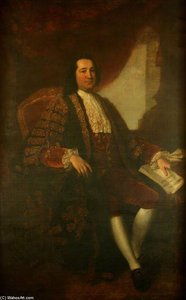
- Starling

 Buy Painting
 Send
Send Share
Share
 Details

 Download
 Similars
 X-Ray
X-Ray Diaporama
Starling
 Read More
Giclée / Art Print
Museum-quality giclée or canvas print with fast production and flexible finish options.




































Pick from our preset sizes that match the artwork's original proportions.

You may enter your own dimensions to fit a specific frame or space. If your selected size does not match the original image's proportions, we will either crop the artwork or extend the image with a mirrored or solid-fill edge. A digital mockup will be sent for your approval before production begins.
Please note that the on-screen preview does not reflect the actual cropping or extension. Only the mockup will accurately show the final composition.
While custom sizes are available, we recommend selecting a dimension from the predefined list to preserve the original proportions.
Worldwide Delivery () in 2 weeks instead of standard 4/5 weeks. (22 July)

Free Worldwide Express Shipping

High-Quality Linen Canvas

Full Shipping Insurance

Customs Tax Refund Guarantee

True Color Matching Guarantee

60-Day Return Policy (Defects Only)

100% Money-Back Guarantee

Bulk Discount Offer
 Glass option is only available in size under 110 CM

Starling
Giclée / Art Print
Reproduction Size
-


Total Price
-
Artist Biography
A Life Illuminated: The Artistic Journey of Edward Penny
Born in the picturesque Cheshire countryside in 1714, Edward Penny emerged as a significant figure in the evolving landscape of British art during the 18th century. His life story is one woven with threads of privilege, rigorous training, and dedicated service to the burgeoning artistic institutions of his time. The son of a surgeon—a profession that demanded both scientific precision and an understanding of human form—and connected to landed gentry, Penny benefited from opportunities for education and cultural exposure uncommon for many aspiring artists. This foundation allowed him to pursue his innate talent, leading him initially to London as an apprentice under the esteemed portraitist Thomas Hudson. Hudson’s tutelage instilled in Penny a mastery of foundational skills – drawing, composition, and painting techniques – that would serve as the bedrock of his artistic endeavors. However, Penny's ambition extended beyond the confines of England; he sought further refinement by traveling to Rome, immersing himself in the classical world under the guidance of Marco Benefiale. This period proved transformative, exposing him to the grandeur of Renaissance art and profoundly influencing his aesthetic sensibilities. Upon returning to England around 1748, Penny began establishing himself as a professional painter, initially focusing on smaller portrait formats before gradually tackling more ambitious historical subjects.Navigating Artistic Currents: From Portraiture to Historical Narrative
Penny’s early career was marked by versatility and an ability to capture the essence of his sitters in compelling portraits across various social strata. He quickly gained recognition for his skill in rendering likenesses, establishing a solid reputation within London's artistic circles. A pivotal moment arrived with his association with the Incorporated Society of Artists in 1762, where he exhibited works like a striking portrait of a lady and a dramatic scene from the tragic tale of Jane Shore. However, disagreements regarding the society’s direction led to a schism, prompting Penny—alongside fellow artists such as Benjamin West and Richard Wilson—to withdraw and seek alternative avenues for artistic expression. This ultimately paved the way for an even more significant chapter in his career: his nomination as one of the founding members of the Royal Academy of Arts in 1768. The establishment of the Royal Academy was a watershed moment for British art, signifying a commitment to formal training and national recognition. Penny’s appointment as the first Professor of Painting at the Academy further underscored his standing within the artistic community—a testament to his skill, knowledge, and dedication to the craft. As his career progressed, Penny broadened his subject matter, venturing into historical scenes and literary illustrations drawn from works like Shakespeare's plays (*King John* being a notable example) and the writings of Tasso and Swift. These paintings were not merely depictions of events; they often incorporated elements of narrative and moral commentary, reflecting Penny’s intellectual engagement with his subjects.Defining Moments: Key Works and Artistic Style
Several works stand as hallmarks of Edward Penny's artistic achievement. The Death of General Wolfe (1764), a powerful depiction of the British victory at Quebec, garnered widespread acclaim and was widely disseminated through engravings by Richard Houston. This painting exemplifies Penny’s ability to portray dramatic historical events with both emotional intensity and technical skill. Equally compelling is A City Shower (1764), inspired by Jonathan Swift's satirical poem. Here, Penny demonstrates his keen observation of everyday life and urban landscapes, capturing the chaotic energy of a sudden downpour in London with remarkable detail. The Generous Behaviour of the Chevalier Bayard (1768) showcases his interest in chivalric themes and historical narratives, while Imogen Discovered in the Cave (1770), a scene from Shakespeare’s *Cymbeline*, reveals his engagement with literary subjects. Penny's style is generally characterized as belonging to the Baroque tradition, reflecting the influence of both Thomas Hudson and Marco Benefiale. His paintings often feature dramatic lighting, carefully considered compositions, and a meticulous attention to narrative detail. While not necessarily revolutionary in comparison to some of his contemporaries, he possessed a remarkable technical skill and an ability to capture both likeness and atmosphere with finesse.Legacy and Lasting Influence
Edward Penny’s contributions extended beyond the canvas; his role as a founding member and first Professor of Painting at the Royal Academy cemented his place in British art history. He played a crucial part in establishing a formal institution dedicated to artistic training and exhibition, shaping the future direction of British art for generations to come. Although his later output diminished due to ill health—leading to his resignation from the professorship and a decline in regular exhibitions—Penny’s earlier works continued to be admired and studied. His lectures on art, though unpublished during his lifetime, were preserved by his nephew and offer valuable insights into his artistic philosophy and teaching methods. Penny's work occupies a transitional space within British art, bridging the gap between the Baroque sensibilities of the early 18th century and the emerging Neoclassical aesthetic that would come to dominate later decades. He represents a pivotal moment in the evolution of British painting—a testament to the enduring power of skill, dedication, and a lifelong commitment to artistic expression. His legacy continues to resonate within the halls of art history, reminding us of the importance of fostering creativity and supporting the institutions that nurture it.
Edward Penny
1714 - 1791 , United Kingdom
Quick Facts
- Artistic Movement Or Style: Baroque
- Artists Who Influenced This Artist:
- Thomas Hudson
- Marco Benefiale
- Date Of Birth: August 1, 1714
- Date Of Death: November 16, 1791
- Full Name: Edward Penny
- Nationality: English
- Notable Artworks:
- The Death of General Wolfe
- A City Shower
- Imogen Discovered in the Cave
- Place Of Birth: Knutsford, UK