

 Preview
 Send
Send Share
Share
 Details
 Guide
Guide

 Download
 Similars
 X-Ray
X-Ray Diaporama
 Stats
StatsThe End -1
 Acrylic On Canvas
- WallArt
- Pop Art
 1993
1993 510.0 x 662.0 cm
 Tate Britain
 Read More
The artwork displayed on this page is protected by copyright law, which means we cannot legally create or sell an identical reproduction. This protection is enforced under international agreements such as the Berne Convention and by national laws, including those outlined by the U.S. Copyright Law - Title 17.
As a respectful and legal alternative, we offer custom, hand-painted artworks inspired by the original. Our skilled and professional artists carefully study the original's style, mood, and artistic essence to create a new, unique piece that evokes the same feeling - while remaining an original creation in its own right.
This method fully complies with copyright regulations because it does not involve copying or duplicating the protected artwork. Instead, it is a creative reinterpretation - a new painting that is influenced by the original but not identical to it.
Hand Made Oil Reproduction
Hand-painted oil on canvas in your size and frame, made to order by our artists. ( Switch to Print Switch to Digital Image)




P118B $10

P118H $10

P118W $10

P438Z $10

P508JH $12

P508YH $12

P805H $10

P805Z $10

P919BZ $10

P919G $10

P919XJ $10

P959ZH $10

P968JZ $12

W106C $8

W218G $10

W218JH $8

W218Y $10

W307PJ $10

W316G $10

W316PJ $8

W316Y $10

W398PJ $8

W4111J $10

W500HY $15

W500JH $15

W692G $12

W849H $8

W940BG $15

W953PJ $8




Pick from our preset sizes that match the artwork's original proportions.

Type the width and the height you need, to fit your frame or your wall. This is hand-painted, so for a size with a different shape the artist can paint a bit more around the picture, or cut a bit — you choose. We send you a digital mockup to approve before the painting starts. The picture shown on this page does not show the real result — only the mockup does.
After order, OriginalUniqueArt.com team will email client for instructions and provide a mockup preview
Worldwide Delivery () in 3/4 weeks instead of standard 5 weeks. (24 October). No compromise on quality.

Free Worldwide Express Shipping

High-Quality Linen Canvas

Full Shipping Insurance

Customs Tax Refund Guarantee

True Color Matching Guarantee

100-Day Return Policy (Defects Only)

100% Money-Back Guarantee

Bulk Discount Offer
 Glass option is only available in size under 110 CM

The End -1
Reproduction Medium
Reproduction Size
-


Total Price
$ 300
The Fractured Echoes of “The End” – A Meditation on Decay and Finality
Edward Ruscha’s “The End,” created in 1993, isn't merely a painting; it’s an unsettling meditation on the transient nature of existence, rendered with a stark minimalism that belies its profound emotional weight. The work immediately confronts the viewer with a fragmented visual vocabulary – two rectangular panels dominated by the repeated phrase “The End,” each section partially obscured by vertical lines resembling scratches or deliberate markings. These aren't clean, precise cuts; they’re rough, uneven interventions that suggest a process of erosion, as if the text itself is slowly being consumed by time and decay. The grayscale palette—ranging from near-white to deep charcoal—further amplifies this sense of disintegration, evoking the faded tones of old photographs or weathered documents. It's a deliberate rejection of vibrant color, prioritizing texture and suggestion over overt representation.A Rooted History: Ruscha’s Pop Art Legacy and Los Angeles Vernacular
Ruscha’s work is deeply intertwined with the trajectory of American art in the late 20th century. Emerging from the Ferus Gallery scene in Los Angeles during the height of the Pop Art movement, he absorbed the influence of figures like Warhol and Lichtenstein while simultaneously forging his own distinct path. However, unlike the celebratory embrace of consumer culture often associated with Pop Art, Ruscha’s work frequently operates on a more melancholic register. He wasn't interested in replicating mass-produced imagery; instead, he sought to capture the essence of Los Angeles – its sprawling infrastructure, its anonymous landscapes, and its underlying sense of alienation. “The End” can be seen as a culmination of this exploration, reflecting a growing disillusionment with the promises of the American Dream. The reference to the Hollywood Boulevard photograph series, created in 1973, highlights this connection—a systematic documentation of urban decay and the relentless march of time.The Language of Absence: Technique and Symbolic Weight
Ruscha’s technique is deceptively simple yet remarkably effective. The work appears to be a print – likely executed on photographic paper – with the deliberate addition of the vertical lines. These markings aren't merely aesthetic flourishes; they actively disrupt the legibility of the text, creating a sense of instability and uncertainty. They suggest a process of erasure, as if the words are struggling to maintain their form against an overwhelming force. The repetition of “The End” itself is crucial. It’s not just a statement of conclusion but also a cyclical affirmation—a constant reminder of the inevitable return to nothingness. The fragmented nature of the phrase – each panel only partially revealing the whole – mirrors the human experience of loss and memory, where fragments remain long after the original event has faded.Beyond the Surface: Emotion and Interpretation
“The End” isn’t a painting that offers easy answers or comforting resolutions. Instead, it invites contemplation—a confrontation with our own mortality and the impermanence of all things. The work evokes feelings of melancholy, anxiety, and perhaps even a strange sense of beauty in its stark honesty. It's a reminder that endings are not necessarily negative; they can be opportunities for renewal and transformation. The deliberate ambiguity of the piece allows each viewer to project their own experiences and interpretations onto it, making “The End” a profoundly personal work of art. Its enduring power lies in its ability to resonate with our deepest fears and desires, prompting us to consider what truly matters at the end of our own journeys.Size: 510 x 662 cm
Date: 1993
Artist Information: Edward Joseph Ruscha IV (born December 16, 1937) is an American artist associated with the pop art movement. He has worked in the media of painting, printmaking, drawing, photography, and film.
Questions & Answers
Which room is "The End -1" by Edward Joseph Ruscha Iv recommended for, given its colors?
Considering its neutrals colors, "The End -1" is suggested for a living room.
What are the reproduction rights of "The End -1" at the Tate Britain?
The copyright status of "The End -1" by Edward Joseph Ruscha Iv is clear: the work is still protected by copyright. Its presence at the Tate Britain does not change that status.
What are the date and style of "The End -1" by Edward Joseph Ruscha Iv?
"The End -1" was made in 1993, within the Pop Art movement.
Artist Biography
Edward Joseph Ruscha IV: A Pioneer of Pop Art
Early Life and Education
- Born on December 16, 1937, in Omaha, Nebraska, Edward Joseph Ruscha IV grew up in a Roman Catholic family.
- He showed an early interest in art, particularly cartooning, nurtured by his mother’s support.
- Ruscha moved to Los Angeles in 1956 and studied at the Chouinard Art Institute (now CalArts) from 1956-1960 under Robert Irwin and Emerson Woelffer.
- During his time at Chouinard, he co-edited the journal *Orb*, a precursor to alternative newspapers.
Artistic Development and Influences
- Ruscha’s artistic journey began in the early 1960s, aligning him with the Ferus Gallery group in Los Angeles.
- He was influenced by a diverse range of artists including Jasper Johns, John McLaughlin, H.C. Westermann, Arthur Dove, Alvin Lustig, and Marcel Duchamp.
- The work of Edward Hopper, particularly his painting *Gas* (1940), also resonated with Ruscha’s developing style.
- His early works explored the visual language of commercialism and everyday American life.
Key Themes and Style
- Ruscha is renowned for his incorporation of text and phrases into paintings, often presented in a flat, deadpan aesthetic.
- He frequently depicted commonplace subjects like gas stations, motels, and landscapes of Southern California.
- His photographic books, such as Every Building on the Sunset Strip (1966), are iconic examples of his conceptual approach to art.
- A key theme in Ruscha’s work is the exploration of vernacular language and the visual culture of Los Angeles.
Major Achievements and Notable Works
- Some of his most celebrated works include:
- Standard Station (1966): A quintessential representation of American roadside architecture.
- Large Trademark (1962): An early example of his word-based paintings.
- Hollywood (1982): Reflecting the iconic imagery of Los Angeles.
- Every Building on the Sunset Strip (1966): A groundbreaking photographic book documenting a stretch of Sunset Boulevard.
- Ruscha’s work challenged traditional notions of painting and photography, blurring the boundaries between art forms.
Historical Significance and Legacy
- Ruscha is considered a pivotal figure in the Pop Art movement, though his style often transcends easy categorization.
- His influence extends to contemporary artists working with language, photography, and conceptual art.
- He helped establish Los Angeles as a significant center for artistic innovation during the 1960s.
- Ruscha continues to live and work in Culver City, California, remaining an active and influential force in the art world.

Edward Joseph Ruscha Iv
1937 - , United States of America
Quick Facts
- Name: Edward Joseph Ruscha IV
- Movement: Pop Art
- Birth Date: December 16, 1937
- Birth Place: Omaha, Nebraska, United States
- Nationality: American
- Date Of Birth: 1937
- Influenced By:
- Jasper Johns
- John McLaughlin
- H.C. Westermann
- Arthur Dove
- Alvin Lustig
- Marcel Duchamp
- Edward Hopper
- Notable Works:
- Standard Station (1966)
- Large Trademark (1962)
- Hollywood (1982)
- Every Building on the Sunset Strip (1966)
- Place Of Birth: Omaha, United States of America
Related Articles

Romantic Landscapes: 10 Masterpieces for Your Home | OriginalUniqueArt
Journey through 10 Romantic landscape masterpieces by Friedrich, Turner & Cole. Explore emotional art, sublime nature scenes & iconic 19th-century paintings. Find museum-quality reproductions for your home at OriginalUniqueArt.com – discover the full collection online!

John Constable's Masterpieces: Explore 25 Iconic Landscapes for Your Home
Journey through John Constable's 25 most celebrated landscapes. Explore Romanticism, Dedham Vale & his masterful use of light in iconic paintings like 'Hay Wain'. Find museum-quality art reproductions and elevate your home decor on OriginalUniqueArt.com.
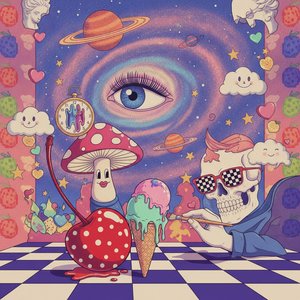
Pop Surrealism Unveiled: The Sophisticated Intersection of Vibrant Pop Art and Dreamlike Subconscious Landscapes
Explore the captivating world of Pop Surrealism. Discover how vibrant Pop Art meets dreamlike subconscious imagery through the works of masters like Jeff Soto and Ryan Heshka. An expert guide for discerning collectors seeking to understand this profound contemporary art movement.

Evocations of Place: A Historical Journey Through Landscape Art
Explore the rich history of landscape art with OriginalUniqueArt. Discover renowned artists, movements like Impressionism & Romanticism, and expert guidance for collecting timeless pieces. Find your perfect serene escape today!

Golden Hour Magic: Capturing the Ethereal Beauty of Sunset Landscapes in Fine Art
Embark on a visual journey through the golden hour. Discover how master painters capture the ethereal glow of sunsets, from Monet's Impressionism to the Hudson River School. Explore timeless techniques and bring the magic of twilight into your home with exquisite fine art reproductions.


