

 Preview
 Send
Send Share
Share
 Details
 Guide
Guide

 Download
 Similars
 X-Ray
X-Ray Diaporama
 Stats
StatsOOF
 Acrylic On Canvas
- WallArt
- Pop Art
 1963
1963 182.0 x 170.0 cm
 MOMA - Museum of Modern Art
 Read More
The artwork displayed on this page is protected by copyright law, which means we cannot legally create or sell an identical reproduction. This protection is enforced under international agreements such as the Berne Convention and by national laws, including those outlined by the U.S. Copyright Law - Title 17.
This method fully complies with copyright regulations because it does not involve copying or duplicating the protected artwork. Instead, it is a creative reinterpretation - a new painting that is influenced by the original but not identical to it.
Giclée / Art Print
Museum-quality giclée or canvas print with fast production and flexible finish options. ( Buy Hand Made Painting Switch to Digital Image)




P118B $10

P118H $10

P118W $10

P438Z $10

P508JH $12

P508YH $12

P805H $10

P805Z $10

P919BZ $10

P919G $10

P919XJ $10

P959ZH $10

P968JZ $12

W106C $8

W218G $10

W218JH $8

W218Y $10

W307PJ $10

W316G $10

W316PJ $8

W316Y $10

W398PJ $8

W4111J $10

W500HY $15

W500JH $15

W692G $12

W849H $8

W940BG $15

W953PJ $8




Pick from our preset sizes that match the artwork's original proportions.

Type the width and the height you need, to fit your frame or your wall. A print can only be cut, never made bigger than the picture, so a size with a different shape loses a part of the image. We send you a digital mockup to approve before we print anything. The picture shown on this page does not show the real cut — only the mockup does.
Worldwide Delivery () in 2 weeks instead of standard 4/5 weeks. (21 October)

Free Worldwide Express Shipping

High-Quality Linen Canvas

Full Shipping Insurance

Customs Tax Refund Guarantee

True Color Matching Guarantee

100-Day Return Policy (Defects Only)

100% Money-Back Guarantee

Bulk Discount Offer
 Glass option is only available in size under 110 CM

OOF
Giclée / Art Print
Reproduction Size
-


Total Price
$ 81
A Bold Statement in Pop: Deconstructing ‘OOF’ by Edward Ruscha
Edward Ruscha's *OOF*, created in 1963, is far more than a simple depiction of an onomatopoeic exclamation. It’s a pivotal work within the Pop Art movement—a moment where language itself became subject matter, divorced from descriptive function and elevated to visual prominence. This large-scale painting, currently residing at the Museum of Modern Art in New York, embodies Ruscha's signature style: a cool detachment combined with an underlying current of playful irony. The work’s impact lies not just *in* what it shows, but *how* it presents it – bold yellow lettering starkly contrasted against a deep azure background.Typography as Image & the Echoes of Popular Culture
Ruscha deliberately eschews painterly expression in favor of precise typography. The letters of “OOF” aren’t brushed or gestural; they are defined, almost mechanical in their execution. This deliberate impersonality is a key characteristic differentiating Ruscha from the Abstract Expressionists who preceded him. He wasn't interested in revealing his inner self on canvas but rather exploring the power and inherent qualities of pre-existing imagery – in this case, a single, impactful word. The choice of “OOF” itself is significant. Commonly found in comic strips to denote impact or shock, it’s a visceral sound rendered silent by its painted form. This paradox—a sonic representation frozen in visual stillness—is central to the painting's conceptual strength. Furthermore, the doubled ‘O’s subtly nod towards contemporary works like Jasper Johns’ *Targets* and Kenneth Noland’s *Circles*, acknowledging a dialogue within the burgeoning Pop Art scene.Ruscha’s Artistic Vision & Lasting Legacy
Edward Ruscha (born 1937) is an American artist whose prolific career spans painting, printmaking, drawing, photography, and film. He consistently returns to themes of language, landscape, and the vernacular imagery of American culture. *OOF* exemplifies his ability to distill complex ideas into deceptively simple forms. His work challenges traditional notions of artistic expression, embracing a deliberate, conceptual approach that continues to influence artists today. Ruscha’s impact extends beyond painting; his photographic books, like *Every Building on the Sunset Strip*, are considered landmark achievements in documenting and interpreting the American landscape. The enduring appeal of *OOF* lies in its ability to provoke thought while simultaneously offering a visually striking aesthetic—a testament to Ruscha's innovative spirit and lasting contribution to modern art.Questions & Answers
What color saturation does "OOF" by Edward Joseph Ruscha Iv have?
The palette of "OOF" is vivid color in saturation.
What does the 1963 date of "OOF" correspond to in Edward Joseph Ruscha Iv's career?
Given its 1963 date, "OOF" falls in Edward Joseph Ruscha Iv's Contemporary.
How harmonious are the colors of "OOF" by Edward Joseph Ruscha Iv?
"OOF" by Edward Joseph Ruscha Iv displays a balanced harmony color harmony.
Artist Biography
Edward Joseph Ruscha IV: A Pioneer of Pop Art
Early Life and Education
- Born on December 16, 1937, in Omaha, Nebraska, Edward Joseph Ruscha IV grew up in a Roman Catholic family.
- He showed an early interest in art, particularly cartooning, nurtured by his mother’s support.
- Ruscha moved to Los Angeles in 1956 and studied at the Chouinard Art Institute (now CalArts) from 1956-1960 under Robert Irwin and Emerson Woelffer.
- During his time at Chouinard, he co-edited the journal *Orb*, a precursor to alternative newspapers.
Artistic Development and Influences
- Ruscha’s artistic journey began in the early 1960s, aligning him with the Ferus Gallery group in Los Angeles.
- He was influenced by a diverse range of artists including Jasper Johns, John McLaughlin, H.C. Westermann, Arthur Dove, Alvin Lustig, and Marcel Duchamp.
- The work of Edward Hopper, particularly his painting *Gas* (1940), also resonated with Ruscha’s developing style.
- His early works explored the visual language of commercialism and everyday American life.
Key Themes and Style
- Ruscha is renowned for his incorporation of text and phrases into paintings, often presented in a flat, deadpan aesthetic.
- He frequently depicted commonplace subjects like gas stations, motels, and landscapes of Southern California.
- His photographic books, such as Every Building on the Sunset Strip (1966), are iconic examples of his conceptual approach to art.
- A key theme in Ruscha’s work is the exploration of vernacular language and the visual culture of Los Angeles.
Major Achievements and Notable Works
- Some of his most celebrated works include:
- Standard Station (1966): A quintessential representation of American roadside architecture.
- Large Trademark (1962): An early example of his word-based paintings.
- Hollywood (1982): Reflecting the iconic imagery of Los Angeles.
- Every Building on the Sunset Strip (1966): A groundbreaking photographic book documenting a stretch of Sunset Boulevard.
- Ruscha’s work challenged traditional notions of painting and photography, blurring the boundaries between art forms.
Historical Significance and Legacy
- Ruscha is considered a pivotal figure in the Pop Art movement, though his style often transcends easy categorization.
- His influence extends to contemporary artists working with language, photography, and conceptual art.
- He helped establish Los Angeles as a significant center for artistic innovation during the 1960s.
- Ruscha continues to live and work in Culver City, California, remaining an active and influential force in the art world.

Edward Joseph Ruscha Iv
1937 - , United States of America
Quick Facts
- Name: Edward Joseph Ruscha IV
- Movement: Pop Art
- Birth Date: December 16, 1937
- Birth Place: Omaha, Nebraska, United States
- Nationality: American
- Date Of Birth: 1937
- Influenced By:
- Jasper Johns
- John McLaughlin
- H.C. Westermann
- Arthur Dove
- Alvin Lustig
- Marcel Duchamp
- Edward Hopper
- Notable Works:
- Standard Station (1966)
- Large Trademark (1962)
- Hollywood (1982)
- Every Building on the Sunset Strip (1966)
- Place Of Birth: Omaha, United States of America
Related Articles
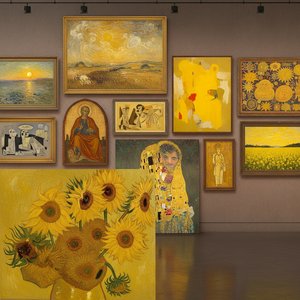
Golden Hues: 10 Masterpieces Dominated by Chrome Yellow | OriginalUniqueArt
Immerse yourself in golden light! Explore 10 famous paintings dominated by 'Chrome Yellow', from Van Gogh’s Sunflowers to Monet's Haystacks. Discover the stories behind these iconic Impressionist & Post-Impressionist masterpieces and find museum-quality art reproductions at OriginalUniqueArt.com.
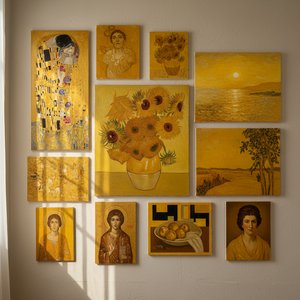
Golden Hues: Top 10 Paintings Dominated by Yellow Ochre |
Explore 10 iconic paintings bathed in golden yellow ochre! From Van Gogh's sunflowers to Monet’s haystacks, discover the stories behind these masterpieces. Find museum-quality art reproductions & elevate your home decor on .

The Golden Hue: Exploring Symbolism & Emotion in Yellow Art
Explore the rich symbolism & emotional power of yellow in art history! From Van Gogh to Kandinsky, discover how artists used this vibrant hue. Expert analysis & high-quality reproductions at OriginalUniqueArt.
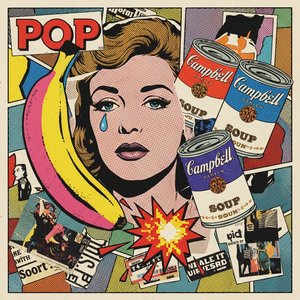
Challenging Conventions: Pop Art's Origins, Evolution & Enduring Legacy
Explore the fascinating history of Pop Art, from its rebellious origins to its enduring influence on contemporary artists. Discover key figures like Warhol & Lichtenstein and learn about collecting this iconic movement.
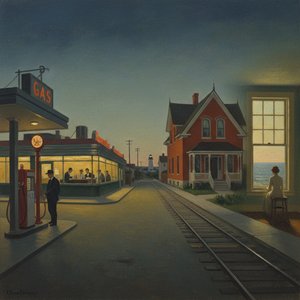
Edward Hopper's Masterpieces: 25 Iconic Paintings & Their Enduring Legacy | OriginalUniqueArt
Explore 25 iconic Edward Hopper paintings & their stories. Discover American realism, urban loneliness, and timeless beauty through his masterpieces. Find museum-quality art reproductions & curated decor ideas at OriginalUniqueArt.com.


