Preview
 Send
Send Share
Share
 Details
 Guide
Guide

 Download
 Similars
 X-Ray
X-Ray Diaporama
 Stats
StatsFides

 Read More
Giclée / Art Print
Museum-quality giclée or canvas print with fast production and flexible finish options. ( Buy Hand Made Painting Switch to Digital Image)




































Pick from our preset sizes that match the artwork's original proportions.

Type the width and the height you need, to fit your frame or your wall. A print can only be cut, never made bigger than the picture, so a size with a different shape loses a part of the image. We send you a digital mockup to approve before we print anything. The picture shown on this page does not show the real cut — only the mockup does.
Worldwide Delivery () in 2 weeks instead of standard 4/5 weeks. (22 October)

Free Worldwide Express Shipping

High-Quality Linen Canvas

Full Shipping Insurance

Customs Tax Refund Guarantee

True Color Matching Guarantee

100-Day Return Policy (Defects Only)

100% Money-Back Guarantee

Bulk Discount Offer
 Glass option is only available in size under 110 CM

Fides
Giclée / Art Print
Reproduction Size
-


Total Price
$ 81
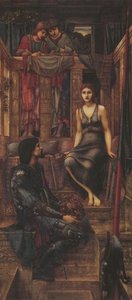
A Vision of Faith: Edward Burne-Jones's "Fides"
Step into a world of Pre-Raphaelite beauty and symbolic depth with this exquisite reproduction of Edward Burne-Jones’s “Fides.” This captivating artwork, meaning 'Faith' in Latin, embodies the virtues championed by the Pre-Raphaelite Brotherhood – meticulous detail, rich color, and a profound engagement with mythology and allegory. The painting presents a serene female figure personifying Faith, poised within an elegant architectural setting that evokes a sense of sacred space and timeless grace. It’s more than just a portrait; it's a visual poem exploring the enduring power of belief.Pre-Raphaelite Style & Technique
Burne-Jones masterfully employs the hallmarks of the Pre-Raphaelite style, drawing inspiration from Renaissance art while rejecting its later developments. The painting is an oil on canvas, showcasing a remarkable level of technical skill. Notice the smooth, polished skin of the central figure contrasted with the textured drapery and foliage – a testament to Burne-Jones’s meticulous brushwork. The composition itself is carefully structured, utilizing strong vertical lines from the architectural elements to create stability and draw the eye upwards, while softer curves in the clothing add a touch of elegance. The lighting is diffused and gentle, bathing the figure in a warm glow that emphasizes her serenity and trustworthiness. This deliberate flattening of perspective, common in Pre-Raphaelite works, prioritizes decorative effect and symbolic clarity over strict realism.Symbolism & Meaning
“Fides” is rich with symbolic meaning, inviting contemplation on the nature of faith itself.- The Figure: The central female figure represents Faith personified – her calm expression conveying piety and unwavering trust.
- The Wreath/Garland: Held in one hand, this likely symbolizes victory or honor achieved through steadfast belief.
- The Object (Mirror/Dish): The object she holds is open to interpretation; it could represent reflection, truth, or the offering of faith.
- Putti: The two cherubic figures (putti) flanking the top of the composition symbolize divine presence and guardianship, reinforcing the sacred nature of Faith.
- Architectural Setting: The columns and archway create a sense of a temple or sanctuary, further emphasizing the spiritual significance of the subject.
Historical Context & Emotional Impact
Created during a period of significant religious questioning and artistic innovation in Victorian England, “Fides” reflects the Pre-Raphaelites’ desire to return to what they perceived as the purity and sincerity of medieval art. Burne-Jones was deeply influenced by John Ruskin's writings on art and morality, and his work often explored themes of faith, beauty, and virtue. Viewing this artwork evokes a sense of reverence and contemplation. The harmonious color palette – dominated by warm reds, oranges, creams, and golds – creates a feeling of warmth and tranquility. The overall mood is one of quiet strength and enduring hope, making it an ideal addition to any space seeking a touch of timeless beauty and spiritual depth.Questions & Answers
Where can I find artworks similar to "Fides" by Edward Coley Burne-Jones?
Artworks similar to "Fides" by Edward Coley Burne-Jones are gathered on the artwork's Similars page.
Can I preview "Fides" by Edward Coley Burne-Jones before ordering?
The Preview page of "Fides" lets you preview the artwork before ordering.
Can I order an oil reproduction of "Fides"?
You can order a hand-painted reproduction of "Fides" by Edward Coley Burne-Jones directly on its Hand-Painted Reproduction page: a hand-painted oil reproduction on linen canvas, made to order.
Artist Biography
A Dream Woven in Color: The Life and Art of Edward Burne-Jones
Born in the burgeoning industrial heartland of Birmingham in 1833, Sir Edward Coley Burne-Jones emerged as a pivotal figure bridging the romantic currents of the Pre-Raphaelite Brotherhood with the aesthetic sensibilities of the late Victorian era. His life, marked by both profound artistic vision and personal complexities, unfolded against a backdrop of societal change and a fervent rediscovery of medieval ideals. The early loss of his mother cast a long shadow, shaping a childhood nurtured by his father and the steadfast housekeeper Ann Sampson – an upbringing that fostered a contemplative nature and a deep immersion in imaginative worlds. His formal education at King Edward VI Grammar School and later the Birmingham School of Art laid the foundation for his technical skill, but it was his time at Exeter College, Oxford, that truly ignited his artistic destiny. There, he forged an enduring friendship with William Morris, a bond built on shared intellectual passions and a mutual yearning for beauty in a rapidly modernizing world. This connection would prove instrumental, not only in shaping Burne-Jones’s artistic trajectory but also in establishing the influential firm of Morris & Co., dedicated to reviving traditional craftsmanship.The Brotherhood and the Birth of a Unique Vision
Oxford became a crucible for artistic experimentation, as Burne-Jones and Morris, alongside their circle of friends – “the Birmingham Set” – immersed themselves in the writings of John Ruskin and Alfred Tennyson, finding inspiration in the art and ethos of the Middle Ages. This fervent embrace of medievalism wasn't merely nostalgic; it was a rejection of what they perceived as the ugliness and materialism of contemporary society. The formation of "The Brotherhood" solidified their commitment to artistic ideals, fostering an environment where poetry, literature, and visual arts intertwined. A pivotal moment arrived with his introduction to Dante Gabriel Rossetti, whose work profoundly impacted Burne-Jones’s early style. However, he quickly transcended imitation, developing a distinctive aesthetic characterized by ethereal beauty, melancholic grace, and a meticulous attention to detail. His paintings weren't simply illustrations of medieval tales; they were evocative dreamscapes imbued with symbolism and psychological depth. The influence of Botticelli and Filippo Lippi became apparent in his attenuated figures and delicate compositions, yet Burne-Jones infused these influences with a uniquely British sensibility. He sought not to replicate the past but to distill its essence, creating works that felt both ancient and utterly new.From Painting to Tapestry: A Renaissance of Craft
Burne-Jones’s artistic output extended far beyond the canvas. His collaboration with William Morris led to the founding of Morris & Co., a firm that revolutionized decorative arts in England. He wasn't merely designing patterns; he was reimagining the very concept of artistry, advocating for a holistic approach where art permeated every aspect of life. The firm produced exquisite textiles, wallpapers, furniture, and stained glass – all bearing the hallmark of Burne-Jones’s refined aesthetic. His designs for stained glass are particularly noteworthy, transforming churches and cathedrals into luminous realms of color and narrative. The medium allowed him to explore his fascination with light and symbolism in a new dimension, creating windows that served as both devotional objects and works of art. This commitment to craftsmanship wasn't simply about reviving traditional techniques; it was a deliberate attempt to elevate the status of decorative arts, challenging the prevailing hierarchy that placed painting and sculpture at the pinnacle of artistic achievement. The Beguiling of Merlin, exhibited in 1877, marked a turning point, establishing Burne-Jones as a leading figure of the Aesthetic Movement – a movement that championed “art for art’s sake” and celebrated beauty above all else.Personal Shadows and Enduring Legacy
Burne-Jones's personal life was not without its complexities. His marriage to Georgiana MacDonald, though enduring, was shadowed by a passionate affair with his Greek model, Maria Zambaco, which culminated in a dramatic crisis. Despite these emotional upheavals, he continued to produce an astonishing body of work, exploring themes of love, loss, and the search for spiritual meaning. His later paintings became increasingly introspective, characterized by a heightened sense of melancholy and a more abstract approach to form. He received a baronetcy in 1895, recognizing his significant contributions to British art and culture. Upon his death in 1898, Burne-Jones left behind a legacy that continues to resonate today. His influence can be seen in the work of countless artists who followed, and his designs continue to inspire contemporary craftspeople and designers. He remains a testament to the power of art to transcend time and touch the deepest recesses of the human soul. Burne-Jones’s enduring appeal lies in his ability to evoke a sense of longing for a lost paradise, a world where beauty and spirituality reign supreme.A Lasting Influence
- Burne-Jones’s work embodies the Pre-Raphaelite ideals of beauty, detail, and symbolism, yet he developed a unique style that set him apart from his contemporaries.
- His contributions to decorative arts through Morris & Co. revitalized traditional crafts and elevated the status of design.
- His stained glass windows remain iconic examples of Victorian artistry, transforming sacred spaces with their luminous beauty.
- He profoundly influenced subsequent generations of artists, inspiring a renewed appreciation for craftsmanship and aesthetic values.
- Burne-Jones’s exploration of myth, legend, and psychological themes continues to captivate audiences today, solidifying his place as one of the most important British artists of the 19th century.

Edward Coley Burne-Jones
1833 - 1898 , United Kingdom
Quick Facts
- Full Name: Edward Coley Burne-Jones
- Nationality: British
- Date Of Birth: 1833
- Date Of Death: 1898
- Place Of Birth: Birmingham, United Kingdom
- Notable Artworks:
- The Beguiling of Merlin
- Sisyphus
- A Sea-Nymph
- Artistic Movement Or Style: Pre-Raphaelite, Aesthetic
- Artists Who Influenced This Artist:
- Rossetti
- Botticelli
- Lippi
- Artists Or Movements Influenced By This Artist:
- Victorian artists
- Craftsmen & designers
Related Articles
Edward Hopper's Masterpieces: 25 Iconic Paintings & Their Enduring Legacy | OriginalUniqueArt
Explore 25 iconic Edward Hopper paintings & their stories. Discover American realism, urban loneliness, and timeless beauty through his masterpieces. Find museum-quality art reproductions & curated decor ideas at OriginalUniqueArt.com.
Beyond the Basics: The Bold, Dreamy World of Pre-Raphaelite Art
Dive into the vivid, rebellious world of Pre-Raphaelite art. Explore the intense detail, romantic myths, and bold colors of this iconic movement, and learn how to bring these timeless, hand-painted masterpieces into your modern space with expert curation.

Dante Gabriel Rossetti's 25 Masterpieces: A Journey Through Victorian Art & Symbolism | OriginalUniqueArt
Explore 25 iconic artworks by Dante Gabriel Rossetti, a leading Pre-Raphaelite artist. Discover the stories behind masterpieces like 'Proserpine' & 'Beata Beatrix'. Find museum-quality art reproductions and elevate your home decor with OriginalUniqueArt.com.

Pre-Raphaelite Romanticism: The Revival of Medieval Beauty and Nature in Victorian Art
Explore the profound beauty of Pre-Raphaelite Romanticism. Discover how visionaries like Rossetti and Millais revived medievalism and nature through meticulous detail and vibrant color in Victorian art history.
Edward Burne-Jones: A Pre-Raphaelite Vision of Myth, Symbolism & Aesthetic Idealism
Discover the enchanting world of Edward Burne-Jones and the Pre-Raphaelite Brotherhood. Explore his mythical paintings, distinctive style, and lasting influence on Victorian art & the Aesthetic Movement. Expert analysis & high-quality reproductions at OriginalUniqueArt.