() ·

A painting made for you, by hand

Design for

Hand Made Oil Reproduction

Hand-painted oil on canvas in your size and frame, made to order by our artists. ( Switch to Print Switch to Digital Image)

Collectible Description

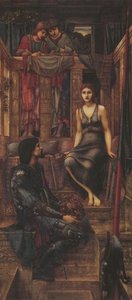
Edward Coley Burne-Jones Sir Edward Coley Burne-Jones (1833–1898) was a pivotal figure bridging Romanticism and Victorian aesthetics. Influenced by Dante Gabriel Rossetti, he established Morris, Marshall, Faulkner & Co., shaping decorative arts and exploring medieval themes. Birmingham United Kingdom 1833 c.1881–2 1898 This graphite on paper drawing embodies Burne-Jones's Pre-Raphaelite sty

Artist Biography

Discover the enchanting Pre-Raphaelite art of Edward Burne-Jones (1833-1898). Explore his mythical paintings, stained glass & Aesthetic Movement designs.

from ·

Chapter 1

How large should it be?

Slide to change the size; the picture on the left shows the frame at its real width. The proportions of the original are kept.

Standard
custom
CM
INCH

Pick from our preset sizes that match the artwork's original proportions.

width
height

Type the width and the height you need, to fit your frame or your wall. This is hand-painted, so for a size with a different shape the artist can paint a bit more around the picture, or cut a bit — you choose. We send you a digital mockup to approve before the painting starts. The picture shown on this page does not show the real result — only the mockup does.

Chapter 2

How should it arrive?

Choose the edges of the stretched canvas

Choose your frame

Corner sample of the WhiteWrap canvas edge finish, stretched on solid wood bars
White $1
Corner sample of the BlurSideWrap canvas edge finish, stretched on solid wood bars
Blurside $1
Corner sample of the ExtendedWrap canvas edge finish, stretched on solid wood bars
Extended $1
Corner sample of the P118B picture frame: moulded polystyrene, 5 cm wide and 3 cm thick
P118B $10
Corner sample of the P118H picture frame: moulded polystyrene, 5 cm wide and 3 cm thick
P118H $10
Corner sample of the P118W picture frame: moulded polystyrene, 5 cm wide and 3 cm thick
P118W $10
Corner sample of the P438Z picture frame: moulded polystyrene, 5.5 cm wide and 3.5 cm thick
P438Z $10
Corner sample of the P508JH picture frame: moulded polystyrene, 7 cm wide and 3.5 cm thick
P508JH $12
Corner sample of the P508YH picture frame: moulded polystyrene, 7 cm wide and 3.5 cm thick
P508YH $12
Corner sample of the P805H picture frame: moulded polystyrene, 5 cm wide and 3.5 cm thick
P805H $10
Corner sample of the P805Z picture frame: moulded polystyrene, 5 cm wide and 3.5 cm thick
P805Z $10
Corner sample of the P919BZ picture frame: moulded polystyrene, 7 cm wide and 3.5 cm thick
P919BZ $10
Corner sample of the P919G picture frame: moulded polystyrene, 7 cm wide and 3.5 cm thick
P919G $10
Corner sample of the P919XJ picture frame: moulded polystyrene, 7 cm wide and 3.5 cm thick
P919XJ $10
Corner sample of the P959ZH picture frame: moulded polystyrene, 5 cm wide and 3 cm thick
P959ZH $10
Corner sample of the P968JZ picture frame: moulded polystyrene, 6 cm wide and 4 cm thick
P968JZ $12
Corner sample of the W106C picture frame: solid wood, 5 cm wide and 3 cm thick
W106C $8
Corner sample of the W218G picture frame: solid wood, 5 cm wide and 3 cm thick
W218G $10
Corner sample of the W218JH picture frame: solid wood, 5 cm wide and 3 cm thick
W218JH $8
Corner sample of the W218Y picture frame: solid wood, 5 cm wide and 3 cm thick
W218Y $10
Corner sample of the W307PJ picture frame: solid wood, 6 cm wide and 3 cm thick
W307PJ $10
Corner sample of the W316G picture frame: solid wood, 6 cm wide and 3 cm thick
W316G $10
Corner sample of the W316PJ picture frame: solid wood, 6 cm wide and 3 cm thick
W316PJ $8
Corner sample of the W316Y picture frame: solid wood, 6 cm wide and 3 cm thick
W316Y $10
Corner sample of the W398PJ picture frame: solid wood, 5 cm wide and 3 cm thick
W398PJ $8
Corner sample of the W4111J picture frame: solid wood, 6.5 cm wide and 3.5 cm thick
W4111J $10
Corner sample of the W500HY picture frame: solid wood, 7 cm wide and 5 cm thick
W500HY $15
Corner sample of the W500JH picture frame: solid wood, 7 cm wide and 5 cm thick
W500JH $15
Corner sample of the W692G picture frame: solid wood, 8 cm wide and 4 cm thick
W692G $12
Corner sample of the W849H picture frame: solid wood, 5 cm wide and 3 cm thick
W849H $8
Corner sample of the W940BG picture frame: solid wood, 7.5 cm wide and 4.5 cm thick
W940BG $15
Corner sample of the W953PJ picture frame: solid wood, 6 cm wide and 3.5 cm thick
W953PJ $8
Corner sample of the H24-GOLD picture frame: carved wood with gesso, 10 cm wide and 6 cm thick
H24-GOLD $30
Corner sample of the H24-SILVER picture frame: carved wood with gesso, 10 cm wide and 6 cm thick
H24-SILVER $30
Corner sample of the H36-GOLD picture frame: carved wood with gesso, 15 cm wide and 6.5 cm thick
H36-GOLD $45
Corner sample of the H36-SILVER picture frame: carved wood with gesso, 15 cm wide and 6.5 cm thick
H36-SILVER $45
Frame preview
Framed

Moulding: . Overall size with the frame: .

Chapter 3

Who paints it, and should anything change?

Examples of what can be changed: Replace face with customer photo; Add pet (e.g., replace cat with dog); Include hidden message in background; Change background landscape or elements.
After order, OriginalUniqueArt.com team will email client for instructions and provide a mockup preview

Worldwide Delivery () in 3/4 weeks instead of standard 5 weeks. (31 October). No compromise on quality.

Chapter 4

The finishing touches

A nameplate, as in a museum?

Engraved Bronze Plaque Details

This elegant plaque features the artist's name and the title of the artwork, finely engraved for a timeless presentation.

It is made from bronze with a refined, elegant finish. The text is precisely laser-engraved for a sharp and permanent result. Measuring 9x2 cm, the plaque is compact yet easy to read. It's built to be durable and scratch-resistant, offering a professional, museum-quality look. Mounting is simple thanks to the included adhesive backing.

Transparent Acrylic Plaque Details

The plaque includes essential engraved details such as the artist's name, the title of the artwork, the date it was created, the type of media used-like oil on canvas or watercolor-a brief description of the piece, and a QR code that links to the complete artwork information.

It is crafted from clear acrylic, offering a sleek, modern appearance. The text is UV-engraved in black to ensure strong visual contrast. With a size of 10x15 cm, it ensures optimal readability. It comes equipped with two metal hooks for secure wall mounting. The plaque is designed to be weather-resistant, making it suitable for various environments, and it includes interactive features that work seamlessly with smartphone scanning.

Black Acrylic Plaque Details

This elegant plaque includes engraved information such as the artist's name, the title of the artwork, the date it was created, the type of media used (like oil on canvas or watercolor), a short description of the artwork, and a QR code for quick access to more information.

The plaque itself is made from refined black acrylic with a premium finish. The text is laser-engraved in white for high contrast and readability. Its size is 10x15 cm, designed to be easy to read. It comes with two metal hooks for professional mounting. The design is sleek and fits any interior style. It is also weather-resistant and durable, with built-in digital integration for mobile compatibility.

A protective varnish?

When do you need it?

Chapter 5

Your painting, as you ordered it

Design for

Reproduction Medium

Reproduction Size

-

Elite Senior Artist

More detail, finesse, and extra production time

-

Reproduction Frame

-

-

For artworks or reproductions larger than 105 cm (approximately 41 inches) on any side, the frame will be shipped as a kit, disassembled. This method ensures safe delivery and prevents damage during transport.

Professional assembly required - this is not a DIY product.
The kit must be assembled and the canvas stretched by an experienced professional framer, using wood glue (not supplied), a canvas stretching plier and clamps to hold the bars square while the glue dries. Incorrect assembly or uneven canvas tension can permanently damage the artwork and is not covered by our warranty.

  • All solid wood bars are included, precisely cut to size.

  • Assembled with the screws provided, plus wood glue for the corner joints, which is not supplied and must be sourced by your framer.

  • Professional tools are required and not included: a canvas stretching plier (tensioner) and clamps to hold the bars square while the glue dries.

Important:
The corner joints require wood glue, the bars must be held with clamps until the glue is fully dry, and tightening the canvas on the assembled frame requires a canvas stretching plier. None of these are included in the kit. Please arrange an experienced professional framer before ordering this size.

Nameplate

-

-

Protective Varnish

Glossy Varnish (enhances colors, protects against light/moisture)

-

Customize My Artwork

Examples of what can be changed: Replace face with customer photo; Add pet (e.g., replace cat with dog); Include hidden message in background; Change background landscape or elements.

-

Urgent

Worldwide Delivery () in 3/4 weeks instead of standard 5 weeks. (31 October). No compromise on quality.

-

Express Shipping

Worldwide Delivery () in 5 weeks. (7 November).

Included

Total Price

$ 300

Total Price $ 300

Glass option is only available in size under 110 CM

Included with every order

  • Free Worldwide Express Shipping
  • High-Quality Linen Canvas
  • Full Shipping Insurance
  • Customs Tax Refund Guarantee
  • True Color Matching Guarantee
  • 100-Day Return Policy (Defects Only)
  • 100% Money-Back Guarantee
  • Bulk Discount Offer

A Vision of Mythic Majesty: Exploring Burne-Jones’ ‘The Last Sleep of Arthur in Avalon’

Edward Coley Burne-Jones's 'The Last Sleep of Arthur in Avalon,' completed in 1897, stands as a monumental testament to the Pre-Raphaelite Brotherhood’s fascination with medieval legend and their mastery of symbolic representation. More than just a painting; it embodies an entire aesthetic philosophy—a deliberate rejection of academic conventions in favor of emotive power and meticulous craftsmanship. Commissioned by George Howard, 9th Earl of Carlisle, Burne-Jones envisioned this grand tableau as a centerpiece for Naworth Castle’s library, reflecting the Earl's profound admiration for Arthurian lore.

  • Subject Matter: The painting depicts Arthur, King of Camelot, peacefully slumbering amidst his knights—Merlin, Tristan and Isolde—in a serene meadow bathed in ethereal moonlight. This scene draws directly from Geoffrey Chaucer’s ‘The Tale of Camelot,’ capturing the poignant moment of repose before Arthur's final demise.

  • Style & Technique: Burne-Jones employed a distinctive watercolor technique combined with bodycolor, layering translucent washes to achieve remarkable luminosity and depth. The artist meticulously rendered every detail—the knights’ robes, Arthur’s face, and the surrounding foliage—demonstrating an unparalleled level of artistic precision.
  • Historical Context: Burne-Jones's work emerged during a period of intense cultural revival in Britain, fueled by Romantic idealism and a renewed interest in medieval art and literature. The Pre-Raphaelites deliberately rejected the idealized forms favored by the Royal Academy, prioritizing emotional sincerity and artistic innovation over stylistic imitation.
  • Symbolism: The meadow itself symbolizes Paradise—a realm of tranquility and spiritual contemplation—contrasting sharply with the turbulent events surrounding Arthur’s reign. Merlin's presence embodies wisdom and prophecy, Tristan and Isolde represent enduring love amidst adversity, and Arthur himself represents noble leadership and unwavering devotion to duty.
  • Emotional Impact: ‘The Last Sleep of Arthur in Avalon’ evokes a profound sense of melancholy beauty—a poignant meditation on mortality and the passing of glory. Burne-Jones's masterful use of color and composition creates an atmosphere of solemn reverence, inviting viewers to contemplate the timeless themes of heroism, faith, and remembrance.

Detailed Examination: Watercolor Layers & Artistic Precision

Burne-Jones’s technique was revolutionary for its time. Rather than adhering to traditional oil painting methods—which prioritized smooth surfaces and tonal gradations—he opted for watercolor with bodycolor, a process that allowed him to achieve unparalleled luminosity and textural richness. The artist painstakingly built up layers of translucent washes, meticulously blending colors to create subtle nuances and atmospheric effects. This approach demanded immense patience and skill, reflecting Burne-Jones’s unwavering commitment to artistic excellence. Careful observation of the natural world—particularly moonlight—informed his compositional choices and contributed to the painting's ethereal quality.
  • Color Palette: The dominant hues are muted blues and greens—reflecting the twilight meadow—contrasting with the warm tones of Arthur’s robes and Merlin’s cloak. Burne-Jones skillfully employed color symbolism, associating blue with serenity and spirituality, while gold represented majesty and divine grace.
  • Composition: The central figure of Arthur is positioned at the apex of a pyramidal arrangement, emphasizing his importance as the focal point of the scene. The knights surround him in concentric circles, creating a harmonious balance between stillness and movement.
  • Brushwork: Burne-Jones’s brushstrokes are remarkably delicate—almost imperceptible—resulting in surfaces that appear velvety smooth. This meticulous attention to detail underscores his dedication to capturing the essence of his subject matter with breathtaking accuracy.

Beyond Aesthetics: Reflections on Myth and Mortality

‘The Last Sleep of Arthur in Avalon’ transcends mere visual beauty; it engages viewers on a deeper emotional level—provoking contemplation about the inevitability of death and the enduring power of mythic narratives. Burne-Jones's artistic vision aligns seamlessly with the broader Pre-Raphaelite preoccupation with exploring spiritual themes through imaginative storytelling. The painting serves as a poignant reminder that even kings must eventually surrender to time, yet their legacy persists in the hearts of those who cherish tales of heroism and virtue.
  • Philosophical Resonance: Burne-Jones’s work embodies the Pre-Raphaelite belief in the transformative potential of art—its ability to inspire awe and elevate the human spirit.
  • Cultural Significance: The painting's depiction of Arthurian legend reflects a wider cultural fascination with medieval chivalry and idealism during the Victorian era.
  • Legacy: Burne-Jones’s masterpiece continues to captivate audiences today—serving as an enduring symbol of artistic brilliance and spiritual contemplation.

Reproductions & Artistic Appreciation

High-quality reproductions of ‘The Last Sleep of Arthur in Avalon’ allow viewers to experience the painting's luminous beauty and profound symbolism firsthand. Collectors appreciate its masterful technique, historical importance, and enduring emotional impact—a testament to Burne-Jones’s unparalleled artistic achievement. Interior designers incorporate this iconic artwork into spaces seeking inspiration—creating environments that evoke tranquility, reverence, and a connection to timeless narratives of heroism and grace.

Questions & Answers

What is "Design for" about, and what atmosphere does it have?

"Design for" by Edward Coley Burne-Jones combines mythology, arthurian legend, stained glass, medieval art, symbolism, pastoral landscape, victorian era with a romantic atmosphere.

Who made "Design for", and when?

"Design for" was created by Edward Coley Burne-Jones in 1881.

Where and for what purpose is "Design for" recommended?

Use (accent) and space (living room) are the two recommendations recorded for "Design for" by Edward Coley Burne-Jones.

More about this painting

Preview AR preview Switch to Print Switch to Digital Image Send
Details Guide Add to favorites Download Similars X-Ray Diaporama Q&A Stats

In numbers

  • 1881the year it was painted
  • 29frames to choose from
  • standard sizes, in its own proportions
  • 5weeks to paint and deliver it
Edward Coley Burne-Jones

Edward Coley Burne-Jones

1833 - 1898, United Kingdom

Quick facts about Edward Coley Burne-Jones

  • Full Name: Edward Coley Burne-Jones
  • Nationality: British
  • Date Of Birth: 1833
  • Date Of Death: 1898
  • Place Of Birth: Birmingham, United Kingdom
  • Notable Artworks:
    • The Beguiling of Merlin
    • Sisyphus
    • A Sea-Nymph
  • Artistic Movement Or Style: Pre-Raphaelite, Aesthetic
  • Artists Who Influenced This Artist:
    • Rossetti
    • Botticelli
    • Lippi
  • Artists Or Movements Influenced By This Artist:
    • Victorian artists
    • Craftsmen & designers

Artist Biography

A Dream Woven in Color: The Life and Art of Edward Burne-Jones

Born in the burgeoning industrial heartland of Birmingham in 1833, Sir Edward Coley Burne-Jones emerged as a pivotal figure bridging the romantic currents of the Pre-Raphaelite Brotherhood with the aesthetic sensibilities of the late Victorian era. His life, marked by both profound artistic vision and personal complexities, unfolded against a backdrop of societal change and a fervent rediscovery of medieval ideals. The early loss of his mother cast a long shadow, shaping a childhood nurtured by his father and the steadfast housekeeper Ann Sampson – an upbringing that fostered a contemplative nature and a deep immersion in imaginative worlds. His formal education at King Edward VI Grammar School and later the Birmingham School of Art laid the foundation for his technical skill, but it was his time at Exeter College, Oxford, that truly ignited his artistic destiny. There, he forged an enduring friendship with William Morris, a bond built on shared intellectual passions and a mutual yearning for beauty in a rapidly modernizing world. This connection would prove instrumental, not only in shaping Burne-Jones’s artistic trajectory but also in establishing the influential firm of Morris & Co., dedicated to reviving traditional craftsmanship.

The Brotherhood and the Birth of a Unique Vision

Oxford became a crucible for artistic experimentation, as Burne-Jones and Morris, alongside their circle of friends – “the Birmingham Set” – immersed themselves in the writings of John Ruskin and Alfred Tennyson, finding inspiration in the art and ethos of the Middle Ages. This fervent embrace of medievalism wasn't merely nostalgic; it was a rejection of what they perceived as the ugliness and materialism of contemporary society. The formation of "The Brotherhood" solidified their commitment to artistic ideals, fostering an environment where poetry, literature, and visual arts intertwined. A pivotal moment arrived with his introduction to Dante Gabriel Rossetti, whose work profoundly impacted Burne-Jones’s early style. However, he quickly transcended imitation, developing a distinctive aesthetic characterized by ethereal beauty, melancholic grace, and a meticulous attention to detail. His paintings weren't simply illustrations of medieval tales; they were evocative dreamscapes imbued with symbolism and psychological depth. The influence of Botticelli and Filippo Lippi became apparent in his attenuated figures and delicate compositions, yet Burne-Jones infused these influences with a uniquely British sensibility. He sought not to replicate the past but to distill its essence, creating works that felt both ancient and utterly new.

From Painting to Tapestry: A Renaissance of Craft

Burne-Jones’s artistic output extended far beyond the canvas. His collaboration with William Morris led to the founding of Morris & Co., a firm that revolutionized decorative arts in England. He wasn't merely designing patterns; he was reimagining the very concept of artistry, advocating for a holistic approach where art permeated every aspect of life. The firm produced exquisite textiles, wallpapers, furniture, and stained glass – all bearing the hallmark of Burne-Jones’s refined aesthetic. His designs for stained glass are particularly noteworthy, transforming churches and cathedrals into luminous realms of color and narrative. The medium allowed him to explore his fascination with light and symbolism in a new dimension, creating windows that served as both devotional objects and works of art. This commitment to craftsmanship wasn't simply about reviving traditional techniques; it was a deliberate attempt to elevate the status of decorative arts, challenging the prevailing hierarchy that placed painting and sculpture at the pinnacle of artistic achievement. The Beguiling of Merlin, exhibited in 1877, marked a turning point, establishing Burne-Jones as a leading figure of the Aesthetic Movement – a movement that championed “art for art’s sake” and celebrated beauty above all else.

Personal Shadows and Enduring Legacy

Burne-Jones's personal life was not without its complexities. His marriage to Georgiana MacDonald, though enduring, was shadowed by a passionate affair with his Greek model, Maria Zambaco, which culminated in a dramatic crisis. Despite these emotional upheavals, he continued to produce an astonishing body of work, exploring themes of love, loss, and the search for spiritual meaning. His later paintings became increasingly introspective, characterized by a heightened sense of melancholy and a more abstract approach to form. He received a baronetcy in 1895, recognizing his significant contributions to British art and culture. Upon his death in 1898, Burne-Jones left behind a legacy that continues to resonate today. His influence can be seen in the work of countless artists who followed, and his designs continue to inspire contemporary craftspeople and designers. He remains a testament to the power of art to transcend time and touch the deepest recesses of the human soul. Burne-Jones’s enduring appeal lies in his ability to evoke a sense of longing for a lost paradise, a world where beauty and spirituality reign supreme.

A Lasting Influence

  • Burne-Jones’s work embodies the Pre-Raphaelite ideals of beauty, detail, and symbolism, yet he developed a unique style that set him apart from his contemporaries.
  • His contributions to decorative arts through Morris & Co. revitalized traditional crafts and elevated the status of design.
  • His stained glass windows remain iconic examples of Victorian artistry, transforming sacred spaces with their luminous beauty.
  • He profoundly influenced subsequent generations of artists, inspiring a renewed appreciation for craftsmanship and aesthetic values.
  • Burne-Jones’s exploration of myth, legend, and psychological themes continues to captivate audiences today, solidifying his place as one of the most important British artists of the 19th century.

Quick Facts

  • Notable elements or techniques: Detailed depiction of St Martin's East Window.
  • Subject or theme: Religious Iconography
  • Medium: Colored Pastel
  • Dimensions: 172 x 57 cm
  • Title: Design for
  • Artist: Edward Coley Burne-Jones

Art Quiz

There is only one correct answer for each question.

Question 1:
What is the primary subject matter of ‘Study for The Last Sleep of Arthur in Avalon’?
Question 2:
Which artistic movement is closely associated with Edward Burne-Jones and the creation of this artwork?
Question 3:
What technique did Burne-Jones primarily employ in creating this painting?
Question 4:
Who commissioned Burne-Jones to create ‘The Last Sleep of Arthur in Avalon’?
Question 5:
What symbolic element is prominently featured in the painting's composition?