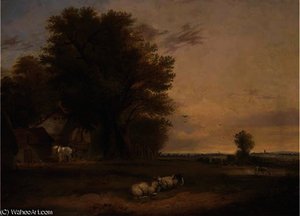
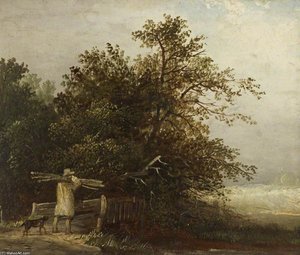
Preview
 Send
Send Share
Share
 Details

 Download
 Similars
 X-Ray
X-Ray Diaporama
 Stats
StatsLandscape -

 Read More
Giclée / Art Print
Museum-quality giclée or canvas print with fast production and flexible finish options. ( Buy Hand Made Painting Switch to Digital Image)




































Pick from our preset sizes that match the artwork's original proportions.

You may enter your own dimensions to fit a specific frame or space. If your selected size does not match the original image's proportions, we will either crop the artwork or extend the image with a mirrored or solid-fill edge. A digital mockup will be sent for your approval before production begins.
Please note that the on-screen preview does not reflect the actual cropping or extension. Only the mockup will accurately show the final composition.
While custom sizes are available, we recommend selecting a dimension from the predefined list to preserve the original proportions.
Worldwide Delivery () in 2 weeks instead of standard 4/5 weeks. (8 September)

Free Worldwide Express Shipping

High-Quality Linen Canvas

Full Shipping Insurance

Customs Tax Refund Guarantee

True Color Matching Guarantee

100-Day Return Policy (Defects Only)

100% Money-Back Guarantee

Bulk Discount Offer
 Glass option is only available in size under 110 CM

Landscape -
Giclée / Art Print
Reproduction Size
-


Total Price
$ 81
Artist Biography
Edward Charles Williams: A Tranquil Vision of Victorian England
Edward Charles Williams (1807 – 1881) stands as a prominent figure within the Williams family of painters—a lineage celebrated for its dedication to capturing the serene beauty of rural landscapes during the Victorian era. Unlike many artists of his time consumed by grand narratives or dramatic portraits, Williams focused intently on portraying the quiet dignity of English countryside, establishing himself as one of the foremost practitioners of this distinctive artistic style. His work reflects not only technical mastery but also a profound sensitivity to atmosphere and light—elements that continue to resonate with viewers today.- Early Life & Family: Born in London, Williams’s artistic inclination stemmed from his father, Edward Williams (1781–1855), who himself was a respected landscape painter. This familial connection instilled within him a deep appreciation for the art form and fostered an unwavering commitment to its pursuit. Despite lacking formal instruction beyond his father's tutelage, Williams absorbed invaluable knowledge through observation and practice—a testament to the enduring power of mentorship.
- Style & Technique: Williams’s artistic style is characterized by meticulous detail and a masterful use of glazing techniques—methods employed by his father and subsequently adopted by him. These techniques allowed for subtle gradations of color, creating luminous effects that conveyed an unparalleled sense of realism. His canvases depict scenes of Cumberland, Kent, Surrey and the Thames with remarkable accuracy, capturing not merely visual appearances but also the intangible qualities of light and air.
- Notable Works: Among Williams’s most celebrated paintings are “Mother And Child On A Track By A Coppice,” “Barges on the Thames at Dusk, With Windsor Castle Beyond” and “Springer in The Bracken.” Each piece exemplifies his signature style—a harmonious blend of observation, draughtsmanship, and atmospheric rendering. Sadly, three of these works remain unaccounted for after World War II, highlighting the fragility of artistic heritage.
- Influence & Legacy: Williams’s contribution to landscape painting is undeniable. He helped solidify the Barnes School tradition—a movement that championed a particular aesthetic rooted in Dutch landscape art—and his paintings continue to inspire admiration for their understated elegance and profound connection to the natural world. His dedication to capturing the essence of rural England cemented his place as one of the most influential artists of his era.
Collaborations & Family Life
Williams’s artistic endeavors extended beyond solitary pursuits; he engaged in fruitful collaborations with fellow artist William Shayer, where he would meticulously render the landscape while Shayer skillfully incorporated figures and animals into the composition—a technique that further enriched his artistic vision. His personal life was marked by marriage to Mary Ann Challenger in 1839, followed by the birth of their daughter Alice Williams shortly thereafter. Despite experiencing tragedy with Mary Ann’s untimely death in 1857, Williams persevered and married Sarah Susanna Horley ten years later—establishing a stable family unit that nurtured his artistic creativity.Later Years & Artistic Evolution
Following the loss of his second wife, Williams experienced a notable shift in his artistic focus—moving away from expansive vistas towards smaller canvases depicting intimate scenes of domestic life. These paintings reflect a contemplative mood and convey a palpable sense of melancholy—a characteristic that has fueled ongoing scholarly debate regarding the psychological undercurrents informing his oeuvre. The disappearance of three of his later works underscores the challenges faced by preserving artistic treasures amidst turbulent historical periods.Recognition & Enduring Appeal
Williams’s paintings are now highly sought after by collectors and museums alike—a testament to their enduring aesthetic qualities and their ability to evoke a timeless appreciation for the beauty of rural England. His meticulous draughtsmanship, combined with his masterful use of glazing techniques, ensures that his landscapes continue to captivate audiences worldwide—solidifying his legacy as one of the most revered artists of the Victorian era.
Edward Charles Williams
1807 - 1881 , United Kingdom
Quick Facts
- Artistic Movement Or Style: Victorian Landscape Art
- Artists Or Movements Influenced By This Artist: ['Barnes School']
- Artists Who Influenced This Artist:
- James Ward RA
- George Morland
- Date Of Death: 1881
- Full Name: Edward Charles Williams
- Nationality: British
- Notable Artworks:
- Springer in the Bracken
- The Lap Dog
- The Ploughman's walk home
- The Ducks at Tilbury
- Primrose at St Mary’s
- Place Of Birth: London, United Kingdom
Related Articles
Edward Hopper's Masterpieces: 25 Iconic Paintings & Their Enduring Legacy | OriginalUniqueArt
Explore 25 iconic Edward Hopper paintings & their stories. Discover American realism, urban loneliness, and timeless beauty through his masterpieces. Find museum-quality art reproductions & curated decor ideas at OriginalUniqueArt.com.

Masterpieces of Light: A Definitive Guide to the Landscapes of the Dutch Golden Age
Discover the luminous mastery of Dutch Golden Age landscapes. Our expert guide explores the atmospheric realism of masters like Van Goyen and Cuyp. Elevate your space with museum-quality, hand-painted oil reproductions from OriginalUniqueArt.com. Art history, beautifully realized.

Golden Light & Dutch Skies: Bringing the Magic of Dutch Golden Age Landscapes into Your Home
Transform your home with the breathtaking light of Dutch Golden Age landscapes. Discover how hand-painted oil reproductions of masterworks like Ruisdael and Vermeer bring timeless elegance, atmosphere, and soulful texture to modern interiors. Elevate your space with museum-quality art.

Golden Light & Dutch Skies: The Timeless Magic of Dutch Golden Age Landscapes
Discover the breathtaking beauty of Dutch Golden Age landscapes. Explore the mastery of light, chiaroscuro, and 17th-century realism through an expert art history lens, celebrating the enduring legacy of the Dutch Masters for discerning collectors and art lovers.
Charles Leickert: Capturing the Dutch Golden Age Light – A Comprehensive Study of Technique, Context, and Legacy
Explore the captivating winter landscapes of Charles Leickert, a master of Dutch Golden Age light & atmosphere. Discover his techniques, symbolism, and lasting legacy – a comprehensive study for art enthusiasts and collectors.