Preview
 Send
Send Share
Share
 Details
 Guide
Guide

 Download
 Similars
 X-Ray
X-Ray Diaporama
 Stats
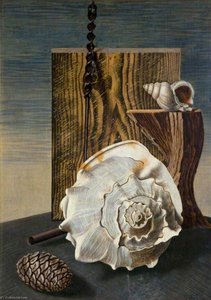
StatsComposition on a Red Ground
 Oil On Canvas
- WallArt
- Vorticism
 1931
1931 51.0 x 61.0 cm
 Leeds Art Gallery
 Read More
Giclée / Art Print
Museum-quality giclée or canvas print with fast production and flexible finish options. ( Buy Hand Made Painting Switch to Digital Image)




P118B $10

P118H $10

P118W $10

P438Z $10

P508JH $12

P508YH $12

P805H $10

P805Z $10

P919BZ $10

P919G $10

P919XJ $10

P959ZH $10

P968JZ $12

W106C $8

W218G $10

W218JH $8

W218Y $10

W307PJ $10

W316G $10

W316PJ $8

W316Y $10

W398PJ $8

W4111J $10

W500HY $15

W500JH $15

W692G $12

W849H $8

W940BG $15

W953PJ $8




Pick from our preset sizes that match the artwork's original proportions.

You may enter your own dimensions to fit a specific frame or space. If your selected size does not match the original image's proportions, we will either crop the artwork or extend the image with a mirrored or solid-fill edge. A digital mockup will be sent for your approval before production begins.
Please note that the on-screen preview does not reflect the actual cropping or extension. Only the mockup will accurately show the final composition.
While custom sizes are available, we recommend selecting a dimension from the predefined list to preserve the original proportions.
Worldwide Delivery () in 2 weeks instead of standard 4/5 weeks. (10 October)

Free Worldwide Express Shipping

High-Quality Linen Canvas

Full Shipping Insurance

Customs Tax Refund Guarantee

True Color Matching Guarantee

100-Day Return Policy (Defects Only)

100% Money-Back Guarantee

Bulk Discount Offer
 Glass option is only available in size under 110 CM

Composition on a Red Ground
Giclée / Art Print
Reproduction Size
-


Total Price
$ 81
Composition on a Red Ground: A Dance of Geometry and Emotion
Edward Alexander Wadsworth’s “Composition on a Red Ground,” painted in 1931, isn't merely a depiction of color; it’s an invitation into a realm where geometric forms coalesce with profound emotional resonance. This work, residing within the broader context of Vorticism and early abstraction, stands as a testament to Wadsworth’s evolving artistic vision – a journey from representational landscapes to a powerfully expressive exploration of shape and hue. The painting immediately commands attention through its bold simplicity: a vast expanse of crimson punctuated by a striking blue structure that dominates the composition. Yet, beneath this apparent austerity lies a complex interplay of visual elements, inviting prolonged contemplation.
Wadsworth’s stylistic journey is particularly evident in this piece. Initially influenced by the Impressionist movement and later drawn to the dynamism of Cubism and Futurism, he synthesized these influences into a distinctly personal aesthetic. The painting's foundation rests upon a deliberate rejection of naturalistic representation. Instead, Wadsworth employs flattened planes of color and simplified geometric shapes – circles, squares, and triangles – creating an effect reminiscent of both Japanese woodblock prints (a significant source of inspiration for the Vorticist movement) and the pioneering work of Piet Mondrian. The blue structure, a monumental yet subtly ambiguous form, seems to float within this red field, its edges dissolving into the surrounding color, suggesting a sense of instability and dynamism.
The Language of Color and Form
Color plays an absolutely crucial role in “Composition on a Red Ground.” The deep, saturated red isn’t simply a background; it's an active participant in the composition. It pulsates with energy, creating a sense of depth and movement through subtle variations in tone. The blue structure, conversely, offers a cool counterpoint to the warmth of the red, establishing a visual dialogue between opposing forces. This careful orchestration of color isn’t merely decorative; it's integral to the painting’s emotional impact. The deliberate lack of shading or detail further emphasizes the importance of color and form in conveying meaning.
Furthermore, Wadsworth masterfully utilizes negative space – the areas *around* the shapes – to create a sense of balance and harmony. The carefully considered placement of the blue structure within the red field allows for an almost meditative quality, inviting the viewer to lose themselves in the interplay of geometric forms. The subtle variations in the color of the red itself—shifts from deeper burgundy to lighter rose tones—add another layer of complexity and visual interest.
Symbolism and Context
Understanding “Composition on a Red Ground” requires considering its historical context within the Vorticist movement, which emerged during the early years of the 20th century. Vorticism sought to capture the dynamism and energy of modern life through abstract forms and bold colors – a reaction against the perceived stagnation of traditional art. Wadsworth’s work embodies this spirit, reflecting the era's fascination with technology, speed, and industrialization. The blue structure itself can be interpreted as representing a machine or a building—a symbol of the rapidly changing urban landscape.
Interestingly, the painting also echoes the influence of Paul Gauguin’s “Vision After the Sermon,” which Wadsworth admired for its exploration of spiritual themes through simplified forms and vibrant colors. While "Composition on a Red Ground" lacks the overt religious symbolism of Gauguin's work, it shares a similar interest in conveying profound emotions through abstract means. The painting evokes feelings of both tension and serenity—a reflection of the complexities of modern life.
A Timeless Appeal
“Composition on a Red Ground” is more than just a visually striking artwork; it’s a powerful meditation on form, color, and emotion. Its enduring appeal lies in its ability to resonate with viewers on a deeply intuitive level. Whether displayed in a contemporary art gallery or incorporated into a sophisticated interior design scheme, this painting offers a unique opportunity to engage with the spirit of modern abstraction and experience the beauty of pure geometric composition. Reproductions capture much of the original’s impact, offering a window into Wadsworth's innovative vision.
Questions & Answers
How old was Edward Alexander Wadsworth when creating "Composition on a Red Ground" in 1931?
Edward Alexander Wadsworth made "Composition on a Red Ground" at the age of 42. The artist was born in 1889 and the work is dated 1931.
Which artist is "Composition on a Red Ground" attributed to?
"Composition on a Red Ground" is attributed to Edward Alexander Wadsworth.
Why is the copyright status of "Composition on a Red Ground" what it is?
"Composition on a Red Ground" by Edward Alexander Wadsworth is in the public domain - its copyright has expired. Copyright terms are measured from the artist's death, and Edward Alexander Wadsworth died in 1949.
Can I see "Composition on a Red Ground" by Edward Alexander Wadsworth under different lights?
The X-Ray view of "Composition on a Red Ground" by Edward Alexander Wadsworth is on the artwork's X-Ray page: an interactive examination of the image through eleven optical layers.
When was "Composition on a Red Ground" made?
"Composition on a Red Ground" by Edward Alexander Wadsworth was created in 1931.
Who created "Composition on a Red Ground" and in what year?
Edward Alexander Wadsworth made "Composition on a Red Ground" in 1931.
What is the luminance of "Composition on a Red Ground" by Edward Alexander Wadsworth?
The colors of "Composition on a Red Ground" show a soft shadow luminance.
Artist Biography
Early Life and Artistic Awakening
Edward Alexander Wadsworth, born in Cleckheaton, West Yorkshire, in 1889, entered a world shadowed by early loss. The death of his mother shortly after his birth profoundly shaped his upbringing, leaving him largely raised by an aunt while his father managed the family’s wool-spinning business. This somewhat solitary childhood fostered a contemplative nature, perhaps laying the groundwork for the introspective quality that would later characterize his art. His formal education began at Fettes College in Edinburgh, but it was a sojourn to Munich in 1906 that proved pivotal. Initially enrolled to study engineering – a path dictated by paternal expectations – Wadsworth found himself irresistibly drawn to the artistic currents swirling within the city. At the Knirr School, he discovered a passion for drawing and woodcut printing, igniting a creative spark that would ultimately lead him away from the world of mechanics and towards a life dedicated to visual expression. This marked not merely a change in academic pursuit but a fundamental shift in his identity, a turning toward the realm of aesthetic exploration. Further honing his skills at Bradford School of Art and then the prestigious Slade School of Art in London, Wadsworth found himself amongst a remarkable cohort of future luminaries – Stanley Spencer, Mark Gertler, and others who would define British art for generations to come.The Vortex and Wartime Innovation
Wadsworth’s artistic trajectory took a dramatic turn with his introduction to Wyndham Lewis and the burgeoning Vorticist movement. Initially influenced by Roger Fry's groundbreaking Post-Impressionist exhibitions, he quickly embraced the radical energy of Vorticism, an avant-garde aesthetic that sought to capture the dynamism of the modern age through abstraction and geometric forms. He became a key contributor to the movement, signing the Vorticist Manifesto in 1914 and exhibiting works that embodied its bold, fragmented style. However, Wadsworth’s engagement with modernity wasn't confined to the canvas. The outbreak of World War I saw him enlist in the Royal Naval Volunteer Reserve, where he put his artistic principles to an unexpectedly practical use. Tasked with designing dazzle camouflage – also known as razzle dazzle – for Allied ships, he applied Vorticist concepts of abstraction and disruption to confuse enemy submarines. These striking patterns, a fusion of art and naval strategy, weren’t intended to render vessels invisible but rather to make it difficult to determine their course and speed, thereby hindering accurate targeting. This period demonstrated Wadsworth's unique ability to bridge the gap between artistic innovation and real-world application, showcasing the power of abstract thought in a time of conflict.Post-War Transformations and Maritime Visions
The aftermath of the war brought about a significant shift in Wadsworth’s artistic style. While he had been at the forefront of abstraction with Vorticism, he gradually moved towards a more representational approach, though one still imbued with a distinctive sensibility. His wartime experiences profoundly influenced his subject matter, leading to an enduring fascination with maritime themes. Ships – symbols of both conflict and exploration – became recurring motifs in his work, often depicted with a haunting stillness or set within dreamlike, surreal landscapes. He explored still life compositions and landscapes as well, frequently incorporating elements of the uncanny and employing muted color palettes that evoked a sense of melancholy and introspection. In 1934, Wadsworth joined Unit One, a group dedicated to promoting modern British art, further solidifying his position within the evolving artistic landscape of the time. This association reflected his commitment to pushing boundaries while remaining rooted in a distinctly British aesthetic tradition.Surreal Echoes and Lasting Legacy
In his later years, Wadsworth’s work became increasingly infused with surrealist undertones, though he never formally aligned himself with the Surrealist movement. His paintings from this period often feature enigmatic juxtapositions of objects and spaces, creating a sense of unease and mystery. Works like Dazzle-ships in Drydock at Liverpool (1919), The Perspective of Idleness II (1942), and Sussex Pastoral (1941) exemplify his evolving style, showcasing a unique blend of abstraction, realism, and surrealism. He died in 1949, leaving behind a body of work that continues to captivate and intrigue. Wadsworth’s legacy extends beyond his paintings; his dazzle camouflage designs have experienced a resurgence of interest in contemporary graphic design, demonstrating the enduring relevance of his innovative visual language. He remains a pivotal figure in the development of modern British art, celebrated for his pioneering role in Vorticism, his wartime contributions, and his distinctive artistic vision that seamlessly blended abstraction with evocative realism. His ability to find beauty and meaning in both the mechanical world and the natural landscape ensures his place as one of the most compelling artists of his generation.
Edward Alexander Wadsworth
1889 - 1949 , United Kingdom
Quick Facts
- Full Name: Edward Alexander Wadsworth
- Nationality: British
- Date Of Birth: 1889
- Date Of Death: 1949
- Place Of Birth: Cleckheaton, United Kingdom
- Notable Artworks:
- Dazzle-ships in Drydock
- The Perspective of Idleness II
- Sussex Pastoral
- Pendent
- Gasteropoda
- Artistic Movement Or Style: Vorticism, Surrealism
- Artists Who Influenced This Artist:
- Roger Fry
- Wyndham Lewis
- Artists Or Movements Influenced By This Artist: ['Contemporary design']
Related Articles

Crimson Threads of Narrative: Exploring Symbolism & Representation in Artworks Featuring the Red Dress
Explore the rich symbolism of the red dress in art history! From ancient power displays to iconic portraits like Cézanne’s 'Madame Cezanne', discover the cultural and artistic significance behind this captivating color. Expert analysis & insights.
Henri Matisse's Masterpieces: Explore 25 Iconic Paintings & Art Decor Ideas
Journey through Henri Matisse's 25 most iconic paintings! Explore Fauvism, vibrant colors & the stories behind masterpieces like 'The Dance'. Find museum-quality art reproductions and curated decor ideas to elevate your space. Discover all masterpieces on OriginalUniqueArt.com.

Kandinsky's Masterpieces: 25 Paintings That Define Abstract Art | OriginalUniqueArt
Journey through Wassily Kandinsky's 25 most iconic abstract paintings. Explore his revolutionary use of color, form & spiritual expressionism. Find museum-quality Kandinsky reproductions and elevate your home decor with OriginalUniqueArt.com. Discover all masterpieces on OriginalUniqueArt.com!
Edward Hopper's Masterpieces: 25 Iconic Paintings & Their Enduring Legacy | OriginalUniqueArt
Explore 25 iconic Edward Hopper paintings & their stories. Discover American realism, urban loneliness, and timeless beauty through his masterpieces. Find museum-quality art reproductions & curated decor ideas at OriginalUniqueArt.com.
The Eloquence of Arrangement: Compositional Strategies in Western Art from the Renaissance to Modernism
Explore the evolution of compositional strategies in Western art! Discover how masters like Raphael & Zurbaran used perspective, proportion, and dynamic arrangement to create timeless masterpieces. Enhance your art appreciation today!