

 Switch to Print
 Read More







































 For artworks or reproductions larger than 105 cm (approximately 41 inches) on any side, the frame will be shipped as a kit, disassembled. This method ensures safe delivery and prevents damage during transport.


The Serene Embrace of Nature’s Palette: Edvard Munch's "Spring Landscape in the Red House"
Edvard Munch’s “Spring Landscape in the Red House,” painted in 1935, isn’t merely a depiction of a rural scene; it’s a profound exploration of memory, emotion, and the delicate balance between humanity and the natural world. This evocative work, housed within the Munch Museum in Oslo, offers a glimpse into the artist's deeply personal vision—a vision shaped by early tragedy, psychological turmoil, and an enduring fascination with the ephemeral beauty of existence. The painting immediately draws the viewer in with its harmonious blend of color and composition, creating an atmosphere of tranquil contemplation that belies the underlying currents of emotion. It’s a testament to Munch's ability to distill complex feelings into a deceptively simple landscape. The scene unfolds within a carefully constructed tableau: a modest red house, painted with a vibrant intensity against a backdrop of lush greenery and a meandering stream. The house itself isn’t imposing or grand; rather, it feels almost vulnerable, nestled amongst the trees like a quiet sentinel. This deliberate choice speaks volumes about Munch's interest in portraying everyday life—not as monumental events, but as moments of profound significance. The strategic placement of trees – some dense and dark, others lighter and more open – creates layers of depth and subtly guides the eye through the composition. The stream, a vital element, isn’t just a geographical feature; it represents the flow of time, life's journey, and perhaps even the subconscious mind itself. Notably, a single bird gracefully circles above the house, adding a touch of dynamism and suggesting a fleeting connection between the human dwelling and the wider world. Munch’s signature Expressionist style is powerfully evident in every brushstroke. Bold colors—a fiery red for the house, deep greens and blues for the foliage, and muted browns for the earth—are applied with unrestrained energy, conveying not just visual information but also raw emotion. The technique isn't about meticulous realism; instead, it’s about capturing the *feeling* of a scene – the sense of melancholy, longing, or perhaps even a quiet joy that permeates the landscape. The brushwork itself is loose and gestural, reflecting Munch’s internal state and his desire to express his subjective experience rather than objective reality. The use of color isn't naturalistic; it’s deliberately heightened to amplify the emotional impact of the scene. Notice how the red house seems to glow with an inner light, suggesting warmth and a sense of refuge amidst the surrounding landscape. The painting’s creation in 1935 offers valuable context for understanding Munch’s artistic trajectory. Following a period of relative stability after his mental breakdown, he experienced a renewed sense of peace and productivity. This work reflects this newfound serenity—a quiet optimism that contrasts with some of his earlier, more tormented works. However, even within this apparent tranquility, traces of his characteristic anxieties remain. The slightly unsettling quality of the landscape, the subtle hints of melancholy in the color palette, suggest that Munch never fully escaped the shadows of his past. The red house, a symbol of domesticity and perhaps even memory, stands as a poignant reminder of lost loved ones and the enduring power of personal experience. “Spring Landscape in the Red House” is more than just a pretty picture; it’s a window into the soul of one of art history's most compelling figures. It invites us to contemplate the beauty and fragility of life, the interplay between nature and humanity, and the profound emotional resonance that can be found within even the simplest scenes. For those seeking a reproduction of this iconic work, OriginalUniqueArt offers meticulously crafted hand-painted reproductions that capture the essence of Munch’s vision with stunning accuracy and detail. Explore the artwork further on OriginalUniqueArt.com, where you'll find additional insights into Munch’s life, his artistic influences, and the broader context of Expressionism. And for a deeper dive into the art world, consider visiting Discovering the Artworks of St Paul’s Cathedral on OriginalUniqueArt – a resource that illuminates the historical and cultural significance of countless masterpieces.Questions & Answers
What space matches the colors of "Spring landscape in the red house" by Edvard Munch?
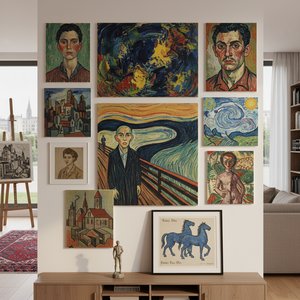
The dark colors of "Spring landscape in the red house" by Edvard Munch match its recommended space: a living room.
How old was Edvard Munch when creating "Spring landscape in the red house" in 1935?
Edvard Munch was 72 years old when creating "Spring landscape in the red house" in 1935. The age is computed from the artist's birth year, 1863.
What color harmony does "Spring landscape in the red house" by Edvard Munch display?
The colors of "Spring landscape in the red house" by Edvard Munch show a discordant palette harmony. Harmony describes how the colors relate to each other.





 Preview
 Send
Send Share
Share
 Details
 Guide
Guide

 Download
 Similars
 X-Ray
X-Ray Diaporama
 Q&A
Q&A Stats
Stats


