
 Send
Send Share
Share
 Details
 Guide
Guide

 Download
 Similars
 Diaporama
 Q&A
Q&A Stats
StatsPlate with groseilles


 Read More
Giclée / Art Print
Museum-quality giclée or canvas print with fast production and flexible finish options. ( Buy Hand Made Painting Switch to Digital Image)




































Pick from our preset sizes that match the artwork's original proportions.

Type the width and the height you need, to fit your frame or your wall. A print can only be cut, never made bigger than the picture, so a size with a different shape loses a part of the image. We send you a digital mockup to approve before we print anything. The picture shown on this page does not show the real cut — only the mockup does.
Worldwide Delivery () in 2 weeks instead of standard 4/5 weeks. (9 November)

Free Worldwide Express Shipping

High-Quality Linen Canvas

Full Shipping Insurance

Customs Tax Refund Guarantee

True Color Matching Guarantee

100-Day Return Policy (Defects Only)

100% Money-Back Guarantee

Bulk Discount Offer
 Glass option is only available in size under 110 CM

Plate with groseilles
Giclée / Art Print
Reproduction Size
-


Total Price
$ 81
A Symphony of Botanical Elegance
In the delicate intersection of fine art and exquisite craftsmanship lies the porcelain masterpiece “Plate with groseilles,” a work that transcends its functional origins to become a window into the romanticized splendor of nineteenth-century France. Created in 1840 by the gifted Édouard Honoré Ave, this piece serves as a captivating emblem of botanical precision and aristocratic grace. To gaze upon this plate is to enter a world where the natural landscape is distilled into a singular, luminous moment of perfection. The composition breathes with life, presenting a lush arrangement of grapes, apples, oranges, and plums that seem almost ripe enough to touch, all nestled within an ornate design that speaks to the refined tastes of the Victorian era.
The artistry of Ave is defined by a masterful tension between Rococo Revival ornamentation and a rigorous, scientific devotion to detail. While the plate utilizes the soft, pastel palettes—gentle blues and verdant greens—characteristic of the Rococo tradition, it eschews mere frivolity in favor of an almost photographic accuracy. Each fruit is rendered with painstaking care, capturing the subtle translucency of a grape skin or the textured zest of an orange. This meticulous technique, likely enhanced by a sophisticated glazing process, allows light to dance across the porcelain surface, creating a luminous quality that elevates the object from simple tableware to a miniature canvas of high art.
Historical Splendor and Artistic Legacy
The historical resonance of this work is deeply intertwined with the cultural renewal of France during the mid-1800s. As the nation navigated the shifts following Napoleon III’s ascension, the decorative arts flourished under a renewed sense of royal and aristocratic patronage. Ave, a student of the legendary Paul Delaroche, brought the grand narrative traditions of his mentor to the intimate scale of porcelain. This specific piece was destined for the prestigious Portuguese Royal Collection, a testament to the artist's ability to satisfy the most demanding connoisseurs of Europe. The plate does not merely depict fruit; it embodies the era's fascination with bringing the untamed beauty of the natural world into the controlled, opulent environment of the domestic sphere.
For the modern collector or interior designer, a high-quality reproduction of this work offers more than just decoration; it provides a focal point of historical depth and tactile beauty. The interplay of gold accents against the vibrant fruit and deep blue borders creates a sophisticated aesthetic that complements both classical and contemporary settings. Whether placed in a sunlit breakfast nook or featured as a centerpiece in a formal dining hall, “Plate with groseilles” invites an emotional connection to the past, evoking a sense of timelessness, luxury, and a profound reverence for the delicate wonders of the botanical world.
Questions & Answers
What underlying hue runs through "Plate with groseilles" by Edouard Honoré Ave?
The dominant hue of "Plate with groseilles" by Edouard Honoré Ave is ochre to sepia. The hue is the underlying tone of the palette.
Is there a factsheet about "Plate with groseilles" by Edouard Honoré Ave for students?
The guide to "Plate with groseilles" is the artwork's Guide page - a printable factsheet showing the artwork with its caption, credit line and identity table (artist, dates, medium, original size, collection).
How do medium and movement combine in "Plate with groseilles"?
"Plate with groseilles" by Edouard Honoré Ave combines the ceramic technique with the Rococo Revival style. Technique and movement describe the making and the style of the work.
Artist Biography
The Delicate Legacy of Édouard Honoré Ave
In the vibrant heart of nineteenth-century Paris, a period defined by both industrial progress and a profound reverence for classical beauty, Édouard Honoré Ave (1818–1890) emerged as a master of the decorative arts. His life and work serve as a window into an era where the boundaries between fine art and exquisite craftsmanship were beautifully blurred. Born in Paris, Ave was shaped by the intellectual and artistic fervor of his time, finding early inspiration in the prestigious traditions of French painting. His formative years were deeply influenced by the legendary Paul Delaroche, whose mastery of historical narrative and meticulous detail instilled in Ave a lifelong devotion to precision and grandeur.
While many of his contemporaries sought fame through massive canvases of historical drama, Ave found his true calling in the intimate and the ornamental. He possessed a rare ability to translate the monumental spirit of classical painting onto the delicate surface of porcelain. His most celebrated works—exquisite porcelain plates—are not merely tableware but miniature masterpieces that capture the essence of Rococo elegance and botanical accuracy. Through these pieces, Ave brought the splendor of the natural world into the domestic sphere, turning everyday objects into vessels of high art.
A Symphony of Flora and Fauna
The artistry of Édouard Honoré Ave is most profoundly felt in his botanical studies and floral still lifes. His technique was characterized by an unwavering commitment to accuracy, a trait inherited from the academic rigor of his training. Whether depicting the soft, velvety petals of a camellia or the vibrant, structured form of a poppy, Ave utilized a palette that breathed life into porcelain. His compositions often featured a sophisticated interplay of light and texture, frequently enhanced by opulent gold accents and intricate borders that echoed the Neoclassical and Rococo styles.
Beyond simple floral arrangements, Ave’s work often integrated the whimsical elements of the natural world, creating much more complex narratives within a circular frame. His plates frequently showcased:
- Avian Elegance: Detailed depictions of paradise birds and other exotic species nestled among lush foliage.
- Fruitful Abundance: Naturalistic studies of apples and other seasonal fruits, rendered with such realism they seem almost tactile.
- Ornate Ornamentation: The use of gilded crowns, blue-bordered designs, and delicate flourishes that elevate the subject matter.
This mastery of detail allowed him to bridge the gap between scientific botanical illustration and pure aesthetic decoration, making his work highly sought after by collectors of both fine art and antique porcelain.
Artistic Recognition and Historical Significance
Ave’s career was marked by active engagement with the prestigious artistic institutions of France. As a participant in the Société des artistes français, he was part of the vital cultural dialogue that defined the Parisian art scene. His presence in the Salon—the era's most significant exhibition platform—provided him with the visibility necessary to establish his reputation among the elite. This involvement ensured that his decorative innovations were recognized not just as craft, but as a legitimate extension of the fine arts.
The historical significance of Édouard Honoré Ave lies in his ability to preserve and evolve the decorative traditions of France during a century of rapid change. By blending the classical influences of his mentor with a burgeoning interest in naturalistic detail, he created a body of work that remains timeless. Today, his porcelain pieces are cherished as quintessential examples of 19th-century French decorative art, representing a period when beauty, precision, and luxury were harmoniously intertwined.

Edouard Honoré Ave
1818 - 1890 , France
Quick Facts
- Full Name: Édouard Honoré Ave
- Nationality: French
- Date Of Birth: 1818
- Date Of Death: 1890
- Place Of Birth: Paris, France
- Notable Artworks: ['The Paris Salon']
- Artistic Movement Or Style: Neoclassical/Romantic
- Artists Who Influenced This Artist: Paul Delaroche
- Artists Or Movements Influenced By This Artist: Impressionism
Related Articles

The Rococo Aesthetic: Opulence, Rebellion & the Pursuit of Pleasure in 18th-Century Art
Explore the opulent world of Rococo art! Discover its origins, key artists like Watteau & Boucher, and lasting influence on design. Expert insights for collectors & enthusiasts.

Simon Vouet: A Baroque Master's Journey from Italian Influence to French Classicism
Explore the life & art of Simon Vouet, a pivotal French Baroque painter who introduced Italian styles to France. Discover his masterpieces and lasting influence on 17th-century art.
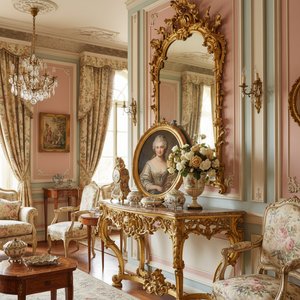
Rococo's Radiant Legacy: 10 Masterpieces for Your Home |
Indulge in the elegance of Rococo! Explore 10 masterpieces by Fragonard, Boucher & Watteau. Discover the stories behind these iconic paintings and bring timeless art to your home with museum-quality reproductions from .

From Grandeur to Grace: Exploring the Evolution of Baroque & Rococo Art
Explore the captivating evolution from Baroque's drama to Rococo's grace! Discover key artists, characteristics & lasting influence of these art movements with expert insights at OriginalUniqueArt.

Baroque vs. Rococo: A Definitive Guide to the Drama of Grandeur and the Elegance of Grace
Explore the profound differences between Baroque drama and Rococo elegance. Our expert guide delves into art history, chiaroscuro, and the evolution of European masterpieces for collectors and enthusiasts seeking deep historical context.


