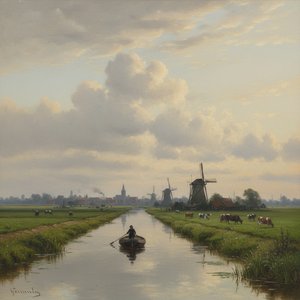
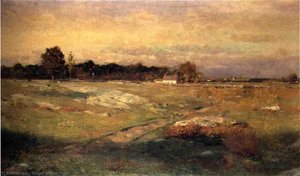
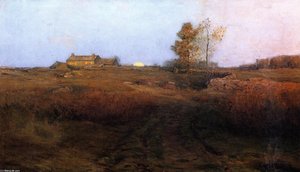
Daybreak
Hand Made Oil Reproduction
Hand-painted oil on canvas in your size and frame, made to order by our artists.
P118B $10
P118H $10
P118W $10
P438Z $10
P508JH $12
P508YH $12
P805H $10
P805Z $10
P919BZ $10
P919G $10
P919XJ $10
P959ZH $10
P968JZ $12
W106C $8
W218G $10
W218JH $8
W218Y $10
W307PJ $10
W316G $10
W316PJ $8
W316Y $10
W398PJ $8
W4111J $10
W500HY $15
W500JH $15
W692G $12
W849H $8
W940BG $15
W953PJ $8
Pick from our preset sizes that match the artwork's original proportions.
You may enter your own dimensions to fit a specific frame or space. If your selected size does not match the original image's proportions, we will either crop the artwork or extend the painting with additional hand-painted elements. A digital mockup will be sent for your approval before production begins.

Please note that the on-screen preview does not reflect the actual cropping or extension. Only the mockup will accurately show the final composition.
While custom sizes are available, we recommend selecting a dimension from the predefined list to preserve the original proportions.
After order, OriginalUniqueArt.com team will email client for instructions and provide a mockup preview
Worldwide Delivery () in 3/4 weeks instead of standard 5 weeks. (18 July). No compromise on quality.
Free Worldwide Express Shipping
High-Quality Linen Canvas
Full Shipping Insurance
Customs Tax Refund Guarantee
True Color Matching Guarantee
60-Day Return Policy (Defects Only)
100% Money-Back Guarantee
Bulk Discount Offer
Daybreak
Reproduction Medium
Reproduction Size
-
Total Price
-
Artwork Description
A Serene Dawn: Capturing Nature's Majesty
Dwight William Tryon’s "Daybreak" is a captivating depiction of sunrise over water, rendered in a style characteristic of American Tonalism. This evocative painting transports the viewer to a tranquil scene where the soft light of dawn gently illuminates the landscape. The composition features two boats resting peacefully on the water's surface – one closer to the left and another towards the right - with scattered figures adding a sense of human presence within this vast natural setting. Tryon masterfully uses subtle gradations of color, particularly in the sky’s cloud formations, creating a dramatic backdrop that enhances the overall serenity of the scene. The painting's atmosphere is one of quiet contemplation and peaceful awakening, inviting viewers to share in the stillness of the moment.Tonalism and Artistic Influences
"Daybreak," created around 1885, exemplifies the Tonalist movement prevalent in late 19th-century American art. This style prioritized mood and atmosphere over precise detail, emphasizing subtle color harmonies and soft edges to create a sense of tranquility and introspection. Tryon was significantly influenced by James McNeill Whistler, a leading figure in the Aesthetic Movement, who championed "art for art's sake" and emphasized harmonious color relationships. Unlike earlier landscape traditions that focused on dramatic narratives or heroic depictions of nature, Tonalism sought to capture the essence of a scene through its tonal qualities – the interplay of light and shadow, and the subtle nuances of color. Tryon’s work reflects this shift towards a more contemplative and atmospheric approach to landscape painting.Technique and Composition
Tryon's technique in "Daybreak" is characterized by his delicate brushwork and careful layering of paint. He employed thin glazes of oil paint to build up the luminous quality of the sky and water, creating a sense of depth and atmosphere. The composition is carefully balanced, with the boats acting as anchors in the foreground while the expansive sky draws the eye upwards. The placement of figures within the scene isn't about narrative detail but rather contributes to the overall feeling of peaceful solitude.- Color Palette: Predominantly soft blues, pinks, and grays create a harmonious and calming effect.
- Brushwork: Loose and blended brushstrokes contribute to the atmospheric quality of the painting.
- Light & Shadow: The subtle interplay of light and shadow defines forms and creates depth, emphasizing the tranquility of the scene.
Symbolism and Emotional Impact
Beyond its aesthetic beauty, "Daybreak" carries symbolic weight. Sunrises often represent new beginnings, hope, and renewal. The presence of boats suggests journeys and exploration, while the figures in the distance hint at human connection within the vastness of nature. The painting evokes a sense of peace, tranquility, and quiet contemplation. It invites viewers to pause, reflect, and appreciate the beauty of the natural world. "Daybreak" is more than just a landscape; it's an emotional experience that resonates with our innate desire for serenity and connection. The overall effect is one of gentle optimism and enduring beauty – qualities that make this painting a timeless treasure.Artist Biography
Early Life and Artistic Beginnings
Dwight William Tryon emerged from the quiet landscapes of Connecticut in 1849, born in Hartford to Anson Tryon and Delia O. Roberts. A shadow fell early upon his childhood with the untimely death of his father, leading to a formative upbringing on his grandparents’ farm in East Hartford. This immersion in rural life proved pivotal, nurturing within him a deep connection to nature that would become the defining characteristic of his artistic vision. Even without formal training at first, Tryon's innate inclination towards art blossomed naturally. He frequented a local bookstore, not merely as a customer but as an employee, and there discovered instructional manuals that sparked his self-education. These early explorations weren’t confined to study; he spent countless hours sketching the surrounding countryside, translating the subtle nuances of light and shadow onto paper. This dedication culminated in his first sale in 1870, followed by local exhibitions that hinted at a burgeoning talent soon to gain wider recognition with acceptance into the National Academy of Design in 1873.European Influences and the Shaping of a Style
Driven by a desire for formal training, Tryon embarked on a transformative journey to France in 1876. He studied under Jacquesson de la Chevreuse at the École des Beaux-Arts, immersing himself in the artistic currents of Europe. However, his education extended beyond the classroom; he sought guidance from luminaries like Charles-François Daubigny, Henri Harpignies, and Jean Baptiste-Antoine Guillemet, absorbing their techniques and philosophies. Initially, Tryon’s style leaned towards Luminism, characterized by its emphasis on atmospheric effects and radiant light. Yet, his artistic path soon diverged, drawn to the principles of the Barbizon School—a movement that prioritized direct observation of nature and a more subdued palette. While surrounded by the burgeoning Impressionist movement in France, Tryon remained steadfastly committed to the Barbizon aesthetic, finding greater resonance in its contemplative mood and realistic depiction of the natural world. A particularly significant influence during this period was James McNeill Whistler, whose tonalist style—emphasizing harmonious arrangements of color and subtle gradations of tone—left an indelible mark on Tryon’s artistic development.Mature Style and Atmospheric Landscapes
By the late 1880s, Dwight William Tryon had fully realized his iconic style – a signature approach that would define his legacy as a leading American Tonalist. His canvases often feature a distinctive composition: a grouping or broken row of trees positioned in the middle distance, acting as a visual bridge between a luminous sky above and a foreground marsh or pasture below. These scenes are frequently imbued with autumnal hues, evoking a sense of tranquility and melancholy. Beyond landscapes, Tryon also excelled at seascapes, utilizing pastel to capture the expansive beauty of water, sky, and beach under varying weather conditions. His mastery lay in his ability to convey atmosphere—the subtle shifts in light, the delicate play of color, and the overall mood of a scene. *Salt-Marsh, December*, which garnered first prize at the Tennessee Centennial Exposition in 1897, stands as a prime example of this skill, showcasing his talent for capturing the serene beauty of the natural world. His paintings were consistently exhibited nationally, finding favor at prestigious venues like the Pennsylvania Academy of Fine Arts and the Montross Gallery.Patronage, Recognition, and Lasting Legacy
The trajectory of Tryon’s career was significantly enhanced by his relationship with Charles Lang Freer, a discerning collector who became his most important patron. Freer acquired dozens of Tryon's works and even collaborated with the artist on interior design projects for his Detroit home. This generous support allowed Tryon to fully dedicate himself to his art, and many of these paintings now reside in the esteemed Freer Gallery of Art as part of the Smithsonian Institution. Further recognition came in 1908 when he received the Carnegie Prize at the Carnegie Exhibition, solidifying his position among the leading artists of his time. Throughout his career, Tryon was an active member of several prestigious art organizations, including the Society of American Artists, the American Watercolor Society, and the National Institute of Arts and Letters (now the American Academy of Arts and Letters). In 1887, he established a summer home in South Dartmouth, Massachusetts, which served as his primary residence for the remainder of his life. He also dedicated himself to education, teaching at Smith College from 1886 to 1923, where he founded the Tryon Gallery of Art. Dwight William Tryon passed away in 1925, leaving behind a rich artistic legacy defined by his contribution to American Tonalism and his exceptional ability to capture atmospheric landscapes and seascapes with delicate color and refined feeling. His works continue to be celebrated and are held in prominent collections such as the Smithsonian American Art Museum and the Freer Gallery of Art, ensuring that his vision endures for generations to come.Dwight William Tryon
1849 - 1925 , United States of America
Quick Facts
- Artistic Movement Or Style: Tonalism, Barbizon School
- Artists Or Movements Influenced By This Artist: American Tonalism
- Artists Who Influenced This Artist:
- Whistler
- Inness
- Wyant
- Daubigny
- Harpignies
- Date Of Birth: August 13, 1849
- Date Of Death: July 1, 1925
- Full Name: Dwight William Tryon
- Nationality: American
- Notable Artworks:
- Salt-Marsh, December
- Spring
- Newbury Haystacks in Moonlight
- The First Leaves
- Place Of Birth: Hartford, USA


Glass option is only available in size under 110 CM