Menu
Text size

() ·

A painting made for you, by hand

Thomson No. 3 (Sunset Bay)

Hand Made Oil Reproduction

Hand-painted oil on canvas in your size and frame, made to order by our artists. ( Switch to Print Switch to Digital Image)

Collectible Description

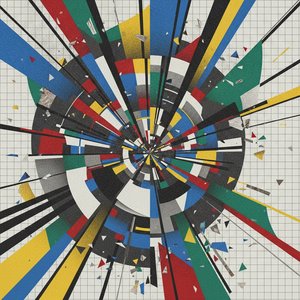
Explore Douglas Coupland’s ‘Thomson No. 3 (Sunset Bay)’ – a geometric abstraction reimagining Canadian landscapes. Inspired by the Group of Seven, this digital artwork questions national identity.

Artist Biography

Douglas Coupland: Canadian novelist & visual artist exploring Gen X, digital culture & modern life. Known for QR code art, sculptures & thought-provoking pieces exhibited globally.

from ·

Chapter 1

How large should it be?

Slide to change the size; the picture on the left shows the frame at its real width. The proportions of the original are kept.

Standard
custom
CM
INCH

Pick from our preset sizes that match the artwork's original proportions.

width
height

Type the width and the height you need, to fit your frame or your wall. This is hand-painted, so for a size with a different shape the artist can paint a bit more around the picture, or cut a bit — you choose. We send you a digital mockup to approve before the painting starts. The picture shown on this page does not show the real result — only the mockup does.

Chapter 2

How should it arrive?

Choose the edges of the stretched canvas

Choose your frame

Corner sample of the WhiteWrap canvas edge finish, stretched on solid wood bars
White $1
Corner sample of the BlurSideWrap canvas edge finish, stretched on solid wood bars
Blurside $1
Corner sample of the ExtendedWrap canvas edge finish, stretched on solid wood bars
Extended $1
Corner sample of the P118B picture frame: moulded polystyrene, 5 cm wide and 3 cm thick
P118B $10
Corner sample of the P118H picture frame: moulded polystyrene, 5 cm wide and 3 cm thick
P118H $10
Corner sample of the P118W picture frame: moulded polystyrene, 5 cm wide and 3 cm thick
P118W $10
Corner sample of the P438Z picture frame: moulded polystyrene, 5.5 cm wide and 3.5 cm thick
P438Z $10
Corner sample of the P508JH picture frame: moulded polystyrene, 7 cm wide and 3.5 cm thick
P508JH $12
Corner sample of the P508YH picture frame: moulded polystyrene, 7 cm wide and 3.5 cm thick
P508YH $12
Corner sample of the P805H picture frame: moulded polystyrene, 5 cm wide and 3.5 cm thick
P805H $10
Corner sample of the P805Z picture frame: moulded polystyrene, 5 cm wide and 3.5 cm thick
P805Z $10
Corner sample of the P919BZ picture frame: moulded polystyrene, 7 cm wide and 3.5 cm thick
P919BZ $10
Corner sample of the P919G picture frame: moulded polystyrene, 7 cm wide and 3.5 cm thick
P919G $10
Corner sample of the P919XJ picture frame: moulded polystyrene, 7 cm wide and 3.5 cm thick
P919XJ $10
Corner sample of the P959ZH picture frame: moulded polystyrene, 5 cm wide and 3 cm thick
P959ZH $10
Corner sample of the P968JZ picture frame: moulded polystyrene, 6 cm wide and 4 cm thick
P968JZ $12
Corner sample of the W106C picture frame: solid wood, 5 cm wide and 3 cm thick
W106C $8
Corner sample of the W218G picture frame: solid wood, 5 cm wide and 3 cm thick
W218G $10
Corner sample of the W218JH picture frame: solid wood, 5 cm wide and 3 cm thick
W218JH $8
Corner sample of the W218Y picture frame: solid wood, 5 cm wide and 3 cm thick
W218Y $10
Corner sample of the W307PJ picture frame: solid wood, 6 cm wide and 3 cm thick
W307PJ $10
Corner sample of the W316G picture frame: solid wood, 6 cm wide and 3 cm thick
W316G $10
Corner sample of the W316PJ picture frame: solid wood, 6 cm wide and 3 cm thick
W316PJ $8
Corner sample of the W316Y picture frame: solid wood, 6 cm wide and 3 cm thick
W316Y $10
Corner sample of the W398PJ picture frame: solid wood, 5 cm wide and 3 cm thick
W398PJ $8
Corner sample of the W4111J picture frame: solid wood, 6.5 cm wide and 3.5 cm thick
W4111J $10
Corner sample of the W500HY picture frame: solid wood, 7 cm wide and 5 cm thick
W500HY $15
Corner sample of the W500JH picture frame: solid wood, 7 cm wide and 5 cm thick
W500JH $15
Corner sample of the W692G picture frame: solid wood, 8 cm wide and 4 cm thick
W692G $12
Corner sample of the W849H picture frame: solid wood, 5 cm wide and 3 cm thick
W849H $8
Corner sample of the W940BG picture frame: solid wood, 7.5 cm wide and 4.5 cm thick
W940BG $15
Corner sample of the W953PJ picture frame: solid wood, 6 cm wide and 3.5 cm thick
W953PJ $8
Corner sample of the H24-GOLD picture frame: carved wood with gesso, 10 cm wide and 6 cm thick
H24-GOLD $30
Corner sample of the H24-SILVER picture frame: carved wood with gesso, 10 cm wide and 6 cm thick
H24-SILVER $30
Corner sample of the H36-GOLD picture frame: carved wood with gesso, 15 cm wide and 6.5 cm thick
H36-GOLD $45
Corner sample of the H36-SILVER picture frame: carved wood with gesso, 15 cm wide and 6.5 cm thick
H36-SILVER $45
Frame preview
Framed

Moulding: . Overall size with the frame: .

Chapter 3

Who paints it, and should anything change?

Examples of what can be changed: Replace face with customer photo; Add pet (e.g., replace cat with dog); Include hidden message in background; Change background landscape or elements.
After order, OriginalUniqueArt.com team will email client for instructions and provide a mockup preview

Worldwide Delivery () in 3/4 weeks instead of standard 5 weeks. (30 October). No compromise on quality.

Chapter 4

The finishing touches

A nameplate, as in a museum?

Engraved Bronze Plaque Details

This elegant plaque features the artist's name and the title of the artwork, finely engraved for a timeless presentation.

It is made from bronze with a refined, elegant finish. The text is precisely laser-engraved for a sharp and permanent result. Measuring 9x2 cm, the plaque is compact yet easy to read. It's built to be durable and scratch-resistant, offering a professional, museum-quality look. Mounting is simple thanks to the included adhesive backing.

Transparent Acrylic Plaque Details

The plaque includes essential engraved details such as the artist's name, the title of the artwork, the date it was created, the type of media used-like oil on canvas or watercolor-a brief description of the piece, and a QR code that links to the complete artwork information.

It is crafted from clear acrylic, offering a sleek, modern appearance. The text is UV-engraved in black to ensure strong visual contrast. With a size of 10x15 cm, it ensures optimal readability. It comes equipped with two metal hooks for secure wall mounting. The plaque is designed to be weather-resistant, making it suitable for various environments, and it includes interactive features that work seamlessly with smartphone scanning.

Black Acrylic Plaque Details

This elegant plaque includes engraved information such as the artist's name, the title of the artwork, the date it was created, the type of media used (like oil on canvas or watercolor), a short description of the artwork, and a QR code for quick access to more information.

The plaque itself is made from refined black acrylic with a premium finish. The text is laser-engraved in white for high contrast and readability. Its size is 10x15 cm, designed to be easy to read. It comes with two metal hooks for professional mounting. The design is sleek and fits any interior style. It is also weather-resistant and durable, with built-in digital integration for mobile compatibility.

A protective varnish?

When do you need it?

Chapter 5

Your painting, as you ordered it

Thomson No. 3 (Sunset Bay)

Reproduction Medium

Reproduction Size

-

Elite Senior Artist

More detail, finesse, and extra production time

-

Reproduction Frame

-

-

For artworks or reproductions larger than 105 cm (approximately 41 inches) on any side, the frame will be shipped as a kit, disassembled. This method ensures safe delivery and prevents damage during transport.

Professional assembly required - this is not a DIY product.
The kit must be assembled and the canvas stretched by an experienced professional framer, using wood glue (not supplied), a canvas stretching plier and clamps to hold the bars square while the glue dries. Incorrect assembly or uneven canvas tension can permanently damage the artwork and is not covered by our warranty.

  • All solid wood bars are included, precisely cut to size.

  • Assembled with the screws provided, plus wood glue for the corner joints, which is not supplied and must be sourced by your framer.

  • Professional tools are required and not included: a canvas stretching plier (tensioner) and clamps to hold the bars square while the glue dries.

Important:
The corner joints require wood glue, the bars must be held with clamps until the glue is fully dry, and tightening the canvas on the assembled frame requires a canvas stretching plier. None of these are included in the kit. Please arrange an experienced professional framer before ordering this size.

Nameplate

-

-

Protective Varnish

Glossy Varnish (enhances colors, protects against light/moisture)

-

Customize My Artwork

Examples of what can be changed: Replace face with customer photo; Add pet (e.g., replace cat with dog); Include hidden message in background; Change background landscape or elements.

-

Urgent

Worldwide Delivery () in 3/4 weeks instead of standard 5 weeks. (30 October). No compromise on quality.

-

Express Shipping

Worldwide Delivery () in 5 weeks. (6 November).

Included

Total Price

$ 300

Total Price $ 300

Glass option is only available in size under 110 CM

Included with every order

  • Free Worldwide Express Shipping
  • High-Quality Linen Canvas
  • Full Shipping Insurance
  • Customs Tax Refund Guarantee
  • True Color Matching Guarantee
  • 100-Day Return Policy (Defects Only)
  • 100% Money-Back Guarantee
  • Bulk Discount Offer

The Genesis of a Fragmented Vision

Douglas Coupland’s “Thomson No. 3 (Sunset Bay)” isn't merely a depiction of a sunset over rolling hills; it’s an interrogation, a deliberate dismantling and reimagining of the very notion of ‘Canadianness.’ Born from a digital alchemy – a process of meticulously reducing iconic landscapes to their most fundamental geometric components – this artwork invites us to consider what remains when the romanticism of nature is stripped bare. Coupland began his exploration with degraded digital images of masterpieces by Emily Carr, the Group of Seven, and Tom Thomson, artists deeply intertwined with the formation of Canada’s visual identity. He then employed a unique, almost architectural language, breaking down these familiar vistas into a series of angular planes and bold blocks of color, creating an effect both strikingly modern and profoundly nostalgic.

The work's foundation lies in the legacy of Tom Thomson, a tragically short-lived artist whose evocative depictions of Ontario’s wilderness captured the spirit of a nascent nation. Coupland’s choice to reference Thomson is particularly potent; the painter’s romanticized portrayal of nature – his emphasis on light, color, and the sublime beauty of the Canadian landscape – provides a crucial counterpoint to the geometric austerity of Coupland's approach. Coupland isn’t simply replicating these scenes; he’s using them as a springboard for a commentary on how we perceive and represent our national identity in the 21st century.

Deconstructing the Sublime: A Geometric Language

Technically, “Thomson No. 3 (Sunset Bay)” is a masterful example of digital painting, executed with an almost clinical precision. Coupland’s process involved manipulating these images through sophisticated software, reducing them to their essential shapes and colors. The result is a flattened, abstracted landscape where the familiar forms of hills and sky are rendered as interlocking triangles and polygons. This deliberate simplification isn't intended to diminish the beauty of the original scenes; rather, it forces us to reconsider how we experience them. The absence of traditional perspective creates a sense of detachment, inviting the viewer to actively engage with the composition and interpret its meaning.

Coupland’s use of color is equally significant. The palette – dominated by warm oranges, yellows, and reds – evokes the drama of a sunset, yet these colors are presented in a deliberately flat, almost schematic manner. This contrasts sharply with the nuanced gradations of light and shadow found in traditional landscape paintings. The effect is both visually arresting and subtly unsettling, suggesting that even our most cherished memories and experiences can be reduced to their basic components.

Symbolism and the Shifting Landscape of Identity

Beyond its purely formal qualities, “Thomson No. 3 (Sunset Bay)” carries a potent symbolic weight. By referencing both Tom Thomson and the Group of Seven – two pivotal figures in Canadian art history – Coupland raises questions about how we define ‘Canadianness’ today. The artwork suggests that this identity is no longer solely rooted in a romanticized connection with nature, but rather shaped by contemporary tools and perspectives. The geometric abstraction can be interpreted as a metaphor for the fragmented and increasingly mediated reality of modern life.

Furthermore, Coupland's choice to utilize degraded digital images adds another layer of meaning. These aren’t pristine reproductions; they are remnants of a bygone era, hinting at the ephemeral nature of memory and representation. The artwork becomes a meditation on how our understanding of the past is constantly being reshaped by technology and cultural shifts. The title itself – “Thomson No. 3 (Sunset Bay)” – subtly underscores this process of deconstruction and reinterpretation.

A Contemporary Masterpiece: Reproduction and Reflection

“Thomson No. 3 (Sunset Bay)” is a compelling work that transcends the boundaries between art history, digital technology, and cultural commentary. Its striking visual impact, combined with its layered symbolism, makes it a significant addition to Coupland’s body of work. A high-quality reproduction captures much of the original's power, offering an accessible way to engage with this thought-provoking piece. Consider framing this artwork in a contemporary setting – its bold geometric forms will complement a range of interior design styles, sparking conversation and inviting contemplation about the nature of Canadian identity.

Questions & Answers

How does "Thomson No. 3 (Sunset Bay)" balance light and dark?

The recorded values for "Thomson No. 3 (Sunset Bay)" by Douglas Coupland are: bright brightness, gentle luminance luminance.

Who created "Thomson No. 3 (Sunset Bay)"?

"Thomson No. 3 (Sunset Bay)" was created by Douglas Coupland. The information on this page describes Douglas Coupland's original work.

What mood and emotion come together in "Thomson No. 3 (Sunset Bay)"?

The recorded mood of "Thomson No. 3 (Sunset Bay)" by Douglas Coupland is calm, and its emotional tone is tranquil.

More about this painting

Preview AR preview Switch to Print Switch to Digital Image Send
Details Guide Add to favorites Download Similars X-Ray Diaporama Q&A Stats

In numbers

  • 29frames to choose from
  • standard sizes, in its own proportions
  • 5weeks to paint and deliver it

About the original

Douglas Coupland

Douglas Coupland

1961 - , Canada

Quick facts about Douglas Coupland

  • Full Name: Douglas Coupland
  • Nationality: Canadian
  • Date Of Birth: 1961
  • Place Of Birth: Vancouver, Canada
  • Notable Artworks:
    • God
    • The Ice Storm
    • Thomson No. 5
    • Silver Boogeyman
  • Artistic Movement Or Style: Pop art, Digital culture

Artist Biography

A Cartographer of Contemporary Culture: The Life and Art of Douglas Coupland

Douglas Coupland emerged onto the cultural landscape in the early 1990s, not simply as a novelist, but as a diagnostician of an era. Born on December 30, 1961, on a Canadian military base in Baden-Söllingen, Germany, his upbringing was one of constant relocation, eventually settling in Vancouver, Canada – a city that would profoundly shape his artistic sensibility. This early experience instilled within him a keen observer’s eye, attuned to the subtle shifts and anxieties of modern life. While initially pursuing sculpture at Emily Carr College of Art and Design, Coupland found his true calling not in molding physical forms but in articulating the intangible textures of contemporary existence through words, and later, through a fascinating blend of visual art and digital technology. He wasn’t merely reflecting culture; he was naming it, giving voice to the unspoken feelings of a generation adrift in a rapidly accelerating world.

From Generation X to Visual Commentary

Coupland's breakthrough arrived with the publication of Generation X: Tales for an Accelerated Culture in 1991. The novel wasn’t just a literary success; it was a cultural phenomenon, coining a term that instantly resonated with millions grappling with identity and purpose in the shadow of post-industrial society. Terms like “McJob” entered the lexicon, becoming shorthand for the precariousness and alienation of work in the late 20th century. But Coupland’s ambition extended far beyond simply labeling a generation. He was interested in exploring the psychological landscape of a world saturated with media, consumerism, and technological change. This exploration didn't end with literature. He seamlessly transitioned into visual art, driven by a desire to express his ideas through different mediums. His artistic practice is remarkably diverse, encompassing painting, sculpture, photography, and design – all unified by a consistent thematic thread: an interrogation of modern life. He has authored 13 novels, two short story collections, seven non-fiction books, and numerous screenplays for film and television, demonstrating his prolific creativity.

The Language of QR Codes and the Weight of Loss

Coupland’s visual art is characterized by a unique blend of abstraction, pop culture references, and technological innovation. Perhaps most notably, he has become known for his series incorporating QR codes into paintings. These aren't merely decorative elements; they are portals to hidden layers of meaning, inviting viewers to actively engage with the artwork through their smartphones. Scanning these codes reveals concise commentaries, adding another dimension to the visual experience – a testament to Coupland’s fascination with the intersection of art and technology. Beyond this innovative technique, his work often grapples with profound themes of loss and mortality. The Dead Grads Series, for example, is a poignant tribute to young lives tragically cut short, each painting bearing titles like “Gun,” “Car Crash,” and “Overdose” – stark reminders of the fragility of life and the enduring impact of grief. Silver Boogeyman, a striking piece that reveals the face of Osama bin Laden when viewed through a smartphone screen, exemplifies his ability to provoke thought and challenge perceptions, forcing viewers to confront uncomfortable truths about the post-9/11 world.

Sculptural Statements and National Identity

Coupland’s artistic vision extends beyond two-dimensional canvases into the realm of sculpture. The Ice Storm, a monumental steel structure, stands as a powerful reflection on Canadian identity and vulnerability. The sculpture's form evokes both strength and fragility, mirroring the complexities of the nation’s history and its relationship to the natural world. His mixed media collages, such as God, demonstrate his mastery of layering techniques and graphic design skills, incorporating symbolic elements like “Lord Jim” and a geometric ‘D’ to create visually arresting compositions that invite multiple interpretations. These works are not simply aesthetic objects; they are intellectual puzzles, demanding active engagement from the viewer. His work has been showcased in prestigious venues such as the Vancouver Art Gallery and the McMichael Canadian Art Collection, solidifying his position as a significant figure in contemporary art.

Legacy of Observation and Innovation

Douglas Coupland’s contributions to both literature and visual art have earned him widespread recognition, including being appointed an Officer of the Order of Canada and membership in the Order of British Columbia. He remains a vital voice in Canadian arts and letters, known for his insightful observations, innovative artistic expression, and willingness to tackle complex social and cultural issues. His work continues to resonate with audiences worldwide, prompting dialogue on contemporary culture, technology, and the human condition. Coupland isn’t just an artist; he is a cultural cartographer, mapping the ever-shifting terrain of modern life with both precision and empathy. He has left an indelible mark on our understanding of ourselves and the world around us, ensuring his place as one of Canada's most important contemporary artists.
  • Key Themes: Generation X, digital culture, technology, loss, identity, consumerism, Canadian identity.
  • Influences: Pop art, minimalism, constructivism, Japanese business science, contemporary literature.

Quick Facts

  • Dimensions: 79 x 58 cm
  • Medium: pigment print on watercolour paper
  • Movement: Geometric Abstraction
  • Notable elements or techniques: Geometric shapes, color blocks
  • Title: Thomson No. 3 (Sunset Bay)

Art Quiz

There is only one correct answer for each question.

Question 1:
What artistic movement is most closely associated with Douglas Coupland’s ‘Thomson No. 3 (Sunset Bay)’?
Question 2:
The artwork’s use of flat planes of color and angular shapes is most reminiscent of which group of Canadian artists?
Question 3:
What is a key theme explored through Coupland’s reimagining of Canadian landscapes?
Question 4:
What material is primarily used to create Douglas Coupland's artwork?
Question 5:
Tom Thomson, the inspiration for this piece, is known for his depictions of: