Send
Send Share
Share
 Details
 Guide
Guide

 Download
 Similars
 Diaporama
 Q&A
Q&A Stats
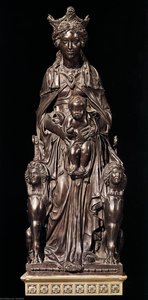
StatsSt George and the Dragon

- 39.0 x 120.0 cm


 Read More
Giclée / Art Print
Museum-quality giclée or canvas print with fast production and flexible finish options. ( Buy Hand Made Painting Switch to Digital Image)




































Pick from our preset sizes that match the artwork's original proportions.

Type the width and the height you need, to fit your frame or your wall. A print can only be cut, never made bigger than the picture, so a size with a different shape loses a part of the image. We send you a digital mockup to approve before we print anything. The picture shown on this page does not show the real cut — only the mockup does.
Worldwide Delivery () in 2 weeks instead of standard 4/5 weeks. (2 November)

Free Worldwide Express Shipping

High-Quality Linen Canvas

Full Shipping Insurance

Customs Tax Refund Guarantee

True Color Matching Guarantee

100-Day Return Policy (Defects Only)

100% Money-Back Guarantee

Bulk Discount Offer
 Glass option is only available in size under 110 CM

St George and the Dragon
Giclée / Art Print
Reproduction Size
-


Total Price
$ 81
The Visage of Renaissance Intensity
Gazing upon this marble bust is to confront a moment frozen in time—a powerful confluence of classical revivalism and raw human emotion. The subject, rendered with breathtaking verisimilitude, commands attention through its intense gaze. It speaks not merely of portraiture, but of an inner struggle made manifest in cold, polished stone. The artist has captured a fleeting expression—a furrowed brow suggesting deep contemplation or perhaps righteous anger—that pulls the viewer into an immediate, almost confrontational dialogue. This piece embodies the burgeoning psychological depth that characterized the early Italian Renaissance, moving sculpture beyond mere idealized forms toward profound individual character studies.
Mastery in Marble: Technique and Craftsmanship
The technical brilliance evident here is nothing short of astonishing. The handling of the marble itself suggests an intimate understanding of the medium's potential. Observe the meticulous detail in the beard and the structure of the hair; these elements are not simply carved, but seem to have grown organically from the stone. Donatello’s influence, or a direct echo of his school, is palpable in the robust yet refined musculature suggested beneath the surface. The artist has achieved a remarkable textural contrast—the smoothness of the skin juxtaposed against the implied roughness of the beard—a testament to virtuoso skill that elevates this bust from mere sculpture to an object of profound aesthetic contemplation.
Historical Echoes and Symbolic Weight
While the specific subject matter is not explicitly detailed in relation to St George, the style firmly roots it within the intellectual ferment of the early 15th century. This period saw a fervent rediscovery of classical antiquity, yet the resulting art was deeply infused with Christian humanism. The intensity captured here often symbolizes virtues—courage, piety, or intellectual fervor—that were paramount to Renaissance thought. Owning a reproduction of such a piece allows one to bring home not just an artifact, but a tangible connection to the cultural rebirth that defined Florence and its artistic zenith.
Integrating Art into Modern Living
For the discerning collector or designer, this bust offers unparalleled gravitas for any interior space. Its dramatic scale (39 x 120 cm) ensures it functions as an immediate focal point, whether placed atop a grand mantelpiece, within a library setting, or curated in a sophisticated gallery niche. The inherent drama of the piece adds layers of narrative depth to a room, suggesting stories untold and intellects at work. It is a statement piece that whispers of history while commanding the attention of the contemporary eye.
Questions & Answers
What orientation does "St George and the Dragon" by Donatello have?
"St George and the Dragon" by Donatello is a portrait composition. The proportions are worth checking before choosing a print size.
At what age did Donatello make "St George and the Dragon"?
When "St George and the Dragon" was created in 1416, Donatello - born in 1386 - was 30 years old.
Do the colors of "St George and the Dragon" appear strong or soft?
The color intensity of "St George and the Dragon" is monochromatic. Intensity describes how strong the colors appear.
Artist Biography
early life and career
donato di niccolò di betto bardi, known as donatello, was born in florence, italy around 1386. he studied classical sculpture, which heavily influenced his development of an early renaissance style. this new approach to art and culture would eventually become the hallmark of the florentine renaissance.key works and innovations
donatello's most famous work, david, was the first freestanding nude male sculpture since antiquity. commissioned by the medici family, it showcased his innovative style and technical expertise. other notable works include:- st. louis of toulouse (now in the museum of the basilica di santa croce), which featured a classical frame designed by donatello.
- the sacrifice of isaac, created for the campanile of santa maria del fiore in florence, characterized by strong portrait details.
- crucifix (1425) for santa croce, which portrayed christ in a moment of agony.
artistic style and legacy
donatello's style can be divided into broad phases, beginning with the development of expressiveness and classical monumentality. his work was not immediately accepted by the community but eventually became the most popular, influencing other italian courts and european artists. key art movements:personal life and working style
donatello was known for being amiable and well-liked, but poor at the business side of his career. he tended to accept more commissions than he could handle, often completing works late or handing them over to other sculptors. notable artworks and artists:- leonardo da vinci: annunciation (detail)
- amico aspertini: statua di pan/leone che azzanna un cavallo
- michelangelo buonarroti: tondo pitt
museums and art collections:
- museo della collegiata (empoli, italy): a hidden gem of the renaissance, featuring works by francesco botticini and raffaello botticini.
- the early italian renaissance art movement

Donatello
1386 - 1466 , Italy
Quick Facts
- Full Name: Donatello di Niccolò
- Nationality: Italian
- Date Of Birth: 1386
- Date Of Death: 1466
- Place Of Birth: Florence, Italy
- Notable Artworks:
- David
- St. Louis of Toulouse
- Sacrifice of Isaac
- Crucifix
- Artistic Movement Or Style: Early Renaissance
- Artists Who Influenced This Artist: ['Classical sculpture']
- Artists Or Movements Influenced By This Artist:
- Italian Renaissance
- Early Renaissance
- Florentine Renaissance
Related Articles

Bronze Age to Modern Masters: 10 Sculptures That Redefined Art | OriginalUniqueArt
Journey through art history with 10 legendary bronze sculptures – from Michelangelo's David to Rodin’s Thinker. Explore the stories, techniques & timeless beauty of these masterpieces. Find museum-quality reproductions & elevate your home decor on OriginalUniqueArt.com.

The Enduring Allure of Marble in Art History: From Classical Sculpture to Modern Abstraction
Explore the captivating history of marble sculpture from ancient Greece to modern art. Discover renowned artists like Canova & Michelangelo, carving techniques, and investment insights at OriginalUniqueArt.

Georges Seurat's Masterpieces: 25 Paintings That Defined Pointillism | OriginalUniqueArt
Explore 25 iconic Georges Seurat paintings & discover the brilliance of Pointillism. From 'La Grande Jatte' to his harbor scenes, delve into art history with OriginalUniqueArt.com. Find museum-quality reproductions for your home decor. Explore the full collection online!

Bronze Sculptures That Defined Art History | OriginalUniqueArt
Journey through art history with our Top 10 bronze sculptures! Explore masterpieces by Rodin, Michelangelo & more. Discover stories behind iconic statues and find museum-quality reproductions for your home decor at OriginalUniqueArt.com.

Mastering Cubism: The Top 25 Georges Braque Artworks
Explore 25 iconic Georges Braque masterpieces and the birth of Cubism. Discover museum-quality art on OriginalUniqueArt.com.