Send
Send Share
Share
 Details
 Guide
Guide

 Download
 Similars
 Diaporama
 Q&A
Q&A Stats
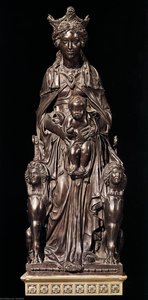
StatsChellini Madonna, recto

- 28.0 x 28.0 cm


 Read More
Giclée / Art Print
Museum-quality giclée or canvas print with fast production and flexible finish options. ( Buy Hand Made Painting Switch to Digital Image)




































Pick from our preset sizes that match the artwork's original proportions.

Type the width and the height you need, to fit your frame or your wall. A print can only be cut, never made bigger than the picture, so a size with a different shape loses a part of the image. We send you a digital mockup to approve before we print anything. The picture shown on this page does not show the real cut — only the mockup does.
Worldwide Delivery () in 2 weeks instead of standard 4/5 weeks. (1 November)

Free Worldwide Express Shipping

High-Quality Linen Canvas

Full Shipping Insurance

Customs Tax Refund Guarantee

True Color Matching Guarantee

100-Day Return Policy (Defects Only)

100% Money-Back Guarantee

Bulk Discount Offer
 Glass option is only available in size under 110 CM

Chellini Madonna, recto
Giclée / Art Print
Reproduction Size
-


Total Price
$ 81
A Testament to Renaissance Grace: The Soul of Donatello’s Chellini Madonna
To gaze upon the Chellini Madonna is to step into the very heart of the Florentine Renaissance, where the divine and the human intersect through the masterful hands of Donatello. Created around 1425, this bronze relief is far more than a religious icon; it is a profound meditation on tenderness, sculpted with an anatomical precision that revolutionized the medium of sculpture. The work captures the Virgin Mary cradling the infant Jesus, but beneath the surface of this sacred motif lies a groundbreaking commitment to realism. Donatello, a pioneer of the Early Renaissance, moved away from the stiff, stylized traditions of the Gothic era, instead drawing inspiration from the classical beauty of ancient Greece to breathe life, weight, and palpable emotion into his bronze figures.
The technical brilliance of this piece is rooted in the complex lost wax casting process, a method that allowed Donatello to achieve an extraordinary level of detail. Through this technique, the sculptor was able to manipulate molten bronze to capture the subtle nuances of skin, the delicate folds of drapery, and the soft, sleeping features of the Christ child. The result is a tactile masterpiece where the cold metal seems to pulse with warmth. For the discerning collector or interior designer, such a piece represents the pinnacle of craftsmanship—a work that commands attention not through sheer scale, but through the intricate textures and the masterful play of light and shadow across its surfaces.
Symbolism and the Humanist Spirit
Beyond its physical beauty, the Chellini Madonna serves as an enduring emblem of Humanism. This intellectual movement, which flourished in 15th-century Italy, sought to reconcile Christian faith with a renewed appreciation for human experience and classical wisdom. In this relief, we see this harmony embodied; the Virgin is not depicted as a distant, ethereal deity, but as a mother caught in a moment of profound, earthly connection. The way she cradles the child reflects a deep, psychological realism that invites the viewer to empathize with her maternal devotion.
The historical significance of this work is further enriched by its personal origins. Donatello famously presented this roundel to his physician, Giovanni Chellini, as a gesture of gratitude for medical care. This intimate connection between art and life underscores the Renaissance ideal that beauty and excellence should be shared and celebrated within the community. For those seeking to adorn a space with art that tells a story of gratitude, intellect, and timeless devotion, a high-quality reproduction of this masterpiece offers an unparalleled opportunity to bring a sense of historical gravity and spiritual serenity into a modern environment.
An Inspiration for the Modern Collector
Integrating a work of such profound historical weight into a contemporary interior requires an eye for balance and elegance. Whether placed as a focal point in a curated gallery or used to add a layer of classical sophistication to a study, the Chellini Madonna provides a sense of permanence and cultural depth. The bronze tones and the intricate relief work harmonize beautifully with both minimalist modern aesthetics and more traditional, opulent decor.
Owning a reproduction of Donatello’s vision allows one to participate in a legacy of artistic innovation that has lasted over five centuries. It is an invitation to surround oneself with the same spirit of inquiry and beauty that defined the Florentine masters, ensuring that every glance at the artwork serves as a moment of quiet reflection and aesthetic inspiration.
Questions & Answers
What is the luminance of "Chellini Madonna, recto" by Donatello?
The colors of "Chellini Madonna, recto" show a gentle luminance luminance.
How do movement and era meet in "Chellini Madonna, recto" by Donatello?
"Chellini Madonna, recto" belongs to the Renaissance Sculpture movement, and its creator worked in the Renaissance era.
What color intensity does "Chellini Madonna, recto" by Donatello have?
The color intensity of "Chellini Madonna, recto" is monochromatic. Intensity describes how strong the colors appear.
Artist Biography
early life and career
donato di niccolò di betto bardi, known as donatello, was born in florence, italy around 1386. he studied classical sculpture, which heavily influenced his development of an early renaissance style. this new approach to art and culture would eventually become the hallmark of the florentine renaissance.key works and innovations
donatello's most famous work, david, was the first freestanding nude male sculpture since antiquity. commissioned by the medici family, it showcased his innovative style and technical expertise. other notable works include:- st. louis of toulouse (now in the museum of the basilica di santa croce), which featured a classical frame designed by donatello.
- the sacrifice of isaac, created for the campanile of santa maria del fiore in florence, characterized by strong portrait details.
- crucifix (1425) for santa croce, which portrayed christ in a moment of agony.
artistic style and legacy
donatello's style can be divided into broad phases, beginning with the development of expressiveness and classical monumentality. his work was not immediately accepted by the community but eventually became the most popular, influencing other italian courts and european artists. key art movements:personal life and working style
donatello was known for being amiable and well-liked, but poor at the business side of his career. he tended to accept more commissions than he could handle, often completing works late or handing them over to other sculptors. notable artworks and artists:- leonardo da vinci: annunciation (detail)
- amico aspertini: statua di pan/leone che azzanna un cavallo
- michelangelo buonarroti: tondo pitt
museums and art collections:
- museo della collegiata (empoli, italy): a hidden gem of the renaissance, featuring works by francesco botticini and raffaello botticini.
- the early italian renaissance art movement

Donatello
1386 - 1466 , Italy
Quick Facts
- Full Name: Donatello di Niccolò
- Nationality: Italian
- Date Of Birth: 1386
- Date Of Death: 1466
- Place Of Birth: Florence, Italy
- Notable Artworks:
- David
- St. Louis of Toulouse
- Sacrifice of Isaac
- Crucifix
- Artistic Movement Or Style: Early Renaissance
- Artists Who Influenced This Artist: ['Classical sculpture']
- Artists Or Movements Influenced By This Artist:
- Italian Renaissance
- Early Renaissance
- Florentine Renaissance
Related Articles

Bronze Sculptures That Defined Art History | OriginalUniqueArt
Journey through art history with our Top 10 bronze sculptures! Explore masterpieces by Rodin, Michelangelo & more. Discover stories behind iconic statues and find museum-quality reproductions for your home decor at OriginalUniqueArt.com.

10 Iconic Bronze Sculptures That Redefined the World of Art
Journey through history with 10 legendary bronze sculptures that redefined art. From Rodin to classical masters, explore the stories behind these timeless bronze masterpieces and find museum-quality inspiration for your decor. Discover all masterpieces on OriginalUniqueArt.com.

10 Iconic Bronze Masterpieces That Redefined the World of Art
Journey through history with 10 iconic bronze masterpieces that redefined art. From Rodin to the Renaissance, explore the stories behind these timeless sculptures and find museum-quality reproductions for your decor. Discover all masterpieces on OriginalUniqueArt.com.

Bronze Age to Modern Masters: 10 Sculptures That Redefined Art | OriginalUniqueArt
Journey through art history with 10 legendary bronze sculptures – from Michelangelo's David to Rodin’s Thinker. Explore the stories, techniques & timeless beauty of these masterpieces. Find museum-quality reproductions & elevate your home decor on OriginalUniqueArt.com.

10 Iconic Bronze Sculptures That Redefined the World of Art
Journey through art history with 10 legendary bronze sculptures that redefined creativity. From Rodin to modern masters, explore the stories behind these timeless metal masterpieces and find museum-quality inspiration for your decor. Discover all masterpieces on OriginalUniqueArt.com.