
 Preview
 Send
Send Share
Share
 Details

 Download
 Similars
 X-Ray
X-Ray Diaporama
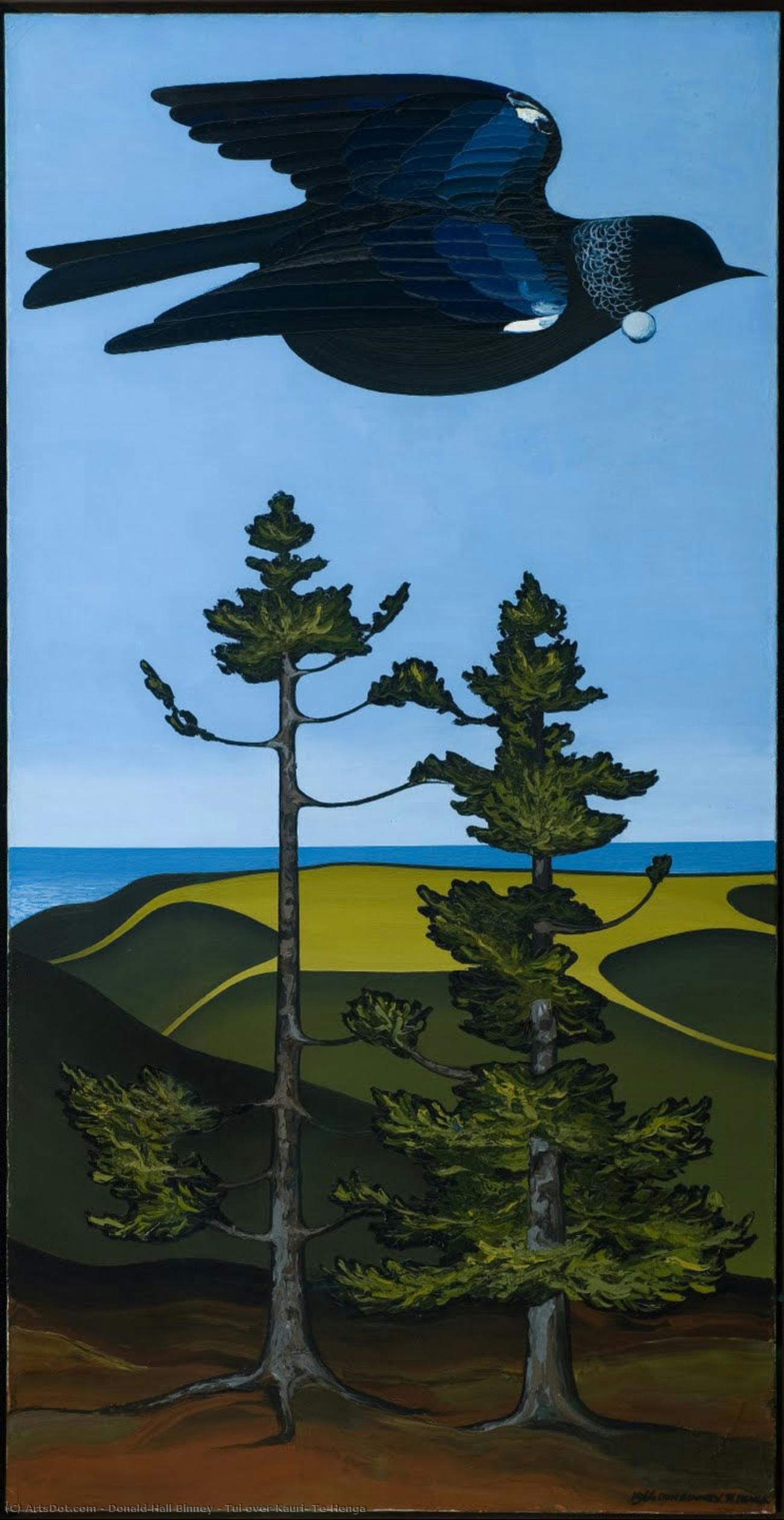
Tui over Kauri, Te Henga
 Acrylic On Canvas
- WallArt
- Contemporary Realism
 1966
1966- Modern
 54.0 x 105.0 cm
 Auckland Art Gallery Toi o Tāmaki
 Read More
Hand Made Oil Reproduction
Hand-painted oil on canvas in your size and frame, made to order by our artists. ( Buy Print Buy Image)




P118B $10

P118H $10

P118W $10

P438Z $10

P508JH $12

P508YH $12

P805H $10

P805Z $10

P919BZ $10

P919G $10

P919XJ $10

P959ZH $10

P968JZ $12

W106C $8

W218G $10

W218JH $8

W218Y $10

W307PJ $10

W316G $10

W316PJ $8

W316Y $10

W398PJ $8

W4111J $10

W500HY $15

W500JH $15

W692G $12

W849H $8

W940BG $15

W953PJ $8




Pick from our preset sizes that match the artwork's original proportions.

You may enter your own dimensions to fit a specific frame or space. If your selected size does not match the original image's proportions, we will either crop the artwork or extend the painting with additional hand-painted elements. A digital mockup will be sent for your approval before production begins.
Please note that the on-screen preview does not reflect the actual cropping or extension. Only the mockup will accurately show the final composition.
While custom sizes are available, we recommend selecting a dimension from the predefined list to preserve the original proportions.
After order, OriginalUniqueArt.com team will email client for instructions and provide a mockup preview
Worldwide Delivery () in 3/4 weeks instead of standard 5 weeks. (20 August). No compromise on quality.

Free Worldwide Express Shipping

High-Quality Linen Canvas

Full Shipping Insurance

Customs Tax Refund Guarantee

True Color Matching Guarantee

60-Day Return Policy (Defects Only)

100% Money-Back Guarantee

Bulk Discount Offer
 Glass option is only available in size under 110 CM

Tui over Kauri, Te Henga
Reproduction Medium
Reproduction Size
-


Total Price
$ 300
Artwork Description
Don Binney’s ‘Tui over Kauri, Te Henga’: A Testament to New Zealand’s Natural Harmony
Donald Hall Binney (1940-2012), a pivotal figure in New Zealand art, gifted us with an extraordinary ability to capture the essence of his native land. “Tui over Kauri, Te Henga,” painted in 1966, is more than just a depiction of a bird and a tree; it’s a profound meditation on the delicate interplay between wildlife, landscape, and human impact. This artwork, measuring 54 x 105 cm, transports the viewer to the rugged coastline of Te Henga (Mission Bay), where the raw power of the Tasman Sea meets the remnants of ancient kauri forests.
- Subject Matter: The painting centers on a striking black tui bird in mid-flight, soaring above a mature kauri tree.
- Location: The scene is set at Te Henga, a dramatic coastal location known for its eroded cliffs and exposed beauty.
- Composition: Binney masterfully employs a balanced composition, with the tui as the clear focal point, framed by the textured foliage of the kauri and the expansive horizon.
A Stylized Observation – Binney’s Unique Approach
Binney's artistic style is instantly recognizable—a deliberate departure from purely representational art. He wasn’t simply aiming to replicate what he saw; instead, he sought to distill the *feeling* of a place, translating it into a powerfully evocative image. This is evident in his use of stylized forms and simplified shapes, prioritizing clarity and emotional resonance over photographic realism. The painting's almost graphic quality contributes significantly to its enduring appeal.
The textured paint surfaces, achieved through meticulous layering and impasto techniques, add another layer of complexity. Binney’s deliberate brushstrokes aren’t merely decorative; they actively engage the viewer, inviting a tactile response to the image. This technique enhances the sense of depth and creates a dynamic surface that shifts with the light.
Symbolism and Historical Context
"Tui over Kauri, Te Henga" speaks volumes about New Zealand’s history and environmental concerns. The kauri tree, once dominant in these forests, is now largely absent due to extensive logging during the 20th century. Binney's painting serves as a poignant reminder of this loss – a visual lament for a vanished landscape. The tui itself, a native bird known for its melodic song and vibrant plumage, represents resilience and the enduring spirit of New Zealand’s natural world.
Painted in 1966, the artwork reflects a period of growing awareness regarding conservation and environmental protection in New Zealand. Binney's work anticipated the later rise of environmental art movements, demonstrating a deep connection between artistic expression and ecological responsibility. The clear horizon line is a constant visual element, representing both the vastness of the landscape and the potential for human impact.
Emotional Impact and Artistic Legacy
"Tui over Kauri, Te Henga" possesses a quiet power that resonates deeply with viewers. It evokes a sense of tranquility, wonder, and perhaps even melancholy – a recognition of beauty threatened by time and circumstance. Binney’s iconic image has become synonymous with New Zealand's natural heritage, continuing to inspire generations of artists and conservationists. This reproduction offers an exceptional opportunity to own a piece of this significant artwork, bringing its timeless beauty into your home or office.
Artist Biography
Paul Klee: A Life Painted in Color and Conflict
Born in Bern, Switzerland, in 1879, Paul Klee’s life was a vibrant tapestry woven from artistic experimentation, personal turmoil, and the tumultuous backdrop of early 20th-century Europe. His journey as an artist wasn't a straightforward ascent; it was a constant exploration, fueled by a restless curiosity and a profound engagement with color theory, music, and the human condition. From his childhood, marked by illness and a somewhat isolated upbringing, Klee developed a keen observational eye and a distinctive visual language that would ultimately define his legacy.
Klee’s early artistic training was initially focused on architecture, but it quickly became apparent that his true passion lay in painting. He studied at the Kunstlerausschule Bern and later at the Academy of Fine Arts Munich, where he encountered the burgeoning currents of Expressionism. However, Klee's style remained distinctively his own—a blend of influences ranging from Jugendstil to Byzantine art, reflecting a deep appreciation for diverse artistic traditions. His early works, such as “The Angel” (1906), demonstrate an interest in symbolism and spiritual themes, while also hinting at the playful experimentation that would characterize much of his later work.
A pivotal moment in Klee’s career arrived with his association with Wassily Kandinsky in Munich. This encounter proved transformative, introducing Klee to the principles of abstract art and profoundly influencing his approach to color and form. Kandinsky's emphasis on the spiritual power of color resonated deeply with Klee, leading him to develop a sophisticated understanding of chromatic relationships—a subject he meticulously documented in his extensive *Notebooks on Colour*. These notebooks are not merely technical treatises but also intimate reflections on the emotional impact of color, revealing Klee’s profound sensitivity and artistic intuition.
In 1928, Klee accepted an invitation to join the Bauhaus school in Dessau, Germany. This marked a significant shift in his artistic practice, exposing him to new ideas about design, typography, and industrial production. He collaborated with László Moholy-Nagy on the “Theatre of Shapes” project, exploring the possibilities of combining painting and architecture. However, the rise of Nazism forced Klee’s departure from Germany in 1933, leading him to settle in Switzerland and later France. During this period, his work became increasingly introspective and emotionally charged, reflecting the anxieties and uncertainties of the era.
The years spent in exile profoundly shaped Klee's artistic vision. His paintings from the late 1930s and early 1940s are characterized by a haunting beauty and a sense of melancholy—a poignant reflection on displacement, loss, and the fragility of human existence. Works like “Autoportrait mit Schal” (Self-Portrait with Scarf) (1937) and “The Redeemer” (1940) embody this emotional intensity, utilizing simplified forms, muted colors, and a distinctive calligraphic style. His exploration of musical notation as a visual language also intensified during this period, evident in works like "Chladni Figures" (1948), which sought to translate the patterns created by vibrating surfaces into abstract compositions.
Sadly, Paul Klee’s life was tragically cut short in 1940, just as he was succumbing to cancer. He died in Muralto, Switzerland, leaving behind a remarkably diverse and influential body of work. Despite his relatively brief career, Klee's impact on the development of modern art is undeniable. His innovative use of color, his playful experimentation with form, and his profound engagement with human emotion continue to inspire artists today. His legacy extends beyond individual artworks; it resides in his unwavering commitment to artistic exploration, his willingness to embrace diverse influences, and his ability to imbue every painting with a sense of wonder and mystery. His work remains a testament to the power of art to illuminate the complexities of life and the enduring beauty of the human spirit.
Key Works & Artistic Developments
- Early Works (1906-1918): “The Angel,” “Kreuzweg” (Via Dolorosa), demonstrating early symbolic themes and a developing draftsmanship.
- Kandinsky Influence (1917-1928): Shift towards abstraction, exploration of color theory documented in the *Notebooks on Colour*. Notable works include “Ad Parnassum” (1932) and “Twittering Machine” (1930).
- Bauhaus Period (1928-1933): Collaboration with Moholy-Nagy, experimentation with design and typography.
- Exile & Late Works (1933-1940): Increased emotional intensity, exploration of displacement and mortality; exemplified by “The Redeemer” (1940) and the "Chladni Figures" series.
Klee’s Artistic Influences
Paul Klee's artistic development was shaped by a remarkably diverse range of influences. Early exposure to Byzantine art, particularly its use of gold leaf and symbolic imagery, profoundly impacted his aesthetic sensibilities. The works of Jugendstil (Art Nouveau) artists like Aubrey Beardsley provided inspiration for his decorative style, while the writings of Nietzsche and Wagner explored philosophical ideas that resonated with his artistic concerns. Crucially, his relationship with Wassily Kandinsky introduced him to the revolutionary concepts of abstract art and color theory, fundamentally altering his approach to painting. Furthermore, Klee’s interest in music—particularly Bach and Debussy—influenced his compositional techniques and his exploration of rhythm and harmony within his artworks.
Historical Context & Significance
Klee's artistic career unfolded during a period of profound social and political upheaval. The rise of Expressionism, Cubism, and Surrealism reflected the anxieties and uncertainties of the early 20th century, while the looming threat of war cast a shadow over Europe. Klee’s work can be understood as both a product of this historical context and a response to it. His exploration of themes such as displacement, loss, and mortality reflects the collective trauma experienced by artists and intellectuals during this turbulent era. Furthermore, his embrace of abstraction and non-representational forms challenged traditional notions of art and paved the way for subsequent developments in modern art movements. Klee’s legacy extends beyond his individual artworks; he remains a symbol of artistic freedom, intellectual curiosity, and the enduring power of creativity to transcend adversity.

donald hall binney
1940 - 2012 , New Zealand
Quick Facts
- Artistic Movement Or Style: Expressionism, Cubism, Surrealism
- Artists Or Movements Influenced By This Artist:
- Bauhaus
- Modernism
- Artists Who Influenced This Artist:
- Kandinsky
- Picasso
- Date Of Birth: 1879-12-18
- Date Of Death: 1940-06-29
- Full Name: Paul Klee
- Nationality: Swiss, German
- Notable Artworks:
- Ships in the Dark
- Autumn
- Sketchbook Drawings
- Place Of Birth: Bern, Switzerland
Related Articles

Grahame Sydney: Evoking Otago's Soul Through Light & Landscape
Explore the captivating landscapes of Sir Grahame Sydney, a leading New Zealand artist renowned for his magic realism & evocative depictions of Otago's beauty. Discover key works and delve into his artistic legacy.
Feathered Visions: A Historical & Artistic Exploration of Birds in Painting
Explore the rich history of birds in painting! Discover symbolism, artistic movements & master artists like Audubon. High-quality reproductions available at OriginalUniqueArt.
Neue Sachlichkeit: The Unflinching Realism and Social Critique of German New Objectivity
Explore the raw realism of Neue Sachlichkeit. Discover how German New Objectivity artists like Otto Dix and George Grosz captured the turbulent Weimar Republic through unflinching social critique and precise detail. A definitive guide for art historians and collectors.
The Enchanted Canopy: Exploring Forests in Art History – From Romantic Idealization to Ecological Consciousness
Explore the rich history of forests in art! Discover Romantic masterpieces by Friedrich & Monet, Symbolist depths, and contemporary visions. Find inspiration & quality reproductions at OriginalUniqueArt.
Nature’s Sanctuary: Curating Enchanting Forest Artworks to Transform Your Home into a Serene Woodland Retreat
Transform your home into a serene woodland retreat with enchanting forest artworks. Discover museum-quality oil reproductions and custom landscape commissions designed to bring the peaceful beauty of nature indoors.


