() ·

A painting made for you, by hand

Penelope

Hand Made Oil Reproduction

Hand-painted oil on canvas in your size and frame, made to order by our artists. ( Switch to Print Switch to Digital Image)

Collectible Description

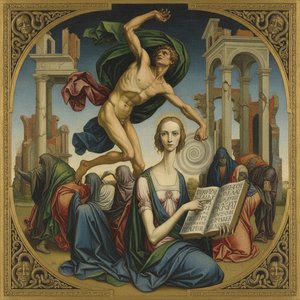
Domenico Beccafumi Delve into the captivating world of Domenico Beccafumi's 'Penelope,' a masterful depiction of virtue and antiquity, showcased in Siena’s Ospedale Nuovo alongside Ingres’ ‘Oedipus and the Sphinx.’ Explore Renaissance artistry.

Artist Biography

Domenico Beccafumi (1486-1551) was a Sienese painter known for his innovative Mannerist style—characterized by dramatic emotion, distorted figures, and opulent decorative detail—particularly in monumental frescoes like “Transit of the Virgin” and “Patriotism.”

from ·

Chapter 1

How large should it be?

Slide to change the size; the picture on the left shows the frame at its real width. The proportions of the original are kept.

Standard
custom
CM
INCH

Pick from our preset sizes that match the artwork's original proportions.

width
height

Type the width and the height you need, to fit your frame or your wall. This is hand-painted, so for a size with a different shape the artist can paint a bit more around the picture, or cut a bit — you choose. We send you a digital mockup to approve before the painting starts. The picture shown on this page does not show the real result — only the mockup does.

Chapter 2

How should it arrive?

Choose the edges of the stretched canvas

Choose your frame

Corner sample of the WhiteWrap canvas edge finish, stretched on solid wood bars
White $1
Corner sample of the BlurSideWrap canvas edge finish, stretched on solid wood bars
Blurside $1
Corner sample of the ExtendedWrap canvas edge finish, stretched on solid wood bars
Extended $1
Corner sample of the P118B picture frame: moulded polystyrene, 5 cm wide and 3 cm thick
P118B $10
Corner sample of the P118H picture frame: moulded polystyrene, 5 cm wide and 3 cm thick
P118H $10
Corner sample of the P118W picture frame: moulded polystyrene, 5 cm wide and 3 cm thick
P118W $10
Corner sample of the P438Z picture frame: moulded polystyrene, 5.5 cm wide and 3.5 cm thick
P438Z $10
Corner sample of the P508JH picture frame: moulded polystyrene, 7 cm wide and 3.5 cm thick
P508JH $12
Corner sample of the P508YH picture frame: moulded polystyrene, 7 cm wide and 3.5 cm thick
P508YH $12
Corner sample of the P805H picture frame: moulded polystyrene, 5 cm wide and 3.5 cm thick
P805H $10
Corner sample of the P805Z picture frame: moulded polystyrene, 5 cm wide and 3.5 cm thick
P805Z $10
Corner sample of the P919BZ picture frame: moulded polystyrene, 7 cm wide and 3.5 cm thick
P919BZ $10
Corner sample of the P919G picture frame: moulded polystyrene, 7 cm wide and 3.5 cm thick
P919G $10
Corner sample of the P919XJ picture frame: moulded polystyrene, 7 cm wide and 3.5 cm thick
P919XJ $10
Corner sample of the P959ZH picture frame: moulded polystyrene, 5 cm wide and 3 cm thick
P959ZH $10
Corner sample of the P968JZ picture frame: moulded polystyrene, 6 cm wide and 4 cm thick
P968JZ $12
Corner sample of the W106C picture frame: solid wood, 5 cm wide and 3 cm thick
W106C $8
Corner sample of the W218G picture frame: solid wood, 5 cm wide and 3 cm thick
W218G $10
Corner sample of the W218JH picture frame: solid wood, 5 cm wide and 3 cm thick
W218JH $8
Corner sample of the W218Y picture frame: solid wood, 5 cm wide and 3 cm thick
W218Y $10
Corner sample of the W307PJ picture frame: solid wood, 6 cm wide and 3 cm thick
W307PJ $10
Corner sample of the W316G picture frame: solid wood, 6 cm wide and 3 cm thick
W316G $10
Corner sample of the W316PJ picture frame: solid wood, 6 cm wide and 3 cm thick
W316PJ $8
Corner sample of the W316Y picture frame: solid wood, 6 cm wide and 3 cm thick
W316Y $10
Corner sample of the W398PJ picture frame: solid wood, 5 cm wide and 3 cm thick
W398PJ $8
Corner sample of the W4111J picture frame: solid wood, 6.5 cm wide and 3.5 cm thick
W4111J $10
Corner sample of the W500HY picture frame: solid wood, 7 cm wide and 5 cm thick
W500HY $15
Corner sample of the W500JH picture frame: solid wood, 7 cm wide and 5 cm thick
W500JH $15
Corner sample of the W692G picture frame: solid wood, 8 cm wide and 4 cm thick
W692G $12
Corner sample of the W849H picture frame: solid wood, 5 cm wide and 3 cm thick
W849H $8
Corner sample of the W940BG picture frame: solid wood, 7.5 cm wide and 4.5 cm thick
W940BG $15
Corner sample of the W953PJ picture frame: solid wood, 6 cm wide and 3.5 cm thick
W953PJ $8
Corner sample of the H24-GOLD picture frame: carved wood with gesso, 10 cm wide and 6 cm thick
H24-GOLD $30
Corner sample of the H24-SILVER picture frame: carved wood with gesso, 10 cm wide and 6 cm thick
H24-SILVER $30
Corner sample of the H36-GOLD picture frame: carved wood with gesso, 15 cm wide and 6.5 cm thick
H36-GOLD $45
Corner sample of the H36-SILVER picture frame: carved wood with gesso, 15 cm wide and 6.5 cm thick
H36-SILVER $45
Frame preview
Framed

Moulding: . Overall size with the frame: .

Chapter 3

Who paints it, and should anything change?

Examples of what can be changed: Replace face with customer photo; Add pet (e.g., replace cat with dog); Include hidden message in background; Change background landscape or elements.
After order, OriginalUniqueArt.com team will email client for instructions and provide a mockup preview

Worldwide Delivery () in 3/4 weeks instead of standard 5 weeks. (1 November). No compromise on quality.

Chapter 4

The finishing touches

A nameplate, as in a museum?

Engraved Bronze Plaque Details

This elegant plaque features the artist's name and the title of the artwork, finely engraved for a timeless presentation.

It is made from bronze with a refined, elegant finish. The text is precisely laser-engraved for a sharp and permanent result. Measuring 9x2 cm, the plaque is compact yet easy to read. It's built to be durable and scratch-resistant, offering a professional, museum-quality look. Mounting is simple thanks to the included adhesive backing.

Transparent Acrylic Plaque Details

The plaque includes essential engraved details such as the artist's name, the title of the artwork, the date it was created, the type of media used-like oil on canvas or watercolor-a brief description of the piece, and a QR code that links to the complete artwork information.

It is crafted from clear acrylic, offering a sleek, modern appearance. The text is UV-engraved in black to ensure strong visual contrast. With a size of 10x15 cm, it ensures optimal readability. It comes equipped with two metal hooks for secure wall mounting. The plaque is designed to be weather-resistant, making it suitable for various environments, and it includes interactive features that work seamlessly with smartphone scanning.

Black Acrylic Plaque Details

This elegant plaque includes engraved information such as the artist's name, the title of the artwork, the date it was created, the type of media used (like oil on canvas or watercolor), a short description of the artwork, and a QR code for quick access to more information.

The plaque itself is made from refined black acrylic with a premium finish. The text is laser-engraved in white for high contrast and readability. Its size is 10x15 cm, designed to be easy to read. It comes with two metal hooks for professional mounting. The design is sleek and fits any interior style. It is also weather-resistant and durable, with built-in digital integration for mobile compatibility.

A protective varnish?

When do you need it?

Chapter 5

Your painting, as you ordered it

Penelope

Reproduction Medium

Reproduction Size

-

Elite Senior Artist

More detail, finesse, and extra production time

-

Reproduction Frame

-

-

For artworks or reproductions larger than 105 cm (approximately 41 inches) on any side, the frame will be shipped as a kit, disassembled. This method ensures safe delivery and prevents damage during transport.

Professional assembly required - this is not a DIY product.
The kit must be assembled and the canvas stretched by an experienced professional framer, using wood glue (not supplied), a canvas stretching plier and clamps to hold the bars square while the glue dries. Incorrect assembly or uneven canvas tension can permanently damage the artwork and is not covered by our warranty.

  • All solid wood bars are included, precisely cut to size.

  • Assembled with the screws provided, plus wood glue for the corner joints, which is not supplied and must be sourced by your framer.

  • Professional tools are required and not included: a canvas stretching plier (tensioner) and clamps to hold the bars square while the glue dries.

Important:
The corner joints require wood glue, the bars must be held with clamps until the glue is fully dry, and tightening the canvas on the assembled frame requires a canvas stretching plier. None of these are included in the kit. Please arrange an experienced professional framer before ordering this size.

Nameplate

-

-

Protective Varnish

Glossy Varnish (enhances colors, protects against light/moisture)

-

Customize My Artwork

Examples of what can be changed: Replace face with customer photo; Add pet (e.g., replace cat with dog); Include hidden message in background; Change background landscape or elements.

-

Urgent

Worldwide Delivery () in 3/4 weeks instead of standard 5 weeks. (1 November). No compromise on quality.

-

Express Shipping

Worldwide Delivery () in 5 weeks. (8 November).

Included

Total Price

$ 300

Total Price $ 300

Glass option is only available in size under 110 CM

Included with every order

  • Free Worldwide Express Shipping
  • High-Quality Linen Canvas
  • Full Shipping Insurance
  • Customs Tax Refund Guarantee
  • True Color Matching Guarantee
  • 100-Day Return Policy (Defects Only)
  • 100% Money-Back Guarantee
  • Bulk Discount Offer

A Visionary Bridging Eras: Domenico Beccafumi’s Penelope

Domenico di Pace Beccafumi, a name perhaps less familiar than those of Michelangelo or Raphael, nevertheless stands as a crucial figure in understanding the artistic landscape of Renaissance Italy. Born around 1486 in Montaperto, near Siena, his career unfolded against a backdrop of evolving stylistic currents—a testament to his remarkable adaptability and unwavering dedication to artistic exploration. Unlike many artists of his time who rigidly adhered to established conventions, Beccafumi possessed an individual sensibility deeply rooted in Sienese traditions yet simultaneously driven by a desire to push boundaries, establishing himself as a pivotal link between the High Renaissance’s polished idealism and the burgeoning expressive fervor of Mannerism. His formative years were marked by a supportive familial environment fostered by Giacomo di Pace, who recognized his prodigious talent and ensured he received comprehensive artistic training under Mechero—a local Sienese artist whose influence would resonate throughout Beccafumi's oeuvre.

Subject Matter and Composition

“Penelope,” painted circa 1514, depicts a woman embodying virtue and wisdom from antiquity – specifically referencing Homer’s epic poem *The Odyssey*. The central figure stands serenely beside a pillar, her gaze directed upwards, suggesting contemplation of divine grace or perhaps an aspiration beyond earthly concerns. Surrounding her are several additional figures—a man positioned behind Penelope, and two others further back in the scene—creating a layered composition that invites viewers to immerse themselves in a narrative tableau. Notably, a bird perched atop the pillar adds a subtle element of symbolism, representing hope and vigilance – qualities consistently associated with female iconography during this period. The artist’s careful arrangement contributes to an atmosphere of dignified repose and spiritual contemplation.

Style and Technique: Mannerist Elegance

Beccafumi's style exemplifies the hallmarks of Mannerism—a movement characterized by deliberate distortion, stylized poses, and a heightened emphasis on expressive emotion. Unlike the harmonious balance favored by Leonardo da Vinci or Raphael, Beccafumi deliberately manipulates perspective and proportion to heighten dramatic impact. The painting’s surface is rendered with meticulous detail using oil paint on wood panel, demonstrating considerable technical skill. Observe the subtle gradations of color—particularly in Penelope's drapery—which convey a sense of luminous realism despite the stylized aesthetic. Beccafumi skillfully employs chiaroscuro – the interplay of light and shadow – to sculpt form and imbue the scene with palpable emotional depth.

Historical Context and Symbolism

Painted during the early 16th century, “Penelope” reflects the broader intellectual climate of its time—a period marked by renewed interest in classical ideals and a fascination with humanist philosophy. The depiction of Penelope aligns perfectly with prevailing artistic conventions that celebrated female virtue and piety. Homer’s *Odyssey*, recounting Odysseus' arduous journey home after the Trojan War, served as an inspirational source for artists exploring themes of resilience, fidelity, and divine providence. The pillar symbolizes stability and support—a visual representation of Penelope’s unwavering devotion to her husband and family.

Emotional Impact and Artistic Legacy

“Penelope” transcends mere visual representation; it communicates a profound sense of serenity and moral fortitude. Beccafumi's masterful technique captures not only the physical appearance of his subject but also her inner spirit—a testament to his ability to convey complex emotions through carefully crafted imagery. This painting stands as an enduring emblem of Renaissance artistic sophistication, demonstrating how artists could simultaneously honor tradition while forging new paths toward expressive innovation. Its meticulous detail and luminous color palette continue to inspire admiration and offer a captivating glimpse into the artistic sensibilities of a pivotal era.

Questions & Answers

Which museum holds the original "Penelope"?

The original "Penelope" by Domenico Di Pace Beccafumi is held at the Seminario Patriarcale, Venice, Italy. A reproduction allows the work to be displayed at home.

What mood and emotion come together in "Penelope"?

The recorded mood of "Penelope" by Domenico Di Pace Beccafumi is dramatic, and its emotional tone is melancholic.

Who is the artist behind "Penelope"?

"Penelope" is attributed to Domenico Di Pace Beccafumi.

More about this painting

Preview AR preview Switch to Print Switch to Digital Image Send
Details Guide Add to favorites Download Similars X-Ray Diaporama Q&A Stats

In numbers

  • 1514the year it was painted
  • 29frames to choose from
  • standard sizes, in its own proportions
  • 5weeks to paint and deliver it
Domenico Di Pace Beccafumi

Domenico Di Pace Beccafumi

1486 - 1551, Italy

Quick facts about Domenico Di Pace Beccafumi

  • Full Name: Domenico di Pace Beccafumi
  • Nationality: Italian
  • Date Of Birth: 1486
  • Date Of Death: 1551
  • Place Of Birth: Montaperto, Italy
  • Notable Artworks:
    • Trinity Triptych
    • The Annunciation
    • Transit of the Virgin
    • Continence of Scipio
  • Artistic Movement Or Style: Mannerism, Renaissance
  • Artists Who Influenced This Artist:
    • Raphael
    • Michelangelo
  • Artists Or Movements Influenced By This Artist: ['Mannerism']

Artist Biography

A Sienese Visionary: The Life and Art of Domenico Beccafumi

Domenico di Pace Beccafumi, a name that resonates less immediately than those of his Florentine contemporaries, nonetheless occupies a pivotal position in the narrative of Italian Renaissance art. Born around 1486 in the small Tuscan town of Montaperto, near Siena, Beccafumi’s artistic journey was one of remarkable development, culminating in a style that bridged the High Renaissance and the burgeoning complexities of Mannerism. His story isn't simply about technical skill; it is about a deeply individual vision—a sensibility steeped in the traditions of his Sienese heritage yet boldly reaching towards new expressive possibilities. His origins were humble: the son of a peasant, Giacomo di Pace, his talent was recognized by Lorenzo Beccafumi, who adopted him and provided for his initial artistic training with Mechero, a local Sienese artist. This early grounding in the Sienese school would prove foundational, even as he ventured beyond its established conventions. The Sienese tradition, already diverging from the classical ideals embraced elsewhere in Italy, fostered an environment where emotional intensity and decorative detail were valued, qualities that would become hallmarks of Beccafumi’s unique style.

Rome and the Forging of a Unique Style

Around 1509, Beccafumi journeyed to Rome, a transformative moment exposing him to the artistic ferment of the papal city. He encountered the groundbreaking works of Raphael and Michelangelo, absorbing their innovations in composition, anatomy, and dramatic expression. However, unlike many artists who sought to directly emulate these masters, Beccafumi synthesized these influences through his own distinct lens. He didn’t simply *copy* the Roman style; he filtered it through a pre-existing Sienese aesthetic—one characterized by a certain provincialism, an emphasis on decorative detail, and a lingering medieval sensibility. Upon returning to Siena, this synthesis began to manifest in a style increasingly his own. It was a style marked by irrationality, emotional intensity, and a captivating visual experience achieved through discordant colors and hallucinatory settings. His paintings weren’t merely representations of reality; they were explorations of inner states, imbued with a sense of unease and psychological depth. This departure from the harmonious balance of High Renaissance ideals signaled his embrace of Mannerism, though he remained distinctly apart from its more widespread trends.

Masterworks and Artistic Innovations

Beccafumi’s artistic output was diverse, encompassing painting, sculpture, mosaic design, and printmaking. Among his most celebrated achievements are the frescoes in the Oratory of St. Benedict in Siena, a testament to his narrative skill and expressive power. The Trinity Triptych, housed in the Pinacoteca Nazionale di Siena, showcases his mastery of oil painting and his ability to convey religious devotion with both grandeur and intimacy. The Annunciation, also at the Pinacoteca Nazionale, exemplifies his distinctive use of color and composition, creating a scene that is both serene and subtly unsettling. However, perhaps his most ambitious undertaking was his direction of the pavement for Siena Cathedral between 1517 and 1544. This monumental project involved intricate designs inlaid with marble and mosaics, depicting scenes from biblical stories—Ahab, Elijah, Melchisedec, Abraham, and Moses among them. Beccafumi not only designed these scenes but also innovated the technical processes used in their creation, demonstrating his remarkable versatility as an artist and craftsman. His skill extended to printmaking, where he excelled in both engraving and woodcut, further expanding his artistic reach. These prints allowed for wider dissemination of his style and ideas, influencing artists beyond Siena’s borders.

Legacy: The Last of the Sienese School

Domenico Beccafumi died in Siena in 1551, marking a symbolic end to the city’s long and distinguished tradition of painting. He is rightfully regarded as the last significant representative of the Sienese school, preserving its unique aesthetic qualities while simultaneously anticipating the developments of Mannerism. His work stands apart from the more harmonious compositions of the High Renaissance, embracing instead a sense of emotional tension, instability, and expressive distortion. This willingness to challenge conventional norms foreshadowed later trends in art, influencing subsequent generations with its innovative techniques and psychological depth. Beccafumi’s legacy is not simply as a painter but as a visionary who dared to explore the boundaries of artistic expression, leaving behind a body of work that continues to captivate and intrigue viewers today. He remains a compelling figure, a testament to the enduring power of individual vision within the broader currents of art history.
  • Key Characteristics of Beccafumi’s Style:
  • Misty, Non-Linear Quality: His paintings often possess an ethereal quality, with forms appearing to dissolve into a hazy atmosphere.
  • Jagged Lines and Primal Coloration: Beccafumi favored sharp, angular lines and a bold, unconventional use of color that departed from the more balanced palettes of his contemporaries.
  • Emotional Tension and Instability: A pervasive sense of unease and psychological complexity characterizes his work, reflecting a departure from the classical ideals of harmony and proportion.
  • Sienese Tradition with Mannerist Influences: He skillfully blended the decorative elements and emotional intensity of the Sienese school with the emerging stylistic features of Mannerism.

Quick Facts

  • Medium: Oil on wood panel
  • Influences: Renaissance
  • Artist: Domenico di Pace Beccafumi
  • Subject or theme: Virtuous Woman
  • Artistic style: Elegant and refined

Art Quiz

There is only one correct answer for each question.

Question 1:
What is the primary subject depicted in Domenico Beccafumi’s painting, Penelope?
Question 2:
The painting showcases several figures surrounding the central woman. What is one notable feature about these additional characters?
Question 3:
Considering Beccafumi’s artistic training in Siena, what stylistic influence can be observed in Penelope?
Question 4:
According to the image description, what is prominent in the upper left corner of Penelope?
Question 5:
What broader artistic movement is Penelope considered to be associated with, marking a transition between High Renaissance ideals and Mannerist experimentation?