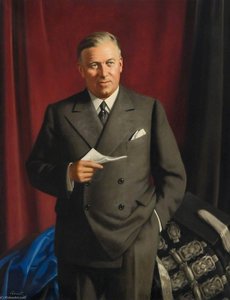
Preview
 Send
Send Share
Share
 Details
 Guide
Guide

 Download
 Similars
 X-Ray
X-Ray Diaporama
 Stats
StatsSailor, HMS 'Caesar'
 1924
1924 112.0 x 87.0 cm
 Read More
The artwork displayed on this page is protected by copyright law, which means we cannot legally create or sell an identical reproduction. This protection is enforced under international agreements such as the Berne Convention and by national laws, including those outlined by the U.S. Copyright Law - Title 17.
As a respectful and legal alternative, we offer custom, hand-painted artworks inspired by the original. Our skilled and professional artists carefully study the original's style, mood, and artistic essence to create a new, unique piece that evokes the same feeling - while remaining an original creation in its own right.
This method fully complies with copyright regulations because it does not involve copying or duplicating the protected artwork. Instead, it is a creative reinterpretation - a new painting that is influenced by the original but not identical to it.
Hand Made Oil Reproduction
Hand-painted oil on canvas in your size and frame, made to order by our artists. ( Switch to Print Switch to Digital Image)




































Pick from our preset sizes that match the artwork's original proportions.

Type the width and the height you need, to fit your frame or your wall. This is hand-painted, so for a size with a different shape the artist can paint a bit more around the picture, or cut a bit — you choose. We send you a digital mockup to approve before the painting starts. The picture shown on this page does not show the real result — only the mockup does.
After order, OriginalUniqueArt.com team will email client for instructions and provide a mockup preview
Worldwide Delivery () in 3/4 weeks instead of standard 5 weeks. (27 October). No compromise on quality.

Free Worldwide Express Shipping

High-Quality Linen Canvas

Full Shipping Insurance

Customs Tax Refund Guarantee

True Color Matching Guarantee

100-Day Return Policy (Defects Only)

100% Money-Back Guarantee

Bulk Discount Offer
 Glass option is only available in size under 110 CM

Sailor, HMS 'Caesar'
Reproduction Medium
Reproduction Size
-


Total Price
$ 300
Artist Biography
A Life Etched in Realism: The Story of David Shanks Ewart
David Shanks Ewart, a name perhaps less celebrated than some of his contemporaries, nevertheless occupies a fascinating and important niche within the landscape of 20th-century Scottish art. Born in 1901, Ewart’s life was one dedicated to meticulous observation and the pursuit of representational accuracy – a commitment that led him from the bustling streets of Glasgow to the artistic heart of Florence, Italy. While initially known under his birth name, he later adopted the pseudonym Ernest Wedderburn, adding an intriguing layer to his already complex artistic persona. His story is not one of flamboyant innovation but rather of quiet dedication and a profound respect for the traditions of Renaissance masters.From Glasgow Beginnings to Florentine Studies
Ewart’s early life in Glasgow undoubtedly shaped his aesthetic sensibilities. The city, with its industrial grit and vibrant social tapestry, provided ample subject matter for an aspiring artist. He received formal training at the Glasgow School of Art, a renowned institution that fostered a strong sense of craftsmanship and encouraged students to engage with both historical and contemporary artistic practices. However, it was Ewart’s decision to relocate to Florence in the 1920s that proved pivotal. Immersing himself in the Italian Renaissance, he studied directly from the Old Masters, absorbing their techniques and principles of composition. This period marked a turning point in his work, shifting his focus towards portraiture and scenes imbued with a remarkable sense of realism. He wasn’t merely copying; he was striving to understand the underlying structure and emotional depth that characterized the art of Michelangelo, Raphael, and Leonardo da Vinci.The Pursuit of Anatomical Precision
Ewart's artistic philosophy centered on an unwavering commitment to anatomical accuracy. This dedication wasn’t simply about technical skill; it was driven by a belief that true representation could unlock deeper emotional resonance in his subjects. He meticulously studied human form, often creating detailed preparatory drawings before embarking on larger compositions. His portraits are not idealized representations but rather honest and unflinching depictions of the individuals he painted – capturing their character, vulnerabilities, and inner lives. This pursuit led him to become a highly sought-after portraitist among both Italian and international clientele. He wasn’t interested in fleeting impressions or abstract interpretations; his goal was to create enduring images that reflected the essence of his sitters.Exhibition Success & Lasting Legacy
Ewart's work gained recognition through numerous exhibitions, most notably at Florence’s prestigious Galleria dell’Accademia – a testament to his mastery of Renaissance techniques and his ability to connect with audiences on an emotional level. His paintings often featured scenes reminiscent of the Italian masters, but infused with a distinctly modern sensibility. He skillfully blended classical principles with contemporary subject matter, creating works that were both timeless and relevant. While he didn’t actively seek widespread fame, his talent was undeniable, attracting the attention of collectors and critics alike. His ability to capture the human spirit through precise rendering and subtle emotional nuance set him apart from many of his contemporaries. Although not a prolific artist in terms of sheer volume, the quality and depth of his work have ensured his place within the annals of Scottish art history.Historical Significance & Enduring Appeal
David Shanks Ewart’s significance lies in his unwavering dedication to realism at a time when abstract expressionism was gaining prominence. He represented a counter-current – a steadfast belief in the power of representational art and the importance of traditional techniques. His work serves as a reminder that artistic innovation doesn't always necessitate radical departures from established norms. Ewart’s paintings offer a glimpse into a bygone era, capturing the essence of his subjects with remarkable clarity and emotional depth. His legacy continues to inspire artists who value craftsmanship, anatomical accuracy, and the enduring power of representational art. He died in 1965, leaving behind a body of work that stands as a testament to his skill, dedication, and profound respect for the traditions of the Renaissance masters.
David Shanks Ewart
1901 - 1965
Quick Facts
- Full Name: David Shanks Ewart
- Nationality: Scottish
- Date Of Birth: 1901
- Date Of Death: 1965
- Place Of Birth: Glasgow, Scotland
- Notable Artworks:
- The Emigrants
- Inspiration
- Artistic Movement Or Style: Realist Painting
- Artists Who Influenced This Artist: ['Michelangelo David']
- Artists Or Movements Influenced By This Artist: ['Renaissance Art']