Preview
 Send
Send Share
Share
 Details
 Guide
Guide

 Download
 Similars
 X-Ray
X-Ray Diaporama
 Stats
StatsMont St Michel


 Read More
Giclée / Art Print
Museum-quality giclée or canvas print with fast production and flexible finish options. ( Buy Hand Made Painting Switch to Digital Image)




P118B $10

P118H $10

P118W $10

P438Z $10

P508JH $12

P508YH $12

P805H $10

P805Z $10

P919BZ $10

P919G $10

P919XJ $10

P959ZH $10

P968JZ $12

W106C $8

W218G $10

W218JH $8

W218Y $10

W307PJ $10

W316G $10

W316PJ $8

W316Y $10

W398PJ $8

W4111J $10

W500HY $15

W500JH $15

W692G $12

W849H $8

W940BG $15

W953PJ $8




Pick from our preset sizes that match the artwork's original proportions.

Type the width and the height you need, to fit your frame or your wall. A print can only be cut, never made bigger than the picture, so a size with a different shape loses a part of the image. We send you a digital mockup to approve before we print anything. The picture shown on this page does not show the real cut — only the mockup does.
Worldwide Delivery () in 2 weeks instead of standard 4/5 weeks. (24 October)

Free Worldwide Express Shipping

High-Quality Linen Canvas

Full Shipping Insurance

Customs Tax Refund Guarantee

True Color Matching Guarantee

100-Day Return Policy (Defects Only)

100% Money-Back Guarantee

Bulk Discount Offer
 Glass option is only available in size under 110 CM

Mont St Michel
Giclée / Art Print
Reproduction Size
-


Total Price
$ 81
The Sublime Majesty of Mont St Michel
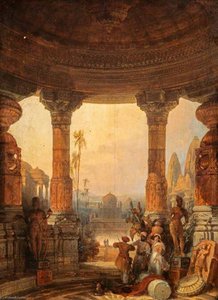
To gaze upon this depiction of Mont St Michel is to be transported across centuries and continents, standing at the precipice where human ambition meets the raw, untamed power of nature. The scene unfolds with an almost breathtaking grandeur, capturing not merely a location, but a profound state of being—a confluence of spiritual devotion and geological permanence. The imposing silhouette of the abbey rises from the tidal island like a monumental prayer etched against the vast expanse of sky. It speaks immediately to the Romantic yearning for the sublime; that feeling of awe mixed with slight terror before something overwhelmingly beautiful.
A Masterclass in 19th-Century Landscape Technique
The artist, working within the tradition of grand 19th-century landscape painting, demonstrates a remarkable command over atmosphere and light. Observe how the palette is dominated by muted earth tones—the warm tans of the sand meeting the cool grays of ancient stone. The technique suggests an oil on canvas execution, characterized by loose, visible brushstrokes that lend an immediacy to the scene, as if the artist captured this moment before the tide shifted or the clouds parted. While the vertical thrust of the abbey’s towers provides rigid structure, these strong lines are beautifully counterbalanced by the soft blending used in the sky and the gentle sweep of the foreground beach. This interplay between sharp architectural geometry and ethereal atmospheric softness is what gives the piece its enduring vitality.
Symbolism and the Human Element
Mont St Michel itself has always been more than just stone; it is a potent symbol of pilgrimage, resilience, and the enduring spirit of faith. The composition masterfully guides the viewer's eye from the inviting foreground—the sandy beach dotted with figures on horseback and in carriages—directly toward the monumental structure. These scattered human elements are crucial; they do not diminish the scale of the abbey but rather serve to measure it, reminding us that this colossal achievement has been witnessed, traversed, and revered by countless generations. It is a dialogue between humanity’s journey and history’s immovable monument.
Creating an Atmosphere for Your Space
For the collector or designer seeking to infuse a room with depth, narrative weight, and historical resonance, this reproduction offers unparalleled emotional texture. The diffused lighting, suggesting either the quiet hush of dawn or the contemplative glow of late afternoon, imbues any space it graces with a sense of timeless tranquility. It is not merely decoration; it is an anchor for contemplation. Imagine this piece anchoring a library, a grand hall, or a study—a visual portal that whispers tales of medieval devotion and the enduring power of human endeavor against the backdrop of nature’s magnificent indifference.
Questions & Answers
What mood and emotion does "Mont St Michel" by David Roberts express?
In "Mont St Michel", a romantic mood accompanies a melancholic emotion.
What color palette is used in "Mont St Michel" by David Roberts?
The colors of "Mont St Michel" form a neutrals palette. This classification describes the dominant color families.
What emotion does the Romanticism work "Mont St Michel" convey?
Within the Romanticism movement, "Mont St Michel" is recorded with a melancholic tone.
Artist Biography
David Roberts: A Life in Art
David Roberts (1796-1864) was a Scottish painter celebrated for his detailed Orientalist scenes and meticulous lithographs. His work provides invaluable visual documentation of the Middle East during the 19th century, bridging artistic representation with historical record.
Early Life and Career
Born on October 24, 1796, in Stockbridge near Edinburgh, Roberts’s early life was marked by practical training. At the age of ten, he began an apprenticeship with house painter and decorator Gavin Beugo. This foundational experience instilled a strong technical skill set, which he supplemented through evening art studies.
His initial professional work included redecorating Scone Palace in 1815. He then transitioned to scene painting for James Bannister’s circus, honing his skills in creating immersive environments. These early experiences laid the groundwork for his later success as a prominent Orientalist painter.
Artistic Journey and Influences
Roberts' artistic development was shaped by a growing fascination with different cultures and landscapes. While initially focused on theatrical scenery, he gradually shifted towards more independent artistic pursuits. His travels to Spain in 1832 were formative, sparking an interest in architectural detail and exotic locales.
However, it was his extensive tours of Egypt and the Near East (1838-1840) that truly defined his career. These journeys provided him with a wealth of sketches and observations which he later translated into his most famous works. His style wasn’t heavily influenced by any single artist, but rather developed from careful observation and technical mastery.
Notable Works and Achievements
Roberts is best known for The Holy Land, Syria, Idumea, Arabia, Egypt, and Nubia – a series of meticulously detailed lithograph prints. These images captured the grandeur of ancient sites and the vibrancy of contemporary life in the region.
- Lithographs: His lithographs were widely circulated and became highly influential in shaping European perceptions of the Middle East.
- Paintings: He also produced numerous oil paintings, often large-scale works depicting expansive landscapes and architectural marvels.
In 1841, Roberts was elected as a Royal Academician – a significant recognition of his contributions to the art world.
Artistic Style and Characteristics
Roberts’s artistic style is characterized by:
- Orientalism: A strong focus on depicting scenes from the Middle East, reflecting the European fascination with “the Orient.”
- Attention to Detail: His work is renowned for its precision and accuracy in rendering architectural details, costumes, and landscapes.
- Landscaping & Townscapes: He skillfully combined romantic sensibilities with detailed observation, creating evocative depictions of both natural environments and urban settings.
Legacy and Historical Significance
David Roberts’s work played a crucial role in popularizing the Middle East among European audiences. His images provided a visual window into a region that was largely unknown to many, influencing travel, scholarship, and artistic representation.
His lithographs served as important historical documents, preserving images of sites that have since changed or been lost. He left an indelible mark on the art world, inspiring subsequent generations of artists and continuing to captivate viewers today.

David Roberts
1796 - 1864 , United Kingdom
Quick Facts
- Name: David Roberts
- Movement: Orientalism
- Birth Date: October 24, 1796
- Death Date: 1864
- Influenced: Jenaro Pérez Villaamil, Alexander Nasmyth
- Birth Place: Stockbridge, United Kingdom
- Nationality: Scottish
- Date Of Birth: 1796
- Date Of Death: 1864
- Notable Works: The Holy Land, Syria, Idumea, Arabia, Egypt, and Nubia
- Place Of Birth: Stockbridge, United Kingdom
Related Articles

Evocations of Place: A Historical Journey Through Landscape Art
Explore the rich history of landscape art with OriginalUniqueArt. Discover renowned artists, movements like Impressionism & Romanticism, and expert guidance for collecting timeless pieces. Find your perfect serene escape today!

Romantic Landscapes: 10 Masterpieces for Your Home | OriginalUniqueArt
Journey through 10 Romantic landscape masterpieces by Friedrich, Turner & Cole. Explore emotional art, sublime nature scenes & iconic 19th-century paintings. Find museum-quality reproductions for your home at OriginalUniqueArt.com – discover the full collection online!

David Roberts: A Scottish Pioneer of Topographical Art & Orientalist Vision
Explore the captivating world of David Roberts, a pioneering Scottish painter renowned for his detailed Orientalist scenes & stunning Egyptian landscapes. Discover his legacy and find museum-quality reproductions at OriginalUniqueArt.
Alexander Nasmyth: Picturing Scotland's Romantic Landscape – Innovation & Identity
Explore the life & art of Alexander Nasmyth, a pivotal figure in Scottish Romantic landscape painting. Discover his iconic works, including portraits of Robert Burns, and learn about his lasting influence on national identity. Fine art reproductions available.

John Constable's Masterpieces: Explore 25 Iconic Landscapes for Your Home
Journey through John Constable's 25 most celebrated landscapes. Explore Romanticism, Dedham Vale & his masterful use of light in iconic paintings like 'Hay Wain'. Find museum-quality art reproductions and elevate your home decor on OriginalUniqueArt.com.