Preview
 Send
Send Share
Share
 Details
 Guide
Guide

 Download
 Similars
 X-Ray
X-Ray Diaporama
 Stats
StatsTwo Calves


 Read More
Giclée / Art Print
Museum-quality giclée or canvas print with fast production and flexible finish options. ( Buy Hand Made Painting Switch to Digital Image)




P118B $10

P118H $10

P118W $10

P438Z $10

P508JH $12

P508YH $12

P805H $10

P805Z $10

P919BZ $10

P919G $10

P919XJ $10

P959ZH $10

P968JZ $12

W106C $8

W218G $10

W218JH $8

W218Y $10

W307PJ $10

W316G $10

W316PJ $8

W316Y $10

W398PJ $8

W4111J $10

W500HY $15

W500JH $15

W692G $12

W849H $8

W940BG $15

W953PJ $8




Pick from our preset sizes that match the artwork's original proportions.

Type the width and the height you need, to fit your frame or your wall. A print can only be cut, never made bigger than the picture, so a size with a different shape loses a part of the image. We send you a digital mockup to approve before we print anything. The picture shown on this page does not show the real cut — only the mockup does.
Worldwide Delivery () in 2 weeks instead of standard 4/5 weeks. (23 October)

Free Worldwide Express Shipping

High-Quality Linen Canvas

Full Shipping Insurance

Customs Tax Refund Guarantee

True Color Matching Guarantee

100-Day Return Policy (Defects Only)

100% Money-Back Guarantee

Bulk Discount Offer
 Glass option is only available in size under 110 CM

Two Calves
Giclée / Art Print
Reproduction Size
-


Total Price
$ 81
David Gauld’s “Two Calves”: A Fusion of Japanese Influence and Pre-Raphaelite Vision
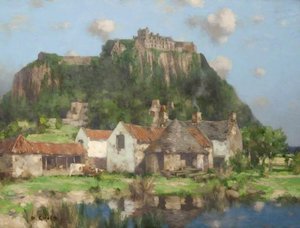
David Gauld (1865-1936) represents a pivotal moment in Scottish artistic evolution, specifically within the Glasgow Boys movement—a collective that championed bold experimentation and challenged academic conventions. His enduring legacy rests not merely on his prolific output but on his singular ability to synthesize disparate aesthetic inspirations into a cohesive visual language. Gauld’s artistic journey began with meticulous apprenticeship as a lithographer, grounding him in traditional craftsmanship before he embraced the transformative energy of Glasgow School of Art in 1882. This formative period instilled within him a deep appreciation for both Eastern and Western artistic traditions—a duality that would become central to his distinctive style.- Subject Matter: The painting depicts two cows situated within a rustic barn setting, capturing a quintessential scene of rural Scotland. Gauld’s careful observation of the natural world is evident in the depiction of the animals and their environment.
- Style: “Two Calves” embodies elements characteristic of both Japanese prints and Pre-Raphaelite ideals. The flattened perspective reminiscent of Ukiyo-e woodblock prints contributes to a sense of serenity and stillness, while simultaneously reflecting the luminous color palettes and idealized forms favored by artists like Dante Gabriel Rossetti and William Holman Hunt.
- Technique: Gauld skillfully employed oil paint on canvas—a technique that allowed for nuanced tonal gradations and textural richness—resulting in an image imbued with palpable warmth and depth. The artist’s meticulous brushwork captures the subtle nuances of light and shadow, enhancing the realism of the bovine subjects.
Historical Context: The Glasgow Boys and Artistic Innovation
Gauld's artistic endeavors coincided with a period of significant intellectual ferment in Scotland. The Glasgow Boys—including Gauld himself—challenged the prevailing stylistic norms of the Royal Academy, advocating for bolder compositions and expressive color palettes. They drew inspiration from Japanese prints, specifically *hokuyo-ga*, which emphasized atmospheric perspective and simplified forms—a deliberate rejection of academic realism. Simultaneously, they absorbed the spiritual fervor of Pre-Raphaelitism, prioritizing beauty and moral allegory over mere imitation of classical art. This dual influence propelled Gauld to forge a path toward artistic innovation that would resonate throughout the late Victorian era.Symbolism: Tranquility and Pastoral Ideal
Beyond its formal stylistic considerations, “Two Calves” carries symbolic weight. Cows represent fertility, nurturing, and pastoral contentment—themes frequently explored in Pre-Raphaelite art. The barn itself symbolizes domesticity and connection to the land, reinforcing the painting’s overarching mood of peaceful contemplation. Furthermore, the gaze of the cows—directed outwards—suggests a yearning for something beyond the immediate surroundings, hinting at an underlying spiritual dimension.Emotional Impact: A Momentary Escape into Beauty
Ultimately, Gauld's “Two Calves” succeeds in transporting viewers to a tranquil rural landscape. The painting’s luminous colors and masterful brushwork evoke feelings of serenity and nostalgia—a testament to the artist’s ability to capture not just visual likeness but also emotional resonance. It serves as an enduring reminder of the transformative power of art to elevate our perception of the natural world and to inspire contemplation on themes of beauty, simplicity, and spiritual harmony.Questions & Answers
How can I view "Two Calves" by David Gauld as a slideshow?
A slideshow is available: the Diaporama page of "Two Calves" by David Gauld.
Where can I see the original "Two Calves" by David Gauld?
The original "Two Calves" by David Gauld is held at the Glasgow Art Gallery and Museum, Glasgow, United Kingdom. A reproduction allows the work to be displayed at home.
In which movement and which era is "Two Calves" by David Gauld placed?
In "Two Calves" by David Gauld, the Glasgow Style movement meets the 19th-Century era.
Artist Biography
The Visionary of Glasgow: The Life and Art of David Gauld
In the vibrant, shifting landscape of late nineteenth-century Scotland, few artists captured the intersection of tradition and modernity as gracefully as David Gauld. Born in Glasgow in 1865, Gauld emerged not merely as a painter, but as a pioneer who bridged the gap between the delicate intricacies of graphic design and the monumental presence of stained glass. His journey was one of profound aesthetic evolution, deeply rooted in the artistic ferment of the Glasgow Boys movement, a group that sought to break free from the rigid academicism of the era in favor of more naturalistic, emotive, and experimental approaches.
Gauld’s early creative impulses were shaped by a meticulous eye for detail, a trait honed during his formative years as a lithographer. When he entered the Glasgow School of Art in 1882, he brought with him a burgeoning fascination with the aesthetics of the East. This period was marked by an intense engagement with Japanese prints, whose flattened perspectives and bold, calligraphic lines would forever haunt his compositions. His early public recognition arrived through his evocative pen and ink drawings for The Glasgow Weekly Citizen, works that demonstrated a masterful command of line and a rhythmic, organic sensibility that hinted at the Art Nouveau revolution still on the horizon.
A Synthesis of Light and Line
As Gauld’s career progressed, his artistic medium expanded from the delicate surface of paper to the luminous, translucent medium of stained glass. This transition allowed him to explore the interplay of light and color in a way that few of his contemporaries could match. During his time in Kirkcudbright between 1891 and 1894, Gauld undertook significant commissions for Guthrie and Wells, creating windows that were much more than mere architectural ornaments. These works were tapestries of light, where the organic, flowing forms of the Art Nouveau style met the soulful, symbolic depth of the Pre-Raphaelite tradition.
His technique in glasswork was characterized by a profound understanding of how color interacts with natural illumination. By manipulating texture and pigment, he could evoke a sense of atmosphere that felt both ethereal and grounded. This mastery of medium reflected his broader artistic philosophy: a belief that art should not only represent the world but also transform the space it inhabits. Whether working in oil, ink, or glass, Gauld sought to capture the essence of his subjects—be they the quiet dignity of a portrait or the rugged beauty of the Scottish landscape—through a lens of stylized elegance.
Legacy and Historical Significance
The trajectory of David Gauld’s life was marked by both collaboration and solitary refinement. His associations with other luminaries of the Glasgow School, such as William Stewart Shirreffs and Harrington Mann, placed him at the heart of a transformative period in Scottish art history. Even as his professional relationships shifted and he relocated between Glasgow, Kirkcudbright, and North Berwick, his commitment to innovation remained steadfast. He stood as a vital link between the nineteenth-century fascination with naturalism and the twentieth-century embrace of decorative modernism.
Today, Gauld is remembered as an artist of immense versatility and foresight. His ability to synthesize diverse influences—from the precision of Japanese woodblock prints to the romanticism of the Pre-Raphaelites—allowed him to contribute a unique voice to the Glasgow Style. His legacy lives on in the enduring beauty of his glasswork and the quiet, powerful presence of his paintings, which continue to resonate with an appreciation for craftsmanship, light, and the enduring spirit of Scottish innovation.

David Gauld
1865 - 1936 , United Kingdom
Quick Facts
- Full Name: David Gauld
- Nationality: Scottish
- Date Of Birth: 1865
- Date Of Death: 1936
- Place Of Birth: Glasgow, United Kingdom
- Notable Artworks:
- St Agnes
- Music
- Artistic Movement Or Style: Glasgow Boys; Art Nouveau; Pre-Raphaelites; Japanese influence
- Artists Who Influenced This Artist: ['William Stewart Macgeorge']
- Artists Or Movements Influenced By This Artist: ['Japanese art']
Related Articles
The Pre-Raphaelite Brotherhood: Reclaiming Beauty, Nature, and Truth in Victorian Art History
Explore the revolutionary Pre-Raphaelite Brotherhood. Discover how these visionary artists rejected academic tradition to reclaim beauty, nature, and truth through luminous detail and literary depth in Victorian art history.

Pre-Raphaelite Romanticism: A Guide to Vivid Detail and Medieval Beauty in Victorian Art
Explore the vivid detail and medieval beauty of Pre-Raphaelite Romanticism. Discover the history of masters like Rossetti and Millais through our expert guide to Victorian art, perfect for collectors and professionals seeking authentic, museum-quality reproductions.
Beyond the Basics: The Bold, Dreamy World of Pre-Raphaelite Art
Dive into the vivid, rebellious world of Pre-Raphaelite art. Explore the intense detail, romantic myths, and bold colors of this iconic movement, and learn how to bring these timeless, hand-painted masterpieces into your modern space with expert curation.

Pre-Raphaelite Romanticism: The Revival of Medieval Beauty and Nature in Victorian Art
Explore the profound beauty of Pre-Raphaelite Romanticism. Discover how visionaries like Rossetti and Millais revived medievalism and nature through meticulous detail and vibrant color in Victorian art history.

Dante Gabriel Rossetti's 25 Masterpieces: A Journey Through Victorian Art & Symbolism | OriginalUniqueArt
Explore 25 iconic artworks by Dante Gabriel Rossetti, a leading Pre-Raphaelite artist. Discover the stories behind masterpieces like 'Proserpine' & 'Beata Beatrix'. Find museum-quality art reproductions and elevate your home decor with OriginalUniqueArt.com.