

 Preview
 Send
Send Share
Share
 Details
 Guide
Guide

 Download
 Similars
 X-Ray
X-Ray Diaporama
 Stats
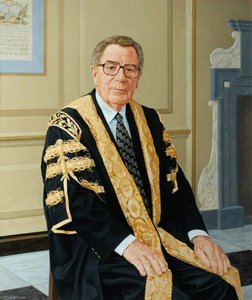
StatsTerence Burlin
 1995
1995 101.0 x 73.0 cm
 University of Westminster
 Read More
Giclée / Art Print
Museum-quality giclée or canvas print with fast production and flexible finish options. ( Buy Hand Made Painting Switch to Digital Image)




































Pick from our preset sizes that match the artwork's original proportions.

You may enter your own dimensions to fit a specific frame or space. If your selected size does not match the original image's proportions, we will either crop the artwork or extend the image with a mirrored or solid-fill edge. A digital mockup will be sent for your approval before production begins.
Please note that the on-screen preview does not reflect the actual cropping or extension. Only the mockup will accurately show the final composition.
While custom sizes are available, we recommend selecting a dimension from the predefined list to preserve the original proportions.
Worldwide Delivery () in 2 weeks instead of standard 4/5 weeks. (26 September)

Free Worldwide Express Shipping

High-Quality Linen Canvas

Full Shipping Insurance

Customs Tax Refund Guarantee

True Color Matching Guarantee

100-Day Return Policy (Defects Only)

100% Money-Back Guarantee

Bulk Discount Offer
 Glass option is only available in size under 110 CM

Terence Burlin
Giclée / Art Print
Reproduction Size
-


Total Price
$ 81
Artist Biography
David Atack: A Sculptor of Human Emotion
David Atack, born in 1949 and still actively creating today, stands as a compelling figure within contemporary British sculpture. His work isn’t merely about depicting the human form; it's an intensely personal exploration of emotion, memory, and the complexities of lived experience. Atack’s sculptures possess a raw honesty, often imbued with a sense of vulnerability that draws viewers into a profound dialogue with the depicted subject. He eschews polished surfaces and idealized forms, instead favoring textured materials and deliberately imperfect execution – choices that contribute significantly to the emotional resonance of his pieces.
Atack’s artistic journey began in the vibrant environment of OriginalUniqueArt, where he honed his skills under the guidance of Professor H. C. A. Hankins, Principal and Vice Chancellor, and later Professor R. F. Boucher, Principal and Vice Chancellor. These formative years instilled a deep appreciation for traditional sculptural techniques while simultaneously encouraging him to forge his own distinctive voice. Early influences included the powerful figurative work of artists like Henry Moore and Barbara Hepworth, though Atack quickly distinguished himself through a more direct and emotionally charged approach.
The Language of Texture and Material
A defining characteristic of Atack’s sculpture is his masterful manipulation of materials. He frequently employs bronze, often incorporating elements of rust and oxidation to create a sense of age, wear, and the passage of time. This deliberate use of imperfection isn't simply aesthetic; it serves as a metaphor for the inherent fragility and vulnerability of human existence. He also works extensively with wood, utilizing its grain and texture to further amplify the emotional impact of his figures. The rough-hewn quality of these pieces invites viewers to contemplate the stories embedded within each surface.
Atack’s process is deeply intuitive. He begins with a conceptual understanding of the subject – often a portrait or a representation of a personal memory – and then allows the material itself to guide his hand. He describes sculpting as “a conversation” between himself, the clay (or wax), and the emerging form. This collaborative approach results in sculptures that feel remarkably alive, imbued with a palpable sense of presence.
Portraits of the Soul
While Atack’s work encompasses various subjects – including landscapes and abstract forms – he is perhaps most renowned for his portraits. These are not simply likenesses; they are attempts to capture the essence of the sitter, their inner world revealed through subtle shifts in posture, expression, and gesture. He has created a substantial body of commissioned portraits, ranging from prominent figures in the arts and sciences to everyday individuals whose stories he wished to preserve.
His portraiture is characterized by an extraordinary sensitivity to detail – not just physical features but also the nuances of emotion. He’s adept at conveying a sense of quiet contemplation, vulnerability, or even unspoken sorrow. The faces in his portraits are often fragmented, as if glimpsed through a veil, inviting viewers to project their own interpretations and experiences onto the depicted subject.
Legacy and Recognition
David Atack’s sculptures have been exhibited extensively throughout the United Kingdom and internationally, garnering critical acclaim for their emotional depth and technical mastery. His work is held in numerous public collections, including those of the National Portrait Gallery and the Tate Britain. His influence extends beyond the realm of sculpture, inspiring a new generation of artists to explore the expressive potential of material and form.
Beyond his artistic achievements, Atack has also been a dedicated educator, sharing his knowledge and passion with students at various institutions. His commitment to nurturing emerging talent ensures that the legacy of David Atack will continue to resonate within the art world for years to come. His work stands as a testament to the power of sculpture to evoke profound emotions and illuminate the complexities of the human condition.
Further Exploration
For more information about David Atack’s life, work, and exhibitions, please visit his website: https://www.davidatack.org/
david atack
1949 -
Quick Facts
- Artistic Movement Or Style: Figurative Sculpture
- Artists Who Influenced This Artist: ['None],\n "Artists or movements influenced by this artist": [None']
- Date Of Birth: 1949
- Full Name: David Atack
- Nationality: British
- Notable Artworks:
- The Figure
- The Observer
- Place Of Birth: WahooArt, UK


