Preview
 Send
Send Share
Share
 Details
 Guide
Guide

 Download
 Similars
 X-Ray
X-Ray Diaporama
 Q&A
Q&A Stats
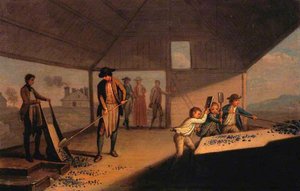
StatsLead Processing at Leadhills Washing the Ore


 Read More
Giclée / Art Print
Museum-quality giclée or canvas print with fast production and flexible finish options. ( Buy Hand Made Painting Switch to Digital Image)




P118B $10

P118H $10

P118W $10

P438Z $10

P508JH $12

P508YH $12

P805H $10

P805Z $10

P919BZ $10

P919G $10

P919XJ $10

P959ZH $10

P968JZ $12

W106C $8

W218G $10

W218JH $8

W218Y $10

W307PJ $10

W316G $10

W316PJ $8

W316Y $10

W398PJ $8

W4111J $10

W500HY $15

W500JH $15

W692G $12

W849H $8

W940BG $15

W953PJ $8




Pick from our preset sizes that match the artwork's original proportions.

Type the width and the height you need, to fit your frame or your wall. A print can only be cut, never made bigger than the picture, so a size with a different shape loses a part of the image. We send you a digital mockup to approve before we print anything. The picture shown on this page does not show the real cut — only the mockup does.
Worldwide Delivery () in 2 weeks instead of standard 4/5 weeks. (5 November)

Free Worldwide Express Shipping

High-Quality Linen Canvas

Full Shipping Insurance

Customs Tax Refund Guarantee

True Color Matching Guarantee

100-Day Return Policy (Defects Only)

100% Money-Back Guarantee

Bulk Discount Offer
 Glass option is only available in size under 110 CM

Lead Processing at Leadhills Washing the Ore
Giclée / Art Print
Reproduction Size
-


Total Price
$ 81
A Rustic Symphony of Industry: David Allan’s “Lead Processing at Leadhills Washing the Ore”
David Allan's "Lead Processing at Leadhills Washing the Ore," painted in 1789, isn’t merely a depiction of a 18th-century mining operation; it’s a carefully constructed tableau brimming with historical significance, social commentary, and a surprisingly romanticized vision of labor. This oil on canvas masterpiece, now housed at the National Galleries of Scotland, transports us to the heart of Leadhills, a small town in South Lanarkshire renowned for its lead mines – a vital industry fueling the burgeoning industrial landscape of Great Britain. Allan’s work offers a rare glimpse into the daily lives and arduous tasks undertaken by those who extracted this essential metal, revealing both the grit and the surprisingly dignified routine of early industrial life.
The scene unfolds within a dimly lit barn or workshop, dominated by a colossal white tub overflowing with molten glass – a detail that immediately suggests the broader context of glassmaking, a craft intimately linked to the mining operations. Three figures are engaged in various stages of this process: a man stirring the molten material with a long metal rod, another carefully collecting finished pieces into a wooden tray, and a third overseeing the operation from a slightly removed position. Allan’s composition is deliberately flattened, eschewing dramatic perspective for a focus on capturing the activity itself – a deliberate choice that emphasizes the relentless rhythm of work and the physicality of the labor involved. The muted color palette—browns, grays, and whites—reflects the raw materials and the inherent austerity of the setting, while subtle blues within the glass and clothing provide visual interest and prevent the scene from becoming entirely monochromatic.
Neoclassical Roots and Scottish Identity
Allan’s artistic style is firmly rooted in Neoclassicism, a movement that drew inspiration from the art and architecture of ancient Greece and Rome. This influence is evident in the carefully rendered figures, their poses conveying a sense of order and dignity despite the demanding nature of their work. However, Allan's Scottish heritage subtly infuses this classical framework with a distinctly local sensibility. The rugged landscape—the rolling Lowther Hills visible in the background—and the depiction of a specific regional industry ground the painting firmly within its geographical context. The inclusion of the Earl of Hopetoun’s patronage further underscores this connection, suggesting that Allan was commissioned to celebrate and legitimize a significant local enterprise.
Born in Alloa, Scotland, David Allan's early life was shaped by his father’s position as harbor master, exposing him to the world beyond his native land. His time in Rome profoundly influenced his artistic development, where he meticulously copied masterpieces by Gavin Hamilton, honing his skills in form and technique. This Italian sojourn instilled a deep appreciation for classical ideals, which he then skillfully integrated into his depictions of Scottish life.
Symbolism Beyond the Surface
Beyond its straightforward portrayal of mining operations, “Lead Processing at Leadhills” carries layers of symbolic meaning. Allan’s decision to romanticize the work—to present it with a degree of grace and dignity—is particularly noteworthy. In an era marked by harsh working conditions and social inequalities, he subtly elevates the status of these laborers, suggesting that their efforts contribute to the prosperity of the nation. The inclusion of a classically posed couple in the background further reinforces this message, creating a visual dialogue between the rustic realities of mining and the ideals of Enlightenment society.
The scattered blue objects on the floor—likely glass beads or fragments—serve as a potent reminder of the interconnectedness of industries within the region. Lead processing was intrinsically linked to glassmaking, highlighting the complex web of economic relationships that sustained Leadhills and its surrounding communities. The painting, therefore, becomes not just a record of a specific industry but a broader commentary on the social and economic dynamics of 18th-century Scotland.
A Window into a Bygone Era
“Lead Processing at Leadhills Washing the Ore” is more than simply a historical painting; it’s a powerful evocation of a bygone era. Allan's meticulous attention to detail—the textures of the wooden walls, the sheen of the molten glass, the expressions on the workers’ faces—transport us back in time, allowing us to connect with the lives and experiences of those who labored in these demanding conditions. Reproductions of this captivating artwork offer a unique opportunity to bring this slice of Scottish history into our homes, serving as both a decorative object and a poignant reminder of the enduring legacy of industry and craftsmanship.
Questions & Answers
Is "Lead Processing at Leadhills Washing the Ore" more bright or more dark overall?
"Lead Processing at Leadhills Washing the Ore" is shadow overall, and its luminance is soft shadow.
How much light do the colors of "Lead Processing at Leadhills Washing the Ore" appear to reflect?
The colors of "Lead Processing at Leadhills Washing the Ore" show a soft shadow luminance.
Are the colors of "Lead Processing at Leadhills Washing the Ore" by David Allan vivid or muted?
"Lead Processing at Leadhills Washing the Ore" by David Allan is recorded with a balanced soft saturation and a balanced intensity.
Artist Biography
A Scottish Voice in the Age of Enlightenment
David Allan, born in Alloa, Scotland, in 1744, emerged as a significant figure during a period of profound artistic and intellectual change. His father’s position as harbor master instilled an early connection to the world beyond Scotland's shores, hinting at influences that would later shape his artistic vision. Though details of his earliest training remain scarce, it is clear that a natural talent blossomed from youth, setting him on a path toward becoming one of Scotland’s most celebrated painters. This path led him, in 1764, to Rome – a pivotal journey for any aspiring artist of the time. For ten years, Allan immersed himself in the study of classical art and architecture, diligently copying masterpieces like the Borghese Gladiator, honing his skills in form and technique under the guidance of Gavin Hamilton. This Italian sojourn wasn’t merely about technical mastery; it was an immersion into a world of ideals that would subtly permeate his later work.Blending Worlds: Neoclassicism with Scottish Life
Upon returning to Scotland around 1770, Allan established himself in Edinburgh, quickly becoming a leading artist within the city’s vibrant cultural scene. His style is remarkable for its unique synthesis of Neoclassical precision and Rococo elegance. While embracing the classical ideals of order, balance, and clarity – hallmarks of the Neoclassical movement – he retained a decorative sensibility evident in his use of color and composition. This wasn't a rigid adherence to any single school but rather a thoughtful blending of influences. Allan excelled in both portraiture and genre painting, demonstrating a keen observational skill and an ability to capture the essence of his subjects. His portraits weren’t simply likenesses; they possessed psychological depth, revealing character and personality. However, it was perhaps in his genre scenes that Allan truly distinguished himself, offering intimate glimpses into 18th-century Scottish life – from bustling market days to quiet domestic moments. Works like “Lead Processing at Leadhills Washing the Ore” are not merely depictions of industry but insightful social commentaries rendered with remarkable realism and attention to detail. He also ventured into historical subjects, such as "Hope (triptych, centre panel)", showcasing his ambition and versatility while skillfully integrating classical influences with religious themes.The ‘Scottish Hogarth’ and a Legacy Forged in Observation
Allan's dedication to depicting contemporary life earned him the moniker “the Scottish Hogarth,” a comparison that highlights his contributions to genre painting and social commentary through art. While not directly emulating Hogarth’s often satirical style, Allan shared a similar interest in portraying everyday scenes with honesty and insight. He possessed an exceptional ability to capture the nuances of human interaction and the textures of daily life, elevating seemingly ordinary subjects to artistic significance. His association with the Foulis Academy, a prominent center for artistic training in Edinburgh, further solidified his role in shaping Scottish art during this period. Allan wasn’t just creating paintings; he was contributing to the development of a distinct national artistic identity. He influenced subsequent generations of Scottish artists, encouraging them to look inward and find inspiration in their own culture and surroundings.A Lasting Impression
David Allan's impact extends beyond his individual artworks. His illustrations for Allan Ramsay’s *The Gentle Shepherd* are particularly noteworthy, demonstrating a playful wit and an ability to capture the spirit of Scottish pastoral life. He was a master of both large-scale historical compositions and intimate domestic scenes, showcasing a remarkable range of skill and sensitivity. His death in 1796 marked the loss of a truly original voice in British art. Today, his paintings continue to be admired for their technical brilliance, insightful portrayals of Scottish society, and enduring artistic merit. Allan’s legacy lies not only in the beauty of his creations but also in his ability to bridge classical ideals with distinctly Scottish subject matter, leaving an indelible mark on the cultural landscape of his time and inspiring artists for generations to come. He remains a testament to the power of observation, the importance of artistic training, and the enduring appeal of capturing the human experience.
David Allan
1744 - 1796 , United States of America
Quick Facts
- Full Name: David Allan
- Nationality: Scottish
- Date Of Birth: 1744
- Date Of Death: 1796
- Place Of Birth: Akron, United States of America
- Notable Artworks:
- Lead Processing at Leadhills
- The Family of Procida
- Hope (triptych)
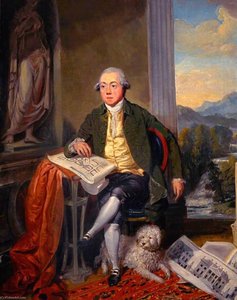
- James Craig, Architect
- The Children of David Allan
- Artistic Movement Or Style: Neoclassicism & Rococo
- Artists Who Influenced This Artist: ['Gavin Hamilton']
- Artists Or Movements Influenced By This Artist: ['Scottish artists']
Related Articles
David Teniers the Younger: Genre Painting & Social Commentary in Baroque Flanders
Explore the captivating world of David Teniers the Younger, a leading Flemish Baroque painter. Discover his genre scenes, social commentary, and lasting influence on 17th-century art. Learn about his life, techniques & legacy.
David Teniers II: Master of Flemish Genre & Social Commentary
Explore the captivating world of David Teniers II, a leading Flemish Baroque painter renowned for his lively genre scenes & insightful social commentary. Discover his masterpieces and legacy with OriginalUniqueArt.
18th Century Masters: 10 Artworks That Define an Era | OriginalUniqueArt
Journey through 18th century art! Explore 10 iconic paintings – from Rococo elegance to Neoclassical grandeur. Discover Fragonard, David & more. Find museum-quality reproductions and elevate your home decor on OriginalUniqueArt.com.
Sir John Watson Gordon: A Study in Scottish Landscape Painting & Tonal Impressionism
Explore the captivating portraits of Sir John Watson Gordon, a leading Scottish master. Discover his evolution from neoclassical style to atmospheric Tonalism and influence on 19th-century British art. Learn about his iconic sitters & legacy.

Sir David Wilkie: Narrative Detail & the Rise of Victorian Genre Painting
Explore the life & work of Sir David Wilkie, a pivotal figure in Victorian genre painting. Discover his narrative detail, social commentary, and lasting influence on 19th-century British art. Learn more at OriginalUniqueArt.