Preview
 Send
Send Share
Share
 Details
 Guide
Guide

 Download
 Similars
 X-Ray
X-Ray Diaporama
 Stats
StatsEveryman no. 1
 Acrylic On Canvas
- WallArt
- Expressionism
 150.0 x 90.0 cm
 Shrine of Remembrance
 Read More
The artwork displayed on this page is protected by copyright law, which means we cannot legally create or sell an identical reproduction. This protection is enforced under international agreements such as the Berne Convention and by national laws, including those outlined by the U.S. Copyright Law - Title 17.
As a respectful and legal alternative, we offer custom, hand-painted artworks inspired by the original. Our skilled and professional artists carefully study the original's style, mood, and artistic essence to create a new, unique piece that evokes the same feeling - while remaining an original creation in its own right.
This method fully complies with copyright regulations because it does not involve copying or duplicating the protected artwork. Instead, it is a creative reinterpretation - a new painting that is influenced by the original but not identical to it.
Hand Made Oil Reproduction
Hand-painted oil on canvas in your size and frame, made to order by our artists. ( Switch to Print Switch to Digital Image)




P118B $10

P118H $10

P118W $10

P438Z $10

P508JH $12

P508YH $12

P805H $10

P805Z $10

P919BZ $10

P919G $10

P919XJ $10

P959ZH $10

P968JZ $12

W106C $8

W218G $10

W218JH $8

W218Y $10

W307PJ $10

W316G $10

W316PJ $8

W316Y $10

W398PJ $8

W4111J $10

W500HY $15

W500JH $15

W692G $12

W849H $8

W940BG $15

W953PJ $8




Pick from our preset sizes that match the artwork's original proportions.

Type the width and the height you need, to fit your frame or your wall. This is hand-painted, so for a size with a different shape the artist can paint a bit more around the picture, or cut a bit — you choose. We send you a digital mockup to approve before the painting starts. The picture shown on this page does not show the real result — only the mockup does.
After order, OriginalUniqueArt.com team will email client for instructions and provide a mockup preview
Worldwide Delivery () in 3/4 weeks instead of standard 5 weeks. (24 October). No compromise on quality.

Free Worldwide Express Shipping

High-Quality Linen Canvas

Full Shipping Insurance

Customs Tax Refund Guarantee

True Color Matching Guarantee

100-Day Return Policy (Defects Only)

100% Money-Back Guarantee

Bulk Discount Offer
 Glass option is only available in size under 110 CM

Everyman no. 1
Reproduction Medium
Reproduction Size
-


Total Price
$ 300
Everyman no. 1: A Study in Somber Reflection
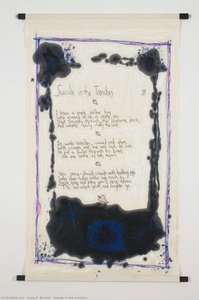
Craig R. Barrett’s “Everyman no. 1” isn't merely a drawing; it’s an invitation into a landscape of profound contemplation—a visual echo of the existential anxieties explored within George Herbert Mead’s poem, ‘Everyman.’ Executed with charcoal and ink on paper, this piece transcends simple representation, prioritizing emotional resonance over photographic accuracy.
- Composition & Technique: Barrett employs a deliberately chaotic approach. Thick, gestural lines dominate the surface, conveying urgency and immediacy alongside an underlying sense of unease. The flattened perspective minimizes depth, reinforcing the artwork’s claustrophobic atmosphere. Layers of charcoal shading create textural complexity, contrasting with delicate ink lines that delineate forms—a technique characteristic of Expressionist drawing.
- Subject Matter & Symbolism: At its core lies a seated figure slumped in a chair, head resting on hand – an archetype of vulnerability and defeat. Behind him stands another shadowy form, suggesting judgment or detached observation. The poem’s reference to mortality underscores the image's symbolic weight; Everyman embodies humanity confronting inevitable decline.
- Historical Context: Created during Barrett’s formative years as a titan of Silicon Valley—a period marked by rapid technological advancement alongside deep introspection—the artwork reflects a duality that defines his artistic vision. It speaks to the anxieties of wartime experience and broader philosophical questions about human existence, mirroring themes prevalent in early 20th-century literature.
- Emotional Impact: “Everyman no. 1” succeeds in capturing a palpable sense of sorrow and isolation. The muted palette—primarily charcoal tones—amplifies the artwork’s melancholic mood, prompting viewers to confront uncomfortable truths about life's brevity and suffering. Barrett’s masterful use of line and texture invites contemplation on themes of loss and resilience.
Craig R. Barrett: From Industry Innovator to Artistic Visionary
Before achieving global recognition as CEO of Intel, Craig R. Barrett honed his observational skills in materials science at Stanford University—a foundation that subtly informs his artistic endeavors. This intellectual rigor blends seamlessly with a passion for conveying emotion through visual mediums.
Barrett’s career trajectory exemplifies the transformative power of pursuing diverse passions. From groundbreaking technological breakthroughs to profound artistic explorations, he embodies a remarkable blend of intellect and sensitivity. His dedication to fostering innovation—both in STEM fields and creative pursuits—solidifies his legacy as an influential figure shaping our understanding of both science and art.
Exploring the Poem's Resonance
"Everyman," penned by George Herbert Mead, serves as a guiding principle for interpreting “Everyman no. 1.” The poem’s central concern – confronting mortality – finds visual expression in the slumped posture of the figure, symbolizing vulnerability and acceptance of inevitable decline.
The artist's deliberate choice to eschew realistic representation—favoring expressive line work and textural layering—mirrors Mead’s poetic approach. Together, they invite viewers into a dialogue about confronting existential anxieties and embracing the complexities inherent in human experience.
A Reproduction Worth Considering
OriginalUniqueArt offers meticulously crafted reproductions of “Everyman no. 1,” capturing Barrett's evocative style with exceptional fidelity. These prints are ideal for interior designers seeking to infuse spaces with contemplative beauty or collectors desiring a piece that embodies both intellectual depth and emotional resonance.
Questions & Answers
Which artistic current is "Everyman no. 1" by Craig R. Barrett part of?
"Everyman no. 1" by Craig R. Barrett belongs to the Expressionism movement. This movement provides the stylistic context of the work.
Is a high-resolution download of "Everyman no. 1" available?
A digital image of "Everyman no. 1" by Craig R. Barrett can be purchased on its Digital Image page: a high-resolution digital image download.
What technique was used for "Everyman no. 1" by Craig R. Barrett?
Craig R. Barrett used the acrylic on canvas technique for "Everyman no. 1". The technique defines the material nature of the original work.
Artist Biography
From Silicon Valley to Somber Sketches: The Dual Life of Craig R. Barrett
Craig R. Barrett’s story is one of remarkable duality, a narrative that intertwines the relentless innovation of the tech world with the deeply human and often harrowing realities depicted in his art. Born in San Francisco in 1939, Barrett initially charted a course firmly rooted in science, earning a doctorate in materials science from Stanford University. This rigorous academic foundation, emphasizing precision and observation, would subtly yet profoundly inform his later artistic endeavors. For decades, however, he was known as a titan of industry, ascending to the role of CEO at Intel Corporation in 1998, a position he held until 2005, followed by serving as Chairman of the Board until 2009. Under his leadership, Intel navigated the turbulent waters of the dot-com era and solidified its dominance as a global technology leader—a legacy built on strategic vision and an unwavering commitment to research and development. Yet, beneath the surface of this high-powered executive life lay a burgeoning artistic sensibility, waiting for the space to fully bloom.The Echoes of War: Finding Voice Through Poetry and Monochrome
Following his retirement from Intel, Barrett turned with increasing dedication to his passion for art. He didn’t embrace vibrant colors or abstract forms; instead, he found his voice in the stark emotional power of monochrome sketches. These are not merely depictions of scenes, but visceral responses to the poignant verses of World War I poetry, particularly the work of Wilfred Owen. A profound empathy for the soldiers whose experiences Owen so unflinchingly documented permeates Barrett’s art. The influence is direct and deliberate; many pieces directly respond to or draw inspiration from specific poems, exploring themes of loss, courage, and the devastating human cost of conflict. This isn't a detached historical observation but an intimate engagement with the psychological weight of war—the isolation, the fear, the enduring trauma. Barrett’s artistic journey is thus not simply about creating images; it’s about translating the emotional truth of poetry into a visual language.A Style Forged in Shadow and Line
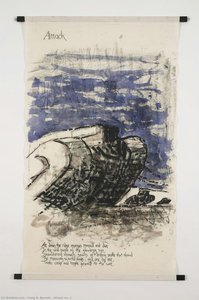
Barrett's distinctive style is immediately recognizable for its deliberate austerity. The predominantly monochrome palette—often shades of charcoal, ink, and gray—lends a somber quality to his depictions, mirroring the bleakness of the landscapes and experiences he portrays. But within this restraint lies immense expressive power. His line work isn’t merely descriptive; it's dynamic and emotive, capturing both the physical realities of trench warfare – the mud, the barbed wire, the crumbling structures – and the psychological toll it takes on individuals. There is a rawness to his technique, an immediacy that conveys a sense of urgency and grief. He doesn’t shy away from depicting the horrors of war, but he does so with a sensitivity that avoids sensationalism, focusing instead on the human element—the resilience, the sacrifice, and the enduring power of the spirit in the face of unimaginable adversity. Notable works like “Attack no. 1” embody this approach, offering a chaotic and brutal depiction of combat, while pieces such as "Banishment" evoke feelings of profound isolation and displacement. “Hospital barge at Cérisy no. 1”, directly inspired by Owen’s poem, is particularly poignant, capturing the quiet desperation and fragile hope within a wartime medical facility.Legacy: A Bridge Between Worlds
Craig R. Barrett's journey represents something truly unique—a successful business leader who has found profound meaning and purpose in artistic expression. His work serves as a powerful reminder of the human cost of war, offering a visual interpretation of the emotional landscape explored by poets like Wilfred Owen. While his achievements at Intel are well-documented and widely celebrated, his artistic contributions offer a compelling new dimension to his legacy. He demonstrates that creativity isn’t confined to specific disciplines; it can flourish in unexpected places and emerge from diverse experiences. Barrett's art is not simply a hobby pursued in retirement but a deeply felt response to history, a testament to the enduring power of empathy, and a poignant exploration of the human condition. His monochrome sketches stand as a powerful visual echo of Owen’s words, ensuring that the lessons—and the tragedies—of World War I continue to resonate with future generations.Notable Works
- “Attack no. 1” – A visceral depiction of the chaos and brutality of combat.
- “Banishment” – Evoking feelings of isolation and displacement.
- “Red sky” - Capturing a haunting atmosphere.
- “The unreturning” – Reflecting on loss and remembrance.
- “Hospital barge at Cérisy no. 1” – A poignant scene depicting wartime medical care, inspired by Owen’s poem.
- “Everyman no. 1” - An expressionistic drawing evoking despair and the human condition.

Craig R. Barrett
1939 - , United States of America
Quick Facts
- Full Name: Craig R. Barrett
- Nationality: American
- Date Of Birth: 1939
- Place Of Birth: San Francisco, United States of America
- Notable Artworks:
- Attack no. 1
- Banishment
- Red sky
- The unreturning
- Hospital barge…
- Artistic Movement Or Style: Monochrome sketches
- Artists Who Influenced This Artist: ['Wilfred Owen']
Related Articles

Mastering the Line: A Comprehensive Expert Guide to Technical Precision and Expressive Depth in Drawing
Elevate your artistic practice with this expert guide to mastering the line. Discover advanced techniques in graphite, charcoal, and contour drawing designed for art students seeking technical precision and expressive depth in their fine art studies.

Mixed Media Art for Hospitality: A Professional Guide to Texture, Layering, and High-Impact Interior Design
Elevate hospitality interiors with professional mixed media art. Our guide explores texture, layering, and durability for hotel designers and procurement managers seeking high-impact, custom-commissioned artworks that define luxury guest experiences.
Beyond the Brush: An Expert Guide to Mastering Mixed Media Art Techniques and Materiality
Elevate your artistic practice with our expert guide to mastering mixed media art. Discover professional techniques for layering, material integration, and creating structural depth to transform your creative vision into sophisticated, multi-dimensional masterpieces.
The Nuances of Graphite: Exploring Emotional Depth & Technical Mastery in Pencil Drawing
Explore the captivating world of graphite drawing! Discover its rich history, master essential techniques like chiaroscuro, and learn how artists evoke emotion through this timeless medium. Expert insights for art enthusiasts.
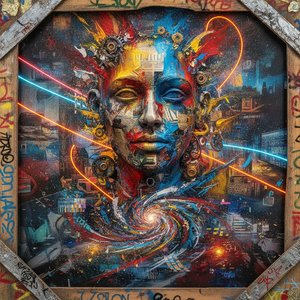
Mixed Media Magic: How to Layer Texture and Street Style for High-Impact Art
Master the art of high-impact decor with our trend forecast on mixed media. Discover how to layer street style textures and dimensional elements to create a bold, urban aesthetic for your modern space. Elevate your collection with professional insights into contemporary art trends.