Preview
 Send
Send Share
Share
 Details
 Guide
Guide

 Download
 Similars
 X-Ray
X-Ray Diaporama
 Q&A
Q&A Stats
StatsBanishment

- 150.0 x 90.0 cm


 Read More
The artwork displayed on this page is protected by copyright law, which means we cannot legally create or sell an identical reproduction. This protection is enforced under international agreements such as the Berne Convention and by national laws, including those outlined by the U.S. Copyright Law - Title 17.
This method fully complies with copyright regulations because it does not involve copying or duplicating the protected artwork. Instead, it is a creative reinterpretation - a new painting that is influenced by the original but not identical to it.
Giclée / Art Print
Museum-quality giclée or canvas print with fast production and flexible finish options. ( Buy Hand Made Painting Switch to Digital Image)




P118B $10

P118H $10

P118W $10

P438Z $10

P508JH $12

P508YH $12

P805H $10

P805Z $10

P919BZ $10

P919G $10

P919XJ $10

P959ZH $10

P968JZ $12

W106C $8

W218G $10

W218JH $8

W218Y $10

W307PJ $10

W316G $10

W316PJ $8

W316Y $10

W398PJ $8

W4111J $10

W500HY $15

W500JH $15

W692G $12

W849H $8

W940BG $15

W953PJ $8




Pick from our preset sizes that match the artwork's original proportions.

Type the width and the height you need, to fit your frame or your wall. A print can only be cut, never made bigger than the picture, so a size with a different shape loses a part of the image. We send you a digital mockup to approve before we print anything. The picture shown on this page does not show the real cut — only the mockup does.
Worldwide Delivery () in 2 weeks instead of standard 4/5 weeks. (11 November)

Free Worldwide Express Shipping

High-Quality Linen Canvas

Full Shipping Insurance

Customs Tax Refund Guarantee

True Color Matching Guarantee

100-Day Return Policy (Defects Only)

100% Money-Back Guarantee

Bulk Discount Offer
 Glass option is only available in size under 110 CM

Banishment
Giclée / Art Print
Reproduction Size
-


Total Price
$ 81
A Portrait of Quiet Intensity: Craig R. Barrett’s “Banishment”
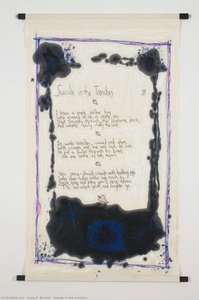
Craig R. Barrett's "Banishment" isn’t merely a monochrome sketch; it’s a distilled echo of the anxieties and resilience inherent in the human condition, rendered with a stark elegance that belies its complex origins. Born from the mind of a man who once steered one of the world’s most powerful technology companies – Intel CEO Craig R. Barrett – this piece reveals a surprising vulnerability beneath layers of disciplined observation. It's a work deeply rooted in the poetry of World War I, specifically Sassoon’s evocative verses, and speaks to themes of isolation, loss, and the enduring struggle against internal demons. The image itself is deceptively simple: a solitary figure, rendered with an almost brutal directness, dominates the composition, its back turned towards the viewer, offering no solace or explanation. This deliberate anonymity invites the observer to project their own experiences onto the subject, fostering a profoundly personal connection.
The Language of Monochrome and Memory
Barrett’s masterful use of monochrome is crucial to the work's impact. The absence of color doesn’t diminish the image; rather, it intensifies its emotional resonance. It strips away superficial distractions, forcing us to confront the raw essence of form and texture. The predominantly dark palette – a deep, almost bruised black – suggests a sense of melancholy and perhaps even despair. Yet, within this darkness, subtle variations in tone reveal a remarkable control over light and shadow, creating a tactile quality that draws the eye across the surface. The technique itself is reminiscent of early 20th-century sketching practices, echoing the expressive lines and loose brushwork favored by artists grappling with the horrors of war. The paper’s texture subtly contributes to this effect, hinting at the artist's hand and adding a layer of intimacy to the piece.
Echoes of Sassoon and the Trauma of War
The text incorporated into “Banishment” – fragments from Wilfred Sassoon’s poetry – provides a vital key to understanding the work’s deeper meaning. Sassoon's verse, known for its unflinching portrayal of war’s psychological toll, speaks directly to themes of disillusionment, suffering, and the struggle to find meaning in a world ravaged by conflict. Barrett’s decision to integrate these words into his sketch suggests a deliberate attempt to confront the legacy of trauma – not through grand pronouncements or heroic narratives, but through quiet contemplation and understated grief. The lines are carefully positioned, almost as if etched onto the figure's form, blurring the boundaries between image and text, and suggesting that the experience of war is inextricably woven into the fabric of human existence.
A Bridge Between Silicon Valley and Somber Sketches
The juxtaposition of Craig R. Barrett’s career – a titan of the technology industry – with this intensely personal artwork is profoundly compelling. It reveals a hidden depth within a man often perceived as purely rational and strategic. “Banishment” offers a glimpse into a soul grappling with complex emotions, suggesting that even those who have achieved extraordinary success can be haunted by inner struggles. The piece serves as a powerful reminder that creativity isn’t solely the domain of innovation; it's also a fundamental aspect of the human experience – a way to process pain, confront mortality, and ultimately, find meaning in a world often marked by uncertainty. The work demonstrates an unexpected sensitivity, transforming the image of a technological visionary into a poignant meditation on the enduring power of memory and emotion.
Dimensions and Reproduction: Bringing “Banishment” Home
“Banishment,” measuring 150 x 90 cm, commands attention with its scale and intensity. Originally created using ink on paper, high-quality reproductions capture the subtle nuances of Barrett’s technique – the delicate variations in tone, the tactile quality of the surface, and the evocative power of the monochrome palette. Consider framing “Banishment” within a simple, dark wood frame to further emphasize its stark beauty, or opt for a minimalist white wall to allow the artwork's inherent drama to shine through. This piece would be particularly well-suited for spaces that value introspection, artistic expression, and a touch of understated elegance – a study, a library, or even a contemporary living room seeking a focal point of quiet intensity.
Questions & Answers
Can I see "Banishment" by Craig R. Barrett under different lights?
"Banishment" can be examined layer by layer on the artwork's X-Ray page, a viewer inspired by a conservator's light bench with eleven optical readings of the image.
Which room is "Banishment" by Craig R. Barrett recommended for?
"Banishment" by Craig R. Barrett is recommended for a living room. This suggestion is based on the work's subject, colors and mood.
Is "Banishment" one of Craig R. Barrett's most popular works?
The popularity level recorded for "Banishment" by Craig R. Barrett is recognized.
Artist Biography
From Silicon Valley to Somber Sketches: The Dual Life of Craig R. Barrett
Craig R. Barrett’s story is one of remarkable duality, a narrative that intertwines the relentless innovation of the tech world with the deeply human and often harrowing realities depicted in his art. Born in San Francisco in 1939, Barrett initially charted a course firmly rooted in science, earning a doctorate in materials science from Stanford University. This rigorous academic foundation, emphasizing precision and observation, would subtly yet profoundly inform his later artistic endeavors. For decades, however, he was known as a titan of industry, ascending to the role of CEO at Intel Corporation in 1998, a position he held until 2005, followed by serving as Chairman of the Board until 2009. Under his leadership, Intel navigated the turbulent waters of the dot-com era and solidified its dominance as a global technology leader—a legacy built on strategic vision and an unwavering commitment to research and development. Yet, beneath the surface of this high-powered executive life lay a burgeoning artistic sensibility, waiting for the space to fully bloom.The Echoes of War: Finding Voice Through Poetry and Monochrome
Following his retirement from Intel, Barrett turned with increasing dedication to his passion for art. He didn’t embrace vibrant colors or abstract forms; instead, he found his voice in the stark emotional power of monochrome sketches. These are not merely depictions of scenes, but visceral responses to the poignant verses of World War I poetry, particularly the work of Wilfred Owen. A profound empathy for the soldiers whose experiences Owen so unflinchingly documented permeates Barrett’s art. The influence is direct and deliberate; many pieces directly respond to or draw inspiration from specific poems, exploring themes of loss, courage, and the devastating human cost of conflict. This isn't a detached historical observation but an intimate engagement with the psychological weight of war—the isolation, the fear, the enduring trauma. Barrett’s artistic journey is thus not simply about creating images; it’s about translating the emotional truth of poetry into a visual language.A Style Forged in Shadow and Line
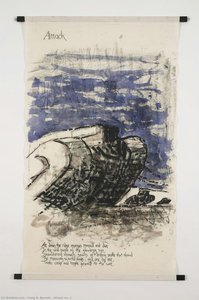
Barrett's distinctive style is immediately recognizable for its deliberate austerity. The predominantly monochrome palette—often shades of charcoal, ink, and gray—lends a somber quality to his depictions, mirroring the bleakness of the landscapes and experiences he portrays. But within this restraint lies immense expressive power. His line work isn’t merely descriptive; it's dynamic and emotive, capturing both the physical realities of trench warfare – the mud, the barbed wire, the crumbling structures – and the psychological toll it takes on individuals. There is a rawness to his technique, an immediacy that conveys a sense of urgency and grief. He doesn’t shy away from depicting the horrors of war, but he does so with a sensitivity that avoids sensationalism, focusing instead on the human element—the resilience, the sacrifice, and the enduring power of the spirit in the face of unimaginable adversity. Notable works like “Attack no. 1” embody this approach, offering a chaotic and brutal depiction of combat, while pieces such as "Banishment" evoke feelings of profound isolation and displacement. “Hospital barge at Cérisy no. 1”, directly inspired by Owen’s poem, is particularly poignant, capturing the quiet desperation and fragile hope within a wartime medical facility.Legacy: A Bridge Between Worlds
Craig R. Barrett's journey represents something truly unique—a successful business leader who has found profound meaning and purpose in artistic expression. His work serves as a powerful reminder of the human cost of war, offering a visual interpretation of the emotional landscape explored by poets like Wilfred Owen. While his achievements at Intel are well-documented and widely celebrated, his artistic contributions offer a compelling new dimension to his legacy. He demonstrates that creativity isn’t confined to specific disciplines; it can flourish in unexpected places and emerge from diverse experiences. Barrett's art is not simply a hobby pursued in retirement but a deeply felt response to history, a testament to the enduring power of empathy, and a poignant exploration of the human condition. His monochrome sketches stand as a powerful visual echo of Owen’s words, ensuring that the lessons—and the tragedies—of World War I continue to resonate with future generations.Notable Works
- “Attack no. 1” – A visceral depiction of the chaos and brutality of combat.
- “Banishment” – Evoking feelings of isolation and displacement.
- “Red sky” - Capturing a haunting atmosphere.
- “The unreturning” – Reflecting on loss and remembrance.
- “Hospital barge at Cérisy no. 1” – A poignant scene depicting wartime medical care, inspired by Owen’s poem.
- “Everyman no. 1” - An expressionistic drawing evoking despair and the human condition.

Craig R. Barrett
1939 - , United States of America
Quick Facts
- Full Name: Craig R. Barrett
- Nationality: American
- Date Of Birth: 1939
- Place Of Birth: San Francisco, United States of America
- Notable Artworks:
- Attack no. 1
- Banishment
- Red sky
- The unreturning
- Hospital barge…
- Artistic Movement Or Style: Monochrome sketches
- Artists Who Influenced This Artist: ['Wilfred Owen']
Related Articles

Echoes of Trauma & Hope: Representing Transformation in Artworks of 1918
Explore the profound artistic responses to World War I's trauma & hope. Discover Expressionist masterpieces by Bacon, de Kooning & more. Expert insights for collectors & art enthusiasts at OriginalUniqueArt.

William Owen: A Poetic Vision of War & Landscape in British Modernism
Explore the poignant war poetry of Wilfred Owen, a key figure in British Modernism. Discover his innovative style, themes of loss & camaraderie, and lasting impact on 20th-century literature. Analysis & historical context included.

The Eloquent Line: Exploring the Artistic Significance of Sketches Across Movements and Media
Explore the profound artistic significance of sketches throughout history. From Renaissance masters to modern innovators like Van Gogh & Guston, discover how these foundational works reveal technique, emotion, and vision. Learn more at OriginalUniqueArt.
C.R.W. Nevinson: A Vorticist Vision of War & Modernity
Explore the powerful art of C.R.W. Nevinson, a key British Vorticist painter. Discover his impactful depictions of WWI and evolution beyond Futurism. Expert analysis & high-quality reproductions at OriginalUniqueArt.
Raw Energy: Why Sketch Studies are the Ultimate Urban Vibe for Your Walls
Elevate your space with the raw energy of sketch studies. Discover how the unfiltered power of charcoal, line, and gesture creates the ultimate urban vibe for modern interiors. Expert trends in contemporary wall art curation for the design-conscious professional.