Preview
 Send
Send Share
Share
 Details

 Download
 Similars
 X-Ray
X-Ray Diaporama
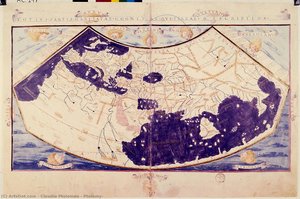
World map


 Read More
Giclée / Art Print
Museum-quality giclée or canvas print with fast production and flexible finish options. ( Buy Hand Made Painting Buy Image)




P118B $10

P118H $10

P118W $10

P438Z $10

P508JH $12

P508YH $12

P805H $10

P805Z $10

P919BZ $10

P919G $10

P919XJ $10

P959ZH $10

P968JZ $12

W106C $8

W218G $10

W218JH $8

W218Y $10

W307PJ $10

W316G $10

W316PJ $8

W316Y $10

W398PJ $8

W4111J $10

W500HY $15

W500JH $15

W692G $12

W849H $8

W940BG $15

W953PJ $8




Pick from our preset sizes that match the artwork's original proportions.

You may enter your own dimensions to fit a specific frame or space. If your selected size does not match the original image's proportions, we will either crop the artwork or extend the image with a mirrored or solid-fill edge. A digital mockup will be sent for your approval before production begins.
Please note that the on-screen preview does not reflect the actual cropping or extension. Only the mockup will accurately show the final composition.
While custom sizes are available, we recommend selecting a dimension from the predefined list to preserve the original proportions.
Worldwide Delivery () in 2 weeks instead of standard 4/5 weeks. (5 September)

Free Worldwide Express Shipping

High-Quality Linen Canvas

Full Shipping Insurance

Customs Tax Refund Guarantee

True Color Matching Guarantee

60-Day Return Policy (Defects Only)

100% Money-Back Guarantee

Bulk Discount Offer
 Glass option is only available in size under 110 CM

World map
Giclée / Art Print
Reproduction Size
-


Total Price
$ 81
A Window into the Ancient Cosmos
To gaze upon Claudio Ptolemy’s World Map is to embark on a profound journey through time, stepping back into an era where the boundaries of the known world were still being etched by the hands of scholars and dreamers. Created in 1490, this exquisite piece serves as a breathtaking bridge between the classical wisdom of antiquity and the burgeoning curiosity of the Renaissance. The painting captures a moment in human history when geography was as much an art form as it was a science, presenting a vision of our planet that is both deeply intricate and hauntingly beautiful. For the discerning collector or interior designer, this work offers more than mere decoration; it provides a window into the very soul of human exploration, making it a commanding centerpiece for any space dedicated to intellect and wonder.
The artistry of this map lies in its delicate balance of mathematical precision and evocative illustration. Every stroke of the brushwork reveals a meticulous attention to detail, from the sweeping curves of the vast, mysterious oceans to the textured outlines of the continents. The technique employed in this reproduction honors the original's spirit, capturing the subtle gradations of color that suggest the depth of uncharted waters and the ruggedness of distant lands. Within its borders, one might find the faint traces of mythical creatures or symbolic elements that once populated the margins of the human imagination, reminding us that for centuries, the map was a canvas where reality and legend danced in inseparable harmony.
The Legacy of a Mathematical Titan
The historical weight of this piece is anchored by the monumental legacy of its creator, Claudio Ptolemy. A titan of the Roman era, Ptolemy’s influence on Western thought cannot be overstated; his geocentric models and cartographic principles shaped the scientific landscape for over a millennium. This map, though a later interpretation of his foundational concepts, carries the weight of that intellectual revolution. It embodies the transition from a world viewed through the lens of myth to one understood through observation and calculation. When placed within a curated collection, this artwork acts as a silent narrator, telling stories of the great navigators, astronomers, and philosophers who sought to decode the mysteries of the heavens and the Earth.
For those seeking to infuse their interiors with a sense of timelessness and prestige, the World Map offers an unparalleled emotional resonance. It evokes a feeling of nostalgia for the Age of Discovery—a period defined by courage and the relentless pursuit of knowledge. The piece possesses a quiet authority that complements both classical and contemporary settings, providing a sophisticated focal point that invites long periods of contemplation. Whether it is gracing a private library, a grand study, or a modern living space, this reproduction serves as a constant reminder of our shared human desire to map the unknown and find our place within the vast, beautiful tapestry of the universe.
Artist Biography
A Titan of Antiquity: Claudio Ptolemy and the Shaping of Western Thought
Born around AD 100 in the ancient, lore-steeped environs of Canopus, Egypt, Claudio Ptolemy was far more than a mere mathematician; he was a monumental figure whose intellectual reach defined the scientific landscape of his era. Living during the twilight years of the Roman Empire, Ptolemy functioned as a bridge between the classical wisdom of antiquity and the burgeoning curiosity that would eventually ignite the Renaissance. His life’s work was not merely an academic pursuit but a profound attempt to decode the very language of the universe, creating a legacy that resonates through the centuries in both scientific treatises and the evocative beauty of historical cartography.
The brilliance of Ptolemy is most vividly captured in his role as the architect of celestial observation. Through his magnum opus, Almagest, he meticulously charted the movements of the planets using sophisticated geometric principles. By developing a geocentric model—a concept that placed Earth at the heart of the cosmos—he provided a framework for astronomical prediction that remained the undisputed authority for over 1,500 years. This was not a simple philosophical assertion but a complex mathematical achievement, utilizing intricate epicycles and deferents to account for the mysterious retrograde motion of planets. To gaze upon the celestial charts inspired by his work is to witness a moment in human history where mathematics and art danced in inseparable harmony, seeking to capture the divine order of the heavens.
Mapping the Known World: The Art of Geography
Beyond the reaches of the stars, Ptolemy revolutionized our understanding of the terrestrial realm through his monumental atlas, Geographia. In an age where maps often drifted into the territory of myth and legend, Ptolemy introduced a rigorous, mathematical approach to cartography. He consolidated vast amounts of knowledge from Greek, Egyptian, Roman, and Persian sources, utilizing mathematical projections to represent the contours of the Earth with unprecedented precision. His work transformed geography from a collection of narratives into a disciplined science of coordinates and projections.
The enduring impact of his cartographic vision can be seen in the exquisite reproductions of his maps that continue to captivate collectors today. These works, such as the Map of Asia or the detailed Tabula II Affricae, serve as breathtaking windows into a time when the boundaries of the known world were still being etched by scholars and dreamers. Each line and coastline in these historical pieces reflects a meticulous attention to detail, where the ruggedness of distant lands meets the delicate artistry of hand-colored parchment. For the modern observer, these maps are more than mere navigational tools; they are profound explorations of human curiosity and the eternal desire to chart the unknown.
A Lasting Legacy in Art and Science
The historical significance of Claudio Ptolemy extends far beyond the dusty pages of ancient textbooks. His influence acted as a foundational pillar for the scientific revolution, providing the very principles that later astronomers would eventually challenge and refine. Yet, his impact is equally felt in the realm of visual aesthetics. The precision of his mathematical models and the structured beauty of his maps deeply influenced Renaissance artists who sought to depict the natural world with both accuracy and grace.
Today, the works attributed to his legacy continue to inspire a sense of wonder. Whether through the sweeping curves of mysterious oceans in a World Map or the intricate settlements detailed in his African charts, Ptolemy’s spirit lives on. He remains a symbol of the human intellect's ability to impose order upon chaos, turning the vast, terrifying expanse of the cosmos and the earth into a structured, beautiful, and ultimately understandable masterpiece.

claudio ptolomeo
Egypt
Quick Facts
- Artistic Movement Or Style: Renaissance Art
- Artists Or Movements Influenced By This Artist: ['Euclid']
- Artists Who Influenced This Artist: ['Aristotle']
- Date Of Birth: c. AD 100
- Date Of Death: 160s/170s
- Full Name: Claudius Ptolemy
- Nationality: Greek
- Notable Artworks:
- Map of Asia
- Tabula II Affricae
- Place Of Birth: Canopus, Egypt
Related Articles
Echoes of Time: Nostalgia, Technique & Cultural Significance in Vintage Paintings
Explore the captivating world of vintage paintings! Discover key styles, cultural significance & collecting tips from art experts at OriginalUniqueArt. Find authentic reproductions and elevate your home décor.
Echoes of Time: Exploring the Enduring Appeal of Vintage Artwork
Explore the captivating world of vintage art! Discover its history, enduring appeal, & how to build your own collection. Expert advice, custom reproductions & museum-quality prints at OriginalUniqueArt.

Echoes of Time: Exploring the Enduring Appeal & Historical Context of Vintage Art Prints
Explore the captivating world of vintage art prints! Discover their history, collecting tips & enduring appeal. Expert insights on chromolithography and building a legacy collection with OriginalUniqueArt.
Echoes of Eras Past: Exploring Themes & Techniques in Vintage Art Collections
Explore the captivating world of vintage art! Discover historical movements, iconic themes & collecting tips. Find handmade reproductions & expert appraisal at OriginalUniqueArt.

Echoes of Arcadia: Nostalgia & Transformation in Vintage Landscape Art
Explore the evocative world of vintage landscape art! Discover the history, artists & emotional power behind masterpieces from the Hudson River School & beyond. Expert insights for collectors & enthusiasts.