
 Preview
 Send
Send Share
Share
 Details

 Download
 Similars
 X-Ray
X-Ray Diaporama
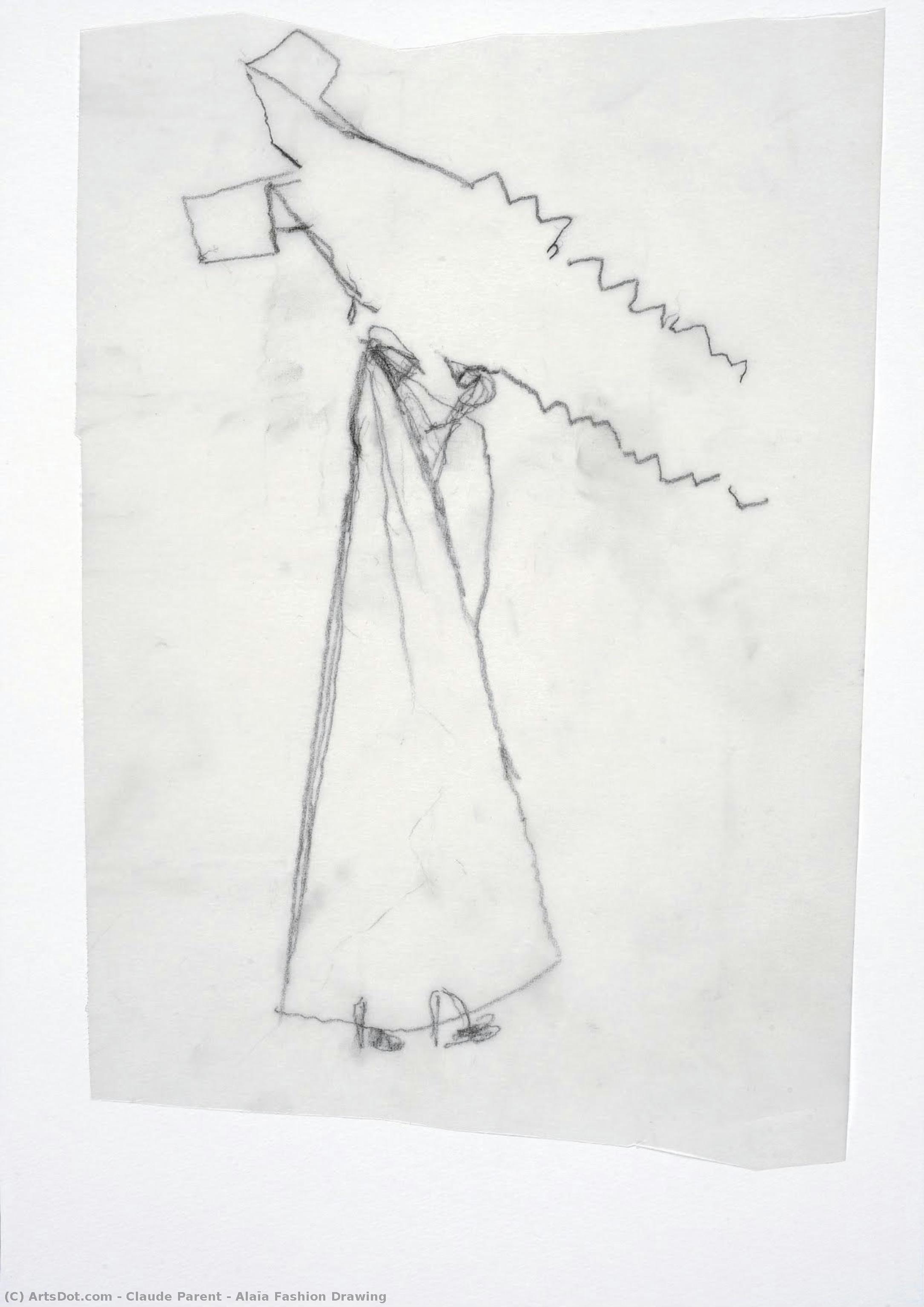
Alaïa Fashion Drawing


 Read More
Giclée / Art Print
Museum-quality giclée or canvas print with fast production and flexible finish options. ( Buy Hand Made Painting Buy Image)




P118B $10

P118H $10

P118W $10

P438Z $10

P508JH $12

P508YH $12

P805H $10

P805Z $10

P919BZ $10

P919G $10

P919XJ $10

P959ZH $10

P968JZ $12

W106C $8

W218G $10

W218JH $8

W218Y $10

W307PJ $10

W316G $10

W316PJ $8

W316Y $10

W398PJ $8

W4111J $10

W500HY $15

W500JH $15

W692G $12

W849H $8

W940BG $15

W953PJ $8




Pick from our preset sizes that match the artwork's original proportions.

You may enter your own dimensions to fit a specific frame or space. If your selected size does not match the original image's proportions, we will either crop the artwork or extend the image with a mirrored or solid-fill edge. A digital mockup will be sent for your approval before production begins.
Please note that the on-screen preview does not reflect the actual cropping or extension. Only the mockup will accurately show the final composition.
While custom sizes are available, we recommend selecting a dimension from the predefined list to preserve the original proportions.
Worldwide Delivery () in 2 weeks instead of standard 4/5 weeks. (19 August)

Free Worldwide Express Shipping

High-Quality Linen Canvas

Full Shipping Insurance

Customs Tax Refund Guarantee

True Color Matching Guarantee

60-Day Return Policy (Defects Only)

100% Money-Back Guarantee

Bulk Discount Offer
 Glass option is only available in size under 110 CM

Alaïa Fashion Drawing
Giclée / Art Print
Reproduction Size
-


Total Price
$ 81
Collectible Description
Claude Parent: Alaïa Fashion Drawing – A Minimalist Echo of Rebellion
Claude Parent’s “Alaïa Fashion Drawing,” created in 2016, isn't merely an image; it’s a crystallized embodiment of the artist’s radical philosophy—a defiant rejection of architectural conventions and a passionate embrace of dynamism. Produced by OriginalUniqueArt.com, this piece represents more than just a depiction of Alaïa’s couture dress; it encapsulates Parent’s groundbreaking concept of “the oblique function,” which fundamentally questioned the dominance of straight lines and static forms in architecture.
At first glance, the drawing appears deceptively simple—a monochrome sketch rendered on tracing paper using pencil. However, beneath this apparent austerity lies a profound intellectual engagement with space and movement. Parent’s meticulous attention to detail isn't focused on replicating every contour of the garment; instead, he prioritizes capturing its essence – the way it interacts with the human body in motion.
Composition & Technique: Embracing Discontinuity
- Centered Figure: The woman’s silhouette is positioned precisely at the center of the frame, emphasizing balance and stability while simultaneously hinting at a subtle tension.
- Dominant Dress: Alaïa's dress occupies almost the entire canvas, its flowing lines extending outwards from the shoulders to create an expansive visual horizon.
- Line Work: Parent’s masterful linework employs hatching and cross-hatching techniques to generate tonal variations that convey depth and volume—a deliberate departure from traditional architectural rendering methods. Varying line weights contribute to a dynamic interplay of light and shadow, mirroring the movement inherent in fabric drapery.
- Tracing Paper: The use of tracing paper lends an immediacy and spontaneity to the drawing process, reflecting Parent’s belief that architecture should be responsive to human experience rather than rigidly imposed upon it.
Historical Context & Philosophical Influence
Parent's artistic vision emerged from a rejection of Modernist dogma—a reaction against the perceived sterility of rectilinear structures and the suppression of natural forms. Influenced by thinkers like Ionel Schein and André Bloc, he championed the “oblique function,” arguing that architecture should embrace asymmetry and instability to stimulate creativity and challenge conventional perceptions of space.
This drawing aligns perfectly with Parent’s broader philosophical stance—a conviction that architecture must transcend mere functionality to engage in a dialogue with human movement. It embodies his desire to disrupt established norms and provoke contemplation, mirroring the spirit of Deconstructivism and echoing the pioneering explorations of Jean Nouvel.
Symbolism & Emotional Resonance
"Alaïa Fashion Drawing" transcends its visual representation; it speaks to themes of elegance, fluidity, and liberation. The monochrome palette underscores Parent’s commitment to stripping away superfluous ornamentation—leaving only the fundamental form and texture of the dress exposed.
The drawing's understated simplicity serves as a powerful reminder that true beauty resides in embracing imperfection and challenging preconceived notions. Like many of Parent’s artworks, it invites viewers to consider the role of architecture in shaping human experience—a quest for dynamism and discontinuity that continues to inspire artists and designers today.
Further Exploration
Discover more about Claude Parent's groundbreaking work on OriginalUniqueArt.com. Explore his iconic Alaïa Fashion Drawing alongside other exceptional pieces showcasing minimalist lines and bold contrast.
Artist Biography
A Maverick of the Oblique: The Revolutionary Vision of Claude Parent
Claude Parent, born in Neuilly-sur-Seine, France, in 1923 and passing away in 2016, was not merely an architect; he was a philosophical provocateur who fundamentally challenged the very foundations of Modernist architectural thought. He dared to question the dominance of right angles and static forms, envisioning instead a dynamic architecture responsive to the human body in motion – a vision embodied in his groundbreaking concept of the ‘Oblique Function.’ Parent’s journey began with formal training, an apprenticeship under Ionel Schein from 1949 to 1955 providing him with technical grounding. However, this period also ignited within him a desire for liberation from conventional norms, a yearning that led him to the avant-garde Espace group in 1951 alongside artists André Bloc and Félix del Marle, exposing him to radical new ideas about space and form. This early exposure proved pivotal, shaping his trajectory toward architectural rebellion.The Birth of the Oblique Function
By the mid-1950s, Parent had begun to forge a path distinctly his own. Rejecting the rigid orthogonality that defined much of Modernist architecture, he developed the ‘Oblique Function,’ a principle prioritizing movement and dynamism over static stability. This wasn’t simply an aesthetic choice; it was a philosophical statement about how humans interact with space. Parent believed buildings should not impose themselves upon the body but rather accommodate and even encourage natural human movement. He envisioned tilting and shifting volumes, creating discontinuous spaces that disrupted traditional notions of floor and wall, fostering a sense of disorientation and prompting new ways of experiencing architecture. This radical approach wasn’t born in isolation; it was deeply intertwined with his intellectual partnership with philosopher Paul Virilio. Together, they formed the Architecture Principe group in 1963, exploring the implications of speed, technology, and movement on architectural space – a collaboration that would yield some of Parent's most iconic works.Landmark Projects & Provocative Collaborations
The collaboration with Virilio culminated in what is arguably their most celebrated achievement: the Église Sainte-Bernadette-du-Banlay in Nevers (1966). This concrete church, a striking monument to the Oblique Function, features a dramatically sloping floor and an unconventional form that challenges conventional religious architecture. It’s not merely a building; it's an experience – a space designed to disorient and provoke contemplation. Beyond this landmark project, Parent consistently applied his principles to other works. The Maison Drusch (1963) stands as an early example of the oblique function in residential design, while projects like the Sens supermarket (1970), built with raw concrete, demonstrated his ability to translate these ideas into commercial spaces. Parent’s versatility extended beyond architecture; he curated the French pavilion at the 1970 Venice Art Biennale, transforming it into an oblique space and inviting artists to engage with this unconventional environment. He even ventured into fashion illustration, creating striking designs for Azzedine Alaïa, showcasing his adaptability and artistic range.A Lasting Legacy of Disruption
Though his partnership with Virilio dissolved in 1968, Parent continued to refine and implement the Oblique Function throughout his career. He remained a tireless advocate for challenging established norms, creating spaces that were both intellectually stimulating and experientially engaging. His work had a profound influence on the development of Deconstructivism and continues to resonate with contemporary architects and designers who seek to break free from conventional constraints. Parent’s legacy isn't solely defined by his built projects; it also lies in his theoretical contributions, his provocative manifesto-drawings that expanded the boundaries of architectural discourse, and his unwavering commitment to questioning the status quo. He demonstrated that architecture could be more than just shelter – it could be a catalyst for thought, a challenge to perception, and a reflection of the dynamic nature of human existence. His work remains a testament to the power of architecture to shape our understanding of the world around us.Exploring Claude Parent’s Work
- Alaïa Fashion Drawing: Discover minimalist fashion drawings, showcasing elegant lines and bold contrast. A unique graphic design reflecting Alaïa's silhouette.
- Église Sainte-Bernadette-du-Banlay (1966): A landmark project embodying the Oblique Function and its impact on spatial experience – a concrete church with a dramatically sloping floor.
- Maison Drusch (1963): An early residential example of Parent’s oblique principles, demonstrating his innovative approach to domestic space.

Claude Parent
1923 - 2016 , France
Quick Facts
- Artistic Movement Or Style: Oblique Architecture
- Artists Or Movements Influenced By This Artist:
- Deconstructivism
- Paul Virilio
- Artists Who Influenced This Artist:
- Ionel Schein
- André Bloc
- Félix del Marle
- Date Of Birth: 1923-02-26
- Date Of Death: 2016-02-27
- Full Name: Claude Parent
- Nationality: French
- Notable Artworks:
- Église Sainte-Bernadette-du-Banlay
- Maison Drusch
- Alaïa Fashion Drawing
- Place Of Birth: Neuilly-sur-Seine, France
Related Articles
Monet's Masterpieces: 25 Iconic Artworks to Transform Your Home
Journey through 25 iconic Claude Monet masterpieces! Explore Impressionism’s beauty, from Water Lilies to Rouen Cathedral. Discover stunning art reproductions & curated decor ideas – explore the full collection online at OriginalUniqueArt.com.
The Nuances of Graphite: Exploring Emotional Depth & Technical Mastery in Pencil Drawing
Explore the captivating world of graphite drawing! Discover its rich history, master essential techniques like chiaroscuro, and learn how artists evoke emotion through this timeless medium. Expert insights for art enthusiasts.
Gianfranco Ferré: Deconstructing Haute Couture – A Legacy of Architectural Form
Explore the revolutionary world of Gianfranco Ferré, 'the architect of fashion.' Discover his architectural approach to haute couture, iconic Dior designs, and lasting influence on luxury style. A deep dive for collectors & enthusiasts.
Mastering the Line: A Comprehensive Expert Guide to Technical Precision and Expressive Depth in Drawing
Elevate your artistic practice with this expert guide to mastering the line. Discover advanced techniques in graphite, charcoal, and contour drawing designed for art students seeking technical precision and expressive depth in their fine art studies.
Erté and Art Deco: The Architect of Glamour, Fashion, and the Geometric Soul of Modernity
Explore the opulent world of Erté and Art Deco. Discover how Romain de Tirtoff defined an era through geometric elegance, fashion illustration, and theatrical design. A deep dive into the history of 20th-century glamour for art lovers and collectors.



