Text size

() ·

A painting made for you, by hand

Alaïa Fashion Drawing

Hand Made Oil Reproduction

Hand-painted oil on canvas in your size and frame, made to order by our artists. ( Switch to Print Switch to Digital Image)

Collectible Description

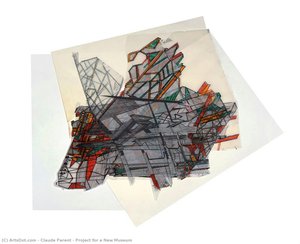
Claude Parent's 'Alaïa Fashion Drawing' captures a minimalist sketch of a dress with bold lines and asymmetry, reflecting his innovative oblique architecture approach.

Artist Biography

Dive into Claude Parent’s striking Alaïa fashion drawing – a bold graphic design capturing elegance and asymmetry. Discover this exceptional piece showcasing minimalist lines.

from ·

Chapter 1

How large should it be?

Slide to change the size; the picture on the left shows the frame at its real width. The proportions of the original are kept.

Standard
custom
CM
INCH

Pick from our preset sizes that match the artwork's original proportions.

width
height

Type the width and the height you need, to fit your frame or your wall. This is hand-painted, so for a size with a different shape the artist can paint a bit more around the picture, or cut a bit — you choose. We send you a digital mockup to approve before the painting starts. The picture shown on this page does not show the real result — only the mockup does.

Chapter 2

How should it arrive?

Choose the edges of the stretched canvas

Choose your frame

Corner sample of the WhiteWrap canvas edge finish, stretched on solid wood bars
White $1
Corner sample of the BlurSideWrap canvas edge finish, stretched on solid wood bars
Blurside $1
Corner sample of the ExtendedWrap canvas edge finish, stretched on solid wood bars
Extended $1
Corner sample of the P118B picture frame: moulded polystyrene, 5 cm wide and 3 cm thick
P118B $10
Corner sample of the P118H picture frame: moulded polystyrene, 5 cm wide and 3 cm thick
P118H $10
Corner sample of the P118W picture frame: moulded polystyrene, 5 cm wide and 3 cm thick
P118W $10
Corner sample of the P438Z picture frame: moulded polystyrene, 5.5 cm wide and 3.5 cm thick
P438Z $10
Corner sample of the P508JH picture frame: moulded polystyrene, 7 cm wide and 3.5 cm thick
P508JH $12
Corner sample of the P508YH picture frame: moulded polystyrene, 7 cm wide and 3.5 cm thick
P508YH $12
Corner sample of the P805H picture frame: moulded polystyrene, 5 cm wide and 3.5 cm thick
P805H $10
Corner sample of the P805Z picture frame: moulded polystyrene, 5 cm wide and 3.5 cm thick
P805Z $10
Corner sample of the P919BZ picture frame: moulded polystyrene, 7 cm wide and 3.5 cm thick
P919BZ $10
Corner sample of the P919G picture frame: moulded polystyrene, 7 cm wide and 3.5 cm thick
P919G $10
Corner sample of the P919XJ picture frame: moulded polystyrene, 7 cm wide and 3.5 cm thick
P919XJ $10
Corner sample of the P959ZH picture frame: moulded polystyrene, 5 cm wide and 3 cm thick
P959ZH $10
Corner sample of the P968JZ picture frame: moulded polystyrene, 6 cm wide and 4 cm thick
P968JZ $12
Corner sample of the W106C picture frame: solid wood, 5 cm wide and 3 cm thick
W106C $8
Corner sample of the W218G picture frame: solid wood, 5 cm wide and 3 cm thick
W218G $10
Corner sample of the W218JH picture frame: solid wood, 5 cm wide and 3 cm thick
W218JH $8
Corner sample of the W218Y picture frame: solid wood, 5 cm wide and 3 cm thick
W218Y $10
Corner sample of the W307PJ picture frame: solid wood, 6 cm wide and 3 cm thick
W307PJ $10
Corner sample of the W316G picture frame: solid wood, 6 cm wide and 3 cm thick
W316G $10
Corner sample of the W316PJ picture frame: solid wood, 6 cm wide and 3 cm thick
W316PJ $8
Corner sample of the W316Y picture frame: solid wood, 6 cm wide and 3 cm thick
W316Y $10
Corner sample of the W398PJ picture frame: solid wood, 5 cm wide and 3 cm thick
W398PJ $8
Corner sample of the W4111J picture frame: solid wood, 6.5 cm wide and 3.5 cm thick
W4111J $10
Corner sample of the W500HY picture frame: solid wood, 7 cm wide and 5 cm thick
W500HY $15
Corner sample of the W500JH picture frame: solid wood, 7 cm wide and 5 cm thick
W500JH $15
Corner sample of the W692G picture frame: solid wood, 8 cm wide and 4 cm thick
W692G $12
Corner sample of the W849H picture frame: solid wood, 5 cm wide and 3 cm thick
W849H $8
Corner sample of the W940BG picture frame: solid wood, 7.5 cm wide and 4.5 cm thick
W940BG $15
Corner sample of the W953PJ picture frame: solid wood, 6 cm wide and 3.5 cm thick
W953PJ $8
Corner sample of the H24-GOLD picture frame: carved wood with gesso, 10 cm wide and 6 cm thick
H24-GOLD $30
Corner sample of the H24-SILVER picture frame: carved wood with gesso, 10 cm wide and 6 cm thick
H24-SILVER $30
Corner sample of the H36-GOLD picture frame: carved wood with gesso, 15 cm wide and 6.5 cm thick
H36-GOLD $45
Corner sample of the H36-SILVER picture frame: carved wood with gesso, 15 cm wide and 6.5 cm thick
H36-SILVER $45
Frame preview
Framed

Moulding: . Overall size with the frame: .

Chapter 3

Who paints it, and should anything change?

Examples of what can be changed: Replace face with customer photo; Add pet (e.g., replace cat with dog); Include hidden message in background; Change background landscape or elements.
After order, OriginalUniqueArt.com team will email client for instructions and provide a mockup preview

Worldwide Delivery () in 3/4 weeks instead of standard 5 weeks. (31 October). No compromise on quality.

Chapter 4

The finishing touches

A nameplate, as in a museum?

Engraved Bronze Plaque Details

This elegant plaque features the artist's name and the title of the artwork, finely engraved for a timeless presentation.

It is made from bronze with a refined, elegant finish. The text is precisely laser-engraved for a sharp and permanent result. Measuring 9x2 cm, the plaque is compact yet easy to read. It's built to be durable and scratch-resistant, offering a professional, museum-quality look. Mounting is simple thanks to the included adhesive backing.

Transparent Acrylic Plaque Details

The plaque includes essential engraved details such as the artist's name, the title of the artwork, the date it was created, the type of media used-like oil on canvas or watercolor-a brief description of the piece, and a QR code that links to the complete artwork information.

It is crafted from clear acrylic, offering a sleek, modern appearance. The text is UV-engraved in black to ensure strong visual contrast. With a size of 10x15 cm, it ensures optimal readability. It comes equipped with two metal hooks for secure wall mounting. The plaque is designed to be weather-resistant, making it suitable for various environments, and it includes interactive features that work seamlessly with smartphone scanning.

Black Acrylic Plaque Details

This elegant plaque includes engraved information such as the artist's name, the title of the artwork, the date it was created, the type of media used (like oil on canvas or watercolor), a short description of the artwork, and a QR code for quick access to more information.

The plaque itself is made from refined black acrylic with a premium finish. The text is laser-engraved in white for high contrast and readability. Its size is 10x15 cm, designed to be easy to read. It comes with two metal hooks for professional mounting. The design is sleek and fits any interior style. It is also weather-resistant and durable, with built-in digital integration for mobile compatibility.

A protective varnish?

When do you need it?

Chapter 5

Your painting, as you ordered it

Alaïa Fashion Drawing

Reproduction Medium

Reproduction Size

-

Elite Senior Artist

More detail, finesse, and extra production time

-

Reproduction Frame

-

-

For artworks or reproductions larger than 105 cm (approximately 41 inches) on any side, the frame will be shipped as a kit, disassembled. This method ensures safe delivery and prevents damage during transport.

Professional assembly required - this is not a DIY product.
The kit must be assembled and the canvas stretched by an experienced professional framer, using wood glue (not supplied), a canvas stretching plier and clamps to hold the bars square while the glue dries. Incorrect assembly or uneven canvas tension can permanently damage the artwork and is not covered by our warranty.

  • All solid wood bars are included, precisely cut to size.

  • Assembled with the screws provided, plus wood glue for the corner joints, which is not supplied and must be sourced by your framer.

  • Professional tools are required and not included: a canvas stretching plier (tensioner) and clamps to hold the bars square while the glue dries.

Important:
The corner joints require wood glue, the bars must be held with clamps until the glue is fully dry, and tightening the canvas on the assembled frame requires a canvas stretching plier. None of these are included in the kit. Please arrange an experienced professional framer before ordering this size.

Nameplate

-

-

Protective Varnish

Glossy Varnish (enhances colors, protects against light/moisture)

-

Customize My Artwork

Examples of what can be changed: Replace face with customer photo; Add pet (e.g., replace cat with dog); Include hidden message in background; Change background landscape or elements.

-

Urgent

Worldwide Delivery () in 3/4 weeks instead of standard 5 weeks. (31 October). No compromise on quality.

-

Express Shipping

Worldwide Delivery () in 5 weeks. (7 November).

Included

Total Price

$ 300

Total Price $ 300

Glass option is only available in size under 110 CM

Included with every order

  • Free Worldwide Express Shipping
  • High-Quality Linen Canvas
  • Full Shipping Insurance
  • Customs Tax Refund Guarantee
  • True Color Matching Guarantee
  • 100-Day Return Policy (Defects Only)
  • 100% Money-Back Guarantee
  • Bulk Discount Offer

A Moment of Fluidity: Decoding the Oblique Line of Claude Parent’s Alaïa Sketch

Claude Parent's 2016 sketch, “Alaïa Fashion Drawing,” isn’t merely a depiction of clothing; it’s a distilled essence of movement, an architectural impulse captured on paper. Born in Neuilly-sur-Seine, France, in 1923 and passing away in 2016, Parent was a radical architect who fundamentally challenged the rigid geometries of Modernism, advocating instead for spaces that responded organically to human experience – a philosophy vividly embodied in this deceptively simple drawing. It’s a testament to his belief that architecture should be dynamic, not static, and that clothing, too, could embody this principle of constant flux.

The piece immediately commands attention with its stark simplicity: a predominantly black-and-white composition dominated by a vertical form suggestive of a flowing dress or gown. Yet, within this apparent minimalism lies a complex interplay of lines and gestures. Parent eschews precise representation, opting instead for a loose, gestural style reminiscent of fashion illustration but imbued with the intellectual rigor of an architect. The drawing isn’t about replicating a garment; it's about capturing its *feeling*, its inherent movement as it drapes and flows across the body.

The Language of the Oblique: Line, Form, and Gesture

Parent’s technique is characterized by a masterful use of hatching and cross-hatching to create an illusion of texture and volume. Bold, decisive lines delineate the primary form, while delicate, sketchy strokes suggest the folds and wrinkles of fabric. The varying line weights contribute significantly to the drawing's dynamism, creating a sense of depth and movement that transcends mere representation. Notice how the lines don’t simply outline the garment; they *become* its essence – a visual embodiment of its flowing form.

The composition itself is deliberately asymmetrical, reflecting Parent’s core architectural principle: the “Oblique Function.” Rather than adhering to strict horizontal and vertical alignments, he sought to introduce angles and curves into space, creating a sense of disorientation and surprise. This principle is mirrored in the drawing; the figure extends vertically, yet its lines curve and twist, disrupting any expectation of static equilibrium. The deliberate imbalance creates visual tension and invites the viewer to actively engage with the image.

A Dialogue Between Fashion and Architecture

Parent’s collaboration with Azzedine Alaïa in creating this sketch reveals a fascinating dialogue between two creative minds. Alaïa, a renowned fashion designer known for his sculptural silhouettes and innovative use of materials, provided the subject matter – a representation of his designs. Parent, in turn, translated these forms into a visual language that reflected his architectural philosophy. The drawing isn’t simply a portrait of a dress; it's an architectural interpretation of fashion, demonstrating how design principles can be applied to both clothing and space.

The monochrome palette – shades of black on white – further emphasizes the drawing’s conceptual core. By stripping away color, Parent focuses entirely on form and texture, allowing the viewer to appreciate the intricacies of line and gesture. It's a deliberate choice that elevates the sketch beyond a mere illustration, transforming it into a study in spatial relationships and dynamic movement.

Beyond the Sketch: A Legacy of Discomfort and Innovation

Claude Parent’s work was often provocative, challenging conventional notions of architecture and design. He sought to disrupt established norms, creating spaces that were unsettling yet exhilarating – spaces that demanded active engagement from their occupants. “Alaïa Fashion Drawing” serves as a poignant example of this approach, offering a glimpse into the mind of an architect who dared to question everything. It’s a reminder that true innovation often lies in embracing discomfort and challenging the status quo.

Questions & Answers

Is "Alaïa Fashion Drawing" by Claude Parent a bright or a dark artwork?

The perceived brightness of "Alaïa Fashion Drawing" by Claude Parent is brilliant. It can be matched to the light of the intended space.

What color intensity does "Alaïa Fashion Drawing" by Claude Parent have?

"Alaïa Fashion Drawing" by Claude Parent shows a monochromatic color intensity.

How do I discover artworks close to "Alaïa Fashion Drawing" by Claude Parent?

Artworks similar to "Alaïa Fashion Drawing" by Claude Parent are gathered on the artwork's Similars page.

More about this painting

Preview AR preview Switch to Print Switch to Digital Image Send
Details Guide Add to favorites Download Similars X-Ray Diaporama Q&A Stats

In numbers

  • 2016the year it was painted
  • 29frames to choose from
  • standard sizes, in its own proportions
  • 5weeks to paint and deliver it

About the original

Claude Parent

Claude Parent

1923 - 2016, France

Quick facts about Claude Parent

  • Full Name: Claude Parent
  • Nationality: French
  • Date Of Birth: 1923
  • Date Of Death: 2016
  • Place Of Birth: Neuilly-sur-Seine, France
  • Notable Artworks:
    • Église Sainte-Bernadette-du-Banlay
    • Maison Drusch
    • Alaïa Fashion Drawing
  • Artistic Movement Or Style: Oblique Architecture
  • Artists Who Influenced This Artist:
    • Ionel Schein
    • André Bloc
    • Félix del Marle
  • Artists Or Movements Influenced By This Artist:
    • Deconstructivism
    • Paul Virilio

Artist Biography

A Maverick of the Oblique: The Revolutionary Vision of Claude Parent

Claude Parent, born in Neuilly-sur-Seine, France, in 1923 and passing away in 2016, was not merely an architect; he was a philosophical provocateur who fundamentally challenged the very foundations of Modernist architectural thought. He dared to question the dominance of right angles and static forms, envisioning instead a dynamic architecture responsive to the human body in motion – a vision embodied in his groundbreaking concept of the ‘Oblique Function.’ Parent’s journey began with formal training, an apprenticeship under Ionel Schein from 1949 to 1955 providing him with technical grounding. However, this period also ignited within him a desire for liberation from conventional norms, a yearning that led him to the avant-garde Espace group in 1951 alongside artists André Bloc and Félix del Marle, exposing him to radical new ideas about space and form. This early exposure proved pivotal, shaping his trajectory toward architectural rebellion.

The Birth of the Oblique Function

By the mid-1950s, Parent had begun to forge a path distinctly his own. Rejecting the rigid orthogonality that defined much of Modernist architecture, he developed the ‘Oblique Function,’ a principle prioritizing movement and dynamism over static stability. This wasn’t simply an aesthetic choice; it was a philosophical statement about how humans interact with space. Parent believed buildings should not impose themselves upon the body but rather accommodate and even encourage natural human movement. He envisioned tilting and shifting volumes, creating discontinuous spaces that disrupted traditional notions of floor and wall, fostering a sense of disorientation and prompting new ways of experiencing architecture. This radical approach wasn’t born in isolation; it was deeply intertwined with his intellectual partnership with philosopher Paul Virilio. Together, they formed the Architecture Principe group in 1963, exploring the implications of speed, technology, and movement on architectural space – a collaboration that would yield some of Parent's most iconic works.

Landmark Projects & Provocative Collaborations

The collaboration with Virilio culminated in what is arguably their most celebrated achievement: the Église Sainte-Bernadette-du-Banlay in Nevers (1966). This concrete church, a striking monument to the Oblique Function, features a dramatically sloping floor and an unconventional form that challenges conventional religious architecture. It’s not merely a building; it's an experience – a space designed to disorient and provoke contemplation. Beyond this landmark project, Parent consistently applied his principles to other works. The Maison Drusch (1963) stands as an early example of the oblique function in residential design, while projects like the Sens supermarket (1970), built with raw concrete, demonstrated his ability to translate these ideas into commercial spaces. Parent’s versatility extended beyond architecture; he curated the French pavilion at the 1970 Venice Art Biennale, transforming it into an oblique space and inviting artists to engage with this unconventional environment. He even ventured into fashion illustration, creating striking designs for Azzedine Alaïa, showcasing his adaptability and artistic range.

A Lasting Legacy of Disruption

Though his partnership with Virilio dissolved in 1968, Parent continued to refine and implement the Oblique Function throughout his career. He remained a tireless advocate for challenging established norms, creating spaces that were both intellectually stimulating and experientially engaging. His work had a profound influence on the development of Deconstructivism and continues to resonate with contemporary architects and designers who seek to break free from conventional constraints. Parent’s legacy isn't solely defined by his built projects; it also lies in his theoretical contributions, his provocative manifesto-drawings that expanded the boundaries of architectural discourse, and his unwavering commitment to questioning the status quo. He demonstrated that architecture could be more than just shelter – it could be a catalyst for thought, a challenge to perception, and a reflection of the dynamic nature of human existence. His work remains a testament to the power of architecture to shape our understanding of the world around us.

Exploring Claude Parent’s Work

  • Alaïa Fashion Drawing: Discover minimalist fashion drawings, showcasing elegant lines and bold contrast. A unique graphic design reflecting Alaïa's silhouette.
  • Église Sainte-Bernadette-du-Banlay (1966): A landmark project embodying the Oblique Function and its impact on spatial experience – a concrete church with a dramatically sloping floor.
  • Maison Drusch (1963): An early residential example of Parent’s oblique principles, demonstrating his innovative approach to domestic space.

Quick Facts

  • Notable elements: Minimalist sketch
  • Title: Alaïa Fashion Drawing
  • Medium: Pencil/Charcoal
  • Subject or theme: Fashion design
  • Movement: Oblique Architecture

Art Quiz

There is only one correct answer for each question.

Question 1:
What is the primary style of Claude Parent’s ‘Alaïa Fashion Drawing’?
Question 2:
The color palette of the ‘Alaïa Fashion Drawing’ is predominantly:
Question 3:
Which artistic movement is most closely associated with Claude Parent’s ‘Oblique Function’?
Question 4:
What technique is most prominently used to create texture and volume in the ‘Alaïa Fashion Drawing’?
Question 5:
According to the description, what does the ‘Alaïa Fashion Drawing’ convey about its creator?