Impressionism
Roses (Claude Monet)
Claude Monet (1840–1926) made Roses. It belongs to the Impressionism movement. It is made in oil.
- Oil

 Preview

 Hand Made Oil Painting
 Send
 Share
 Fact sheet


 Download
 Similars
 X-Ray
 Diaporama
 Q&A

 Stats
Roses, in brief
- Title
- Roses
- Artist
- Claude Monet (1840–1926)
- Artist born in
- Paris, France
- Medium
- Oil
- Movement
- Impressionism
- Subject
- roses, monet, impressionism, garden, pink, light
What does Roses depict?
Introduction to Claude Monet and Impressionism
Claude Monet, a seminal French artist, played a pivotal role in founding Impressionist painting. His philosophy, primarily based on capturing immediate perceptions and nature's essence, particularly through outdoor (plein air) landscape art, revolutionized artistic approaches.Monet's Roses: A Masterpiece of Impressionism
Claude Monet: Roses, an exquisite painting available at OriginalUniqueArt.com, showcases the artist's mastery of capturing fleeting moments and natural beauty. The roses, depicted with vibrant colors and loose brushstrokes, embody Monet's unique Impressionist style.The Rose Garden: A Haven for Inspiration
Monet painted several works featuring rose gardens, including Claude Monet: The House Seen from the Rose Garden (Musée Marmottan Monet, Paris, France). These paintings reflect his fascination with capturing the ever-changing light and atmosphere within these idyllic spaces.Monet's Legacy in Art History
Monet's contributions to art history extend beyond Impressionism. His innovative techniques and dedication to capturing nature's essence have inspired countless artists and movements, solidifying his status as a trailblazer in modern art.Experience Monet's Roses at OriginalUniqueArt.com
To acquire a high-quality reproduction of Claude Monet: Roses, visit OriginalUniqueArt.com. Our skilled painters create handmade oil painting reproductions that are virtually indistinguishable from the original, allowing you to appreciate Monet's mastery in your own space.Conclusion: The Enduring Beauty of Claude Monet's Roses
Claude Monet's Roses painting remains a timeless testament to the beauty and power of Impressionism. By exploring this work, art lovers can delve deeper into Monet's artistic vision and appreciate the enduring impact of his groundbreaking approach.High-resolution images of Roses

Claude Monet, Roses. Public domain.
Questions on Roses, answered
What is "Roses" made with?
The medium of "Roses" by Claude Monet is oil. Reproductions aim to render the appearance of this technique.
What does "Roses" by Claude Monet depict?
The themes present in "Roses" by Claude Monet include roses, monet, impressionism, garden, pink, light, landscape. Together they summarize the artwork's subject matter.
Is "Roses" by Claude Monet in the public domain?
Regarding copyright, "Roses" is in the public domain - its copyright has expired.
Who is the artist behind "Roses"?
"Roses" is attributed to Claude Monet.
What art movement does "Roses" by Claude Monet belong to?
"Roses" is a work of Impressionism. The movement indicates the artistic tradition the work is part of.
Where does "Roses" fall in Claude Monet's career?
Within Claude Monet's career, "Roses" falls in the Late Period. The phase helps compare it with the artist's other works.
Why is the copyright status of "Roses" what it is?
The copyright status of "Roses" - in the public domain - its copyright has expired - follows from the artist's death in 1926.
Where does "Roses" sit within Claude Monet's body of work?
"Roses" shares with Claude Monet's other works its Impressionism style and the recorded themes: en plein air landscape, light, color observation, nature’s fleeting beauty, impressionist innovation”, “giverny garden series”.
How does the subject of "Roses" relate to Claude Monet's usual themes?
Claude Monet's recurring themes include en plein air landscape, light, color observation, nature’s fleeting beauty, impressionist innovation”, “giverny garden series”; "Roses" focuses on roses, monet, impressionism, garden, pink, light, landscape.
About the artist, Claude Monet
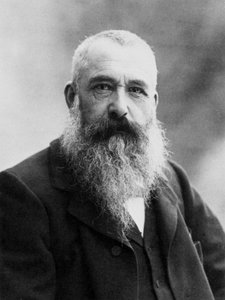
1840–1926, France
Claude Monet
Early Life, Family and Training Born in Paris, France, on 14 November 1840, Claude Monet entered a world of diverging expectations. While his father, Claude-Adolphe Monet, envisioned a more stable professional path for his son, his mother, Louise-Justine Aubrée Monet, offered a quiet support for his burgeoning creative inclinations. The family eventually settled in Le Havre, Normandy, where the coastal atmosphere would leave a lasting impression on the young boy. This period of childhood was marked by an early talent for drawing, a skill that would eventually lead him away from the commercial interests his father preferred.
Also by Claude Monet
 Water Lilies (or Nympheas)1916
 Impression, Sunrise1872
 Haystacks: Snow Effect1891
 The Walk. Lady with a Parasol1875
Essays around Roses
 The Allure of Open Airs: Exploring Representations of Outdoors in Art HistoryExplore the rich history of outdoor painting! From Romantic landscapes to Impressionism's revolution, discover key artists, techniques & th…
 Impressionistic Landscapes: 10 Masterpieces That Changed Art & DecorJourney into the heart of Impressionism! Explore 10 masterpieces by Monet, Renoir & Degas that revolutionized landscape art. Discover their…
 Beyond the Brush: How Monet and the Impressionists Revolutionized Modern ArtExplore the revolutionary impact of Claude Monet and the Impressionists. Discover how their mastery of light, color, and plein air techniqu…