Preview
 Send
Send Share
Share
 Details
 Guide
Guide

 Download
 Similars
 X-Ray
X-Ray Diaporama
 Stats
StatsShipwreck
 Acrylic On Canvas
- WallArt
- Rococo
 1759
1759- Late Medieval
 96.0 x 134.0 cm
 Groeninge Museum
 Read More
Hand Made Oil Reproduction
Hand-painted oil on canvas in your size and frame, made to order by our artists. ( Switch to Print Switch to Digital Image)




P118B $10

P118H $10

P118W $10

P438Z $10

P508JH $12

P508YH $12

P805H $10

P805Z $10

P919BZ $10

P919G $10

P919XJ $10

P959ZH $10

P968JZ $12

W106C $8

W218G $10

W218JH $8

W218Y $10

W307PJ $10

W316G $10

W316PJ $8

W316Y $10

W398PJ $8

W4111J $10

W500HY $15

W500JH $15

W692G $12

W849H $8

W940BG $15

W953PJ $8




Pick from our preset sizes that match the artwork's original proportions.

Type the width and the height you need, to fit your frame or your wall. This is hand-painted, so for a size with a different shape the artist can paint a bit more around the picture, or cut a bit — you choose. We send you a digital mockup to approve before the painting starts. The picture shown on this page does not show the real result — only the mockup does.
After order, OriginalUniqueArt.com team will email client for instructions and provide a mockup preview
Worldwide Delivery () in 3/4 weeks instead of standard 5 weeks. (23 October). No compromise on quality.

Free Worldwide Express Shipping

High-Quality Linen Canvas

Full Shipping Insurance

Customs Tax Refund Guarantee

True Color Matching Guarantee

100-Day Return Policy (Defects Only)

100% Money-Back Guarantee

Bulk Discount Offer
 Glass option is only available in size under 110 CM

Shipwreck
Reproduction Medium
Reproduction Size
-


Total Price
$ 300
A Tempestuous Vision: The Shipwreck by Claude-Joseph Vernet
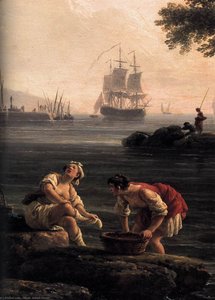
Claude-Joseph Vernet’s “Shipwreck” (1759) isn't merely a depiction of maritime disaster; it’s a visceral plunge into the heart of the sublime – that potent blend of terror, awe, and exhilaration evoked by confronting the raw power of nature. Painted during the height of the Rococo period in France, yet imbued with a dramatic intensity that anticipates Romanticism, this work transcends its subject matter to become a meditation on human vulnerability against an indifferent universe. The painting immediately commands attention with its dynamic composition, a swirling vortex of turbulent sea and bruised sky, pulling the viewer into the chaotic drama unfolding before them.
Vernet masterfully employs the techniques characteristic of his era – a meticulous attention to detail combined with a loose, expressive brushstroke. Notice how he renders the churning waves, not as smooth forms but as frothing crests and shadowed troughs, conveying an almost palpable sense of movement. The light is equally crucial; it’s fractured and diffused by the storm clouds, casting dramatic highlights on the wreckage and creating pools of deep shadow that heighten the feeling of unease. The artist's use of chiaroscuro – the stark contrast between light and dark – isn’t simply for aesthetic effect but serves to amplify the drama and underscore the precariousness of the scene.
Echoes of the Sublime: Rococo Meets Romanticism
“Shipwreck” occupies a fascinating space within art history. While firmly rooted in the decorative elegance of the Rococo style – evidenced by the vibrant palette, the intricate details of the ship’s rigging (though rendered with a slightly more rugged quality than typical for the period), and the overall sense of theatricality – it also foreshadows the Romantic movement's fascination with untamed nature. Vernet was deeply influenced by the philosophical ideas of Jean-Jacques Rousseau, who championed the beauty and power of the natural world as a counterpoint to the artificiality of courtly life. This painting embodies that sentiment, presenting a storm at sea not as a destructive force but as an overwhelming spectacle of sublime grandeur.
The historical context is equally important. Vernet’s work reflects the growing European interest in maritime exploration and trade during the 18th century. Shipwrecks were frequent occurrences, often resulting in significant loss of life and cargo – events that captured the public imagination. Vernet's painting taps into this collective anxiety about the perils of the sea while simultaneously celebrating its breathtaking beauty. It’s a reminder of humanity’s smallness within the vastness of the ocean.
Figures Amidst Ruin: Symbolism and Human Drama
Scattered along the rocky shoreline are several figures, rendered in stark silhouette against the brightly lit background. These aren't heroic rescuers; they are ordinary people – men and women – overwhelmed by the scale of the disaster. Their postures suggest a mixture of despair, frantic activity, and perhaps even a desperate hope for survival. Vernet doesn’t offer easy answers or moral judgments; he simply presents these individuals as witnesses to an event beyond their control. The inclusion of these human figures elevates the painting from a purely landscape study to a poignant meditation on mortality and resilience.
In the background, a partially obscured castle-like structure – likely a coastal fortress or lighthouse – adds another layer of symbolism. It represents both protection and vulnerability, suggesting that even the most formidable structures are ultimately subject to the forces of nature. The presence of this architectural element anchors the scene within a specific geographical context while simultaneously emphasizing the insignificance of human endeavors in the face of overwhelming natural power.
A Legacy of Dramatic Seascapes
Signed “C. J. Vernet” in the lower right corner, "Shipwreck" stands as a testament to Claude-Joseph Vernet’s mastery of marine painting. It's a work that continues to resonate with viewers today, not only for its technical brilliance but also for its profound exploration of human emotion and the sublime power of nature. Reproductions of this iconic image offer a captivating glimpse into a pivotal moment in art history – a moment when the Rococo’s decorative elegance yielded to the Romantic spirit's embrace of untamed beauty and dramatic intensity.
Questions & Answers
What style does "Shipwreck" belong to?
The movement associated with "Shipwreck" by Claude-Joseph Vernet is Rococo. This classification situates the work among related artists and artworks.
How does "Shipwreck" balance light and dark?
The recorded values for "Shipwreck" by Claude-Joseph Vernet are: shadow brightness, soft shadow luminance.
Is "Shipwreck" a famous Rococo artwork?
Within the Rococo movement, "Shipwreck" has a recognized popularity level.
Artist Biography
A Master of Maritime Light: The Life and Art of Claude-Joseph Vernet
Claude-Joseph Vernet, born in Bordeaux in 1714, wasn’t initially destined for the grand landscapes and dramatic seascapes that would define his legacy. His earliest artistic inclinations revealed a fascination with horses—a passion evident even in childhood, sketching these noble creatures from the tender age of five. This early devotion to animal anatomy, particularly equine form, would subtly inform his later work, lending a dynamic energy and realism to figures within broader compositions. Vernet’s formal training began under his father, Antoine Vernet, a decorative painter, and Nicolas-Bernard Lépicié, providing him with a solid academic foundation before he ventured towards the artistic heart of Europe: Rome. It was in Italy that Vernet truly discovered his calling, captivated not only by classical landscapes but also by the raw power and beauty of the sea. The sight of whales off the coast of Marseille proved pivotal, igniting a lifelong obsession with maritime subjects.From Roman Studies to Royal Commissions
Vernet’s time in Rome wasn't merely about replicating existing styles; it was an immersive study of light, atmosphere, and the interplay between humanity and nature. He absorbed influences from masters like Claude Lorrain and Salvator Rosa, blending their approaches into a uniquely personal vision. While Lorrain offered idealized serenity, Rosa provided dramatic intensity—Vernet skillfully synthesized these elements, creating scenes that were both visually stunning and emotionally resonant. Upon his return to France in 1753, Vernet’s talent quickly gained recognition. A pivotal moment arrived with a commission from Louis XV to paint a series of views of French seaports. This ambitious project—eventually encompassing fifteen paintings—established Vernet as the premier marine painter of his time. These weren't simply topographical records; they were evocative portrayals of national pride, showcasing France’s maritime power and its connection to the sea. Intérieur du port de Marseille (1754), for example, isn’t just a depiction of a bustling harbor—it’s an ode to commerce, industry, and the vibrant lifeblood of the city.A Legacy Forged in Light and Tempest
Vernet's artistic skill lay not only in his precise rendering of ships and harbors but also in his masterful handling of light and atmosphere. He understood how sunlight glinted off water, how clouds gathered before a storm, and how these elements could dramatically alter the mood of a scene. His paintings often feature dramatic skies, turbulent waters, and figures caught in moments of both peril and resilience. A View of the Port of Naples with Mount Vesuvius in the Background (1774), exemplifies this talent—the imposing presence of Vesuvius looms over the bustling port, a reminder of nature’s power while simultaneously highlighting human activity. This ability to balance grandeur and intimacy is a hallmark of his work. Beyond maritime scenes, Vernet also explored landscapes and hunting subjects, always maintaining a keen eye for detail and an understanding of animal anatomy—a skill honed in his youth.Family, Influence, and Enduring Significance
The artistic lineage continued with Vernet’s son, Antoine Charles Horace Vernet (also known as Carle Vernet), who followed in his father's footsteps, achieving renown for his own dynamic battle scenes and hunting art. This familial connection underscores the importance of tradition and mentorship within the French artistic community of the 18th century. Claude-Joseph Vernet’s influence extended beyond his immediate family; he helped to elevate landscape painting to a position of prominence in French art. His work paved the way for later generations of artists, inspiring them to explore the beauty and power of the natural world. Though he passed away in 1789, on the cusp of revolutionary change, Vernet’s legacy endures. His paintings continue to captivate viewers with their atmospheric depth, technical brilliance, and evocative storytelling—a testament to a life dedicated to capturing the essence of light, sea, and the human spirit.
Claude-Joseph Vernet
1714 - 1789 , France
Quick Facts
- Full Name: Claude-Joseph Vernet
- Nationality: French
- Date Of Birth: 1714
- Date Of Death: 1789
- Place Of Birth: Bordeaux, France
- Notable Artworks:
- Intérieur du port de Marseille
- A view of the port of Naples
- Artistic Movement Or Style: Landscape, Seascape
- Artists Who Influenced This Artist:
- Claude Lorrain
- Bernardino Fergioni
- Artists Or Movements Influenced By This Artist: ['Antoine Charles Horace Vernet']
Related Articles

Rococo's Radiant Legacy: 10 Masterpieces for Your Home |
Indulge in the elegance of Rococo! Explore 10 masterpieces by Fragonard, Boucher & Watteau. Discover the stories behind these iconic paintings and bring timeless art to your home with museum-quality reproductions from .
James E. Buttersworth: Navigating the Seas of Victorian Marine Painting
Explore the captivating world of James Edward Buttersworth, a foremost Victorian marine painter. Discover his meticulous ship portraits, America's Cup chronicles & enduring legacy in museums worldwide. Learn about his technique and style.

Shipping & Returns
APS delivers expert worldwide art shipping with museum-grade care, full tracking, and a 100-day money-back guarantee. From customs support to Priority Production, trust transparent service, secure packaging, and reliable delivery for collectors, designers, and galleries.

The Rococo Aesthetic: Opulence, Rebellion & the Pursuit of Pleasure in 18th-Century Art
Explore the opulent world of Rococo art! Discover its origins, key artists like Watteau & Boucher, and lasting influence on design. Expert insights for collectors & enthusiasts.
Navigating the Depths of Representation: A Historical Exploration of Marine Painting
Explore the rich history of marine painting with OriginalUniqueArt. Discover Dutch Masters, Romantic seascapes & renowned artists like Wyllie and Harris. Expert guidance for collectors & custom reproductions.