- Home

- Oil Painting Reproduction
- claes thure oldenburg
- Giant 3-Way Plug

 Preview
 Buy print
 Send
Send Share
Share
 Details

 Download
 Similars
 X-Ray
X-Ray Diaporama
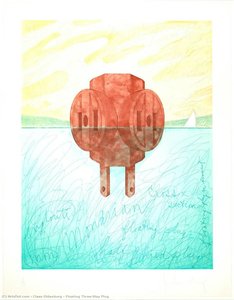
Giant 3-Way Plug

 Read More
Hand Made Oil Reproduction
Hand-painted oil on canvas in your size and frame, made to order by our artists.




































Pick from our preset sizes that match the artwork's original proportions.

You may enter your own dimensions to fit a specific frame or space. If your selected size does not match the original image's proportions, we will either crop the artwork or extend the painting with additional hand-painted elements. A digital mockup will be sent for your approval before production begins.
Please note that the on-screen preview does not reflect the actual cropping or extension. Only the mockup will accurately show the final composition.
While custom sizes are available, we recommend selecting a dimension from the predefined list to preserve the original proportions.
After order, OriginalUniqueArt.com team will email client for instructions and provide a mockup preview
Worldwide Delivery () in 3/4 weeks instead of standard 5 weeks. (24 July). No compromise on quality.

Free Worldwide Express Shipping

High-Quality Linen Canvas

Full Shipping Insurance

Customs Tax Refund Guarantee

True Color Matching Guarantee

60-Day Return Policy (Defects Only)

100% Money-Back Guarantee

Bulk Discount Offer
 Glass option is only available in size under 110 CM

Giant 3-Way Plug
Reproduction Medium
Reproduction Size
-


Total Price
-
Artist Biography
The Architect of the Everyday: The Visionary World of Claes Oldenburg
To encounter the work of Claes Oldenburg is to witness a delightful subversion of reality, where the mundane is elevated to the monumental and the familiar becomes strangely surreal. Born in Stockholm, Sweden, in 1929, Oldenburg possessed an uncanny ability to strip the ordinary of its invisibility. His artistic journey, which would eventually define much of the Pop Art movement, was rooted in a profound fascination with the textures and shapes of daily life. Whether it was the soft sag of a fabric-covered object or the towering presence of a giant utensil, Oldenburg’s oeuvre challenged the viewer to reconsider the very objects that populate our domestic and urban landscapes.
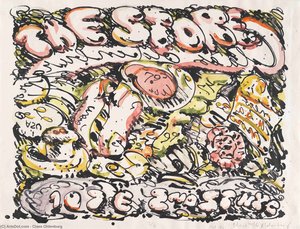
His early years were shaped by an avant-garde sensibility, absorbing the radical energies of Surrealism and Dada. This foundation allowed him to approach sculpture not as a rigid medium of stone or bronze, but as a fluid language capable of expressing absurdity and wit. After moving to New York in 1956, he became a central figure in the city's burgeoning experimental scene. His early installations, such as The Street (1960) and The Store (1961), were transformative performances of space and commerce, utilizing urban debris and plaster replicas of consumer goods to blur the line between high art and the grit of the marketplace.
Softness, Scale, and the Pop Art Revolution
One of Oldenburg’s most enduring legacies lies in his pioneering development of soft sculpture. By utilizing pliable materials like polyurethane foam and heavy fabrics, he introduced a sense of vulnerability and organic life to inanimate objects. These "floppy" versions of hard items—clothespins, telephones, or even toilets—defied the traditional permanence of sculpture, inviting a tactile, almost psychological engagement from the audience. This technique allowed him to capture the ephemeral essence of consumer culture, rendering the industrial in a state of soft, yielding repose.
As his career progressed, Oldenburg’s ambitions expanded from the intimate scale of the gallery to the grand stage of the public square. In collaboration with his late wife and creative partner, Coosje van Bruggen, his work achieved a new level of architectural grandeur. Together, they mastered the art of the monumental, creating massive installations that integrated seamlessly into the urban fabric while simultaneously disrupting it. Their collaborative spirit breathed life into iconic pieces that transformed city skylines, turning public spaces into playgrounds of imagination.
A Legacy Carved in the Public Imagination
The historical significance of Claes Oldenburg cannot be overstated; he fundamentally altered the relationship between art and the spectator. His work remains a cornerstone of 20th-century art history due to several key achievements:
- Redefining Materiality: Through his use of soft, yielding materials, he broke the "monumental" tradition of heavy, static sculpture.
- Pop Art Iconography: He successfully bridged the gap between high culture and popular consumerism, using symbols like hamburgers and lipsticks to comment on modern identity.
- Public Engagement: His massive outdoor installations, such as the celebrated Spoonbridge & Cherry, democratized art by bringing it out of museums and into the daily paths of millions.
- Collaborative Vision: His partnership with Coosje van Bruggen demonstrated how shared creative voices could push the boundaries of scale and environmental integration.
Though he passed away in 2022, Oldenburg’s influence persists in every oversized sculpture that makes us pause, smile, or question our surroundings. He left behind a world that feels slightly more magical, reminding us that even the most overlooked object—a spoon, a plug, or a piece of fruit—holds the potential for greatness if viewed through the lens of a truly transformative imagination.

claes thure oldenburg
1929 - 2022 , Sweden
Quick Facts
- Artistic Movement Or Style: Pop Art
- Artists Or Movements Influenced By This Artist: ['Minimalism']
- Artists Who Influenced This Artist: ['Hannah Wilke']
- Date Of Birth: January 28, 1929
- Date Of Death: July 18, 2022
- Full Name: Claes Oldenburg
- Nationality: Swedish-American
- Notable Artworks:
- Knifeship - (85)
- Store poster
- Split button
- Place Of Birth: Stockholm, Sweden