Text size

() ·

A painting made for you, by hand

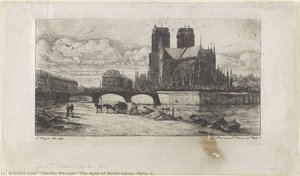
The Morgue, Paris

Hand Made Oil Reproduction

Hand-painted oil on canvas in your size and frame, made to order by our artists. ( Switch to Print Switch to Digital Image)

Collectible Description

Explore Charles Meryon’s haunting ‘The Morgue, Paris.’ A monochrome etching capturing 19th-century Parisian life with gothic detail & mystery. Discover this iconic artwork.

Artist Biography

Explore the haunting beauty of Paris through Charles Méryon's iconic etchings. Discover his gothic vision & masterful 'Eaux-fortes sur Paris' series.

from ·

Chapter 1

How large should it be?

Slide to change the size; the picture on the left shows the frame at its real width. The proportions of the original are kept.

Standard
custom
CM
INCH

Pick from our preset sizes that match the artwork's original proportions.

width
height

Type the width and the height you need, to fit your frame or your wall. This is hand-painted, so for a size with a different shape the artist can paint a bit more around the picture, or cut a bit — you choose. We send you a digital mockup to approve before the painting starts. The picture shown on this page does not show the real result — only the mockup does.

Chapter 2

How should it arrive?

Choose the edges of the stretched canvas

Choose your frame

Corner sample of the WhiteWrap canvas edge finish, stretched on solid wood bars
White $1
Corner sample of the BlurSideWrap canvas edge finish, stretched on solid wood bars
Blurside $1
Corner sample of the ExtendedWrap canvas edge finish, stretched on solid wood bars
Extended $1
Corner sample of the P118B picture frame: moulded polystyrene, 5 cm wide and 3 cm thick
P118B $10
Corner sample of the P118H picture frame: moulded polystyrene, 5 cm wide and 3 cm thick
P118H $10
Corner sample of the P118W picture frame: moulded polystyrene, 5 cm wide and 3 cm thick
P118W $10
Corner sample of the P438Z picture frame: moulded polystyrene, 5.5 cm wide and 3.5 cm thick
P438Z $10
Corner sample of the P508JH picture frame: moulded polystyrene, 7 cm wide and 3.5 cm thick
P508JH $12
Corner sample of the P508YH picture frame: moulded polystyrene, 7 cm wide and 3.5 cm thick
P508YH $12
Corner sample of the P805H picture frame: moulded polystyrene, 5 cm wide and 3.5 cm thick
P805H $10
Corner sample of the P805Z picture frame: moulded polystyrene, 5 cm wide and 3.5 cm thick
P805Z $10
Corner sample of the P919BZ picture frame: moulded polystyrene, 7 cm wide and 3.5 cm thick
P919BZ $10
Corner sample of the P919G picture frame: moulded polystyrene, 7 cm wide and 3.5 cm thick
P919G $10
Corner sample of the P919XJ picture frame: moulded polystyrene, 7 cm wide and 3.5 cm thick
P919XJ $10
Corner sample of the P959ZH picture frame: moulded polystyrene, 5 cm wide and 3 cm thick
P959ZH $10
Corner sample of the P968JZ picture frame: moulded polystyrene, 6 cm wide and 4 cm thick
P968JZ $12
Corner sample of the W106C picture frame: solid wood, 5 cm wide and 3 cm thick
W106C $8
Corner sample of the W218G picture frame: solid wood, 5 cm wide and 3 cm thick
W218G $10
Corner sample of the W218JH picture frame: solid wood, 5 cm wide and 3 cm thick
W218JH $8
Corner sample of the W218Y picture frame: solid wood, 5 cm wide and 3 cm thick
W218Y $10
Corner sample of the W307PJ picture frame: solid wood, 6 cm wide and 3 cm thick
W307PJ $10
Corner sample of the W316G picture frame: solid wood, 6 cm wide and 3 cm thick
W316G $10
Corner sample of the W316PJ picture frame: solid wood, 6 cm wide and 3 cm thick
W316PJ $8
Corner sample of the W316Y picture frame: solid wood, 6 cm wide and 3 cm thick
W316Y $10
Corner sample of the W398PJ picture frame: solid wood, 5 cm wide and 3 cm thick
W398PJ $8
Corner sample of the W4111J picture frame: solid wood, 6.5 cm wide and 3.5 cm thick
W4111J $10
Corner sample of the W500HY picture frame: solid wood, 7 cm wide and 5 cm thick
W500HY $15
Corner sample of the W500JH picture frame: solid wood, 7 cm wide and 5 cm thick
W500JH $15
Corner sample of the W692G picture frame: solid wood, 8 cm wide and 4 cm thick
W692G $12
Corner sample of the W849H picture frame: solid wood, 5 cm wide and 3 cm thick
W849H $8
Corner sample of the W940BG picture frame: solid wood, 7.5 cm wide and 4.5 cm thick
W940BG $15
Corner sample of the W953PJ picture frame: solid wood, 6 cm wide and 3.5 cm thick
W953PJ $8
Corner sample of the H24-GOLD picture frame: carved wood with gesso, 10 cm wide and 6 cm thick
H24-GOLD $30
Corner sample of the H24-SILVER picture frame: carved wood with gesso, 10 cm wide and 6 cm thick
H24-SILVER $30
Corner sample of the H36-GOLD picture frame: carved wood with gesso, 15 cm wide and 6.5 cm thick
H36-GOLD $45
Corner sample of the H36-SILVER picture frame: carved wood with gesso, 15 cm wide and 6.5 cm thick
H36-SILVER $45
Frame preview
Framed

Moulding: . Overall size with the frame: .

Chapter 3

Who paints it, and should anything change?

Examples of what can be changed: Replace face with customer photo; Add pet (e.g., replace cat with dog); Include hidden message in background; Change background landscape or elements.
After order, OriginalUniqueArt.com team will email client for instructions and provide a mockup preview

Worldwide Delivery () in 3/4 weeks instead of standard 5 weeks. (31 October). No compromise on quality.

Chapter 4

The finishing touches

A nameplate, as in a museum?

Engraved Bronze Plaque Details

This elegant plaque features the artist's name and the title of the artwork, finely engraved for a timeless presentation.

It is made from bronze with a refined, elegant finish. The text is precisely laser-engraved for a sharp and permanent result. Measuring 9x2 cm, the plaque is compact yet easy to read. It's built to be durable and scratch-resistant, offering a professional, museum-quality look. Mounting is simple thanks to the included adhesive backing.

Transparent Acrylic Plaque Details

The plaque includes essential engraved details such as the artist's name, the title of the artwork, the date it was created, the type of media used-like oil on canvas or watercolor-a brief description of the piece, and a QR code that links to the complete artwork information.

It is crafted from clear acrylic, offering a sleek, modern appearance. The text is UV-engraved in black to ensure strong visual contrast. With a size of 10x15 cm, it ensures optimal readability. It comes equipped with two metal hooks for secure wall mounting. The plaque is designed to be weather-resistant, making it suitable for various environments, and it includes interactive features that work seamlessly with smartphone scanning.

Black Acrylic Plaque Details

This elegant plaque includes engraved information such as the artist's name, the title of the artwork, the date it was created, the type of media used (like oil on canvas or watercolor), a short description of the artwork, and a QR code for quick access to more information.

The plaque itself is made from refined black acrylic with a premium finish. The text is laser-engraved in white for high contrast and readability. Its size is 10x15 cm, designed to be easy to read. It comes with two metal hooks for professional mounting. The design is sleek and fits any interior style. It is also weather-resistant and durable, with built-in digital integration for mobile compatibility.

A protective varnish?

When do you need it?

Chapter 5

Your painting, as you ordered it

The Morgue, Paris

Reproduction Medium

Reproduction Size

-

Elite Senior Artist

More detail, finesse, and extra production time

-

Reproduction Frame

-

-

For artworks or reproductions larger than 105 cm (approximately 41 inches) on any side, the frame will be shipped as a kit, disassembled. This method ensures safe delivery and prevents damage during transport.

Professional assembly required - this is not a DIY product.
The kit must be assembled and the canvas stretched by an experienced professional framer, using wood glue (not supplied), a canvas stretching plier and clamps to hold the bars square while the glue dries. Incorrect assembly or uneven canvas tension can permanently damage the artwork and is not covered by our warranty.

  • All solid wood bars are included, precisely cut to size.

  • Assembled with the screws provided, plus wood glue for the corner joints, which is not supplied and must be sourced by your framer.

  • Professional tools are required and not included: a canvas stretching plier (tensioner) and clamps to hold the bars square while the glue dries.

Important:
The corner joints require wood glue, the bars must be held with clamps until the glue is fully dry, and tightening the canvas on the assembled frame requires a canvas stretching plier. None of these are included in the kit. Please arrange an experienced professional framer before ordering this size.

Nameplate

-

-

Protective Varnish

Glossy Varnish (enhances colors, protects against light/moisture)

-

Customize My Artwork

Examples of what can be changed: Replace face with customer photo; Add pet (e.g., replace cat with dog); Include hidden message in background; Change background landscape or elements.

-

Urgent

Worldwide Delivery () in 3/4 weeks instead of standard 5 weeks. (31 October). No compromise on quality.

-

Express Shipping

Worldwide Delivery () in 5 weeks. (7 November).

Included

Total Price

$ 500

Total Price $ 500

Glass option is only available in size under 110 CM

Included with every order

  • Free Worldwide Express Shipping
  • High-Quality Linen Canvas
  • Full Shipping Insurance
  • Customs Tax Refund Guarantee
  • True Color Matching Guarantee
  • 100-Day Return Policy (Defects Only)
  • 100% Money-Back Guarantee
  • Bulk Discount Offer
French printmaker Charles Meryon (1821-68) was the illegitimate son of a British doctor and a French dancer. He entered the French Naval Academy at Brest in 1837 and travelled widely with his parents. Meryon took drawing lessons in 1840 from Vincent Courdouan (1810–93), from whom he learned elegant precision of line. He served as midshipman on the corvette Le Rhin during its mission to the French possessions in Oceania (1842–6). Meryon drew small but lively sketches of shipboard life, ethnographic studies and topographical views. Signs of mental instability occurred as he resigned from the navy in 1848. Meryon’s elaborate monochrome cartoon for the Assassination of Marion Dufrêsne in 1772 (Alexander Turnbull Library, Wellington) was exhibited at the 1848 Salon. In his subsequent studies of etching, he began by copying prints by Philippe de Loutherbourg, Salvator Rosa and, most enthusiastically, Reinier Nooms, the Dutch sailor–artist whom he venerated as ‘another self’ and whose Paris views prompted his Etchings of Paris. The first great original from this series, Petit Pont, was shown at the 1850 Salon and was followed by a spectacular sequence of prints: the Clock Tower Turret, Rue de la Tixéranderies, Saint-Etienne-du-Mont and the Notre-Dame Pump (1852), The Chimera, the Arch of the Pont Notre-Dame, the Notre-Dame Gallery and The Pont-Neuf (1853), and, climactically, the Rue des Mauvais-Garçons, The Morgue and the Apse of Notre-Dame (1854). Prior to commercially published editions, principally for the Artiste, most subjects were proofed through numerous states by Meryon himself, who appreciated the effect of printing variation in wiping, ink tint and paper tone and texture, making presentation impressions of brilliance and subtlety. From the outset his admirers realised that for all the clarity and objectivity of his views of the old buildings of Paris, the plates project a mysterious aura and a dream-like, somewhat sinister atmosphere. From 1855 Meryon’s physical and mental health deteriorated and his incisive style and geometrically crisp composition weakened, although he got increasing recognition—select, but important—from Baudelaire, Gautier, Hugo and others. His precarious livelihood became based on reproductive hack-work, book titles and illustrations, many portraits and ephemera, although the privately commissioned panoramic views of San Francisco of 1856 (based on photographs) is more ambitious. Beset by melancholia and bizarre and complex delusions, Meryon was confined to the asylum at Charenton from 12 May 1858 to 25 August 1859. When he resumed printmaking, Meryon reworked and modified in hallucinatory manner the earlier Paris views and elaborated new subjects, but both conception and execution had deteriorated in intensity and images of arcane and more obvious allegory intrude on the architectural compositions. Wary of drawing publicly from life, Meryon appended reproductive etchings from Paris drawings by earlier artists to the initial group, and etched a sequence of his youthful drawings made in Oceania, together with a frontispiece, between 1860 and 1866 in a loose and more casually diffuse manner. Friends and admirers attempted to obtain sales and commissions for him. The Ministère de la Marine (1865), the sky replete with Polynesian and marine phantasmagoria, was published by the Société des Aquafortistes in 1866. Also from 1866 dates his sole plate for the Louvre engraving series, the Old Louvre, after a painting by Reinier Nooms. Although Meryon exhibited in the Salon from 1863 to 1866, his paranoid delusions, semi-starvation and religious mania led to re-admission to Charenton in late 1866. He died there insane in February 1868 and was buried in Père Lachaise Cemetery, Paris, with a tomb plaque by Félix Bracquemond, who had etched the two most important portraits of the artist. The Morgue, Paris is a 19th-century printmaking icon. In his famous Etchings of Paris, Meryon depicted architectural landmarks that were likely to be demolished or moved in Baron Haussmann

Questions & Answers

How does the subject of "The Morgue, Paris" relate to Charles Meryon's usual themes?

Among Charles Meryon's recorded themes - haussmann's paris, gothic vision, nooms' influence, dutch echoes, urban decay, social commentary, mental instability, dark visions - "The Morgue, Paris" brings its own focus on parisian street, urban decay, gothic atmosphere, 19th century, noir print, morgue scene, french city, detailed etching.

How does "The Morgue, Paris" fit into Charles Meryon's themes and style?

Within Charles Meryon's output, "The Morgue, Paris" sits in the Realism style, alongside the themes of haussmann's paris, gothic vision, nooms' influence, dutch echoes, urban decay, social commentary, mental instability, dark visions.

What does the 1854 date of "The Morgue, Paris" correspond to in Charles Meryon's career?

"The Morgue, Paris", created in 1854, belongs to the Mature Period of Charles Meryon's career.

More about this painting

Preview AR preview Switch to Print Switch to Digital Image Send
Details Guide Add to favorites Download Similars X-Ray Diaporama Q&A Stats

In numbers

  • 1854the year it was painted
  • 29frames to choose from
  • standard sizes, in its own proportions
  • 5weeks to paint and deliver it
Charles Meryon

Charles Meryon

1821 - 1868, France

Quick facts about Charles Meryon

  • Full Name: Charles Meryon
  • Nationality: French
  • Date Of Birth: 1821
  • Date Of Death: 1868
  • Place Of Birth: Paris, France
  • Notable Artworks:
    • Eaux-fortes sur Paris
    • Le Stryge
    • St. Etienne-du-Mont
  • Artistic Movement Or Style: Gothic Romanticism
  • Artists Who Influenced This Artist:
    • Eugène Delacroix
    • Caspar David Friedrich

Artist Biography

early life and naval career

charles méryon, a french artist, was born on november 23, 1821, in paris. his mother, a dancer at the paris opera, had a significant influence on his early life. méryon's colour blindness led him to pursue a naval career, which took him on extensive voyages, including a four-year tour around the world. this experience would later inspire his etched depictions of paris.

artistic journey and notable works

after realizing that colour-blindness ruled out painting for him, méryon settled on etching in 1848. his most famous work is the series eaux-fortes sur paris, which powerfully conveys his distinctive gothic vision of paris. this series, executed from 1850 to 1854, includes twenty-two etchings that are now considered a testament to méryon's skill and artistry.

museums and collections featuring charles méryon's work

* the metropolitan museum of art (new york city, united states) houses several of méryon's notable etchings, including etchings of paris; title page to the suite. (view on OriginalUniqueArt) * harvard art museums (cambridge, united states) features méryon's le stryge, a testament to his skill in etching. (view on OriginalUniqueArt) discover more about charles méryon's life and work on wikipedia: read more