Preview
 Send
Send Share
Share
 Details
 Guide
Guide

 Download
 Similars
 X-Ray
X-Ray Diaporama
 Q&A
Q&A Stats
StatsHalt of the Hunt

- 59.0 x 50.0 cm


 Read More
Giclée / Art Print
Museum-quality giclée or canvas print with fast production and flexible finish options. ( Buy Hand Made Painting Switch to Digital Image)




P118B $10

P118H $10

P118W $10

P438Z $10

P508JH $12

P508YH $12

P805H $10

P805Z $10

P919BZ $10

P919G $10

P919XJ $10

P959ZH $10

P968JZ $12

W106C $8

W218G $10

W218JH $8

W218Y $10

W307PJ $10

W316G $10

W316PJ $8

W316Y $10

W398PJ $8

W4111J $10

W500HY $15

W500JH $15

W692G $12

W849H $8

W940BG $15

W953PJ $8




Pick from our preset sizes that match the artwork's original proportions.

Type the width and the height you need, to fit your frame or your wall. A print can only be cut, never made bigger than the picture, so a size with a different shape loses a part of the image. We send you a digital mockup to approve before we print anything. The picture shown on this page does not show the real cut — only the mockup does.
Worldwide Delivery () in 2 weeks instead of standard 4/5 weeks. (1 November)

Free Worldwide Express Shipping

High-Quality Linen Canvas

Full Shipping Insurance

Customs Tax Refund Guarantee

True Color Matching Guarantee

100-Day Return Policy (Defects Only)

100% Money-Back Guarantee

Bulk Discount Offer
 Glass option is only available in size under 110 CM

Halt of the Hunt
Giclée / Art Print
Reproduction Size
-


Total Price
$ 81
A Glimpse into Rococo Splendor
In the delicate dance of light and shadow captured within Charles-André van Loo’s 1737 masterpiece, “Halt of the Hunt,” we are transported to the very heart of the French aristocracy during the reign of Louis XV. This exquisite oil sketch is far more than a mere depiction of a midday respite; it serves as a window into an era defined by opulence, grace, and the pursuit of pleasure. The scene unfolds with a choreographed elegance, presenting a group of noblemen and ladies gathered around a table laden with delicacies. As they pause amidst their hunting expedition, the atmosphere is thick with the refined leisure of the court, inviting the viewer to step into a world where every gesture is poised and every detail is a testament to high society's splendor.
The composition is masterfully balanced, utilizing the presence of two loyal dogs to anchor the scene. These animals are not merely incidental; they serve as profound symbols of nobility and fidelity, mirroring the very virtues held dear by the aristocratic class of the eighteenth century. As the figures mingle around the feast, the interplay between the lush, natural backdrop and the sophisticated attire of the guests creates a captivating tension between the wildness of the hunt and the controlled refinement of civilization.
Mastery of Technique and Rococo Elegance
Van Loo’s technical prowess is on full display through his signature Rococo style, a movement characterized by its emphasis on beauty, ornament, and lightheartedness. The artist employs a breathtakingly delicate technique, utilizing thin glazes layered upon one another to achieve a luminous, almost ethereal quality. This method allows for a remarkable tonal subtlety, where the pastel hues of the drapery seem to glow from within, capturing the soft, filtered light of a forest clearing. Through the skillful application of sfumato, Van Loo softens the edges of the landscape, creating an atmospheric depth that pulls the observer into this idealized, dreamlike realm.
For the discerning collector or interior designer, the visual impact of this work lies in its ability to evoke emotion through texture and color. The meticulous attention to detail—from the glint of a silver cup to the intricate folds of silk garments—provides a sensory richness that elevates the painting from a historical document to a living piece of art. The brushwork is fluid yet precise, conveying a palpable sense of carefree enjoyment and the effortless sophistication that defines the Rococo spirit.
An Enduring Legacy for Modern Spaces
Historically, this work holds immense significance as a preparatory study for a much larger canvas destined for the prestigious Château de Fontainebleau. It represents the height of French artistic ambition, born from a period of intense innovation and royal patronage. To possess a high-quality reproduction of “Halt of the Hunt” is to bring a piece of history into the contemporary home, offering a sophisticated focal point that speaks of timeless elegance.
Whether placed in a grand dining hall to echo its original purpose or used as a subtle accent in a curated gallery wall, this painting offers an unparalleled sense of prestige. It provides an infusion of classical charm and warmth, making it an ideal choice for those looking to inspire awe and conversation. The artwork does not merely decorate a room; it transforms the space, imbuing it with the romanticism, light, and aristocratic charm of a bygone golden age.
Questions & Answers
Where in Charles-André van Loo's career does "Halt of the Hunt" fall, given its date?
The 1737 date places "Halt of the Hunt" in the Mature Rococo Style of Charles-André van Loo's development.
Where does "Halt of the Hunt" stand among Charles-André van Loo's recurring subjects?
"Halt of the Hunt" depicts hunting, aristocracy, banquet, fête galante, elegant picnic, servant costume, french royalty, classical painting, while Charles-André van Loo's recorded themes are watteau’s fêtes galantes influence, aristocratic leisure themes, royal patronage significance, classical tradition reflection. Comparing the two shows how the work relates to the artist's usual subjects.
Can "Halt of the Hunt" by Charles-André van Loo, held at the Metropolitan Museum of Art, be legally reproduced?
"Halt of the Hunt" by Charles-André van Loo, held at the Metropolitan Museum of Art, is in the public domain - its copyright has expired. This status determines whether reproductions of the image may be made.
Artist Biography
Early Life and Training
- Born: February 15, 1705, in Nice, France
- Family Background: Son of Louis-Abraham van Loo and younger brother of Jean-Baptiste van Loo. Member of a successful dynasty of Dutch painters.
- Early Education: Initial training in Turin, followed by studies in Rome (1712) under Benedetto Luti and Pierre Legros.
- Parisian Studies: Attended the Académie royale, winning first prize for drawing in 1723 and historical painting in 1727.
Artistic Career and Notable Works
- Style: Primarily known as a Rococo painter, characterized by elegance, grace, and ornate detail.
- Subject Matter: Diverse range including portraits, mythological scenes, historical paintings, allegories, and genre scenes.
- Significant Works:
- Venus and Amor (Kunsthalle Bremen) - Demonstrates mastery of the Rococo style.
- Halt of the Hunt (The Metropolitan Museum of Art) – Captures aristocratic activities.
- Portrait of Marie Leszczynska, Queen of France – A notable royal portrait.
- Jupiter and Antiope - Showcases mythological themes.
- Self Portrait – Provides insight into the artist's self-perception.
- Perseus and Andromeda (multiple versions) – Illustrates skill in depicting classical mythology.
- Mademoiselle Clairon as Medea (small version) - A captivating Rococo portrait of 1760.
Patronage and Royal Recognition
- Royal Patronage: Enjoyed the patronage of Madame de Pompadour and the French court.
- Appointment to the Court: Became First Painter to King Louis XV in 1762, a prestigious position.
- Order of Saint Michael: Decorated with the Order of Saint Michael, signifying royal favor.
Influences and Legacy
- Family Influence: Heavily influenced by his father and brother, both accomplished painters.
- Rivalry: Competed with François Boucher, another prominent Rococo artist.
- Modern French School: His "simplicity of style and correctness of design" significantly influenced the modern French school of painting.
- Critical Fortune: While his critical standing fluctuated over time, his skill and the breadth of his work command respect.
Museum Collections & Further Exploration
- Museum Presence: Works are featured in prominent museums including the Louvre (The Marriage of the Virgin), Kunsthalle Bremen, and The Metropolitan Museum of Art.
- Further Resources:
- OriginalUniqueArt's Charles-André van Loo page: https://www.OriginalUniqueArt.com/artists/charles-andre-van-loo/
- OriginalUniqueArt's Greatest Artists of All Time page: https://www.OriginalUniqueArt.com/greatest-artists
- OriginalUniqueArt Virtual Museum: https://www.OriginalUniqueArt.com/
- Wikipedia Article: https://en.wikipedia.org/wiki/Charles-Andr%C3%A9_van_Loo
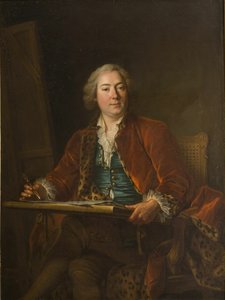
Charles-André van Loo
1705 - 1765 , France
Quick Facts
- Full Name: Charles-André van Loo
- Nationality: French
- Date Of Birth: 1705
- Date Of Death: 1765
- Place Of Birth: Nice, France
- Notable Artworks:
- Venus and Amor
- Halt of the Hunt
- Portrait of Marie Leszczynska
- Jupiter and Antiope
- Self Portrait
- Perseus and Andromeda
- Artistic Movement Or Style: Rococo painting
- Artists Who Influenced This Artist:
- Benedetto Luti
- Pierre Le Gros
- Artists Or Movements Influenced By This Artist: ['Modern French school']
Related Articles

The Allure of Elegance in Art: A Historical & Aesthetic Exploration of Refinement & Grace
Explore the exquisite world of Rococo art! Discover its history, masters (Watteau, Boucher & more), and defining elegance. Expert insights for collectors seeking museum-quality reproductions & custom portraits.

The Rococo Aesthetic: Opulence, Rebellion & the Pursuit of Pleasure in 18th-Century Art
Explore the opulent world of Rococo art! Discover its origins, key artists like Watteau & Boucher, and lasting influence on design. Expert insights for collectors & enthusiasts.

The Fête Galante & Beyond: Exploring the Artistic World of Jean-Antoine Watteau
Discover the captivating world of Jean-Antoine Watteau, master of the Fête Galante! Explore his iconic paintings, symbolism, and lasting influence on Rococo art. A deep dive for classic art enthusiasts.
The Rococo Style: Aristocratic Leisure & the Pursuit of Delight in 18th-Century Art
Explore the opulent world of Rococo art! Discover Watteau, Boucher & Nattier's masterpieces. Expert insights for collectors seeking museum-quality reproductions and custom portraits at OriginalUniqueArt.

Rococo's Radiant Legacy: 10 Masterpieces for Your Home |
Indulge in the elegance of Rococo! Explore 10 masterpieces by Fragonard, Boucher & Watteau. Discover the stories behind these iconic paintings and bring timeless art to your home with museum-quality reproductions from .