Preview
 Send
Send Share
Share
 Details
 Guide
Guide

 Download
 Similars
 X-Ray
X-Ray Diaporama
 Stats
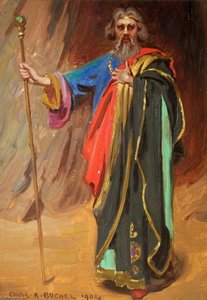
StatsHerbert Tree as Hamlet


 Read More
Giclée / Art Print
Museum-quality giclée or canvas print with fast production and flexible finish options. ( Buy Hand Made Painting Switch to Digital Image)




































Pick from our preset sizes that match the artwork's original proportions.

You may enter your own dimensions to fit a specific frame or space. If your selected size does not match the original image's proportions, we will either crop the artwork or extend the image with a mirrored or solid-fill edge. A digital mockup will be sent for your approval before production begins.
Please note that the on-screen preview does not reflect the actual cropping or extension. Only the mockup will accurately show the final composition.
While custom sizes are available, we recommend selecting a dimension from the predefined list to preserve the original proportions.
Worldwide Delivery () in 2 weeks instead of standard 4/5 weeks. (26 September)

Free Worldwide Express Shipping

High-Quality Linen Canvas

Full Shipping Insurance

Customs Tax Refund Guarantee

True Color Matching Guarantee

100-Day Return Policy (Defects Only)

100% Money-Back Guarantee

Bulk Discount Offer
 Glass option is only available in size under 110 CM

Herbert Tree as Hamlet
Giclée / Art Print
Reproduction Size
-


Total Price
$ 81
Artist Biography
Charles A. Buchel: The Painter of Stage Stars
Born in Mainz, Germany, in 1872, Charles Augustus Buchel’s artistic journey began amidst the backdrop of a rapidly changing Europe. His early life was marked by immigration to England, an experience that undoubtedly shaped his perspective and informed his later work. Initially studying at the Royal Academy Schools in London, Buchel quickly established himself as a portrait artist, gaining recognition for his ability to capture the essence of his subjects – particularly those who inhabited the vibrant world of theatre. He wasn’t merely rendering likenesses; he was distilling personality, imbuing each canvas with a sense of drama and immediacy that resonated deeply with audiences.
Buchel's career truly flourished under the patronage of Sir Herbert Beerbohm Tree, the influential actor-manager at the Savoy Theatre. For sixteen years, Buchel served as Tree’s official artist, documenting the star-studded cast of productions through a series of captivating portraits. These weren’t formal studio portraits; they were intimate glimpses into the lives and personalities of these theatrical luminaries – Lily Langtry, Henry Irving, George Alexander, and countless others. He skillfully captured their stage presence, their charisma, and often, a hint of vulnerability, revealing layers beneath the carefully constructed public image. His work during this period is characterized by loose brushstrokes, vibrant colors, and an almost palpable sense of movement, reflecting the dynamism of the theatre itself.
Theatrical Portraits: A Unique Artistic Approach
What distinguished Buchel’s portraits from those of his contemporaries was not simply technical skill but a deeply considered approach to capturing theatrical character. He wasn't interested in photographic realism; instead, he employed Impressionistic techniques – broken color, loose brushwork, and an emphasis on light and shadow – to create paintings that felt alive and immediate. He understood that the stage was a world of illusion, and his portraits sought to translate this ephemeral quality onto canvas. He often worked *en plein air* (outdoors) or used large canvases to capture the full effect of lighting and atmosphere, mimicking the conditions under which actors performed.
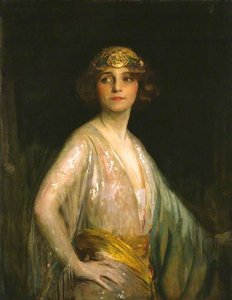
His subjects weren’t simply posed; Buchel actively engaged with them, observing their mannerisms, their expressions, and their interactions. He would spend hours sketching and studying his models before beginning a portrait, meticulously capturing every nuance of their appearance and personality. This dedication to detail is evident in works like “Irene Vanbrugh,” a stunning 1903 painting that showcases his mastery of color and light, as well as his ability to convey the subject’s elegance and grace. Similarly, his depiction of ‘Stage Setting for “Twelfth Night”’ demonstrates an understanding of theatrical design and how it contributes to the overall atmosphere of a production.
Beyond the Stage: Broader Artistic Pursuits
While best known for his portraits of stage stars, Buchel's artistic output extended beyond the realm of portraiture. He designed numerous theatrical programmes and advertising posters, demonstrating a versatility and creative flair that transcended his primary role as a painter. His illustrations for theatre magazines were particularly noteworthy, showcasing his ability to capture the spirit of the era through evocative imagery and witty captions. These works reveal a keen eye for detail and a sophisticated understanding of popular culture.
Buchel’s work reflects the artistic trends of the late 19th and early 20th centuries – the influence of Impressionism, the rise of modern theatre, and the growing popularity of celebrity culture. He was a keen observer of his time, capturing not only the outward appearance of his subjects but also their inner lives and aspirations. His portraits offer a valuable window into the world of Victorian and Edwardian theatre, providing insights into the personalities and ambitions of some of its most celebrated performers.
Legacy and Historical Significance
Charles A. Buchel’s legacy lies primarily in his captivating collection of theatrical portraits. These paintings are not merely representations of famous stage stars; they are imbued with a sense of drama, intimacy, and artistic brilliance. His work is held by institutions such as the British Museum and the Victoria & Albert Museum, testament to its enduring value and significance. Buchel’s influence can be seen in the works of later portrait artists who sought to capture the essence of their subjects through evocative brushstrokes and a keen understanding of human psychology.
He died in 1950, leaving behind a substantial body of work that continues to fascinate and inspire. His portraits remain remarkably relevant today, offering a glimpse into a bygone era and reminding us of the enduring power of theatre to captivate and enchant audiences around the world. His contribution to the visual documentation of theatrical history is undeniable, solidifying his place as one of the most important portrait artists of his time.

charles a buchel
1872 - 1950
Quick Facts
- Artistic Movement Or Style: Theatrical portraits
- Artists Or Movements Influenced By This Artist: ['Victorian Art']
- Artists Who Influenced This Artist: ['Herbert Beerbohm Tree']
- Date Of Birth: 1872
- Date Of Death: 1950
- Full Name: Charles A Buchel
- Nationality: British
- Notable Artworks:
- Within the Tent of Brutus
- Irene Vanbrugh portrait
- Place Of Birth: Mainz, Germany