Preview
 Send
Send Share
Share
 Details

 Download
 Similars
 X-Ray
X-Ray Diaporama
 Stats
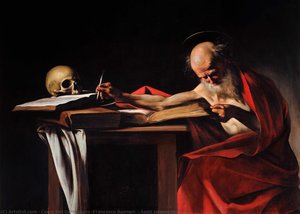
StatsSaint Jerome Writing
 Oil On Canvas
- WallArt
- Baroque
 1605
1605- Early Modern
 112.0 x 157.0 cm
 Galleria Borghese
 Read More
Giclée / Art Print
Museum-quality giclée or canvas print with fast production and flexible finish options. ( Buy Hand Made Painting Switch to Digital Image)




P118B $10

P118H $10

P118W $10

P438Z $10

P508JH $12

P508YH $12

P805H $10

P805Z $10

P919BZ $10

P919G $10

P919XJ $10

P959ZH $10

P968JZ $12

W106C $8

W218G $10

W218JH $8

W218Y $10

W307PJ $10

W316G $10

W316PJ $8

W316Y $10

W398PJ $8

W4111J $10

W500HY $15

W500JH $15

W692G $12

W849H $8

W940BG $15

W953PJ $8




Pick from our preset sizes that match the artwork's original proportions.

You may enter your own dimensions to fit a specific frame or space. If your selected size does not match the original image's proportions, we will either crop the artwork or extend the image with a mirrored or solid-fill edge. A digital mockup will be sent for your approval before production begins.
Please note that the on-screen preview does not reflect the actual cropping or extension. Only the mockup will accurately show the final composition.
While custom sizes are available, we recommend selecting a dimension from the predefined list to preserve the original proportions.
Worldwide Delivery () in 2 weeks instead of standard 4/5 weeks. (18 September)

Free Worldwide Express Shipping

High-Quality Linen Canvas

Full Shipping Insurance

Customs Tax Refund Guarantee

True Color Matching Guarantee

100-Day Return Policy (Defects Only)

100% Money-Back Guarantee

Bulk Discount Offer
 Glass option is only available in size under 110 CM

Saint Jerome Writing
Giclée / Art Print
Reproduction Size
-


Total Price
$ 81
A Symphony of Shadows: The Solitude of Saint Jerome
In the quiet, heavy atmosphere of a Roman night, a single source of light pierces through the gloom to reveal a moment of profound intellectual and spiritual labor. Saint Jerome Writing, painted in 1605 by the enigmatic Cecco del Caravaggio, is not merely a portrait of a scholar; it is an immersive experience in Tenebrism. As the eye wanders across the canvas, one is immediately struck by the dramatic interplay between the deep, swallowing shadows and the sudden, brilliant illumination that catches the textures of parchment, skin, and bone. The scene captures the venerable Saint Jerome in his study, lost in the monumental task of translating sacred texts, surrounded by the tools of his devotion and the silent reminders of mortality.
The composition is masterfully anchored by the weight of the books resting upon the table—one open, inviting the viewer into the saint's scholarly pursuit, and another closed, representing the vast, unread mysteries of the divine. This tension between the known and the unknown is further heightened by the presence of a skull, a classic memento mori that serves as a silent companion to Jerome’s work. In this dimly lit sanctuary, the skull acts as a poignant reminder that while the intellect seeks eternal truths, the flesh remains bound to the passage of time. For the discerning collector or interior designer, this piece offers a profound sense of gravity and contemplative stillness, making it an ideal centerpiece for spaces designed for reflection, study, or sophisticated repose.
The Legacy of the Caravaggisti
To understand the technical brilliance of this work, one must look to the shadows of its namesake. While history often focuses on Michelangelo Merisi da Caravaggio, Cecco del Caravaggio (Francesco Buoneri) emerged as a vital pulse within the Caravaggisti movement, absorbing the master's revolutionary naturalism and infusing it with his own psychological intensity. The technique employed here is nothing short of visceral; the artist uses light not just to illuminate the subject, but as a spiritual protagonist that carves the figure out of the darkness. This high-contrast approach creates a three-dimensional presence that feels almost tactile, as if one could reach out and feel the rough grain of the wooden table or the delicate edge of the quill.
The emotional impact of the painting lies in its ability to evoke a sense of sacred intimacy. There is no grand spectacle here, only the quiet, rhythmic pulse of a man dedicated to his calling. For those looking to adorn a home or gallery with a high-quality reproduction, this artwork provides more than just aesthetic beauty; it brings an atmosphere of historical depth and intellectual rigor. It is a piece that commands attention through its subtlety, inviting viewers to linger in the darkness and find meaning in the light. Whether placed in a contemporary setting to provide a dramatic contrast or within a classical library to enhance its traditional charm, Saint Jerome Writing remains a timeless testament to the power of focused devotion.
Artist Biography
The Shadowy Genius: Unveiling Cecco del Caravaggio
In the dimly lit corridors of Baroque art history, few figures possess a mystique as profound as Francesco Buoneri, known to posterity by the intimate diminutive Cecco del Caravaggio. To study his life is to navigate a landscape of shadows and half-truths, where the boundaries between historical fact and artistic legend blur. Emerging in the early seventeenth century, Cecco was far more than a mere shadow cast by the greatness of Michelangelo Merisi da Caravaggio; he was a vital pulse in the movement known as the Caravaggisti. While his name suggests a close-knit, perhaps even familial connection to the master, recent scholarship suggests a complex relationship where the student did not merely mimic the teacher but absorbed his revolutionary naturalism to forge a voice of startling psychological intensity.
The very essence of Cecco’s identity is woven into the fabric of Rome's turbulent artistic scene. The name Cecco, a diminutive of Francesco, hints at a level of familiarity that has led many historians to speculate he may have been the "boy Francesco" who assisted Caravaggio during the master's final, fugitive years in the city. This personal connection likely served as the crucible for his development, allowing him to witness firsthand the birth of tenebrism—that dramatic, high-contrast interplay of light and dark that would become his signature. His early training, potentially influenced by the Mannerist traditions of Pietro Testa, provided him with a foundation in classical composition, yet it was the raw, visceral reality of Caravaggio’s influence that ultimately pulled him toward a more profound, humanistic truth.
A Mastery of Light and Human Vulnerability
Cecco’s oeuvre is characterized by an uncompromising commitment to dramatic realism. He possessed a rare ability to use light not merely as a tool for visibility, but as a spiritual protagonist capable of illuminating the deepest recesses of the human soul. In his most celebrated works, such as the monumental The Resurrection, one observes an exaggeration of the bold contrasts pioneered by Caravaggio. Here, the light does not simply fall upon the figures; it erupts through the darkness, carving out forms with a sculptural weight that commands the viewer's attention and evokes a sense of divine intervention amidst earthly struggle.
Beyond the grand religious narratives, Cecco’s talent extended to capturing the quiet, often unsettling moments of human existence. His paintings frequently explore themes of:
- Sacred Suffering: Works like Ecce Homo utilize deep shadows to emphasize the physical and emotional agony of Christ, making the divine feel palpably present.
- Biblical Drama: In pieces such as Salome with the Head of John the Baptist, he employs a tragic realism that highlights the chilling intersection of beauty and brutality.
- Intimate Devotion: His depictions of figures like Saint Jerome Writing or John the Baptist showcase a mastery of texture and flesh, where the tactile reality of skin and parchment is rendered with breathtaking precision.
Legacy Amidst the Shadows
Though his active period was relatively brief, spanning from roughly 1610 to the mid-1620s, Cecco del Caravaggio left an indelible mark on the trajectory of Baroque painting. He stood at a pivotal moment in art history, acting as a bridge between the dying gasps of Mannerism and the full-throated emotionalism of the seventeenth century. While some early historians relegated him to the status of a mere follower, modern eyes recognize a painter who understood that true realism requires more than just accurate anatomy; it requires the courage to embrace the darkness.
His historical significance lies in his role as a custodian of the Caravaggisti spirit. By refining the techniques of chiaroscuro and infusing them with a unique, often melancholic tenderness, he helped ensure that the revolutionary naturalism of Caravaggio would endure through subsequent generations. Today, as we look upon his surviving masterpieces in collections like the Art Institute of Chicago or the Galleria Borghese, we do not see a mere imitator, but an artist who found profound meaning in the interplay of light and void, proving that even in the deepest shadows, a brilliant truth can be found.

cecco del caravaggio (francesco buoneri)
1589 - 1620 , Italy
Quick Facts
- Artistic Movement Or Style: Baroque
- Artists Or Movements Influenced By This Artist: ['']
- Artists Who Influenced This Artist: ['Caravaggio']
- Date Of Death: 1620
- Full Name: Francesco Buoneri
- Nationality: Italian
- Notable Artworks:
- The Death of the Virgin
- Portrait of Alof de Wignacourt and his Page
- Place Of Birth: Rome, Italy
Related Articles

Baroque Masterpieces: 10 Paintings That Defined an Era |
Journey through the drama & grandeur of Baroque art! Explore 10 masterpieces by Caravaggio, Rembrandt, Rubens & more. Discover stunning oil paintings, rich colors & timeless stories. Find museum-quality reproductions at .

The Dramatic Flourish: Exploring the Baroque Movement's Enduring Legacy in Art History
Explore the dramatic world of Baroque art! Discover iconic artists like Caravaggio & Rubens, defining techniques, and its lasting impact on art history. Expert insights for collectors & enthusiasts at OriginalUniqueArt.
Cecco del Caravaggio: Rediscovering the Shadowy Genius of Francesco Buoneri
Explore the captivating world of Cecco del Caravaggio (Francesco Buoneri), a pivotal Baroque artist. Discover his dramatic realism, mysterious life, and lasting legacy with OriginalUniqueArt's expert analysis.
Chiaroscuro and Soul: A Definitive Guide to the Drama and Emotion of Italian Baroque Masterpieces
Embark on a sophisticated journey through Italian Baroque art. Discover the dramatic interplay of light and emotion in Caravaggio’s masterpieces and explore how to bring this timeless grandeur into your collection with expert art insights.

Theatricality & Triumph: Baroque Drama in Painting & Sculpture
Explore the dramatic world of Baroque art! Discover its history, defining characteristics, & lasting influence on painting & sculpture. Expert insights into Caravaggio, Zurbarán, and Bernini – plus high-quality reproductions at OriginalUniqueArt.