
 Preview
 Send
Send Share
Share
 Details
 Guide
Guide

 Download
 Similars
 X-Ray
X-Ray Diaporama
 Q&A
Q&A Stats
StatsUntitled (AQTGEN)


 Read More
The artwork displayed on this page is protected by copyright law, which means we cannot legally create or sell an identical reproduction. This protection is enforced under international agreements such as the Berne Convention and by national laws, including those outlined by the U.S. Copyright Law - Title 17.
This method fully complies with copyright regulations because it does not involve copying or duplicating the protected artwork. Instead, it is a creative reinterpretation - a new painting that is influenced by the original but not identical to it.
Giclée / Art Print
Museum-quality giclée or canvas print with fast production and flexible finish options. ( Buy Hand Made Painting Switch to Digital Image)




P118B $10

P118H $10

P118W $10

P438Z $10

P508JH $12

P508YH $12

P805H $10

P805Z $10

P919BZ $10

P919G $10

P919XJ $10

P959ZH $10

P968JZ $12

W106C $8

W218G $10

W218JH $8

W218Y $10

W307PJ $10

W316G $10

W316PJ $8

W316Y $10

W398PJ $8

W4111J $10

W500HY $15

W500JH $15

W692G $12

W849H $8

W940BG $15

W953PJ $8




Pick from our preset sizes that match the artwork's original proportions.

Type the width and the height you need, to fit your frame or your wall. A print can only be cut, never made bigger than the picture, so a size with a different shape loses a part of the image. We send you a digital mockup to approve before we print anything. The picture shown on this page does not show the real cut — only the mockup does.
Worldwide Delivery () in 2 weeks instead of standard 4/5 weeks. (7 November)

Free Worldwide Express Shipping

High-Quality Linen Canvas

Full Shipping Insurance

Customs Tax Refund Guarantee

True Color Matching Guarantee

100-Day Return Policy (Defects Only)

100% Money-Back Guarantee

Bulk Discount Offer
 Glass option is only available in size under 110 CM

Untitled (AQTGEN)
Giclée / Art Print
Reproduction Size
-


Total Price
$ 81
A Chronicle in Cypress and Light: Unveiling Carol Highsmith’s “Untitled (AQTGEN)”
Carol M. Highsmith's "Untitled (AQTGEN)" isn’t merely a depiction of a bygone era; it’s a meticulously crafted narrative woven into the very fabric of American transportation history. Captured in 2010, this mural-sized photograph transcends the limitations of a simple snapshot, becoming instead a vibrant testament to progress, industry, and the enduring allure of movement itself. Highsmith, a chronicler of America's landscapes and people for over four decades, imbues this image with an almost palpable sense of time – a feeling that simultaneously evokes nostalgia and anticipation for what’s yet to come.
The scene unfolds within a bustling urban tableau, dominated by the stately presence of a horse-drawn carriage. A gentleman, rendered in Highsmith's signature sharp detail, confidently guides his steeds through a lively streetscape. Surrounding him are figures engaged in various modes of transport: pedestrians strolling along sidewalks, individuals seated on benches, and even glimpses of boats navigating nearby waterways – each element contributing to the layered complexity of the composition. The deliberate inclusion of these diverse modes—from the horse-drawn carriage representing an earlier age to the implied presence of trains and automobiles—creates a powerful visual dialogue about America’s evolving relationship with travel and innovation.
The Artistry of Observation: Highsmith's Photographic Technique
What immediately draws the eye is Highsmith’s masterful use of light and shadow. The photograph benefits from a strong, diffused daylight that illuminates the scene without overwhelming it. She employs a subtle depth-of-field, keeping the foreground figures sharply in focus while gently blurring those in the background, creating an inviting sense of intimacy within the larger composition. This technique directs the viewer’s gaze across the expansive mural, encouraging them to explore every detail and absorb the richness of the scene.
Highsmith's approach is rooted in a documentary style, yet imbued with a distinct artistic sensibility. She doesn’t shy away from capturing the grit and texture of urban life – the worn cobblestones, the slightly faded colors, the subtle imperfections that speak to the passage of time. This commitment to realism is balanced by her keen eye for composition and her ability to distill complex narratives into single, evocative images. The photograph's clarity and detail are remarkable, a testament to Highsmith’s meticulous attention to every element within the frame.
A Historical Tapestry: Contextualizing the Image
"Untitled (AQTGEN)" is part of a larger body of work by Carol M. Highsmith dedicated to documenting America's infrastructure and urban landscapes. Her project, initiated in the early 1980s, reflects a deep fascination with the country’s built environment – its roads, bridges, buildings, and the people who inhabit them. This particular image was created during her ongoing effort to capture the nation’s history through photography, a mission that has yielded an extraordinary collection of over 100,000 images now housed in the Library of Congress.
The photograph's creation coincided with a period of significant urban renewal and modernization in America. The late 20th century witnessed rapid technological advancements and shifting social dynamics, prompting Highsmith to document these changes through her lens. “Untitled (AQTGEN)” serves as a poignant reminder of the country’s past while simultaneously offering a glimpse into its ongoing evolution.
Symbolism and Emotional Resonance: A Journey Through Time
Beyond its historical context, "Untitled (AQTGEN)" resonates with profound symbolic meaning. The horse-drawn carriage represents tradition, stability, and a slower pace of life – qualities that are often contrasted with the dynamism and speed of modern transportation. The diverse array of vehicles symbolizes America’s relentless pursuit of progress and innovation. The image evokes a sense of both optimism and melancholy—a recognition of how far we've come while simultaneously acknowledging the loss of simpler times.
Ultimately, Highsmith’s photograph is more than just a visual record; it’s an invitation to reflect on America’s journey through time. It’s a powerful reminder that every mode of transportation—every road and bridge—is built upon the foundations of those who came before us. The image's enduring appeal lies in its ability to capture not only a specific moment in history but also the timeless human desire for connection, movement, and exploration.
Questions & Answers
What color harmony does "Untitled (AQTGEN)" by Carol M Highsmith display?
The color harmony of "Untitled (AQTGEN)" is recorded as discordant palette.
When was "Untitled (AQTGEN)" made?
The creation of "Untitled (AQTGEN)" by Carol M Highsmith is dated 2010.
What style does "Untitled (AQTGEN)" belong to?
"Untitled (AQTGEN)" by Carol M Highsmith belongs to the Contemporary Realism movement. This movement provides the stylistic context of the work.
Artist Biography
A Life Documenting America: The Vision of Carol M. Highsmith
Born in 1946 in Leesville, North Carolina, Carol McKinney Highsmith’s journey to becoming one of America's most prolific and generous photographic documentarians was shaped by a childhood steeped in contrasting experiences. Summers spent on a tobacco farm instilled an appreciation for the rhythms of rural life, while visits with affluent family friends in Atlanta offered glimpses into societal elegance – a duality that would later inform her nuanced perspective on the American landscape. These early travels south, facilitated by her father’s work as a manufacturer's representative, ignited a lifelong fascination with documenting the country and its diverse facets. Though her formal education included attendance at Parsons College after graduating from Minnehaha Academy in Minneapolis, it was experience—and a growing sense of purpose—that truly charted her course.From Restoration to National Archive: A Photographic Awakening
Highsmith’s serious pursuit of photography began in the 1970s, sparked by transformative travels to the Soviet Union and China. Witnessing these vastly different cultures ignited a passion for visual documentation, a desire to capture and preserve the essence of place and people. Her career truly took shape with her work documenting the meticulous restoration of Washington D.C.’s historic Willard Hotel. This project wasn’t merely about architectural preservation; it was an immersion into history, craftsmanship, and the stories embedded within physical structures. It proved a pivotal moment, solidifying her commitment to detailed documentation and setting the stage for a decades-long undertaking: photographing all 50 U.S. states and the District of Columbia. Utilizing high-resolution digital cameras, Highsmith embarked on an ambitious project to create a comprehensive visual record of America – its landscapes, architecture, urban life, rural scenes, and the individuals who inhabit them. Her style is characterized by clarity, precision, and a remarkable objectivity, allowing her photographs to speak for themselves, offering unvarnished glimpses into the heart of American existence.A Legacy in Public Domain: The Highsmith Collection at the Library of Congress
The sheer scale of Highsmith’s endeavor is astounding. Over decades, she amassed an archive exceeding 100,000 images – a monumental collection that stands as a testament to her dedication and vision. However, what truly sets her apart isn't just the quantity but the spirit in which this work was offered to the world. In an unprecedented act of generosity, Highsmith donated her entire life’s work, copyright-free, to the Library of Congress. This decision ensures public access and preservation of her photographic legacy, making it a resource for scholars, artists, and anyone interested in understanding America's cultural heritage. The Highsmith Collection at the Library of Congress is therefore not simply an archive; it’s a gift to the nation, a visual treasure trove available to all. This act echoes the spirit of earlier pioneering photographers like Frances Benjamin Johnston, whose own extensive archive also resides within the Library of Congress and served as a significant inspiration for Highsmith.Influences and Enduring Significance
The influence of Frances Benjamin Johnston is undeniable. Both women shared a commitment to meticulous documentation and a belief in the power of photography to preserve cultural memory. However, Highsmith’s work extends beyond mere replication; it offers a contemporary perspective on America in the early 21st century, capturing both its enduring traditions and its evolving landscape. Her photographs serve as invaluable historical documents, providing visual evidence of changes and continuities in architecture, society, and everyday life. By donating her work to the public domain, Highsmith has not only ensured its accessibility but also fostered a spirit of collaboration and creativity. Her images are freely available for use in educational materials, research projects, and artistic endeavors, inspiring future generations of photographers and archivists. Carol M. Highsmith’s dedication to documenting America is more than just a photographic project; it's an act of cultural preservation, a testament to the power of visual storytelling, and a lasting gift to the world.Major Achievements & Recognition
- Extensive Archive: Created an archive of over 100,000 images documenting America.
- Library of Congress Donation: Donated her entire life's work, copyright-free, to the Library of Congress.
- Numerous Awards: Received accolades for contributions to photography and documentation of American culture.
- Influence on Future Photographers: Inspired others with dedication to meticulous documentation and open access.

Carol M Highsmith
1946 - , United States of America
Quick Facts
- Full Name: Carol M. Highsmith
- Nationality: American
- Date Of Birth: 1946
- Place Of Birth: Leesville, United States of America
- Notable Artworks:
- Untitled (AQTGG2)
- Discovery and Building
- Artistic Movement Or Style: Documentary photography
- Artists Who Influenced This Artist: ['Frances Benjamin Johnston']
- Artists Or Movements Influenced By This Artist: ['Future photographers']
Related Articles

Elevating Interiors: How Murals are Redefining Kitchens and Bathrooms
Transform your kitchen & bathroom with stunning murals! Explore design trends, durable materials & expert advice. Elevate your interiors with OriginalUniqueArt.com's bespoke mural solutions.
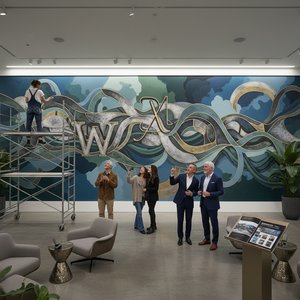
Transforming Spaces: How Custom Murals Forge Brand Identity & Enhance Customer Experience
Elevate your brand & spaces with custom murals. Explore expert insights on design, artists, materials & installation. Transform environments – discover OriginalUniqueArt.com's bespoke solutions.

Anchoring Interior Design with Murals: A Comprehensive Guide for Hotel Designers
Elevate your hotel's design with impactful murals! Our expert guide explores anchoring interior spaces, thematic storytelling & durable solutions for luxury hospitality. Discover bespoke art options & elevate the guest experience.

Monochrome Visions: Exploring the Aesthetic & Historical Significance of Black & White Photography
Explore the rich history & artistic power of black and white photography. From early techniques to iconic masters like Ansel Adams, discover why monochrome continues to captivate art lovers today. Expert insights for collectors.

From Jungle Scenes to Gold Leaf Geometry: A Guide to Today's Most Requested Mural Styles
Explore today's top mural styles for hotels & commercial spaces! Discover trends, expert insights, & custom design solutions. Elevate your space with .


