Preview
 Send
Send Share
Share
 Details
 Guide
Guide

 Download
 Similars
 X-Ray
X-Ray Diaporama
 Stats
StatsConcordia
 1972
1972 255.0 x 305.0 cm
 Read More
The artwork displayed on this page is protected by copyright law, which means we cannot legally create or sell an identical reproduction. This protection is enforced under international agreements such as the Berne Convention and by national laws, including those outlined by the U.S. Copyright Law - Title 17.
As a respectful and legal alternative, we offer custom, hand-painted artworks inspired by the original. Our skilled and professional artists carefully study the original's style, mood, and artistic essence to create a new, unique piece that evokes the same feeling - while remaining an original creation in its own right.
This method fully complies with copyright regulations because it does not involve copying or duplicating the protected artwork. Instead, it is a creative reinterpretation - a new painting that is influenced by the original but not identical to it.
Hand Made Oil Reproduction
Hand-painted oil on canvas in your size and frame, made to order by our artists. ( Switch to Print Switch to Digital Image)




































Pick from our preset sizes that match the artwork's original proportions.

Type the width and the height you need, to fit your frame or your wall. This is hand-painted, so for a size with a different shape the artist can paint a bit more around the picture, or cut a bit — you choose. We send you a digital mockup to approve before the painting starts. The picture shown on this page does not show the real result — only the mockup does.
After order, OriginalUniqueArt.com team will email client for instructions and provide a mockup preview
Worldwide Delivery () in 3/4 weeks instead of standard 5 weeks. (24 October). No compromise on quality.

Free Worldwide Express Shipping

High-Quality Linen Canvas

Full Shipping Insurance

Customs Tax Refund Guarantee

True Color Matching Guarantee

100-Day Return Policy (Defects Only)

100% Money-Back Guarantee

Bulk Discount Offer
 Glass option is only available in size under 110 CM

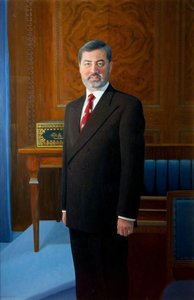
Concordia
Reproduction Medium
Reproduction Size
-


Total Price
$ 300
Artist Biography
Carol Graham: A Portraitist of Northern Ireland’s Soul
Carol Graham, born in Belfast in 1951, is more than just a portrait painter; she's a visual chronicler of a nation grappling with its identity and history. Her work, deeply rooted in the landscapes and figures of Northern Ireland, transcends mere representation, offering instead poignant glimpses into the lives and spirits that shaped – and continue to shape – this complex region. From her early studies at the Belfast College of Art to her current status as a respected member of the Royal Ulster Academy (RUA) and former President, Graham’s artistic journey has been one of quiet observation, meticulous technique, and an unwavering commitment to capturing the essence of her subjects.
Graham's formative years in Belfast were crucial to her artistic development. Growing up amidst the political tensions of the Troubles instilled a deep sensitivity to the human condition – the resilience, vulnerability, and unspoken stories embedded within everyday life. This awareness is immediately apparent in her portraits, where she doesn’t simply depict physical likeness but strives to convey an individual's inner world, their hopes, fears, and memories. Her early training at Cambridge House School provided a solid foundation, while her subsequent studies at the Belfast College of Art honed her technical skills and introduced her to the diverse range of artistic styles available. Crucially, her decision to pursue portraiture wasn’t driven by a desire for fame or fortune but rather by a genuine fascination with capturing the complexities of human character.
A Landscape Shaped by History
While Graham is celebrated primarily for her portraits, her landscapes are equally compelling and integral to understanding her artistic vision. These aren't idyllic depictions of rolling hills; they’re imbued with the weight of history – the scars of conflict, the enduring beauty of the countryside, and the quiet dignity of rural life. Graham’s early exposure to the rugged coastline and dramatic moorlands of Northern Ireland undoubtedly influenced her approach to landscape painting. She frequently incorporates elements of abstraction and symbolism into her work, suggesting layers of meaning beyond the purely visual. The use of light and shadow is particularly masterful, creating a sense of atmosphere and mood that reflects the emotional tenor of each scene.
Her landscapes are not merely scenic; they’re imbued with a narrative quality, often hinting at stories untold. The muted colors and textured brushstrokes evoke a feeling of timelessness, as if these scenes have witnessed generations of human experience. Graham's ability to capture the essence of Northern Ireland’s landscape—its beauty, its hardship, and its enduring spirit—is a testament to her deep connection with the region and her profound artistic talent.
Portraits of Prominence and Quiet Moments
Graham’s portraiture is perhaps her most celebrated work. She has been commissioned to paint a diverse range of subjects – from prominent political figures like Mary Robinson and Mary McAleese, President of Ireland, to esteemed members of the legal community such as John P.B. Maxwell, barrister. What distinguishes Graham's portraits isn’t simply technical skill; it’s her remarkable ability to reveal something essential about each subject through careful observation and empathetic engagement. She avoids superficiality, instead focusing on capturing the character, intelligence, and humanity of her sitters.
Her portraits are often characterized by a sense of intimacy and vulnerability. Graham employs a loose, expressive brushstroke that conveys both strength and fragility. She’s adept at using light and shadow to sculpt the faces of her subjects, creating a three-dimensional effect that draws the viewer in. The inclusion of subtle details – a fleeting expression, a gesture, a particular texture – adds layers of meaning and complexity to each portrait, transforming them from simple likenesses into powerful statements about human experience.
Recognition and Legacy
Carol Graham’s artistic achievements have been widely recognized throughout her career. She was elected to the Royal Ulster Academy in 1985, a prestigious honor that reflects her standing within the Northern Irish art community. She served as RUA President from 2003 to 2006, demonstrating her commitment to fostering and supporting emerging artists. Graham’s work has been exhibited extensively throughout Ireland and internationally, including solo shows at The Arts Council Gallery in Belfast, Tom Caldwell Gallery, Holywood, and the Naughton Gallery at Queen's University.
Beyond her individual accomplishments, Graham has played a significant role in promoting Northern Irish art on a national and international stage. Her dedication to nurturing young talent and advocating for the importance of visual arts education is a testament to her generous spirit and enduring legacy. Carol Graham’s work continues to resonate with audiences today, offering a poignant reflection on the complexities of identity, history, and the human spirit – a vital contribution to the artistic landscape of Northern Ireland.

Carol Graham
1951 -
Quick Facts
- Artistic Movement Or Style: Portraiture
- Artists Or Movements Influenced By This Artist: ['None specified']
- Artists Who Influenced This Artist: ['None specified']
- Date Of Birth: 1951
- Full Name: Carol Graham
- Nationality: Irish
- Notable Artworks:
- The Striped Skirt
- Various portraits
- Place Of Birth: Belfast, Northern Ireland