
 Preview
 Send
Send Share
Share
 Details

 Download
 Similars
 X-Ray
X-Ray Diaporama
Untitled (D2X6D6)
 Oil On Canvas
- WallArt
- Baroque
 1612
1612- Early Modern
 305.0 x 231.0 cm
 Metropolitan Museum of Art
 Read More
Purchase a high-resolution, enhanced digital image, far superior to the online preview.
Each file is meticulously prepared by our in-house specialists using advanced tools and expert manual retouching. We ensure every image has exceptional clarity, precise color accuracy, and fine detail.
The final file is delivered via email within 72 hours, optimized for immediate use in professional, editorial, and print environments. This is the same quality trusted by top-tier design studios, publishers, and galleries.
Digital Image
Download a high-resolution file for personal display, printing, and creative projects. ( Buy Print Buy Hand Made Painting)
Included in Every Digital Image Order
Expert Digital Delivery, Guaranteed
When you choose OriginalUniqueArt.com, you're not just getting an image - you're receiving a professionally enhanced digital artwork, crafted with precision and backed by a satisfaction guarantee. Here's everything that comes with your order, automatically:

Fast Email Delivery
Your high-resolution digital image file will be emailed to you within 72 hours of ordering - ready for immediate use.

AI-Enhanced Digital File
Your artwork is professionally optimized using advanced AI tools and manual editing, ensuring maximum detail, clarity, and color accuracy.

Free Lifetime Re-Delivery
Accidentally deleted or lost your file? No worries - we'll resend it to you anytime, free of charge.

No Import Fees - Ever
Enjoy your artwork instantly with zero customs, duties, or delivery fees - digital downloads are always tax-free.

Color Accuracy Guarantee
We ensure your digital image reflects the original colors as closely as possible using professional tools and color management.

60-Day Satisfaction Guarantee
If you're not satisfied with your digital image, we'll revise it or refund 100% within 60 days - no questions asked.

100% Money-Back Guarantee
Not satisfied? Get a full refund within 60 days of receiving your digital file - no questions asked.

Bulk Order Discounts
Buy 3 images, save 10% - Buy 5, save 15% - Buy 10+, save 20%. Great for creative projects, galleries, and agencies.
Collectible Description
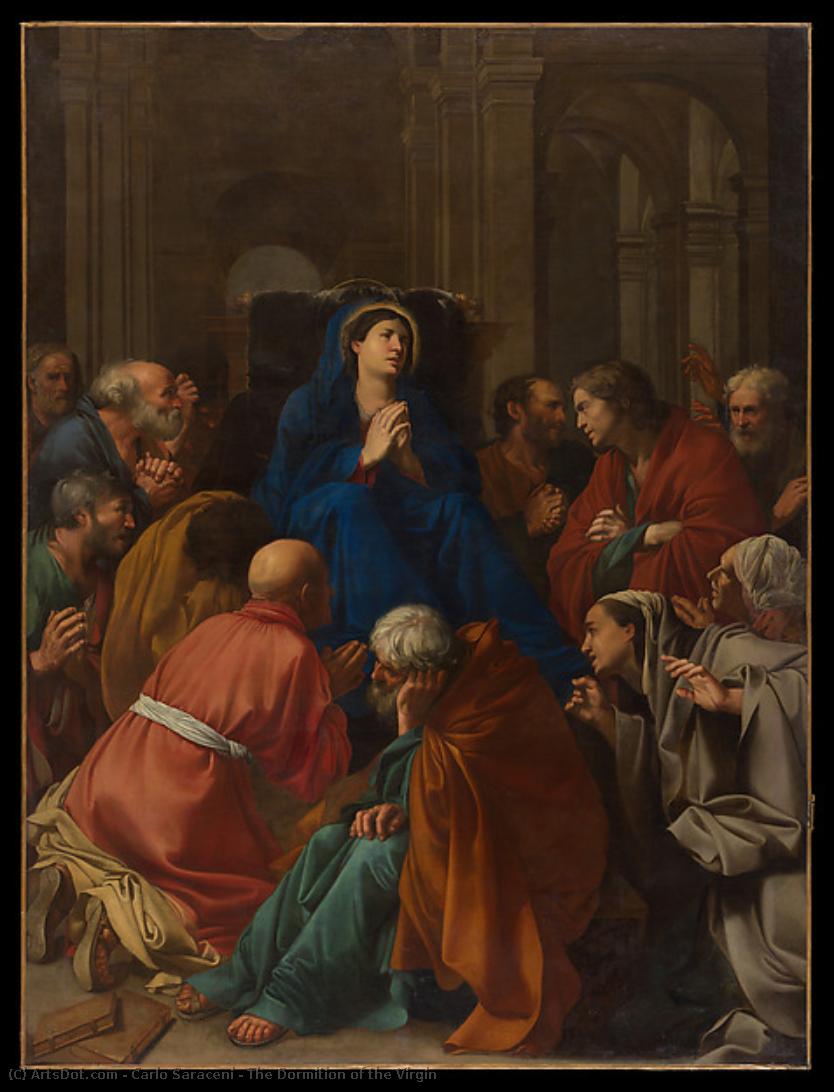
A Roman Echo in Venetian Light: Exploring Carlo Saraceni’s “Untitled (D2X6D6)”
Carlo Saraceni, born in Venice in 1579 and tragically deceased in Rome just two years later, stands as a pivotal figure bridging the stylistic gap between Mannerism and Baroque. While rooted in Venetian artistic traditions—influenced by his upbringing amidst a vibrant milieu of artists—his oeuvre possesses an unmistakable Roman character, reflecting his decisive relocation to the papal capital in 1598 and membership within the prestigious Accademia di San Luca. This duality is powerfully embodied in “Untitled (D2X6D6),” a monumental canvas completed around 1612 that captures a scene of profound spiritual contemplation.- Subject Matter: The painting depicts a solemn religious tableau centered on the Virgin Mary seated upon a chair, radiating serenity and grace. Surrounding her are figures kneeling or bowing in reverence—a testament to her revered status within Christian iconography.
- Style & Technique: Saraceni’s masterful execution aligns squarely with Caravaggio's revolutionary tenebrism – a dramatic interplay of light and shadow that intensifies emotional impact. This technique, adopted early in his career after encountering Elsheimer’s evocative landscapes, prioritizes chiaroscuro to sculpt form and heighten the sense of drama, creating an atmosphere charged with solemnity.
- Emotional Impact: “Untitled (D2X6D6)” succeeds in transporting viewers into a realm of contemplative stillness. The masterful use of tenebrism generates an arresting visual experience, drawing attention to Mary’s figure and amplifying the emotional resonance of the scene. It evokes feelings of peace, reverence, and profound spiritual connection.
- Interior Design Considerations: This artwork's monumental scale and dramatic chiaroscuro would lend itself beautifully to grand interiors—particularly those seeking a touch of solemn elegance and artistic sophistication. Its muted palette – predominantly earthy tones accented by subtle highlights – harmonizes seamlessly with classical architectural styles.
Artist Biography
The Roman Shadow of Caravaggio
Carlo Saraceni, a name that resonates with the dramatic intensity of the early Baroque era, remains one of the most compelling figures of the seventeenth century. Though his life was relatively brief, spanning from 1579 to 1620, his impact on the Roman art scene was profound. Born in Venice to a family steeped in artistic tradition, Saraceni’s early years were shaped by the meticulous observation and classical ideals inherent in Venetian training. His mastery of both disegno and pictura provided him with a robust foundation, yet it was his departure from the serene traditions of his birthplace that would ultimately define his legacy. Moving to Rome in 1598, he entered a crucible of innovation, joining the prestigious Accademia di San Luca and positioning himself at the heart of a burgeoning artistic revolution.
The trajectory of Saraceni’s career was irrevocably altered by his encounter with the revolutionary techniques of Caravaggio. While he did not merely mimic the master, rather than becoming a mere follower, Saraceni achieved a sophisticated assimilation of tenebrism—the dramatic use of intense light and deep shadow. This mastery of chiaroscuro allowed him to imbue his canvases with an emotional weight and physical presence that captivated both contemporaries and modern scholars alike. His work serves as a bridge between the atmospheric landscapes of Adam Elsheimer and the visceral, human-centric drama of the Caravaggisti movement. In pieces such as The Birth of the Virgin, one can witness this unique synthesis, where divine beauty is rendered through a lens of profound, dramatic lighting and rich, tactile detail.
A Synthesis of Styles and Spirit
Saraceni’s artistic evolution was characterized by a remarkable ability to blend disparate influences into a cohesive, personal language. His early fascination with the landscape paintings of Adam Elsheimer introduced a sense of depth and narrative scale to his work, which he later layered with the heavy, dramatic shadows of the Roman school. This stylistic duality is perhaps most evident in works like Paradise, where the artist successfully merges Venetian artistic traditions with Northern European influences. In this composition, the depiction of the Holy Trinity reflects a pivotal moment in Baroque history, showcasing his ability to handle complex theological themes through a lens of masterful tenebrism.
Beyond the technical brilliance of his brushwork, Saraceni’s work is noted for its profound symbolic depth and emotional resonance. His religious and mythological scenes are rarely mere illustrations; they are psychological explorations. In St Gregory the Great, the meticulous detail of symbolic elements, such as the presence of doves, works in tandem with a starkly lit composition to create an atmosphere of divine intervention and solemnity. This ability to command the viewer's attention through light and shadow ensured his place among the foremost practitioners of his era, earning him a reputation that, while once categorized by historians as a "second-rank" painter, has been rightfully elevated by modern scholarship to recognize his true brilliance.
The historical significance of Carlo Saraceni lies in his role as a pivotal figure within the Roman Baroque movement. His life and work represent the intersection of Venetian grace and Roman drama. Even though he never traveled to France, his cultural reach was expansive, evidenced by his fluency in French and an aesthetic sensibility that resonated with international tastes. Today, his masterpieces reside in some of the world's most esteemed collections, such as the Palazzo del Quirinale and the Galleria Nazionale d'Arte Antica, serving as enduring testaments to a painter who mastered the art of capturing the divine within the shadows.

Carlo Saraceni
1579 - 1620 , Italy
Quick Facts
- Artistic Movement Or Style: Early Baroque; Tenebrism
- Artists Or Movements Influenced By This Artist: ['Caravaggisti']
- Artists Who Influenced This Artist:
- Adam Elsheimer
- Caravaggio
- Date Of Birth: Venice, Italy (1579)
- Date Of Death: Rome (1620)
- Full Name: Carlo Saraceni
- Nationality: Italian
- Notable Artworks:
- St Gregory the Great
- The Birth of the Virgin
- Venus and Mars
- Place Of Birth: Venice

