Text size

() ·

A painting made for you, by hand

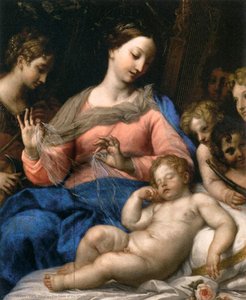
Maria Immaculata

Hand Made Oil Reproduction

Hand-painted oil on canvas in your size and frame, made to order by our artists. ( Switch to Print Switch to Digital Image)

Collectible Description

Marvel at 'Maria Immaculata' by Carlo Maratta! This stunning Baroque masterpiece depicts the Virgin Mary with angels, showcasing exquisite detail and classicizing style from 1688. A timeless work of art.

Artist Biography

Discover Carlo Maratta (1625-1713), a leading Roman Baroque painter renowned for his classicizing style, religious scenes & frescoes commissioned by six Popes. Explore his legacy today!

from ·

Chapter 1

How large should it be?

Slide to change the size; the picture on the left shows the frame at its real width. The proportions of the original are kept.

Standard
custom
CM
INCH

Pick from our preset sizes that match the artwork's original proportions.

width
height

Type the width and the height you need, to fit your frame or your wall. This is hand-painted, so for a size with a different shape the artist can paint a bit more around the picture, or cut a bit — you choose. We send you a digital mockup to approve before the painting starts. The picture shown on this page does not show the real result — only the mockup does.

Chapter 2

How should it arrive?

Choose the edges of the stretched canvas

Choose your frame

Corner sample of the WhiteWrap canvas edge finish, stretched on solid wood bars
White $1
Corner sample of the BlurSideWrap canvas edge finish, stretched on solid wood bars
Blurside $1
Corner sample of the ExtendedWrap canvas edge finish, stretched on solid wood bars
Extended $1
Corner sample of the P118B picture frame: moulded polystyrene, 5 cm wide and 3 cm thick
P118B $10
Corner sample of the P118H picture frame: moulded polystyrene, 5 cm wide and 3 cm thick
P118H $10
Corner sample of the P118W picture frame: moulded polystyrene, 5 cm wide and 3 cm thick
P118W $10
Corner sample of the P438Z picture frame: moulded polystyrene, 5.5 cm wide and 3.5 cm thick
P438Z $10
Corner sample of the P508JH picture frame: moulded polystyrene, 7 cm wide and 3.5 cm thick
P508JH $12
Corner sample of the P508YH picture frame: moulded polystyrene, 7 cm wide and 3.5 cm thick
P508YH $12
Corner sample of the P805H picture frame: moulded polystyrene, 5 cm wide and 3.5 cm thick
P805H $10
Corner sample of the P805Z picture frame: moulded polystyrene, 5 cm wide and 3.5 cm thick
P805Z $10
Corner sample of the P919BZ picture frame: moulded polystyrene, 7 cm wide and 3.5 cm thick
P919BZ $10
Corner sample of the P919G picture frame: moulded polystyrene, 7 cm wide and 3.5 cm thick
P919G $10
Corner sample of the P919XJ picture frame: moulded polystyrene, 7 cm wide and 3.5 cm thick
P919XJ $10
Corner sample of the P959ZH picture frame: moulded polystyrene, 5 cm wide and 3 cm thick
P959ZH $10
Corner sample of the P968JZ picture frame: moulded polystyrene, 6 cm wide and 4 cm thick
P968JZ $12
Corner sample of the W106C picture frame: solid wood, 5 cm wide and 3 cm thick
W106C $8
Corner sample of the W218G picture frame: solid wood, 5 cm wide and 3 cm thick
W218G $10
Corner sample of the W218JH picture frame: solid wood, 5 cm wide and 3 cm thick
W218JH $8
Corner sample of the W218Y picture frame: solid wood, 5 cm wide and 3 cm thick
W218Y $10
Corner sample of the W307PJ picture frame: solid wood, 6 cm wide and 3 cm thick
W307PJ $10
Corner sample of the W316G picture frame: solid wood, 6 cm wide and 3 cm thick
W316G $10
Corner sample of the W316PJ picture frame: solid wood, 6 cm wide and 3 cm thick
W316PJ $8
Corner sample of the W316Y picture frame: solid wood, 6 cm wide and 3 cm thick
W316Y $10
Corner sample of the W398PJ picture frame: solid wood, 5 cm wide and 3 cm thick
W398PJ $8
Corner sample of the W4111J picture frame: solid wood, 6.5 cm wide and 3.5 cm thick
W4111J $10
Corner sample of the W500HY picture frame: solid wood, 7 cm wide and 5 cm thick
W500HY $15
Corner sample of the W500JH picture frame: solid wood, 7 cm wide and 5 cm thick
W500JH $15
Corner sample of the W692G picture frame: solid wood, 8 cm wide and 4 cm thick
W692G $12
Corner sample of the W849H picture frame: solid wood, 5 cm wide and 3 cm thick
W849H $8
Corner sample of the W940BG picture frame: solid wood, 7.5 cm wide and 4.5 cm thick
W940BG $15
Corner sample of the W953PJ picture frame: solid wood, 6 cm wide and 3.5 cm thick
W953PJ $8
Corner sample of the H24-GOLD picture frame: carved wood with gesso, 10 cm wide and 6 cm thick
H24-GOLD $30
Corner sample of the H24-SILVER picture frame: carved wood with gesso, 10 cm wide and 6 cm thick
H24-SILVER $30
Corner sample of the H36-GOLD picture frame: carved wood with gesso, 15 cm wide and 6.5 cm thick
H36-GOLD $45
Corner sample of the H36-SILVER picture frame: carved wood with gesso, 15 cm wide and 6.5 cm thick
H36-SILVER $45
Frame preview
Framed

Moulding: . Overall size with the frame: .

Chapter 3

Who paints it, and should anything change?

Examples of what can be changed: Replace face with customer photo; Add pet (e.g., replace cat with dog); Include hidden message in background; Change background landscape or elements.
After order, OriginalUniqueArt.com team will email client for instructions and provide a mockup preview

Worldwide Delivery () in 3/4 weeks instead of standard 5 weeks. (3 November). No compromise on quality.

Chapter 4

The finishing touches

A nameplate, as in a museum?

Engraved Bronze Plaque Details

This elegant plaque features the artist's name and the title of the artwork, finely engraved for a timeless presentation.

It is made from bronze with a refined, elegant finish. The text is precisely laser-engraved for a sharp and permanent result. Measuring 9x2 cm, the plaque is compact yet easy to read. It's built to be durable and scratch-resistant, offering a professional, museum-quality look. Mounting is simple thanks to the included adhesive backing.

Transparent Acrylic Plaque Details

The plaque includes essential engraved details such as the artist's name, the title of the artwork, the date it was created, the type of media used-like oil on canvas or watercolor-a brief description of the piece, and a QR code that links to the complete artwork information.

It is crafted from clear acrylic, offering a sleek, modern appearance. The text is UV-engraved in black to ensure strong visual contrast. With a size of 10x15 cm, it ensures optimal readability. It comes equipped with two metal hooks for secure wall mounting. The plaque is designed to be weather-resistant, making it suitable for various environments, and it includes interactive features that work seamlessly with smartphone scanning.

Black Acrylic Plaque Details

This elegant plaque includes engraved information such as the artist's name, the title of the artwork, the date it was created, the type of media used (like oil on canvas or watercolor), a short description of the artwork, and a QR code for quick access to more information.

The plaque itself is made from refined black acrylic with a premium finish. The text is laser-engraved in white for high contrast and readability. Its size is 10x15 cm, designed to be easy to read. It comes with two metal hooks for professional mounting. The design is sleek and fits any interior style. It is also weather-resistant and durable, with built-in digital integration for mobile compatibility.

A protective varnish?

When do you need it?

Chapter 5

Your painting, as you ordered it

Maria Immaculata

Reproduction Medium

Reproduction Size

-

Elite Senior Artist

More detail, finesse, and extra production time

-

Reproduction Frame

-

-

For artworks or reproductions larger than 105 cm (approximately 41 inches) on any side, the frame will be shipped as a kit, disassembled. This method ensures safe delivery and prevents damage during transport.

Professional assembly required - this is not a DIY product.
The kit must be assembled and the canvas stretched by an experienced professional framer, using wood glue (not supplied), a canvas stretching plier and clamps to hold the bars square while the glue dries. Incorrect assembly or uneven canvas tension can permanently damage the artwork and is not covered by our warranty.

  • All solid wood bars are included, precisely cut to size.

  • Assembled with the screws provided, plus wood glue for the corner joints, which is not supplied and must be sourced by your framer.

  • Professional tools are required and not included: a canvas stretching plier (tensioner) and clamps to hold the bars square while the glue dries.

Important:
The corner joints require wood glue, the bars must be held with clamps until the glue is fully dry, and tightening the canvas on the assembled frame requires a canvas stretching plier. None of these are included in the kit. Please arrange an experienced professional framer before ordering this size.

Nameplate

-

-

Protective Varnish

Glossy Varnish (enhances colors, protects against light/moisture)

-

Customize My Artwork

Examples of what can be changed: Replace face with customer photo; Add pet (e.g., replace cat with dog); Include hidden message in background; Change background landscape or elements.

-

Urgent

Worldwide Delivery () in 3/4 weeks instead of standard 5 weeks. (3 November). No compromise on quality.

-

Express Shipping

Worldwide Delivery () in 5 weeks. (10 November).

Included

Total Price

$ 300

Total Price $ 300

Glass option is only available in size under 110 CM

Included with every order

  • Free Worldwide Express Shipping
  • High-Quality Linen Canvas
  • Full Shipping Insurance
  • Customs Tax Refund Guarantee
  • True Color Matching Guarantee
  • 100-Day Return Policy (Defects Only)
  • 100% Money-Back Guarantee
  • Bulk Discount Offer

A Divine Embrace: Exploring the Baroque Majesty of Maria Immaculata

Carlo Maratta’s “Maria Immaculata,” painted in 1688, isn't merely a depiction of the Virgin Mary; it’s a carefully constructed tableau of faith, grace, and the burgeoning classical ideals of the late Baroque period. The painting immediately draws the viewer into a scene brimming with serene beauty – a testament to Maratta’s mastery of light, composition, and his deep understanding of religious iconography. The work transcends simple portraiture, offering a glimpse into a world where divine presence is palpable, inviting contemplation on themes of motherhood, purity, and spiritual devotion.

Maratta, a pivotal figure in Roman art after the Mannerist style, skillfully blended the emotional intensity of the Baroque with a newfound emphasis on clarity and balance. He was deeply influenced by Andrea Sacchi, his mentor, who instilled within him a reverence for classical forms and a restraint that tempered the dramatic flourishes characteristic of earlier Baroque painters. This influence is evident in “Maria Immaculata” – the figures are rendered with elegant poise, their gestures refined and harmonious, creating an atmosphere of dignified serenity. The color palette is rich yet controlled, dominated by deep blues and golds, evoking a sense of majesty and spiritual depth.

  • Subject & Composition: At the heart of the painting stands Mary, presented as a figure of profound grace and maternal tenderness. She cradles the infant Jesus, his face radiating an innocent beauty. Surrounding them are a host of angels – one hovering above her head, another descending from the heavens, and two more positioned on either side, acting as silent witnesses to this sacred moment. The composition is meticulously balanced, drawing the eye towards Mary’s central position while subtly guiding it through the intricate arrangement of figures and architectural elements.
  • Technique & Style: Maratta's brushwork is remarkably smooth and polished, indicative of his meticulous attention to detail. He employs sfumato – a technique borrowed from Leonardo da Vinci – to soften edges and create an ethereal quality, particularly around Mary’s face and the infant Jesus. The use of gold leaf adds a luminous sheen to the garments and halos, further enhancing the painting's sense of grandeur.
  • Historical Context: Painted in 1688, “Maria Immaculata” reflects the Counter-Reformation’s emphasis on religious art as a tool for spiritual instruction and inspiration. The Catholic Church actively commissioned artworks that reinforced its doctrines and promoted piety among the faithful. The depiction of Mary as Immaculate – signifying her sinless conception – was a key theological concept during this period, emphasizing her unique role in salvation history.

Symbolism Woven into Sacred Space

Beyond its immediate beauty, “Maria Immaculata” is laden with symbolic meaning. The angels themselves represent divine messengers and protectors, embodying the grace and guidance offered by God’s presence. Mary's pose – her hand gently shielding the infant Jesus – symbolizes protection, nurturing, and the safeguarding of faith. The architectural setting, though somewhat simplified, evokes a sense of heavenly space, suggesting the sacredness of this encounter. The inclusion of light is particularly significant; it emanates from Mary and the Christ Child, illuminating the scene and symbolizing divine grace.

Notably, the painting’s composition echoes classical ideals of harmony and proportion, reflecting Maratta's commitment to a refined aesthetic rooted in antiquity. The arrangement of figures creates a pyramidal structure, a compositional device frequently employed by Renaissance artists to convey stability and balance.

A Legacy of Baroque Elegance

Carlo Maratta’s “Maria Immaculata” stands as a remarkable example of the Roman Baroque at its most refined. It showcases his ability to seamlessly blend technical mastery with profound spiritual insight, creating an artwork that continues to resonate with viewers centuries later. The painting's enduring appeal lies not only in its aesthetic beauty but also in its capacity to evoke feelings of reverence, peace, and a deep connection to the timeless themes of faith and motherhood. Reproductions of this masterpiece offer a chance to bring this serene vision into any space, fostering contemplation and reminding us of the profound beauty found within religious art.

Further Research: For more information about Carlo Maratta and “Maria Immaculata,” explore resources such as the OriginalUniqueArt website (https://OriginalUniqueArt.com/carlo-maratta-maria-immaculata) and Wikipedia’s entry on Carlo Maratta (https://en.wikipedia.org/wiki/Carlo_Maratta).

Questions & Answers

How does the subject of "Maria Immaculata" relate to Carlo Maratta's usual themes?

"Maria Immaculata" depicts mary, angels, baroque, catholicism, renaissance, italy, devotion, virgin mary, while Carlo Maratta's recorded themes are sacred imagery, classical forms, catholic faith, devotion themes, roman art, papal patronage, maratta’s refined style”, baroque narrative. Comparing the two shows how the work relates to the artist's usual subjects.

What level of contrast does "Maria Immaculata" by Carlo Maratta show?

"Maria Immaculata" by Carlo Maratta shows a bold contrast between its light and dark areas.

Can I order an oil reproduction of "Maria Immaculata"?

You can order a hand-painted reproduction of "Maria Immaculata" by Carlo Maratta directly on its Hand-Painted Reproduction page: a hand-painted oil reproduction on linen canvas, made to order.

More about this painting

Preview AR preview Switch to Print Switch to Digital Image Send
Details Guide Add to favorites Download Similars X-Ray Diaporama Q&A Stats

In numbers

  • 1688the year it was painted
  • 29frames to choose from
  • standard sizes, in its own proportions
  • 5weeks to paint and deliver it
Carlo Maratta

Carlo Maratta

1625 - 1713, Italy

Quick facts about Carlo Maratta

  • Full Name: Carlo Maratta
  • Nationality: Italian
  • Date Of Birth: 1625
  • Date Of Death: 1713
  • Place Of Birth: Camerano, Italy
  • Notable Artworks:
    • The Visitation
    • Trinity Revealed
    • St. Philip Neri
    • Apollo Chasing Daphne
    • Adoration of Magi
    • Adoration Shepherds
  • Artistic Movement Or Style: Baroque classicism
  • Artists Who Influenced This Artist: ['Andrea Sacchi']
  • Artists Or Movements Influenced By This Artist: ['18th-century art']

Artist Biography

A Roman Master of the Baroque Classicizing Style

Carlo Maratta, often known as Maratti, stands as a pivotal figure in 17th-century Italian painting, embodying the transition from the High Baroque to a more refined and classically inspired aesthetic. Born on May 15, 1625, in Camerano, within the Papal States—now part of Italy—his artistic journey began with an early move to Rome at the age of eleven. This relocation proved transformative, as he entered the studio of Andrea Sacchi, a painter renowned for his measured compositions and commitment to classical ideals. Sacchi’s influence would profoundly shape Maratta's developing style, instilling in him a dedication to clarity, balance, and a restrained emotionalism that distinguished him from more flamboyant Baroque contemporaries. This apprenticeship wasn’t merely technical training; it was an immersion into a philosophical approach to art, one prioritizing intellectual rigor and harmonious design over dramatic spectacle. Maratta absorbed these principles, yet he wouldn't remain solely within their confines, demonstrating a remarkable ability to synthesize classical foundations with the prevailing currents of Baroque sensibility.

The Flourishing Career in Rome

Maratta’s talent quickly blossomed, and by the mid-1650s, he had already begun attracting significant commissions. His early works, such as *The Visitation* (1656) for Santa Maria della Pace, reveal a masterful command of light and movement, coupled with an emerging ability to imbue religious scenes with a palpable sense of spiritual depth. He wasn’t simply replicating established models; he was infusing them with his own unique vision, characterized by graceful figures, elegant drapery, and a subtle yet powerful use of color. This period also saw the creation of *The Mystery of the Trinity Revealed to St. Augustine* (circa 1655), a work that exemplifies his skill in balancing classical idealism with Baroque dynamism. As his reputation grew, so did the scale and prestige of his commissions. He became a favored artist among prominent Roman families and, crucially, the papacy itself. Over the course of six decades, Maratta received patronage from no fewer than six popes—a testament to his artistic prowess and political acumen. This consistent papal support not only provided financial security but also positioned him at the very heart of Rome’s artistic and cultural life.

A Synthesis of Styles and Influences

Maratta's style is often described as “classicizing Baroque,” a term that encapsulates his unique position within the art historical landscape. While deeply rooted in the classical tradition stemming from Raphael, he wasn’t immune to the influence of the more theatrical tendencies of the Baroque. His contemporary, Giovanni Bellori, recognized this synthesis, documenting Maratta's artistic approach in an early biography. The artist skillfully integrated the dramatic use of light and shadow characteristic of Baroque painting with the clarity of form and compositional balance favored by classicists. This fusion resulted in works that were both emotionally engaging and intellectually satisfying. His palette, while vibrant, was often restrained, prioritizing harmonious color relationships over bold contrasts. He excelled at depicting religious narratives, imbuing them with a sense of reverence and spiritual intensity. *The Appearance of the Virgin to St. Philip Neri* (circa 1675), now housed in the Pitti Palace in Florence, is a prime example of his ability to interpret such themes with grace and profound emotional resonance.

Beyond Painting: Restoration and Legacy

Maratta’s contributions extended beyond creating new artworks; he was also entrusted with preserving the artistic heritage of Rome. In 1702-1703, Innocent XI appointed him *surintendent des chambres du vatican* and tasked him with repairing the frescoes of Raphael in the Vatican Stanze—a responsibility that underscored his status as a leading authority on classical art. This undertaking wasn’t merely a matter of technical restoration; it was an act of reverence for one of Italy's greatest artistic treasures, entrusted to a master who understood its significance. Maratta continued working prolifically until his death in Rome on December 15, 1713, leaving behind a vast and influential body of work. His legacy as a master of the late Baroque classicizing manner endured throughout the 18th century, influencing generations of artists with his emphasis on clarity, balance, and harmonious composition. Today, his paintings can be found in museums worldwide, including those featured on platforms like OriginalUniqueArt.com, ensuring that his artistic vision continues to inspire and captivate audiences for years to come.

Key Works & Lasting Impact

  • Apollo Chasing Daphne: A dynamic depiction of the classical myth, showcasing Maratta’s skill in portraying movement and emotion.
  • Adoration of the Magi (in Garland): A richly detailed composition that exemplifies his mastery of color and form.
  • Adoration of the Shepherds: A Baroque masterpiece from 1690, celebrated for its divine symbolism and dynamic arrangement.
  • The Visitation: An early work demonstrating Maratta’s emerging talent for light and movement within a religious context.
  • The Mystery of the Trinity Revealed to St. Augustine: A compelling example of his ability to blend classical idealism with Baroque elements.
Maratta's influence extends beyond specific paintings; it lies in his articulation of a style that bridged two eras, offering a refined and intellectually engaging alternative to the more overtly dramatic tendencies of the High Baroque. He remains a significant figure for understanding the evolution of Italian art and its enduring legacy on Western artistic tradition.

Quick Facts

  • Notable elements: Angels, Mary figure
  • Dimensions: 181 x 128 cm
  • Title: Maria Immaculata
  • Artist: Carlo Maratta
  • Medium: Oil on canvas

Art Quiz

There is only one correct answer for each question.

Question 1:
What is the primary subject depicted in Carlo Maratta’s ‘Maria Immaculata’?
Question 2:
In what year was ‘Maria Immaculata’ painted?
Question 3:
Carlo Maratta was a prominent figure in which artistic movement?
Question 4:
According to the description, what is a notable feature of Mary’s depiction in ‘Maria Immaculata’?
Question 5:
Carlo Maratta’s style was characterized by what approach?