- Home

- Oil Painting Reproduction
- Carlo Levi
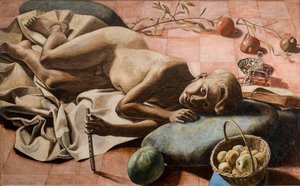
- Forese da Rabatta e Giotto

 Preview
 Buy print
 Send
Send Share
Share
 Details

 Download
 Similars
 X-Ray
X-Ray Diaporama
Forese da Rabatta e Giotto


 Read More
Hand Made Oil Reproduction
Hand-painted oil on canvas in your size and frame, made to order by our artists.




































Pick from our preset sizes that match the artwork's original proportions.

You may enter your own dimensions to fit a specific frame or space. If your selected size does not match the original image's proportions, we will either crop the artwork or extend the painting with additional hand-painted elements. A digital mockup will be sent for your approval before production begins.
Please note that the on-screen preview does not reflect the actual cropping or extension. Only the mockup will accurately show the final composition.
While custom sizes are available, we recommend selecting a dimension from the predefined list to preserve the original proportions.
After order, OriginalUniqueArt.com team will email client for instructions and provide a mockup preview
Worldwide Delivery () in 3/4 weeks instead of standard 5 weeks. (25 July). No compromise on quality.

Free Worldwide Express Shipping

High-Quality Linen Canvas

Full Shipping Insurance

Customs Tax Refund Guarantee

True Color Matching Guarantee

60-Day Return Policy (Defects Only)

100% Money-Back Guarantee

Bulk Discount Offer
 Glass option is only available in size under 110 CM

Forese da Rabatta e Giotto
Reproduction Medium
Reproduction Size
-


Total Price
-
Artwork Description
Artist Biography
Carlo Levi: A Painter's Witness to Resilience and Revolution
Carlo Levi (1902-1975) stands as a singular figure in Italian art history—a painter, writer, activist, and doctor whose oeuvre transcends mere aesthetic beauty to embody the spirit of his time. Born in Turin, Italy, Levi’s life was marked by intellectual curiosity, political engagement, and profound empathy for the marginalized communities of Southern Italy during the tumultuous years following World War II. His artistic output reflects this multifaceted perspective, characterized by a distinctive Neorealist style that captured both the stark realities of poverty and the enduring human spirit.Early Life and Artistic Beginnings
Levi’s formative years instilled in him a deep appreciation for literature and philosophy—influences that would permeate his subsequent creative endeavors. He pursued medical studies at Turin University, graduating in 1924, but simultaneously nurtured his artistic inclinations. His debut exhibition at the XIV Venice Biennale in 1938 signaled the emergence of a talent destined to captivate audiences with its uncompromising honesty and evocative imagery. Levi’s artistic explorations extended beyond traditional landscapes; he experimented with abstraction and explored themes of solitude and displacement—a preoccupation that would find expression in his autobiographical masterpiece, *Cristo si è fermato a Eboli*.The Influence of Surrealism and Parisian Exile
Levi's artistic sensibilities were further shaped by encounters with prominent artists like Sergei Prokofiev and Igor Stravinsky during his time in Paris. This immersion in avant-garde movements fostered an interest in experimentation and challenged conventional artistic conventions. The surrealist aesthetic—particularly its preoccupation with dreamlike imagery and subconscious exploration—left a discernible imprint on Levi’s visual vocabulary, contributing to the distinctive character of his paintings.“Cristo si è Fermato a Eboli”: A Literary Landmark
Levi's literary breakthrough arrived in 1945 with *Cristo si è fermato a Eboli*, a poignant memoir documenting his exile in Lucania—a region ravaged by poverty and neglect during the postwar reconstruction effort. This book, lauded for its lyrical prose and unflinching portrayal of social injustice, catapulted Levi to national prominence and cemented his reputation as a humanist voice committed to confronting uncomfortable truths. The novel’s narrative style—characterized by fragmented perspectives and evocative sensory details—became synonymous with the “problem of the south,” sparking crucial debates about Italy's socio-economic disparities.Notable Works: Landscapes of Suffering and Reflection
Levi’s artistic output encompasses a diverse range of landscapes and figurative compositions that grapple with themes of resilience, memory, and human dignity. Paintings like *L'Orologio* (1950) and *Le Parole Sono Pietre* (1955) exemplify his masterful technique—employing muted palettes and subtle brushstrokes to convey profound emotional depth. These works serve as visual meditations on the complexities of existence, reflecting Levi’s unwavering belief in the transformative power of art to illuminate human experience.Legacy and Recognition
Carlo Levi's artistic legacy extends beyond individual paintings; it resides in his enduring contribution to Italian literature and culture—a testament to his ability to synthesize intellectual rigor with compassionate empathy. His story continues to inspire artists and writers alike, reminding us that art can serve as a catalyst for social change and a conduit for confronting difficult questions about human condition. Levi’s work is housed in museums across Italy and internationally, including the National Museum of Fine Arts in Valletta, Malta, ensuring his artistic vision remains accessible to future generations.
Carlo Levi
1902 - 1975 , Italy
Quick Facts
- Artistic Movement Or Style: Neorealism
- Artists Or Movements Influenced By This Artist: ['Italian Literature']
- Artists Who Influenced This Artist:
- Sergei Prokofiev
- Igor Stravinsky
- Date Of Birth: November 29, 1902
- Date Of Death: January 4, 1975
- Full Name: Carlo Levi
- Nationality: Italian
- Notable Artworks:
- The Watch
- Words Are Stones
- Christ Stopped at Eboli
- Place Of Birth: Turin, Italy