

 Preview
 Send
Send Share
Share
 Details
 Guide
Guide

 Download
 Similars
 X-Ray
X-Ray Diaporama
 Stats
StatsMatthew Boulton
 Acrylic On Canvas
- WallArt
- Neoclassical
 1772
1772 127.0 x 102.0 cm
 Birmingham Museums And Art Gallery
 Read More
Purchase a high-resolution, enhanced digital image, far superior to the online preview.
Each file is meticulously prepared by our in-house specialists using advanced tools and expert manual retouching. We ensure every image has exceptional clarity, precise color accuracy, and fine detail.
The final file is delivered via email within 72 hours, optimized for immediate use in professional, editorial, and print environments. This is the same quality trusted by top-tier design studios, publishers, and galleries.
Digital Image
Download a high-resolution file for personal display, printing, and creative projects. ( Switch to Print Buy Hand Made Painting)
Included in Every Digital Image Order
Expert Digital Delivery, Guaranteed
When you choose OriginalUniqueArt.com, you're not just getting an image - you're receiving a professionally enhanced digital artwork, crafted with precision and backed by a satisfaction guarantee. Here's everything that comes with your order, automatically:

Fast Email Delivery
Your high-resolution digital image file will be emailed to you within 72 hours of ordering - ready for immediate use.

AI-Enhanced Digital File
Your artwork is professionally optimized using advanced AI tools and manual editing, ensuring maximum detail, clarity, and color accuracy.

Free Lifetime Re-Delivery
Accidentally deleted or lost your file? No worries - we'll resend it to you anytime, free of charge.

No Import Fees - Ever
Enjoy your artwork instantly with zero customs, duties, or delivery fees - digital downloads are always tax-free.

Color Accuracy Guarantee
We ensure your digital image reflects the original colors as closely as possible using professional tools and color management.

100-Day Satisfaction Guarantee
If you're not satisfied with your digital image, we'll revise it or refund 100% within 100 days - no questions asked.

100% Money-Back Guarantee
Not satisfied? Get a full refund within 100 days of receiving your digital file - no questions asked.

Bulk Order Discounts
Buy 3 images, save 10% - Buy 5, save 15% - Buy 10+, save 20%. Great for creative projects, galleries, and agencies.
The Subject – Matthew Boulton, Architect of Industry
Carl Fredrik von Breda’s 1772 portrait of Matthew Boulton is more than a simple likeness; it's a carefully constructed tableau of ambition, industry, and the burgeoning spirit of the Industrial Revolution. Boulton himself was a pivotal figure in this transformative era – a Birmingham manufacturer who revolutionized iron production, coin minting, and ultimately, the very fabric of British commerce. The painting captures him not merely as a businessman, but as a man deeply invested in shaping his world, radiating an aura of shrewdness and determined innovation. His seated posture, hands deliberately placed, speaks to a mind constantly engaged in calculation and strategic planning – a visual representation of his relentless drive.
A Neoclassical Composition – Echoes of Reynolds and the Age of Reason
Von Breda, trained under the influence of Joshua Reynolds, a leading figure in the British Royal Academy, skillfully employs the principles of neoclassical portraiture. The composition is meticulously balanced, reflecting the order and rationality that defined the era. The dark red curtain serves as a dramatic backdrop, framing Boulton against a subtle suggestion of an outdoor scene – perhaps a glimpse of Birmingham’s developing cityscape through a window. This carefully orchestrated space isn't merely decorative; it subtly elevates Boulton’s status, associating him with both the stability of tradition and the promise of progress. The lighting is directional, highlighting his face and hands, drawing the viewer’s attention to his intellect and authority.
- The use of chiaroscuro (strong contrasts between light and dark) creates a sense of depth and drama.
- Boulton's attire – the dark coat, white shirt, and waistcoat – adheres to the formal dress codes of the period, signifying his wealth and social standing.
- The composition’s symmetry reinforces Boulton’s position as a central figure in the narrative.
Symbolism and Context – The Lunar Society and Birmingham's Rise
To fully appreciate this portrait, it’s crucial to understand the context of 18th-century Birmingham. The city was undergoing an unprecedented transformation, fueled by coal mining, iron production, and the rise of a vibrant merchant class. Matthew Boulton was at the heart of this revolution, alongside James Watt, forming the core of the Lunar Society – a group of intellectuals, scientists, and industrialists who met regularly to exchange ideas and push the boundaries of knowledge. Von Breda’s painting subtly reflects this intellectual ferment; Boulton's thoughtful gaze suggests a man deeply engaged in philosophical inquiry as well as practical innovation. The small object he holds—likely a tool or instrument related to his work – hints at the constant activity of his mind.
Further Research:- Matthew Boulton (1728–1809) | Art UK
- Carl Frederik von Breda
- Matthew Boulton (1728–1809) | Wikipedia
A Legacy in Oil – The Artist’s Hand and the Enduring Image
Von Breda's masterful brushwork, evident in the rich textures of Boulton’s clothing and the subtle modeling of his face, speaks to a deep understanding of oil painting techniques. The portrait is not merely a representation; it’s an embodiment of Boulton’s character – a man of intellect, determination, and entrepreneurial spirit. The enduring appeal of this image lies in its ability to capture a pivotal moment in British history, portraying a figure who fundamentally reshaped the nation's economy and technological landscape. Reproductions of this work offer a tangible connection to this remarkable era, inviting viewers to contemplate the legacy of Matthew Boulton and the transformative power of innovation.
Artist Biography
A Swedish Master Across Borders: The Life and Art of Carl Frederik von Breda
Carl Frederik von Breda occupies a fascinating, somewhat unique position in the history of European portraiture. Born in Stockholm in 1759, his artistic journey wasn’t confined by national boundaries but rather flourished through an intriguing interplay between Swedish tradition and British innovation. Descended from Pieter von Breda, a Dutch emigrant who settled in Sweden around 1670, Carl inherited not only an artistic lineage—his grandfather Lucas was a painter, and his father, Lucas the younger, an art collector and arbitrator—but also a cosmopolitan sensibility that would shape his career. This upbringing fostered within him a deep appreciation for aesthetics and laid the groundwork for his future success. From a young age, Breda demonstrated exceptional talent, enrolling at the Royal Swedish Academy of Arts at nineteen where he studied historical and portrait painting under Lorens Pasch the Younger. Early recognition came swiftly; prizes accumulated, and by 1784, he was already exhibiting nineteen paintings and receiving commissions for royal portraits—including those of Duchess Hedvig Elisabeth Charlotte, Crown Prince Gustavus Adolphus, and King Gustavus III himself. These early works reveal a nascent talent, grounded in the established Swedish style but hinting at an ambition that extended beyond its borders.London Calling: The Influence of Reynolds and British Portraiture
A pivotal moment arrived when Breda faced a difficult choice after losing a competition at the Academy. Rather than following the conventional path to Paris and Rome, he made the bold decision to relocate to London with his family in 1786. This move proved transformative. In London, Breda sought out and secured tutelage under the esteemed portraitist Sir Joshua Reynolds. While Reynolds wasn’t known for intensive instruction, his influence on Breda was profound, instigating what has been described as a “revolutionary change” in the young artist's style. Breda quickly established a successful studio on St James's Street, attracting a clientele drawn from London’s intellectual and social elite—the "learned men and literati," as they were known. He became sought after for his ability to capture not just likeness but also character and intellect. His portraits during this period include prominent figures such as abolitionists Thomas Clarkson and James Ramsay, engineers James Watt and Matthew Boulton of the famed Lunar Society, botanist William Withering, and Mary Priestley. These weren’t merely commissions; they were engagements with some of the most forward-thinking minds of the era. A testament to his growing reputation was his portrait of Reynolds himself, completed as a diploma piece for admission to the Stockholm Academy of Arts in 1791—a symbolic acknowledgement of his artistic debt and achievement.Return to Sweden and Artistic Maturity
In 1796, Breda returned to Stockholm, accepting a professorship at the Academy of Arts. This marked a new phase in his career, one characterized by artistic maturity and a distinctive style honed during his years in England. He was immediately inundated with portrait commissions, quickly becoming a leading figure in the Swedish art scene. His brushwork became bolder and more spirited, reflecting the energy and dynamism he had absorbed in London. The late 1790s are often considered to be among his finest years, with works exhibiting an early embrace of Romantic sensibilities. Notable portraits from this period include those of his father Lucas, two of his nephews, the scholar Nils von Rosenstein, and perhaps most celebrated of all, Teresa Vandoni, a renowned Italian singer performing at the Royal Swedish Opera. The portrait of Vandoni is particularly striking, capturing her dramatic presence and vocal artistry with remarkable sensitivity. These works demonstrate Breda’s ability to synthesize classical training with a modern sensibility, creating portraits that were both technically accomplished and emotionally resonant.Legacy and Historical Significance
Carl Frederik von Breda's impact on Swedish art extended far beyond his own prolific output. His exposure to British artistic trends—particularly the influence of Reynolds—helped modernize portraiture in Sweden, inspiring subsequent generations of artists to embrace new techniques and stylistic approaches. He wasn’t simply a painter of faces; he was a chronicler of his time, creating a visual record of some of the leading scientific, intellectual, and cultural figures of the late 18th and early 19th centuries. His portraits of members of the Lunar Society, for example, offer invaluable insights into this influential group of innovators. The artistic legacy continued within his family; his son, Johan Fredrik von Breda, followed in his father’s footsteps, receiving tutelage from him and continuing the family tradition. While some critics noted a perceived decline in consistency in his later works—a tendency towards monotony—Breda remained an important figure in Swedish art history until his death in Stockholm in 1818. He is remembered today as “the Van Dyck of Sweden,” a testament to his skill, elegance, and enduring contribution to the world of portraiture.Key Works & Collections
- James Watt: A compelling portrait of the renowned engineer, held in the National Portrait Gallery, London.
- Matthew Boulton: Another significant work depicting a member of the Lunar Society, residing in Birmingham Museum and Art Gallery.
- Teresa Vandoni: Often considered his most celebrated piece, capturing the essence of the Italian opera singer.
- Portrait of Joshua Reynolds: A testament to Breda’s admiration for his mentor and a key work in establishing his own artistic credentials.
- Mrs. William Hartigan: An example of his skill in capturing the elegance and refinement of society figures.
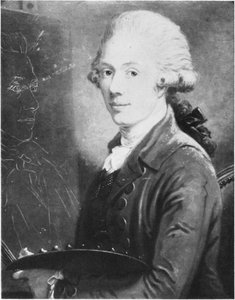
Carl Fredrik von Breda
1759 - 1818 , Sweden
Quick Facts
- Artistic Movement Or Style: Portraiture, Romanticism
- Artists Or Movements Influenced By This Artist: ['Swedish portrait painters']
- Artists Who Influenced This Artist:
- Lorens Pasch the Younger
- Joshua Reynolds
- Date Of Birth: 1759
- Date Of Death: 1818
- Full Name: Carl Fredrik von Breda
- Nationality: Swedish
- Notable Artworks:
- Portrait of Reynolds
- Teresa Vandoni
- James Watt
- Matthew Boulton
- Place Of Birth: Stockholm, Sweden