Preview
 Send
Send Share
Share
 Details
 Guide
Guide

 Download
 Similars
 X-Ray
X-Ray Diaporama
 Q&A
Q&A Stats
StatsWicker chair

- 12.0 x 22.0 cm


 Read More
The artwork displayed on this page is protected by copyright law, which means we cannot legally create or sell an identical reproduction. This protection is enforced under international agreements such as the Berne Convention and by national laws, including those outlined by the U.S. Copyright Law - Title 17.
This method fully complies with copyright regulations because it does not involve copying or duplicating the protected artwork. Instead, it is a creative reinterpretation - a new painting that is influenced by the original but not identical to it.
Giclée / Art Print
Museum-quality giclée or canvas print with fast production and flexible finish options. ( Buy Hand Made Painting Switch to Digital Image)




P118B $10

P118H $10

P118W $10

P438Z $10

P508JH $12

P508YH $12

P805H $10

P805Z $10

P919BZ $10

P919G $10

P919XJ $10

P959ZH $10

P968JZ $12

W106C $8

W218G $10

W218JH $8

W218Y $10

W307PJ $10

W316G $10

W316PJ $8

W316Y $10

W398PJ $8

W4111J $10

W500HY $15

W500JH $15

W692G $12

W849H $8

W940BG $15

W953PJ $8




Pick from our preset sizes that match the artwork's original proportions.

Type the width and the height you need, to fit your frame or your wall. A print can only be cut, never made bigger than the picture, so a size with a different shape loses a part of the image. We send you a digital mockup to approve before we print anything. The picture shown on this page does not show the real cut — only the mockup does.
Worldwide Delivery () in 2 weeks instead of standard 4/5 weeks. (31 October)

Free Worldwide Express Shipping

High-Quality Linen Canvas

Full Shipping Insurance

Customs Tax Refund Guarantee

True Color Matching Guarantee

100-Day Return Policy (Defects Only)

100% Money-Back Guarantee

Bulk Discount Offer
 Glass option is only available in size under 110 CM

Wicker chair
Giclée / Art Print
Reproduction Size
-


Total Price
$ 81
A Study in Form and Light: The Wicker Chair by Carl Fieger
Carl Fieger’s 1921 drawing of a wicker chair transcends mere depiction; it's a distilled essence of the Bauhaus philosophy, capturing a fleeting moment of elegant functionality. Rendered in stark black and white, the image possesses an immediate intimacy, inviting us into a domestic space defined by clean lines and considered design. The composition is deceptively simple – two chairs, one a vibrant red, the other a calming green – yet within this restrained palette lies a wealth of visual interest. The subtle variations in shading suggest the texture of the wicker itself, hinting at the intricate weaving process that brought these forms to life. It’s not simply a chair; it's an embodiment of the Bauhaus ideal: form following function, prioritizing honest materials and unadorned beauty.
Fieger’s work is inextricably linked to the revolutionary Bauhaus school in Weimar, where he served as a draftsman under Walter Gropius. This formative period instilled within him a deep appreciation for geometric precision and an understanding of how design could elevate everyday objects. The chair's design reflects this influence – its proportions are carefully balanced, its lines are clean and direct, and its overall aesthetic is one of understated sophistication. The choice of red and green isn’t arbitrary; it creates a dynamic visual contrast that draws the eye and adds a touch of warmth to the otherwise cool composition. It's a deliberate attempt to infuse functionality with a subtle emotional resonance.
Technique and Materiality: A Dance of Lines
The drawing itself is executed with remarkable skill, showcasing Fieger’s mastery of line and shading. The artist employs a delicate hand, capturing the intricate details of the wicker weave with astonishing accuracy. Notice how the lines subtly vary in thickness to suggest the different textures and densities within the material. This attention to detail elevates the image beyond a simple sketch; it becomes a study in materiality – an exploration of how light interacts with form and how line can be used to convey depth and texture. The use of black ink on paper creates a sense of immediacy, as if we’ve stumbled upon a quick study or preliminary drawing.
The choice of wicker as the subject matter is significant in itself. Wicker, derived from pliable plant materials like rattan and cane, represented a shift away from heavier, more ornate furniture styles prevalent at the time. It embodied lightness, flexibility, and a connection to nature – values that aligned perfectly with the Bauhaus ethos. The chair’s wheels further emphasize its intended function: mobility and adaptability, reflecting the school's commitment to designing objects for modern living.
Symbolism and Legacy
Beyond its technical merits, Fieger’s wicker chair carries a potent symbolic weight. It represents the promise of a new era in design – an era defined by functionality, simplicity, and social responsibility. The Bauhaus movement sought to break down traditional hierarchies and democratize access to good design, and this chair embodies that spirit. It's a testament to the belief that even the most ordinary objects could be imbued with beauty and meaning through careful consideration of form and function.
Today, Fieger’s work continues to resonate with contemporary designers and collectors alike. His ability to capture the essence of a subject with such clarity and precision is a testament to his artistic talent. Reproductions of this drawing offer a valuable opportunity to experience the elegance and sophistication of Bauhaus design in your own home – a reminder that good design can enrich our lives in countless ways.
Questions & Answers
How do contrast and harmony combine in "Wicker chair"?
In "Wicker chair", a serene contrast is paired with a strong color unity harmony.
How is "Wicker chair" recommended to be printed - what size, what orientation?
For "Wicker chair", the recommended print setup is a medium size and a landscape orientation.
What kind of colors does "Wicker chair" use?
The palette of "Wicker chair" by Carl Fieger is described as neutrals. It is a compact description of the work's colors.
Artist Biography
The Architect of Bauhaus Ideals: The Life and Legacy of Carl Fieger
In the grand tapestry of early 20th-century modernism, few figures embody the intersection of structural precision and social vision as elegantly as Carl Fieger. Born in Mainz, Germany, in 1893, Fieger emerged from a period of profound artistic transformation. His journey began at the Mainz Art and Vocational School, an institution where he first encountered the burgeoning currents of Impressionism and Jugendstil. These early exposures to organic forms and expressive color palettes provided him with a sensitive aesthetic foundation, yet it was his subsequent immersion in the rigorous, functionalist world of the Bauhaus that would ultimately define his historical significance.
The trajectory of Fieger’s career was irrevocably altered when he entered the orbit of Walter Gropius. Beginning his apprenticeship as a draftsman in 1912, Fieger became an integral part of the revolutionary atmosphere at the Bauhaus school in Weimar. Under Gropius’s mentorship, he moved away from the decorative flourishes of the past and toward a future defined by geometric abstraction, material experimentation, and the radical belief that art should serve a functional purpose in everyday life. This period was not merely a professional training ground but a philosophical awakening, where Fieger learned to view architecture as a tool for social progress.
Mastery of Form and Functionalist Vision
Fieger’s body of work is characterized by an extraordinary ability to translate complex architectural theories into tangible, human-centric designs. His collaborations with Gropius on monumental projects—such as the Fagus Factory and the iconic Bauhaus Building in Dessau—demonstrate his mastery of modern construction techniques, including the innovative use of tubular steel and glass. Through these works, Fieger helped pioneer a visual language that celebrated the beauty of industrial materials and the efficiency of modern engineering.
Beyond large-scale industrial structures, Fieger’s true genius often resided in his intimate approach to domesticity. He was deeply invested in the concept of Existenzminimum—the idea of designing highly efficient, minimal living spaces that did not sacrifice dignity or comfort. His notable projects include:
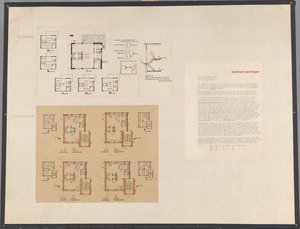
- The Ideal Small Flat: A visionary architectural concept developed for the 1931 German Building Exhibition (Deutsche Bauausstellung) in Berlin, which emphasized a logical flow between essential rooms such as the kitchen, living area, and bedroom.
- Adaptive Floor Plans: Detailed layouts that utilized text montages and photographic elements to showcase how furniture and spatial arrangement could maximize utility within limited urban footprints.
A Lasting Impression on Modern Design
The historical significance of Carl Fieger lies in his role as a bridge between the artistic experimentation of the late 19th century and the disciplined functionalism of the modern era. His work was never solely about the aesthetic of a building; it was about the lived experience within it. By prioritizing efficiency, light, and movement, he helped shape the very blueprint of contemporary urban living. Even as architectural styles shifted throughout the mid-20th century, the principles of clarity and purpose championed by Fieger remained foundational.
Though his life concluded in 1960, the echoes of his Bauhaus apprenticeship continue to resonate in the halls of architectural history. Through his meticulous drawings and groundbreaking housing concepts, Fieger remains a vital figure for anyone seeking to understand how the marriage of art and craft can fundamentally reshape the world we inhabit.

Carl Fieger
1893 - 1960 , Germany
Quick Facts
- Full Name: Carl Fieger
- Nationality: German
- Date Of Birth: 1893
- Date Of Death: 1960
- Place Of Birth: Mainz, Germany
- Notable Artworks:
- Untitled (Club House of the deutscher verein in barcelona, perspective view)
- Untitled (Design for an interior with white varnished cupboard for the German Embassy in Saint Petersburg)
- Untitled (Sommerfeld House, Berlin-Lichterfelde, architects Walter Gropius and Adolf Meyer. Concept, perspective view of a reading room)
- Artistic Movement Or Style: Bauhaus
- Artists Who Influenced This Artist:
- Walter Gropius
- Peter Behrens
Related Articles

The Eloquent Line: Exploring the Artistic Significance of Sketches Across Movements and Media
Explore the profound artistic significance of sketches throughout history. From Renaissance masters to modern innovators like Van Gogh & Guston, discover how these foundational works reveal technique, emotion, and vision. Learn more at OriginalUniqueArt.

Ephemeral Lines: Exploring Emotional Resonance in Ink Sketching Traditions
Explore the profound art of ink sketching! Discover techniques to express emotion, master line work, and cultivate artistic sensitivity. Learn from historical masters & unlock your creative potential.
Franz Ehrlich: Bridging Expressionism, Bauhaus & the Shadows of History
Explore the life of Franz Ehrlich, a pivotal Bauhaus architect whose career spanned Expressionism, resistance during Nazi Germany, and GDR reconstruction. Discover his complex legacy & view museum-quality reproductions at OriginalUniqueArt.

The Art of the Sketch: Capturing Raw Emotion and Movement through the Mastery of Line and Form
Explore the profound beauty of the sketch. Discover how masters use charcoal and graphite to capture raw emotion, anatomical precision, and fluid movement, bridging the gap between ephemeral marks and eternal oil masterpieces.

The Timeless Beauty of Pencil Sketches: Mastering the Art of Line, Shadow, and Tonal Depth
Explore the profound elegance of pencil and charcoal sketching. Discover how masters use line, shadow, and chiaroscuro to capture light and texture, bridging the gap between preparatory studies and timeless fine art masterpieces.