Preview
 Send
Send Share
Share
 Details
 Guide
Guide

 Download
 Similars
 X-Ray
X-Ray Diaporama
 Stats
StatsFisherman


 Read More
Giclée / Art Print
Museum-quality giclée or canvas print with fast production and flexible finish options. ( Buy Hand Made Painting Switch to Digital Image)




P118B $10

P118H $10

P118W $10

P438Z $10

P508JH $12

P508YH $12

P805H $10

P805Z $10

P919BZ $10

P919G $10

P919XJ $10

P959ZH $10

P968JZ $12

W106C $8

W218G $10

W218JH $8

W218Y $10

W307PJ $10

W316G $10

W316PJ $8

W316Y $10

W398PJ $8

W4111J $10

W500HY $15

W500JH $15

W692G $12

W849H $8

W940BG $15

W953PJ $8




Pick from our preset sizes that match the artwork's original proportions.

Type the width and the height you need, to fit your frame or your wall. A print can only be cut, never made bigger than the picture, so a size with a different shape loses a part of the image. We send you a digital mockup to approve before we print anything. The picture shown on this page does not show the real cut — only the mockup does.
Worldwide Delivery () in 2 weeks instead of standard 4/5 weeks. (23 October)

Free Worldwide Express Shipping

High-Quality Linen Canvas

Full Shipping Insurance

Customs Tax Refund Guarantee

True Color Matching Guarantee

100-Day Return Policy (Defects Only)

100% Money-Back Guarantee

Bulk Discount Offer
 Glass option is only available in size under 110 CM

Fisherman
Giclée / Art Print
Reproduction Size
-


Total Price
$ 81
A Serene Moment Captured in Monochrome
In the delicate, monochromatic strokes of Carl Blechen’s 1839 drawing, Fisherman, we are transported to a tranquil era where the rhythm of life was dictated by the gentle ebb and flow of the tides. This exquisite work captures a quiet tableau on the water, presenting a scene of profound stillness and communal harmony. Through a masterful use of light and shadow, Blechen invites the viewer to drift alongside several small boats scattered across the reflective surface of the water. The composition is anchored by three primary vessels, each populated by figures engaged in the timeless labor of fishing or the simple leisure of rowing. There is a palpable sense of peace in the way the individuals are positioned—some standing poised near the edges of their crafts, others seated in quiet contemplation—creating a balanced, rhythmic arrangement that guides the eye across the watery expanse.
The technical execution of this piece speaks to Blechen’s profound ability to manipulate tone to suggest depth and atmosphere. Without the distraction of color, the viewer is forced to confront the raw essence of the scene: the texture of the ripples, the weight of the boats, and the soft, diffused light that seems to emanate from a hidden horizon. The artist utilizes subtle gradations of grey to create a sense of atmospheric perspective, making the distant figures feel as though they are emerging from a light mist. For the discerning collector or interior designer, this drawing offers a sophisticated study in minimalism and tonal harmony, making it an ideal centerpiece for spaces that value understated elegance and a connection to the contemplative side of nature.
The Romantic Spirit and the Dawn of Change
To understand Fisherman, one must look through the lens of the German Romantic movement, a period defined by an intense emotional response to the natural world. While many of his contemporaries sought to depict the sublime power of storms or the terrifying grandeur of mountains, Blechen possessed a unique sensitivity to the quiet, everyday intersections of humanity and nature. This drawing serves as a poignant window into 1839, capturing a way of life that was on the precipice of transformation. As an artist who would later become famous for documenting the encroaching shadows of early industrialization, Blechen’s earlier works like this one possess a bittersweet quality—a documentation of a pristine, undisturbed world that felt both eternal and fragile.
The symbolism within the piece lies in its very stillness. The boats, acting as small vessels of human endeavor, represent our delicate relationship with the elements. There is no struggle depicted here, only a coexistence. For those looking to adorn a home or gallery with a reproduction of this work, it brings with it an emotional resonance of stability and calm. It is more than just a depiction of a fishing excursion; it is an invitation to slow down, to breathe, and to find beauty in the quiet, unobserved moments of existence. This piece remains a testament to Blechen’s enduring legacy as a pioneer who could find the profound within the simple.
Questions & Answers
What mood and emotion come together in "Fisherman"?
The recorded mood of "Fisherman" by Carl Blechen is serene, and its emotional tone is calm.
How is the color composition of "Fisherman" by Carl Blechen built?
In "Fisherman", a serene contrast is paired with a unified palette harmony.
Is "Fisherman" by Carl Blechen a portrait, landscape or square composition?
The format of "Fisherman" is panoramic. This is useful when planning where a reproduction will be placed.
Artist Biography
A Pioneer of Romantic Industrialization: The Life and Art of Carl Blechen
Carl Eduard Ferdinand Blechen, born in Cottbus, Germany, in 1798, occupies a unique and often overlooked position within the landscape painting tradition. His life was marked by both artistic brilliance and personal turmoil, a duality that profoundly shaped his evocative and groundbreaking work. Initially destined for a pragmatic career in banking due to familial financial constraints, Blechen’s inherent artistic inclinations ultimately prevailed. He pursued studies at the Berlin Academy of Arts in 1822, embarking on a path that would see him become one of the first artists to grapple with the aesthetic challenges—and possibilities—presented by early industrialization.
Blechen's formative years were steeped in the Romantic ideals sweeping across Europe. However, unlike many of his contemporaries who focused solely on idealized natural beauty or historical grandeur, Blechen’s gaze was drawn to a changing world. A pivotal journey to Italy in 1828-1829 proved transformative. Immersed in the light and atmosphere of the Italian countryside, he honed his skills in plein air sketching, capturing fleeting moments and dramatic effects with remarkable sensitivity. These sketches weren't merely preparatory studies; they were imbued with a vibrant energy that would characterize his mature style. He returned to Berlin not simply as a technically proficient painter but as an artist with a distinct vision—one that sought to reconcile the sublime beauty of nature with the encroaching realities of modernity.
Navigating Tradition and Transformation
Blechen’s artistic output is characterized by a compelling tension between Romantic sensibility and a nascent realism. He didn't shy away from depicting the burgeoning industrial landscape, but neither did he celebrate it uncritically. Works like Bau der Teufelsbrücke (Construction of the Devil's Bridge), painted between 1830 and 1832, exemplify this approach. The painting doesn’t glorify the engineering feat; instead, it presents a scene of arduous labor set against a dramatic backdrop, hinting at both human ambition and the potential for disruption of the natural order. This willingness to confront the complexities of his time sets him apart from many of his contemporaries.
His landscapes are often imbued with a melancholic atmosphere, reflecting not only the changing physical environment but also his own internal struggles. Waldweg bei Spandau (Forest Path near Spandau), for instance, evokes a sense of solitude and introspection, while simultaneously showcasing Blechen’s mastery of light and shadow. He skillfully employed atmospheric perspective to create depth and mood, drawing the viewer into the scene and inviting contemplation. He wasn't merely recording what he saw; he was conveying an emotional response to it.
A Troubled Genius and Lasting Legacy
Despite his artistic achievements, Blechen’s life was tragically cut short by mental illness. Appointed Professor of Landscape Painting at the Berlin Academy in 1831—a testament to his growing reputation—his condition began to deteriorate rapidly after 1835. Forced to take leave and eventually hospitalized, he continued to create art even amidst his suffering, producing poignant drawings that offer a glimpse into his troubled inner world. He died in Berlin in 1840 at the age of 41.
Though his career was relatively brief, Carl Blechen’s influence on subsequent generations of artists is undeniable. His pioneering depictions of industrial landscapes paved the way for later Realist and Impressionist painters who sought to capture the changing face of modern life. He demonstrated that it was possible to find beauty—and meaning—even in the midst of transformation, a lesson that continues to resonate with artists today. His work remains a powerful reminder of the complex relationship between humanity, nature, and progress.
Key Works & Collections
- Im Berliner Tiergarten (The Berlin Zoo), 1825: An early example of his ability to capture atmospheric effects and everyday scenes with a Romantic sensibility.
- Waldweg bei Spandau (Forest Path near Spandau): A haunting landscape that exemplifies his mastery of light, shadow, and mood.
- Bau der Teufelsbrücke (Construction of the Devil's Bridge), 1830–32: A groundbreaking depiction of early industrialization, showcasing both human ambition and its impact on the natural world.
Today, Blechen’s works can be found in prominent museum collections worldwide, including the Kunsthalle Bielefeld in Germany, The Fitzwilliam Museum in Cambridge, and the National Gallery in London. These institutions preserve his legacy for future generations, ensuring that his innovative vision continues to inspire and challenge viewers.
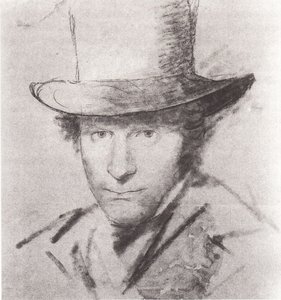
Carl Blechen
1798 - 1840 , Germany
Quick Facts
- Full Name: Carl Eduard Ferdinand Blechen
- Nationality: German
- Date Of Birth: 1798
- Date Of Death: 1840
- Place Of Birth: Cottbus, Germany
- Notable Artworks:
- Im Berliner Tiergarten
- Waldweg bei Spandau
- Bau der Teufelsbrücke
- Artistic Movement Or Style: Romanticism
- Artists Who Influenced This Artist:
- Caspar David Friedrich
- Johann Christian Dahl
Related Articles

White on Canvas: 10 Masterpieces & Timeless Elegance for Your Home Decor
Explore 10 iconic white paintings by Monet, Whistler & Rothko! Discover the stories behind these serene masterpieces and their impact on art history. Find museum-quality reproductions for your home decor at .
Monet's Masterpieces: 25 Iconic Artworks to Transform Your Home
Journey through 25 iconic Claude Monet masterpieces! Explore Impressionism’s beauty, from Water Lilies to Rouen Cathedral. Discover stunning art reproductions & curated decor ideas – explore the full collection online at OriginalUniqueArt.com.
Fluid Reflections: Exploring Water's Symbolism in Art History – From Myth to Impressionism
Explore the rich symbolism of water in art history – from ancient myths to Impressionism's fleeting beauty. Discover masterpieces & find your perfect serene artwork with OriginalUniqueArt.com.
Serene Masterpieces: 10 Artworks That Define Tranquility | OriginalUniqueArt
Find peace with 10 iconic artworks embodying tranquility! Explore Monet's water lilies, Van Gogh’s starry night & more. Discover the stories behind these serene masterpieces and bring calming art into your home with museum-quality reproductions from OriginalUniqueArt.com.

Dark Masterpieces: 10 Iconic Paintings Dominated by Black Tones |
Explore 10 iconic paintings dominated by black tones, from Rembrandt’s chiaroscuro to Goya's dark expressions. Discover the stories behind these masterpieces & find museum-quality art reproductions for your home at .