Preview
 Send
Send Share
Share
 Details
 Guide
Guide

 Download
 Similars
 X-Ray
X-Ray Diaporama
 Stats
StatsAbraham De Potter
 Oil On Canvas
- WallArt
- Baroque
 1649
1649 69.0 x 57.0 cm
 Rijksmuseum
 Read More
Hand Made Oil Reproduction
Hand-painted oil on canvas in your size and frame, made to order by our artists. ( Switch to Print Switch to Digital Image)




P118B $10

P118H $10

P118W $10

P438Z $10

P508JH $12

P508YH $12

P805H $10

P805Z $10

P919BZ $10

P919G $10

P919XJ $10

P959ZH $10

P968JZ $12

W106C $8

W218G $10

W218JH $8

W218Y $10

W307PJ $10

W316G $10

W316PJ $8

W316Y $10

W398PJ $8

W4111J $10

W500HY $15

W500JH $15

W692G $12

W849H $8

W940BG $15

W953PJ $8




Pick from our preset sizes that match the artwork's original proportions.

Type the width and the height you need, to fit your frame or your wall. This is hand-painted, so for a size with a different shape the artist can paint a bit more around the picture, or cut a bit — you choose. We send you a digital mockup to approve before the painting starts. The picture shown on this page does not show the real result — only the mockup does.
After order, OriginalUniqueArt.com team will email client for instructions and provide a mockup preview
Worldwide Delivery () in 3/4 weeks instead of standard 5 weeks. (24 October). No compromise on quality.

Free Worldwide Express Shipping

High-Quality Linen Canvas

Full Shipping Insurance

Customs Tax Refund Guarantee

True Color Matching Guarantee

100-Day Return Policy (Defects Only)

100% Money-Back Guarantee

Bulk Discount Offer
 Glass option is only available in size under 110 CM

Abraham De Potter
Reproduction Medium
Reproduction Size
-


Total Price
$ 300
The Dignity of Portraiture in the Dutch Golden Age
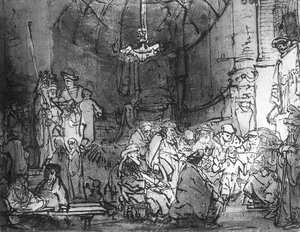
To stand before a portrait like this depiction of Abraham De Potter is to step directly into the rarefied atmosphere of 17th-century Dutch society. It is more than just a likeness; it is a carefully constructed monument to status, intellect, and enduring presence. The subject commands attention with an air of profound contemplation. His gaze, though neutral, seems to observe something beyond the confines of the canvas, inviting the modern viewer into a silent dialogue across the centuries. The overall impression is one of meticulous dignity, characteristic of the era when portraiture served not only as commemoration but also as a subtle declaration of worldly standing.
Mastery in Technique and Texture
The technical brilliance evident in this work speaks volumes about the skill of its creator, Carel Fabritius. Observe how the light interacts with the various textures: the soft fall of illumination across the forehead contrasts sharply with the intricate, almost architectural detail of the ruff collar and the rich depth suggested within the beard. Fabritius employed a technique that relied heavily on layering thin glazes of oil paint. This process allowed him to build up color and shadow with an unparalleled subtlety, giving the skin a lifelike translucency while simultaneously lending weight and substance to the heavy black robe. The background, deliberately muted and indistinct, functions as nothing more than a velvet curtain, ensuring that every ounce of focus remains fixed upon the compelling humanity captured in the sitter’s face.
Symbolism Woven into Fabric and Form
Every element within this composition seems imbued with symbolic meaning. The elaborate ruff, for instance, was not merely fashionable; it spoke to the sitter's adherence to contemporary codes of wealth and social order. Similarly, the sobriety of the black attire suggests gravitas and perhaps scholarly pursuits. In the context of the Dutch Golden Age, where mercantile success fueled artistic patronage, such portraits were potent symbols. They affirmed lineage, professional achievement, and a measured participation in the burgeoning bourgeois culture. The stillness captured here is thus not merely repose, but a carefully curated statement of enduring worth.
An Echo of Fabritius's Genius
Knowing that this piece hails from the tragically brief career of Carel Fabritius adds an extra layer of poignant resonance to the viewing experience. His life was cut short by disaster, leaving behind a body of work that feels both intensely immediate and hauntingly ephemeral. When acquiring a reproduction of such a piece, one is not just purchasing paint on canvas; one is connecting with a moment of artistic genius—a fleeting glimpse into an artist whose mastery illuminated the Dutch world before it was tragically dimmed. It offers collectors and designers alike a touchstone of historical depth, capable of lending unparalleled sophistication to any interior space.
Questions & Answers
Where does "Abraham De Potter" sit within Carel Fabritius's body of work?
"Abraham De Potter" shares with Carel Fabritius's other works its Baroque style and the recorded themes: early mature work, transition to delft school, exploration of portraiture, rembrandt's influence, baroque lighting techniques, detailed realism style, dutch merchant society, calvinist values.
Where can I find artworks similar to "Abraham De Potter" by Carel Fabritius?
Works similar to "Abraham De Potter" are listed on the artwork's Similars page.
What is the recommended print size for "Abraham De Potter" by Carel Fabritius?
The recommended print size for "Abraham De Potter" by Carel Fabritius is medium.
Artist Biography
A Brief Life Illuminated: The Enigmatic World of Carel Fabritius
Carel Fabritius, a name whispered with reverence among connoisseurs of the Dutch Golden Age, remains an elusive figure despite the profound impact his brief career had on the development of painting. Born in Middenbeemster in 1622, and tragically lost to the Delft gunpowder explosion of 1654 at just thirty-two years old, Fabritius left behind a remarkably small but intensely powerful body of work that continues to captivate and inspire. His paintings are not merely representations of reality; they are investigations into light, perception, and the very essence of visual experience.
Fabritius’s artistic journey began within the nurturing environment of his family home. His father, Pieter Carelsz Fabritius, was a painter himself—a schoolteacher who also practiced his craft, instilling in young Carel an early appreciation for the arts. This foundation led him to Amsterdam around 1641, where he entered the studio of Rembrandt van Rijn. While the exact duration of his apprenticeship remains debated, the influence of the master is undeniable. However, Fabritius was no mere imitator. He quickly began to forge his own path, diverging from Rembrandt’s characteristic tenebrism and developing a unique style that prioritized clarity, cool harmonies, and an almost scientific observation of light's effects.
The Delft School and a Distinctive Vision
Following his time with Rembrandt, Fabritius settled in Delft, becoming a member of the local painters’ guild in 1652. It was here, within the burgeoning artistic community known as the Delft School, that his mature style truly blossomed. Unlike many of his contemporaries who focused on grand historical narratives or bustling genre scenes, Fabritius gravitated towards intimate domestic interiors and carefully observed studies of everyday objects. His paintings possess a remarkable stillness, a quiet intensity that draws the viewer into a world suspended in time.
What sets Fabritius apart is his masterful manipulation of light. He didn’t simply depict illumination; he *analyzed* it, capturing its subtle gradations and its ability to define form and create atmosphere. This fascination with optics led him to experiment with perspective—often employing unusual viewpoints that heighten the sense of realism and draw the viewer into the scene. The Goldfinch, perhaps his most celebrated work, exemplifies this perfectly. The seemingly simple depiction of a chained goldfinch against a stark white wall is, in fact, a tour de force of trompe-l'oeil technique and spatial illusion. The bird appears to hover just beyond the picture plane, its feathers rendered with astonishing detail, while the interplay of light and shadow creates an almost palpable sense of depth.
Major Works and Lasting Legacy
Beyond The Goldfinch, Fabritius’s oeuvre includes other compelling works that showcase his distinctive vision. A View of Delft (1652) is a captivating cityscape, notable for its unique perspective and atmospheric rendering of the city's architecture. The painting isn’t simply a topographical record; it’s an evocation of place, imbued with a sense of tranquility and poetic beauty. The Sentry, painted shortly before his death, is perhaps his most enigmatic work—a haunting portrait of a lone soldier that invites contemplation on themes of duty, isolation, and the human condition.
Fabritius’s tragically short career meant he produced only around twelve surviving paintings. Yet, these few works had an outsized influence on subsequent generations of artists. His innovative use of light and perspective is widely believed to have profoundly impacted Johannes Vermeer, who shared a similar fascination with optical effects and domestic interiors. The cool tonalities, precise rendering, and quiet intimacy that characterize Vermeer’s masterpieces can be traced back to Fabritius's pioneering work.
A Painter Ahead of His Time
The explosion in Delft cut short not only Fabritius’s life but also a potentially revolutionary artistic trajectory. His paintings offer a glimpse into the mind of an artist who was pushing the boundaries of representation, exploring the very nature of seeing and perception. While his contemporaries were often preoccupied with narrative or symbolism, Fabritius focused on the fundamental elements of painting—light, color, form—creating works that are both visually stunning and intellectually stimulating.
Today, Carel Fabritius is recognized as a pivotal figure in the Dutch Golden Age, a painter whose brief but brilliant career left an indelible mark on the history of art. His paintings continue to resonate with viewers, offering a timeless testament to the power of observation, innovation, and the enduring beauty of light.

Carel Fabritius
1622 - 1654 , Netherlands
Quick Facts
- Full Name: Carel Pietersz Fabritius
- Nationality: Dutch
- Date Of Birth: 1622
- Date Of Death: 1654
- Place Of Birth: Muiden, Netherlands
- Notable Artworks:
- The Raising of Lazarus
- A View of Delft
- The Goldfinch
- Artistic Movement Or Style: Baroque art
- Artists Who Influenced This Artist: ['Rembrandt van Rijn']
- Artists Or Movements Influenced By This Artist: ['Johannes Vermeer']
Related Articles

Mastering Light & Shadow: A Journey Through the Dutch Golden Age's Luminous Legacy
Embark on a cultural journey through the Dutch Golden Age. Explore the masterful interplay of light and shadow in 17th-century masterpieces, from Rembrandt to Vermeer, and discover how this era of profound realism continues to inspire fine art collectors today.

Dutch Masters: 10 Golden Age Paintings That Still Inspire |
Journey into the Dutch Golden Age! Explore 10 iconic paintings by Rembrandt, Vermeer & Hals. Discover the stories behind these Baroque masterpieces and find museum-quality art reproductions to elevate your home decor on .

Chiaroscuro and Character: A Masterclass in Light and Shadow within Dutch Golden Age Painting
Explore the profound mastery of light and shadow in Dutch Golden Age painting. From chiaroscuro to atmospheric landscapes, discover the techniques that defined an era and learn how to bring these timeless masterpieces into your home through museum-quality oil reproductions.

Illuminating Innovation: Exploring the Dutch Golden Age of Painting
Explore the Dutch Golden Age of painting with OriginalUniqueArt. Discover Rembrandt, Vermeer & other Masters. Learn about key characteristics, iconic artworks, and lasting influence. Expert insights for collectors & enthusiasts.

Golden Light & Dutch Skies: The Timeless Magic of Dutch Golden Age Landscapes
Discover the breathtaking beauty of Dutch Golden Age landscapes. Explore the mastery of light, chiaroscuro, and 17th-century realism through an expert art history lens, celebrating the enduring legacy of the Dutch Masters for discerning collectors and art lovers.