Text size

() ·

A painting made for you, by hand

The Nativity

Hand Made Oil Reproduction

Hand-painted oil on canvas in your size and frame, made to order by our artists. ( Switch to Print Switch to Digital Image)

Collectible Description

Discover the Baroque brilliance of Palermo's Oratorio di San Lorenzo! Marvel at Serpotta’s stunning stucco work, explore religious art & uncover a lost Caravaggio masterpiece – a hidden Sicilian gem.

Artist Biography

Lorenzo di Bicci (c. 1350-1427) was a pivotal Florentine painter known for bright colors, precise execution & devotional works commissioned by guilds & clergy. A key figure in 14th-century Italian art influencing artists like Jacopo di Cione.

from ·

Chapter 1

How large should it be?

Slide to change the size; the picture on the left shows the frame at its real width. The proportions of the original are kept.

Standard
custom
CM
INCH

Pick from our preset sizes that match the artwork's original proportions.

width
height

Type the width and the height you need, to fit your frame or your wall. This is hand-painted, so for a size with a different shape the artist can paint a bit more around the picture, or cut a bit — you choose. We send you a digital mockup to approve before the painting starts. The picture shown on this page does not show the real result — only the mockup does.

Chapter 2

How should it arrive?

Choose the edges of the stretched canvas

Choose your frame

Corner sample of the WhiteWrap canvas edge finish, stretched on solid wood bars
White $1
Corner sample of the BlurSideWrap canvas edge finish, stretched on solid wood bars
Blurside $1
Corner sample of the ExtendedWrap canvas edge finish, stretched on solid wood bars
Extended $1
Corner sample of the P118B picture frame: moulded polystyrene, 5 cm wide and 3 cm thick
P118B $10
Corner sample of the P118H picture frame: moulded polystyrene, 5 cm wide and 3 cm thick
P118H $10
Corner sample of the P118W picture frame: moulded polystyrene, 5 cm wide and 3 cm thick
P118W $10
Corner sample of the P438Z picture frame: moulded polystyrene, 5.5 cm wide and 3.5 cm thick
P438Z $10
Corner sample of the P508JH picture frame: moulded polystyrene, 7 cm wide and 3.5 cm thick
P508JH $12
Corner sample of the P508YH picture frame: moulded polystyrene, 7 cm wide and 3.5 cm thick
P508YH $12
Corner sample of the P805H picture frame: moulded polystyrene, 5 cm wide and 3.5 cm thick
P805H $10
Corner sample of the P805Z picture frame: moulded polystyrene, 5 cm wide and 3.5 cm thick
P805Z $10
Corner sample of the P919BZ picture frame: moulded polystyrene, 7 cm wide and 3.5 cm thick
P919BZ $10
Corner sample of the P919G picture frame: moulded polystyrene, 7 cm wide and 3.5 cm thick
P919G $10
Corner sample of the P919XJ picture frame: moulded polystyrene, 7 cm wide and 3.5 cm thick
P919XJ $10
Corner sample of the P959ZH picture frame: moulded polystyrene, 5 cm wide and 3 cm thick
P959ZH $10
Corner sample of the P968JZ picture frame: moulded polystyrene, 6 cm wide and 4 cm thick
P968JZ $12
Corner sample of the W106C picture frame: solid wood, 5 cm wide and 3 cm thick
W106C $8
Corner sample of the W218G picture frame: solid wood, 5 cm wide and 3 cm thick
W218G $10
Corner sample of the W218JH picture frame: solid wood, 5 cm wide and 3 cm thick
W218JH $8
Corner sample of the W218Y picture frame: solid wood, 5 cm wide and 3 cm thick
W218Y $10
Corner sample of the W307PJ picture frame: solid wood, 6 cm wide and 3 cm thick
W307PJ $10
Corner sample of the W316G picture frame: solid wood, 6 cm wide and 3 cm thick
W316G $10
Corner sample of the W316PJ picture frame: solid wood, 6 cm wide and 3 cm thick
W316PJ $8
Corner sample of the W316Y picture frame: solid wood, 6 cm wide and 3 cm thick
W316Y $10
Corner sample of the W398PJ picture frame: solid wood, 5 cm wide and 3 cm thick
W398PJ $8
Corner sample of the W4111J picture frame: solid wood, 6.5 cm wide and 3.5 cm thick
W4111J $10
Corner sample of the W500HY picture frame: solid wood, 7 cm wide and 5 cm thick
W500HY $15
Corner sample of the W500JH picture frame: solid wood, 7 cm wide and 5 cm thick
W500JH $15
Corner sample of the W692G picture frame: solid wood, 8 cm wide and 4 cm thick
W692G $12
Corner sample of the W849H picture frame: solid wood, 5 cm wide and 3 cm thick
W849H $8
Corner sample of the W940BG picture frame: solid wood, 7.5 cm wide and 4.5 cm thick
W940BG $15
Corner sample of the W953PJ picture frame: solid wood, 6 cm wide and 3.5 cm thick
W953PJ $8
Corner sample of the H24-GOLD picture frame: carved wood with gesso, 10 cm wide and 6 cm thick
H24-GOLD $30
Corner sample of the H24-SILVER picture frame: carved wood with gesso, 10 cm wide and 6 cm thick
H24-SILVER $30
Corner sample of the H36-GOLD picture frame: carved wood with gesso, 15 cm wide and 6.5 cm thick
H36-GOLD $45
Corner sample of the H36-SILVER picture frame: carved wood with gesso, 15 cm wide and 6.5 cm thick
H36-SILVER $45
Frame preview
Framed

Moulding: . Overall size with the frame: .

Chapter 3

Who paints it, and should anything change?

Examples of what can be changed: Replace face with customer photo; Add pet (e.g., replace cat with dog); Include hidden message in background; Change background landscape or elements.
After order, OriginalUniqueArt.com team will email client for instructions and provide a mockup preview

Worldwide Delivery () in 3/4 weeks instead of standard 5 weeks. (3 November). No compromise on quality.

Chapter 4

The finishing touches

A nameplate, as in a museum?

Engraved Bronze Plaque Details

This elegant plaque features the artist's name and the title of the artwork, finely engraved for a timeless presentation.

It is made from bronze with a refined, elegant finish. The text is precisely laser-engraved for a sharp and permanent result. Measuring 9x2 cm, the plaque is compact yet easy to read. It's built to be durable and scratch-resistant, offering a professional, museum-quality look. Mounting is simple thanks to the included adhesive backing.

Transparent Acrylic Plaque Details

The plaque includes essential engraved details such as the artist's name, the title of the artwork, the date it was created, the type of media used-like oil on canvas or watercolor-a brief description of the piece, and a QR code that links to the complete artwork information.

It is crafted from clear acrylic, offering a sleek, modern appearance. The text is UV-engraved in black to ensure strong visual contrast. With a size of 10x15 cm, it ensures optimal readability. It comes equipped with two metal hooks for secure wall mounting. The plaque is designed to be weather-resistant, making it suitable for various environments, and it includes interactive features that work seamlessly with smartphone scanning.

Black Acrylic Plaque Details

This elegant plaque includes engraved information such as the artist's name, the title of the artwork, the date it was created, the type of media used (like oil on canvas or watercolor), a short description of the artwork, and a QR code for quick access to more information.

The plaque itself is made from refined black acrylic with a premium finish. The text is laser-engraved in white for high contrast and readability. Its size is 10x15 cm, designed to be easy to read. It comes with two metal hooks for professional mounting. The design is sleek and fits any interior style. It is also weather-resistant and durable, with built-in digital integration for mobile compatibility.

A protective varnish?

When do you need it?

Chapter 5

Your painting, as you ordered it

The Nativity

Reproduction Medium

Reproduction Size

-

Elite Senior Artist

More detail, finesse, and extra production time

-

Reproduction Frame

-

-

For artworks or reproductions larger than 105 cm (approximately 41 inches) on any side, the frame will be shipped as a kit, disassembled. This method ensures safe delivery and prevents damage during transport.

Professional assembly required - this is not a DIY product.
The kit must be assembled and the canvas stretched by an experienced professional framer, using wood glue (not supplied), a canvas stretching plier and clamps to hold the bars square while the glue dries. Incorrect assembly or uneven canvas tension can permanently damage the artwork and is not covered by our warranty.

  • All solid wood bars are included, precisely cut to size.

  • Assembled with the screws provided, plus wood glue for the corner joints, which is not supplied and must be sourced by your framer.

  • Professional tools are required and not included: a canvas stretching plier (tensioner) and clamps to hold the bars square while the glue dries.

Important:
The corner joints require wood glue, the bars must be held with clamps until the glue is fully dry, and tightening the canvas on the assembled frame requires a canvas stretching plier. None of these are included in the kit. Please arrange an experienced professional framer before ordering this size.

Nameplate

-

-

Protective Varnish

Glossy Varnish (enhances colors, protects against light/moisture)

-

Customize My Artwork

Examples of what can be changed: Replace face with customer photo; Add pet (e.g., replace cat with dog); Include hidden message in background; Change background landscape or elements.

-

Urgent

Worldwide Delivery () in 3/4 weeks instead of standard 5 weeks. (3 November). No compromise on quality.

-

Express Shipping

Worldwide Delivery () in 5 weeks. (10 November).

Included

Total Price

$ 300

Total Price $ 300

Glass option is only available in size under 110 CM

Included with every order

  • Free Worldwide Express Shipping
  • High-Quality Linen Canvas
  • Full Shipping Insurance
  • Customs Tax Refund Guarantee
  • True Color Matching Guarantee
  • 100-Day Return Policy (Defects Only)
  • 100% Money-Back Guarantee
  • Bulk Discount Offer

A Moment of Divine Reverence: Bicci Di Lorenzo’s Nativity

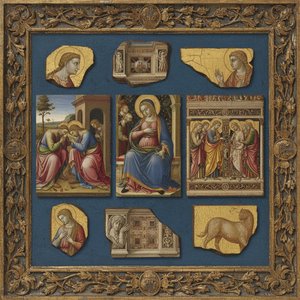
The Florentine School of painting flourished during the fifteenth century, propelled by humanist ideals and fueled by patronage from wealthy families like the Medici. Amidst this artistic dynamism emerged Bicci di Lorenzo (c. 1373–1427), a master whose devotion to religious art produced works that continue to resonate with viewers today. This magnificent Nativity panel—measuring 88 x 58 cm—offers a captivating glimpse into the aesthetic sensibilities of its time and stands as a testament to Lorenzo’s meticulous craftsmanship and profound understanding of visual storytelling.

Style & Technique: Renaissance Realism Embodied

Lorenzo di Bicci skillfully blended elements of Gothic tradition with burgeoning Renaissance realism, reflecting the evolving artistic landscape of Florence. Like many artists of his era, he embraced tempera paint on wood—a technique favored for its luminosity and durability—allowing him to achieve remarkable detail and tonal gradation. The artist’s brushstrokes are deliberate yet graceful, conveying a sense of movement and capturing the subtle nuances of light and shadow. Careful observation of nature informed Lorenzo's approach, evident in the depiction of the rocky outcrop supporting the shepherds and the soft textures of Mary’s robe and Jesus’ infant skin. This meticulous attention to realism distinguishes his work from earlier Gothic styles, aligning it squarely with the humanist preoccupation for accurate representation.

Historical Context: Florence Under Medici Influence

The painting's creation coincided with a period of significant cultural transformation in Florence under the rule of Cosimo I de' Medici—a visionary patron who championed artistic innovation and fostered an environment conducive to intellectual discourse. The Medicis’ commitment to humanist scholarship profoundly impacted Florentine art, encouraging artists to explore themes of human dignity and spiritual contemplation. Lorenzo di Bicci’s Nativity aligns perfectly with this broader cultural ethos, reflecting the Renaissance fascination with biblical narratives and its desire to convey profound theological truths through visual imagery. It exemplifies the artistic fervor that characterized Florence during Cosimo I's reign—a time when art served not merely as decoration but as a vehicle for conveying moral and spiritual values.

Symbolism & Narrative Depth: The Language of Faith

The Nativity scene itself is laden with symbolic significance, reflecting Christian beliefs about incarnation and salvation. Mary’s kneeling posture symbolizes humility and piety, while the infant Jesus nestled in the manger represents divine grace and vulnerability. The shepherds—representing the humble witnesses to God's plan—offer a poignant reminder that holiness resides not only in royalty but also in simplicity. Above all, the angel heralds the miraculous birth of Christ—a pivotal event in Christian theology signifying redemption from sin and eternal life. Lorenzo di Bicci’s masterful composition skillfully guides the viewer’s gaze across the scene, emphasizing these key elements of the narrative and fostering a contemplative response.

Emotional Impact: A Window into Renaissance Spirituality

Looking upon Bicci di Lorenzo’s Nativity panel evokes a palpable sense of serenity and reverence—a feeling deeply rooted in the spiritual values of the Renaissance period. The artist's skillful use of color—primarily earthy tones accented by subtle highlights—creates an atmosphere of warmth and solemn beauty. More than just depicting a biblical story, Lorenzo’s artwork aspires to inspire contemplation and convey the profound mystery of faith. It stands as enduring proof of the power of art to communicate spiritual truths and elevate the human spirit—a legacy that continues to captivate audiences centuries after its creation.

Questions & Answers

Does "The Nativity" show strong light-dark contrasts?

"The Nativity" by Bicci Di Lorenzo shows a statement contrast between its light and dark areas.

What feeling does "The Nativity" by Bicci Di Lorenzo convey?

In "The Nativity", a serene mood accompanies a tranquil emotion.

Can I see an X-ray view of "The Nativity" by Bicci Di Lorenzo?

The X-Ray view of "The Nativity" by Bicci Di Lorenzo is on the artwork's X-Ray page: an interactive examination of the image through eleven optical layers.

More about this painting

Preview AR preview Switch to Print Switch to Digital Image Send
Details Guide Add to favorites Download Similars X-Ray Diaporama Q&A Stats

In numbers

  • 29frames to choose from
  • standard sizes, in its own proportions
  • 5weeks to paint and deliver it
Bicci Di Lorenzo

Bicci Di Lorenzo

1350 - 1427, Italy

Quick facts about Bicci Di Lorenzo

  • Full Name: Lorenzo di Bicci
  • Nationality: Italian
  • Date Of Birth: 1350
  • Date Of Death: 1427
  • Place Of Birth: Florence, Italy
  • Notable Artworks:
    • St Martin Enthroned
    • Saints John & Matthew
    • The Four Evangelists (detail)
    • Saint Nicholas Resuscitating Three Youths
  • Artistic Movement Or Style: Florentine School
  • Artists Who Influenced This Artist:
    • Andrea di Cione
    • Jacopo di Cione
  • Artists Or Movements Influenced By This Artist: ['Gentile da Fabriano']

Artist Biography

Lorenzo di Bicci (c. 1373–1452): A Florentine Master of Devotion

Lorenzo di Bicci, born around 1373 in Florence, stands as a pivotal figure within the burgeoning Florentine School of painting during the second half of the fourteenth century and early fifteenth. While biographical details remain scarce—his father’s identity shrouded in obscurity—scholarly consensus firmly establishes Lorenzo's apprenticeship under Jacopo di Cione and Andrea di Cione, artists whose stylistic innovations profoundly shaped his artistic trajectory. This lineage cemented him within a vibrant milieu characterized by experimentation with color palettes and compositional fluidity, mirroring the broader trends of the era.
  • Early Life & Training: Lorenzo’s formative years were spent immersed in the workshop of his father, Jacopo di Bicci—a craftsman whose own artistic endeavors foreshadowed Lorenzo's distinctive approach. Membership in the Guild of Saint Luke by 1370 provided him with invaluable access to artistic knowledge and fostered connections within Florence’s burgeoning cultural landscape.
  • Early Career & Patronage: His debut commission, a panel depicting St. Martin Enthroned for the Arte dei Vinattieri guild, exemplifies Lorenzo's commitment to serving the Florentine citizenry—particularly the clergy and guilds—a pattern that would define his artistic career. Collaborations with Agnolo Gaddi and Corso di Jacopo further honed his skills and exposed him to influential artistic currents.
  • Style & Technique: Lorenzo’s style is instantly recognizable for its restrained elegance and masterful execution. Unlike many contemporaries who embraced grand narratives and elaborate ornamentation, he favored compositions characterized by balanced symmetry and a deliberate avoidance of complexity. Figures possessed serene expressions—often devoid of emotion—and were rendered with exceptional anatomical precision, reflecting the influence of Andrea di Cione’s meticulous draughtsmanship.
  • Notable Works: Lorenzo’s artistic legacy is cemented by several iconic paintings that continue to captivate audiences today. The *Saints John the Baptist and Minias*, housed in San Francisco's Legion of Honor Museum, showcases his ability to convey spiritual depth through subtle color harmonies and architectural detail. Similarly, the *Four Evangelists* fresco—a testament to Lorenzo’s technical prowess—demonstrates a masterful command of perspective and shading techniques.
  • Legacy & Influence: Lorenzo di Bicci's artistic output profoundly impacted subsequent generations of Florentine painters, notably his son Neri di Bicci, who carried forward the family tradition of devotional art. His unwavering dedication to portraying religious themes—coupled with his commitment to serving the Florentine community—solidifies his position as a cornerstone of Renaissance artistic development and an enduring symbol of Florentine piety.

The Frescoes of Palazzo Medici: A Reflection of Patronage & Artistic Innovation

Lorenzo’s most ambitious undertaking was undoubtedly the cycle of frescoes adorning Palazzo Medici—commissioned by Cosimo I de' Medici—a project that cemented his reputation as a leading artist of his time. These monumental paintings, depicting scenes from biblical history and mythological narratives, represent a pinnacle of Florentine Renaissance art, showcasing Lorenzo’s mastery of color, composition, and perspective. The frescoes served not only as decorative embellishments but also as powerful statements of Medici patronage—demonstrating the transformative role that aristocratic commissions played in shaping artistic trends.

Exploring Lorenzo's Artistic Connections: Influences & Collaborations

Lorenzo’s artistic development was inextricably linked to his interactions with fellow masters and craftsmen, fostering a dynamic exchange of ideas within Florence’s artistic ecosystem. His apprenticeship under Jacopo di Cione instilled in him an appreciation for expressive color palettes—a characteristic that would permeate his own paintings—while collaborations with Andrea di Cione honed his draughtsmanship skills and exposed him to innovative compositional strategies. Furthermore, Lorenzo's engagement with the Guild of Saint Luke facilitated access to artistic resources and fostered connections within Florence’s vibrant cultural milieu.

A Painter Dedicated to Faith: Themes & Symbolism in Lorenzo’s Oeuvre

Lorenzo di Bicci’s artistic output consistently centered on religious themes—primarily depictions of saints, biblical narratives, and liturgical scenes—reflecting the pervasive influence of piety within Florentine society during his lifetime. His paintings employed symbolic imagery—drawing upon established conventions of medieval iconography—to convey spiritual truths and evoke emotional responses from viewers. The serene expressions of his figures—often devoid of overt emotion—underscored a contemplative aesthetic that distinguished Lorenzo’s work from more flamboyant artistic endeavors prevalent elsewhere in Europe.

Concluding Reflections: Lorenzo di Bicci's Enduring Significance

Lorenzo di Bicci’s contribution to Florentine art transcends mere stylistic innovation; he embodies the humanist spirit of his era—characterized by a profound engagement with classical ideals and a commitment to portraying human experience with dignity and compassion. His unwavering dedication to serving the Florentine community—coupled with his mastery of artistic technique—solidifies his position as one of the most influential painters of the fourteenth century, ensuring that his legacy continues to inspire artists and scholars alike.

Quick Facts

  • Artist: bicci di lorenzo
  • Influences:
    • Jacopo di Cione
    • Andrea di Cione
  • Medium: Oil on wood
  • Title: The Nativity
  • Artistic style: Renaissance Art

Art Quiz

There is only one correct answer for each question.

Question 1:
What artistic movement is represented by this painting?
Question 2:
Who is depicted as the central figure in 'The Nativity'?
Question 3:
What stylistic characteristic distinguishes this painting from earlier artistic traditions?
Question 4:
The painting utilizes light and shadow to create:
Question 5:
What is Bicci di Lorenzo known for?