Preview
 Send
Send Share
Share
 Details

 Download
 Similars
 X-Ray
X-Ray Diaporama
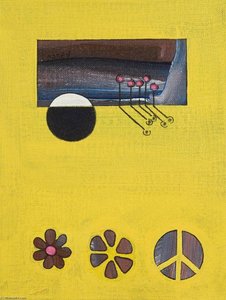
Rhea's Ray
 1968
1968 21.0 x 15.0 cm
 Read More
Giclée / Art Print
Museum-quality giclée or canvas print with fast production and flexible finish options. ( Buy Hand Made Painting Buy Image)




































Pick from our preset sizes that match the artwork's original proportions.

You may enter your own dimensions to fit a specific frame or space. If your selected size does not match the original image's proportions, we will either crop the artwork or extend the image with a mirrored or solid-fill edge. A digital mockup will be sent for your approval before production begins.
Please note that the on-screen preview does not reflect the actual cropping or extension. Only the mockup will accurately show the final composition.
While custom sizes are available, we recommend selecting a dimension from the predefined list to preserve the original proportions.
Worldwide Delivery () in 2 weeks instead of standard 4/5 weeks. (21 August)

Free Worldwide Express Shipping

High-Quality Linen Canvas

Full Shipping Insurance

Customs Tax Refund Guarantee

True Color Matching Guarantee

60-Day Return Policy (Defects Only)

100% Money-Back Guarantee

Bulk Discount Offer
 Glass option is only available in size under 110 CM

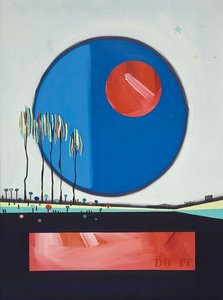
Rhea's Ray
Giclée / Art Print
Reproduction Size
-


Total Price
$ 81
Collectible Description
Introduction to the Artist and the Painting
Bernie Casey was an American artist, and 'Rhea's Ray' is one of his notable works, created in 1968. The painting measures 21 x 15 cm and is made on canvas. It is currently housed at the Smithsonian American Art Museum in the United States. This museum is renowned for its extensive collection of American art, making it an ideal location for 'Rhea's Ray' to be showcased.Key Elements and Interpretation
The painting 'Rhea's Ray' features a sun with a face, symbolizing warmth and energy. The presence of two individuals in the painting adds a sense of human connection and community. A clock at the bottom right corner of the image introduces an element of time, possibly hinting at the fleeting nature of moments. These elements combined create a vibrant scene that invites viewers to ponder the deeper meaning behind the artwork. Some notable aspects of 'Rhea's Ray' include:- The use of color to evoke emotions and convey messages.
- The incorporation of everyday objects, like the clock, to add depth and symbolism.
- The depiction of human figures, which may represent relationships or interactions.
Conclusion and Further Exploration
'Rhea's Ray' by Bernie Casey is a captivating piece that offers much to explore and interpret. For those interested in learning more about American art and the Smithsonian American Art Museum, visiting /art/list/?Filter=AQTURA-Bernie-Casey-Rhea-s-Ray can provide valuable insights and resources. Additionally, the Smithsonian Institution website offers a wealth of information on art collections and exhibitions, including details about the Smithsonian American Art Museum.The world of art is vast and diverse, with each piece telling its unique story. 'Rhea's Ray' by Bernie Casey is a testament to the power of art to inspire, provoke thought, and bring people together.
Artist Biography
A Symphony of Motion and Color
Bernie Casey’s life was a remarkable tapestry woven from the threads of physical prowess and profound creativity. Before he became a celebrated figure in the world of fine art, his presence was felt on the gridiron of the National Football League, where he played with legendary intensity for the Detroit Lions, San Francisco 49ers, and Los Angeles Rams. This early chapter of his life, defined by the rhythmic collision of athletes and the strategic dance of professional football, provided a unique foundation for his later artistic endeavors. The physicality of the sport—the explosive energy, the precision of movement, and the sheer stamina required—deeply informed his approach to the canvas. For Casey, painting was not merely a departure from his athletic career but an evolution of it, translating the kinetic energy of the field into the expressive gestures of Abstract Expressionism.The Language of the Inner Landscape
As his creative journey unfolded during the mid-to-late 1960s, Casey emerged as a compelling voice within the movements of Abstract Expressionism and Lyrical Abstraction. Drawing inspiration from titans such as Jackson Pollock and Willem de Kooning, he embraced a technique that prioritized raw emotion over representational accuracy. His canvases became vibrant arenas where thick impasto and spontaneous brushstrokes collided with a palette often dominated by striking blues, reds, and yellows. In seminal works like The Afterthought of Dante’s Inferno, one can witness the palpable texture of his process, where layers of paint create a sense of psychological depth and movement. He sought to move beyond the literal, using geometric shapes and swirling forms to map out inner landscapes that spoke to universal human experiences.His artistic vocabulary was built upon several key elements:
- Dynamic Texture: The use of heavy impasto to create a three-dimensional, tactile experience on the canvas.
- Emotional Color Palettes: A deliberate use of high-contrast hues to evoke feelings ranging from tranquility to intense passion.
- Spontaneous Gesture: A commitment to the improvisational spirit, allowing the movement of the hand to dictate the composition.
Legacy and Social Resonance
Beyond the aesthetic allure of his work lies a profound social significance. Navigating the complexities of the Civil Rights era as an African American icon, Casey utilized his art to explore themes of love, peace, nature, and justice. His paintings served as windows into a broader struggle for human dignity, reflecting the tensions and triumphs of his time. While he simultaneously achieved fame as an actor in the 1970s blaxploitation genre, his commitment to the canvas remained a constant pursuit of truth. Through his ability to transcend the boundaries of race and physicality through abstraction, Bernie Casey left behind a legacy that continues to resonate, reminding us that art is a powerful medium for communicating the unspoken truths of the human spirit.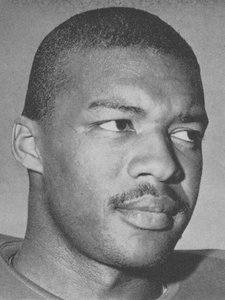
bernie casey
1939 - 2017
Quick Facts
- Artistic Movement Or Style: Abstract Expressionism
- Artists Or Movements Influenced By This Artist: ['Neoexpressionism']
- Artists Who Influenced This Artist:
- Jackson Pollock
- Mark Rothko
- Date Of Birth: June 8, 1939
- Date Of Death: September 19, 2017
- Full Name: Bernie Casey
- Nationality: American
- Notable Artworks:
- Afterthought of Dante’s Inferno
- Memory From Another Time, A
- White Daisy Land
- Place Of Birth: Detroit, Michigan