Send
Send Share
Share
 Details
 Guide
Guide

 Download
 Similars
 Diaporama
 Stats
StatsPerseus (detail) (12)


 Read More
Giclée / Art Print
Museum-quality giclée or canvas print with fast production and flexible finish options. ( Buy Hand Made Painting Switch to Digital Image)




































Pick from our preset sizes that match the artwork's original proportions.

Type the width and the height you need, to fit your frame or your wall. A print can only be cut, never made bigger than the picture, so a size with a different shape loses a part of the image. We send you a digital mockup to approve before we print anything. The picture shown on this page does not show the real cut — only the mockup does.
Worldwide Delivery () in 2 weeks instead of standard 4/5 weeks. (27 October)

Free Worldwide Express Shipping

High-Quality Linen Canvas

Full Shipping Insurance

Customs Tax Refund Guarantee

True Color Matching Guarantee

100-Day Return Policy (Defects Only)

100% Money-Back Guarantee

Bulk Discount Offer
 Glass option is only available in size under 110 CM

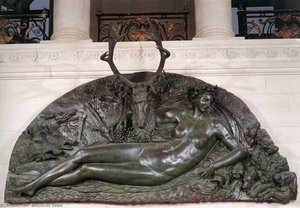
Perseus (detail) (12)
Giclée / Art Print
Reproduction Size
-


Total Price
$ 81
A Bronze Echo of Myth and Mastery: Benvenuto Cellini’s Perseus
Benvenuto Cellini's “Perseus (detail) (12)” isn’t merely a depiction of the legendary hero; it’s a visceral embodiment of Renaissance ambition, technical prowess, and a profound engagement with classical mythology. This exquisite bronze sculpture, created around 1543 for Francis I of France, transcends its material form to become a testament to Cellini's unparalleled skill as a goldsmith and sculptor – a master who dared to elevate the craft to the level of art itself. The work’s immediate impact is one of dynamic energy; Perseus stands poised in mid-action, his muscular physique radiating strength and determination as he holds aloft the severed head of Medusa. Yet, it's not simply a heroic portrait; within this single figure resides a complex tapestry of symbolism and narrative.
- The Narrative Core: The sculpture directly references the famed myth – Perseus’s audacious slaying of the Gorgon Medusa, a creature whose gaze could turn men to stone. Cellini doesn't shy away from the gruesome detail; the head itself is rendered with unsettling realism, its snakes writhing in a chaotic dance, a potent reminder of the monstrous threat vanquished.
- A Mannerist Masterpiece: Cellini’s work firmly anchors itself within the Mannerist style – a period characterized by dramatic poses, exaggerated proportions, and an intense focus on emotional expression. Perseus is not idealized in the classical sense; he's powerfully human, imbued with a palpable sense of struggle and triumph.
- Technical Brilliance: The sculpture’s creation represents a monumental achievement in goldsmithing. Cellini employed a revolutionary technique – hammering gold directly into shape without the use of molds—a feat previously considered impossible. This daring approach resulted in a surface texture that is both incredibly detailed and remarkably smooth, showcasing his mastery over the material.
The Weight of History: Contextualizing Cellini’s Vision
To fully appreciate “Perseus (detail) (12),” one must understand its historical context. Cellini lived during a period of intense political and artistic upheaval in Italy, marked by the rise of powerful patrons like Francis I and the shifting dynamics between Florence, Rome, and France. His work served as both a personal statement and a demonstration of his loyalty to the French court. The commission itself reflects the Renaissance fascination with classical antiquity – a renewed interest in the myths and heroes of Greece and Rome that profoundly influenced artistic and intellectual thought. Cellini’s sculpture is not simply an illustration of a myth; it's a deliberate engagement with the values and ideals embodied by these legendary figures.
Furthermore, Cellini’s autobiography, “The Life,” provides invaluable insight into his creative process and motivations. He meticulously documented every step of the sculpture’s creation, revealing his obsessive attention to detail and his unwavering belief in his own abilities. The work is therefore deeply intertwined with the artist's personal narrative – a testament to his ambition, ego, and relentless pursuit of artistic perfection.Symbolism Unveiled: Decoding the Layers of Meaning
Beyond the straightforward depiction of Perseus’s victory over Medusa, the sculpture is rich in symbolic meaning. The severed head itself represents not just defeat but also a triumph over chaos and darkness. The posture of Perseus – his stance radiating strength and resolve – embodies the virtues of courage, intelligence, and leadership. The intricate details of the sculpture—the musculature, the expression on Perseus’s face, the texture of the bronze—all contribute to a complex visual language that speaks to themes of heroism, mortality, and the enduring power of myth.
- The Serpent Motif: The snakes writhing around Medusa's head are not merely decorative elements; they symbolize temptation, deceit, and the dangers lurking in the shadows.
- Dynamic Composition: Cellini’s masterful use of contrapposto – a technique that creates a sense of balance and movement – imbues the sculpture with a palpable energy. Perseus is not static; he's actively engaged in his heroic act.
- The Golden Surface: The gleaming surface of the bronze reflects light, creating an aura of brilliance and majesty—a fitting tribute to the legendary hero.
A Legacy Enduring: Cellini’s Influence and Artistic Significance
“Perseus (detail) (12)” stands as a cornerstone of Renaissance sculpture, demonstrating Cellini's unparalleled technical skill and his profound understanding of classical mythology. It is one of the few surviving examples of his work in bronze, making it an extraordinarily valuable artifact for art historians and collectors alike. The sculpture’s enduring appeal lies not only in its aesthetic beauty but also in its ability to evoke a sense of wonder, excitement, and contemplation—a testament to Cellini's genius as both an artist and a storyteller. Reproductions offer a remarkable opportunity to experience the power and artistry of this iconic masterpiece.
Questions & Answers
What feeling do the colors of "Perseus (detail) (12)" by Benvenuto Cellini create?
"Perseus (detail) (12)" by Benvenuto Cellini combines an earthy palette with a reflective tone.
What emotion does "Perseus (detail) (12)" by Benvenuto Cellini convey?
"Perseus (detail) (12)" by Benvenuto Cellini conveys a reflective emotional tone.
Does "Perseus (detail) (12)" have an augmented reality preview?
The AR Preview page of "Perseus (detail) (12)" by Benvenuto Cellini uses augmented reality to show the artwork in your own space, on a compatible device.
Artist Biography
Benvenuto Cellini: A Renaissance Polymath
- Born: Florence, Italy (November 1, 1500)
- Died: February 13, 1571
Benvenuto Cellini was a remarkable figure of the Italian Renaissance, renowned as an accomplished goldsmith, sculptor, draftsman, soldier, musician, and writer. His multifaceted talents and flamboyant personality are vividly captured in his celebrated autobiography, considered a significant literary work alongside his artistic achievements. He embodies the spirit of Mannerism, a period following the High Renaissance characterized by dramatic flair and stylistic complexity.
Early Life and Artistic Training
Born into a family with musical inclinations – his father was a musician and instrument maker – Cellini initially showed promise in music. However, at fifteen, he passionately pursued a career as a goldsmith, convincing his reluctant father to apprentice him to Antonio di Sandro (known as Marcone). This marked the beginning of his formal artistic training. His early years were not without incident; at sixteen, he became embroiled in an affray with companions, leading to banishment from Florence and a period working in Siena under goldsmith Fracastoro.
Major Artistic Works and Style
- Salt Cellar: This elaborate silver masterpiece, commissioned by King Francis I of France, is arguably his most famous work. It showcases intricate detail and dynamic figures, now housed at the Kunsthistorisches Museum in Vienna.
- Perseus with the Head of Medusa: A bronze sculpture depicting Perseus triumphantly holding the severed head of Medusa, this piece exemplifies Cellini’s mastery of form and dramatic composition. It stands as a testament to his skill in capturing movement and emotion in metal.
- Gold Medallion of Leda and the Swan: Created for Gonfaloniere Gabriello Cesarino, this medallion demonstrates Cellini's ability to blend classical mythology with exquisite craftsmanship.
- Project for a Seal: A drawing held at the British Museum, showcasing his design skills.
Cellini’s style is characterized by its dynamism, realism, and attention to detail. He drew inspiration from classical antiquity and Michelangelo's powerful figures, but infused his work with a distinctly Mannerist sensibility – elongated forms, exaggerated poses, and a sense of theatricality.
Life Beyond Art: Soldier, Musician, and Autobiographer
Cellini’s life extended far beyond the workshop. He served as a soldier during sieges, claiming to have played a crucial role in defending Rome against imperial forces. He was also an accomplished musician, playing the cornett and flute at papal court. However, it is his autobiography that truly sets him apart.
- The Life of Benvenuto Cellini: This candid and often boastful account provides invaluable insights into Renaissance art, culture, and society. It’s a compelling narrative filled with anecdotes about patrons, rivals, and personal adventures, offering a unique perspective on the era.
His autobiography is not merely a recounting of events; it's a carefully constructed self-portrait designed to showcase his talents and justify his actions. While sometimes unreliable due to Cellini’s own biases, it remains an essential primary source for understanding Renaissance life.
Legacy and Historical Significance
Benvenuto Cellini died in Florence in 1571, leaving behind a legacy as one of the most important artists of Mannerism. His technical skill, artistic innovation, and captivating autobiography continue to inspire artists and art enthusiasts alike. He represents the quintessential Renaissance ideal – a polymath skilled in multiple disciplines, driven by ambition, and unafraid to express his individuality. His works are celebrated for their beauty, craftsmanship, and dramatic power, solidifying his place as a pivotal figure in Western art history.

Benvenuto Cellini
1500 - 1571 , Italy
Quick Facts
- Full Name: Benvenuto Cellini
- Nationality: Italian
- Date Of Birth: 1500
- Date Of Death: 1571
- Place Of Birth: Florence, Italy
- Notable Artworks:
- Perseus with the Head of Medusa
- Cellini Salt Cellar
- Artistic Movement Or Style: Mannerism
- Artists Who Influenced This Artist: ['Michelangelo']
Related Articles

Benvenuto Cellini: Renaissance Goldsmith, Sculptor & Master of Self-Fashioning
Explore the life & art of Benvenuto Cellini, Renaissance goldsmith & sculptor. Discover his iconic 'Perseus,' masterful techniques, and enduring legacy – a collector's essential guide.

Bronze Sculptures That Defined Art History | OriginalUniqueArt
Journey through art history with our Top 10 bronze sculptures! Explore masterpieces by Rodin, Michelangelo & more. Discover stories behind iconic statues and find museum-quality reproductions for your home decor at OriginalUniqueArt.com.

The Enduring Form: Sculpture Across History, Technique & Emotional Resonance
Explore the rich history of sculpture with OriginalUniqueArt. Discover key techniques, influential artists & investment potential for discerning collectors. Expert insights into valuing and collecting timeless masterpieces.

The Enduring Form: Exploring Themes & Techniques in Sculpture Across Historical Periods
Explore the rich history of sculpture from ancient masterpieces to contemporary innovations. Discover key techniques, influential artists & investment potential for discerning art collectors.

Bronze Age to Modern Masters: 10 Sculptures That Redefined Art | OriginalUniqueArt
Journey through art history with 10 legendary bronze sculptures – from Michelangelo's David to Rodin’s Thinker. Explore the stories, techniques & timeless beauty of these masterpieces. Find museum-quality reproductions & elevate your home decor on OriginalUniqueArt.com.