

 Preview
 Send
Send Share
Share
 Details
 Guide
Guide

 Download
 Similars
 X-Ray
X-Ray Diaporama
 Stats
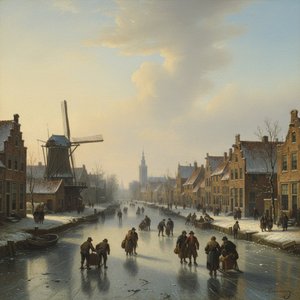
StatsWinter landscape
 Oil On Panel
- Romantic Landscape Painting
 1838
1838- 19th Century
 62.0 x 75.0 cm
 Rijksmuseum
 Read More
Hand Made Oil Reproduction
Hand-painted oil on canvas in your size and frame, made to order by our artists. ( Switch to Print Switch to Digital Image)




P118B $10

P118H $10

P118W $10

P438Z $10

P508JH $12

P508YH $12

P805H $10

P805Z $10

P919BZ $10

P919G $10

P919XJ $10

P959ZH $10

P968JZ $12

W106C $8

W218G $10

W218JH $8

W218Y $10

W307PJ $10

W316G $10

W316PJ $8

W316Y $10

W398PJ $8

W4111J $10

W500HY $15

W500JH $15

W692G $12

W849H $8

W940BG $15

W953PJ $8




Pick from our preset sizes that match the artwork's original proportions.

Type the width and the height you need, to fit your frame or your wall. This is hand-painted, so for a size with a different shape the artist can paint a bit more around the picture, or cut a bit — you choose. We send you a digital mockup to approve before the painting starts. The picture shown on this page does not show the real result — only the mockup does.
After order, OriginalUniqueArt.com team will email client for instructions and provide a mockup preview
Worldwide Delivery () in 3/4 weeks instead of standard 5 weeks. (26 October). No compromise on quality.

Free Worldwide Express Shipping

High-Quality Linen Canvas

Full Shipping Insurance

Customs Tax Refund Guarantee

True Color Matching Guarantee

100-Day Return Policy (Defects Only)

100% Money-Back Guarantee

Bulk Discount Offer
 Glass option is only available in size under 110 CM

Winter landscape
Reproduction Medium
Reproduction Size
-


Total Price
$ 300
A Winter's Embrace: Exploring Barend Cornelis Koekkoek’s “Winter Landscape”
The Dutch Romantic landscape painter Barend Cornelis Koekkoek’s “Winter Landscape,” completed in 1833, transcends mere depiction; it embodies the spirit of a bygone era and speaks to enduring themes of resilience and beauty amidst adversity. Executed on wood with oil paint—a technique favored by Koekkoek for its ability to capture subtle tonal variations—the painting presents a serene yet poignant tableau of a snowy road winding through a sparsely populated Dutch countryside.Style and Technique: Romantic Precision
Koekkoek’s artistic vision aligns perfectly with the tenets of Romanticism, prioritizing emotional intensity alongside meticulous observation. Unlike earlier Baroque landscapes that sought to impose grandeur upon nature, Koekkoek embraced its inherent wildness, conveying a sense of contemplative solitude rather than triumphant dominion. His brushstrokes are deliberate and controlled, blending seamlessly to create luminous washes of color—primarily blues and whites—that dominate the composition. The artist skillfully utilizes chiaroscuro—the interplay between light and shadow—to sculpt the forms of trees, snowdrifts, and distant buildings, enhancing depth and creating a palpable atmosphere of coldness and stillness.Historical Context: Reflecting Dutch Identity
“Winter Landscape” emerged during a period of significant artistic ferment in Holland, mirroring broader cultural anxieties surrounding the Napoleonic Wars and the subsequent Restoration. The painting served as a powerful emblem of Dutch national identity—a celebration of its pastoral heritage and an assertion of moral fortitude in the face of political upheaval. Koekkoek’s depiction of a quiet rural scene resonated deeply with viewers who longed for stability and continuity amidst turbulent times, reflecting a desire to reconnect with simpler values and traditions.Symbolism: Resilience Amidst Winter's Grip
Beyond its aesthetic qualities, “Winter Landscape” is laden with symbolic significance. The snow itself represents hardship and purification—a blank slate upon which new beginnings can emerge. Yet, despite the bleakness of the winter season, Koekkoek’s careful rendering of trees bearing fruit underscores the promise of fecundity and renewal. Furthermore, the solitary figures traversing the road symbolize perseverance and determination—individuals striving onward despite obstacles, mirroring the broader human experience of confronting challenges with courage and grace.Emotional Impact: A Momentary Pause for Reflection
Ultimately, Koekkoek’s “Winter Landscape” invites contemplation and introspection. Its muted palette and tranquil composition evoke a profound sense of peace and melancholy—a recognition of beauty found in vulnerability and solitude. The painting compels viewers to pause amidst the frenetic pace of modern life, encouraging them to appreciate the quiet grandeur of nature and to contemplate the enduring power of resilience and hope. It remains an exquisite testament to Koekkoek’s artistic prowess and a timeless masterpiece capturing the essence of Romantic sensibility.Questions & Answers
Is "Winter landscape" more bright or more dark overall?
"Winter landscape" is bright overall, and its luminance is gentle luminance.
From which era does "Winter landscape" date?
"Winter landscape" belongs to the 19th-Century era.
What feeling does "Winter landscape" by Barend Cornelis Koekkoek convey?
The recorded mood of "Winter landscape" by Barend Cornelis Koekkoek is serene, and its emotional tone is tranquil.
Artist Biography
Early Life and Artistic Foundations
Born on October 11, 1803, in the charming city of Middelburg, nestled within the Dutch province of Zeeland, Barend Cornelis Koekkoek entered a world already steeped in artistic tradition. His father, Johannes Hermanus Koekkoek, was a celebrated marine painter, and his mother, Anna van Koolwijk, fostered an environment where creativity flourished. This nurturing atmosphere extended to his siblings – Hermanus, Johannes, and Marinus – all of whom pursued careers as artists, creating a veritable dynasty of Dutch painters. From his earliest years, young Barend absorbed the techniques and sensibilities of his father, laying the groundwork for his own artistic journey. He formally began his training at the Drawing Academy of Middelburg under the guidance of Abraham Krayestein, honing his foundational skills in draftsmanship and observation. This early education instilled in him a meticulous approach to detail that would become a hallmark of his mature style. In 1822, Koekkoek ventured to Amsterdam, enrolling at the prestigious Koninklijke Academie van Beeldende Kunsten where he dedicated four years to refining his talents. Even then, by 1824, his ambition was clear: he aspired to become a painter of landscapes, a genre that would ultimately define his legacy.The Embrace of Romanticism and the Search for Inspiration
As Europe succumbed to the allure of the Romantic movement, Koekkoek found himself deeply inspired by its emphasis on emotion, individualism, and the sublime power of nature. This influence manifested in his developing style, characterized by dramatic landscapes and atmospheric effects that sought to capture not merely the visual appearance of a scene but also its emotional resonance. A pivotal period followed his formal studies, as he spent two years in Hilversum (1826-1827), a rural haven attracting landscape and cattle painters. This immersion solidified his commitment to depicting the natural world. Recognition arrived in 1829 when the Amsterdam society Felix Meritis awarded him a gold medal for one of his summer landscapes, signaling his rising prominence within the Dutch art scene. His personal life also blossomed during this time; he married Elise Thérèse Daiwaille, daughter of artist Jean Augustin Daiwaille, in 1833. However, Koekkoek felt constrained by the relatively flat Dutch countryside and yearned for more dramatic scenery to fuel his Romantic vision. This led him to a momentous decision: in 1836, he relocated to Cleves, Germany, seeking inspiration along the Ahr, Ruhr, and Rhine rivers – regions renowned for their picturesque valleys, dense forests, and imposing natural beauty.Cleves Romanticism and Artistic Pedagogy
The move to Cleves proved transformative. Koekkoek quickly established himself as a leading figure in what became known as “Cleves Romanticism,” a distinct school of landscape painting characterized by its dramatic compositions, meticulous detail, and evocative atmosphere. He focused on expansive river valleys, idyllic forest views dominated by majestic oak trees, and scenes that emphasized the overwhelming power and grandeur of nature. His artistic philosophy was rooted in rigorous observation and precise draughtsmanship – principles he articulated in his influential book, *Herinneringen en mededeelingen van eenen landschapsschilder* (Recollections and Communications of a Landscape Painter), published in 1841. This work served as both a guide for aspiring artists and a testament to his own artistic beliefs. Recognizing the need to nurture future generations of landscape painters, Koekkoek founded his own drawing academy, the Zeichen Collegium, in Cleves. The academy attracted numerous students eager to learn from the “Prince of Landscape Painting,” including notable artists such as Frederik Marinus Kruseman, Lodewijk Johannes Kleijn, and Johann Bernard Klombeck. He guided them to study nature intently, observe subtle shifts in light, and examine the works of Dutch 17th-century masters – a lineage he sought to continue and expand upon.Later Years, Legacy, and Enduring Influence
Tragically, Koekkoek’s painting career was cut short by a debilitating stroke in November 1859. This event marked the end of his active artistic production, and he passed away on April 5, 1862, in Cleves at the age of 58. Despite this premature ending, Barend Cornelis Koekkoek left an indelible mark on Dutch art history. He was celebrated during his lifetime as the “Prince of Landscape Painting” and is now widely regarded as the founding father of Dutch Romantic landscape painting. His influence extended far beyond his own artistic output, shaping subsequent generations through his pupils and his emphasis on detailed observation and atmospheric rendering. His works are held in museums worldwide, a testament to their enduring appeal and artistic merit. Koekkoek’s legacy continues to inspire artists and art lovers alike, reminding us of the profound beauty and emotional power that can be found within the natural world. He remains a pivotal figure in understanding the development of Dutch Romanticism and its lasting impact on landscape painting. His dedication to capturing the sublime grandeur of nature, combined with his meticulous technique and pedagogical influence, ensures his place among the most important artists of the 19th century.
Barend Cornelis Koekkoek
1803 - 1862 , Netherlands
Quick Facts
- Full Name: Barend Cornelis Koekkoek
- Nationality: Dutch
- Date Of Birth: 1803
- Date Of Death: 1862
- Place Of Birth: Middelburg, Netherlands
- Notable Artworks:
- The Approaching Storm
- A Wooded Landscape
- Figures in Winter
- Artistic Movement Or Style: Romanticism
- Artists Who Influenced This Artist:
- Johannes H. Koekkoek
- Abraham Krayestein
- Artists Or Movements Influenced By This Artist:
- Dutch Romanticism
- Cleves Romanticism
Related Articles

Hokusai's Masterpieces: 25 Iconic Prints & Paintings for Art Lovers | OriginalUniqueArt
Journey through Katsushika Hokusai’s 25 most iconic artworks, including *The Great Wave*. Explore the ukiyo-e master's history, style & timeless Japanese woodblock prints. Find museum-quality reproductions for your home at OriginalUniqueArt.com.

Romantic Landscapes: 10 Masterpieces for Your Home | OriginalUniqueArt
Journey through 10 Romantic landscape masterpieces by Friedrich, Turner & Cole. Explore emotional art, sublime nature scenes & iconic 19th-century paintings. Find museum-quality reproductions for your home at OriginalUniqueArt.com – discover the full collection online!

Golden Light & Dutch Skies: Bringing the Magic of Dutch Golden Age Landscapes into Your Home
Transform your home with the breathtaking light of Dutch Golden Age landscapes. Discover how hand-painted oil reproductions of masterworks like Ruisdael and Vermeer bring timeless elegance, atmosphere, and soulful texture to modern interiors. Elevate your space with museum-quality art.

Golden Light & Dutch Skies: The Timeless Magic of Dutch Golden Age Landscapes
Discover the breathtaking beauty of Dutch Golden Age landscapes. Explore the mastery of light, chiaroscuro, and 17th-century realism through an expert art history lens, celebrating the enduring legacy of the Dutch Masters for discerning collectors and art lovers.
Charles Leickert: Capturing the Dutch Golden Age Light – A Comprehensive Study of Technique, Context, and Legacy
Explore the captivating winter landscapes of Charles Leickert, a master of Dutch Golden Age light & atmosphere. Discover his techniques, symbolism, and lasting legacy – a comprehensive study for art enthusiasts and collectors.


