Send
Send Share
Share
 Details
 Guide
Guide

 Download
 Similars
 Diaporama
 Stats
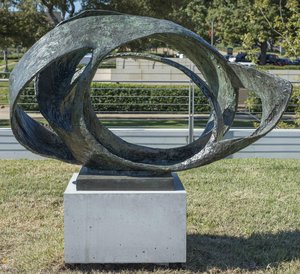
StatsPrototype for Construction (Crucifixion)
 Sculpture Bronze
- Modern Sculpture
 1966
1966 391.0 x 471.0 cm
 The Hepworth Wakefield
 Read More
The artwork displayed on this page is protected by copyright law, which means we cannot legally create or sell an identical reproduction. This protection is enforced under international agreements such as the Berne Convention and by national laws, including those outlined by the U.S. Copyright Law - Title 17.
This method fully complies with copyright regulations because it does not involve copying or duplicating the protected artwork. Instead, it is a creative reinterpretation - a new painting that is influenced by the original but not identical to it.
Giclée / Art Print
Museum-quality giclée or canvas print with fast production and flexible finish options. ( Buy Hand Made Painting Switch to Digital Image)




































Pick from our preset sizes that match the artwork's original proportions.

Type the width and the height you need, to fit your frame or your wall. A print can only be cut, never made bigger than the picture, so a size with a different shape loses a part of the image. We send you a digital mockup to approve before we print anything. The picture shown on this page does not show the real cut — only the mockup does.
Worldwide Delivery () in 2 weeks instead of standard 4/5 weeks. (26 October)

Free Worldwide Express Shipping

High-Quality Linen Canvas

Full Shipping Insurance

Customs Tax Refund Guarantee

True Color Matching Guarantee

100-Day Return Policy (Defects Only)

100% Money-Back Guarantee

Bulk Discount Offer
 Glass option is only available in size under 110 CM

Prototype for Construction (Crucifixion)
Giclée / Art Print
Reproduction Size
-


Total Price
$ 81
Barbara Hepworth: A Sculptural Dialogue with Form, Space & The Human Condition
Dame Barbara Hepworth (1903–1975) stands as an undeniable titan of modernist sculpture, a figure whose pioneering spirit reshaped the landscape of British art and continues to inspire artists globally. Her oeuvre transcends mere representation; instead, Hepworth sought to distill emotion and experience into geometric forms that engage with fundamental concepts of space and materiality—a radical departure from traditional artistic conventions.
Born in Wakefield, Yorkshire, Hepworth’s early life was marked by a profound engagement with the natural world. Influenced by her father's profession as a geologist, she developed an acute sensitivity to geological strata and textures, which would become recurring motifs in her sculptures. This formative experience instilled within her a fascination for exploring how forms interact with each other and with their surroundings—a preoccupation that would define her artistic trajectory.
Hepworth’s formal training at Leeds School of Art and subsequently the Royal College of Art cemented her commitment to abstraction, though she skillfully blended Surrealist influences with geometric precision. Notably, Hepworth co-founded Unit One Art Movement alongside Ben Nicholson, Paul Nash, and others in 1933—a collective endeavor dedicated to uniting Surrealism and Abstraction in British art.
Her breakthrough came with the creation of “Oval Form (Trezion)” in 1937 – a monumental bronze sculpture that embodies Hepworth’s core aesthetic principles. This piece, alongside "Two Forms," exemplifies her masterful manipulation of negative space—a technique she championed as crucial to conveying emotional depth and spiritual contemplation.
Hepworth's artistic vision extended beyond mere sculptural form; it encompassed an exploration of the human condition. Her sculptures grapple with themes of vulnerability, resilience, and connection to nature—reflecting her deeply held Christian faith. The deliberate simplicity of Hepworth’s forms serves as a powerful conduit for conveying profound ideas about existence and spirituality.
Today, Hepworth's legacy resides in the enduring beauty and intellectual rigor of her sculptures. Pieces like “Oval Form” and “Two Forms,” housed at The Hepworth Wakefield and internationally acclaimed museums alike, continue to captivate audiences with their elegant geometry and evocative presence—testaments to Hepworth’s unwavering dedication to pushing artistic boundaries and forging a dialogue between art and human experience.
Questions & Answers
What is "Prototype for Construction (Crucifixion)" about, and what atmosphere does it have?
"Prototype for Construction (Crucifixion)" shows sculpture, aluminum, faith, abstraction, colour, religion, contemporary, and its recorded mood is serene.
What does "Prototype for Construction (Crucifixion)" share with the rest of Barbara Hepworth's output?
"Prototype for Construction (Crucifixion)" shares with Barbara Hepworth's other works its Modern Sculpture style and the recorded themes: faithful abstraction, bronze dialogue, modern form, religious symbolism, sculptural exploration.
What color harmony does "Prototype for Construction (Crucifixion)" by Barbara Hepworth display?
The colors of "Prototype for Construction (Crucifixion)" by Barbara Hepworth show a balanced harmony harmony. Harmony describes how the colors relate to each other.
Artist Biography
early life and education
dame barbara hepworth, a renowned english artist and sculptor, was born on january 10, 1903, in wakefield, yorkshire. she attended the leeds school of art from 1920 and later won a county scholarship to study at the royal college of art (rca) in london from 1921 until she was awarded the diploma in 1924.artistic career
- dame barbara hepworth's work exemplifies modernism, particularly modern sculpture. she was one of the few female artists to achieve international prominence.
- in 1933, she co-founded the unit one art movement with ben nicholson, paul nash, and others, seeking to unite surrealism and abstraction in british art.
- hepworth's early work was characterized by abstraction and her involvement with the paris-based art movement, abstraction-création.
notable works and exhibitions
- oval form (trezion), a bronze sculpture, is part of the kimbell art museum collection in fort worth, united states. (view on OriginalUniqueArt)
- two forms, a sculpture, is exhibited at the hepworth wakefield in wakefield, united kingdom. (view on OriginalUniqueArt)
- totem, a marble sculpture, is also part of the collection at the hepworth wakefield. (view on OriginalUniqueArt)
legacy and museum collections
barbara hepworth's work is widely recognized, with her sculptures and paintings forming part of various museum collections worldwide. the hepworth wakefield, named after the artist, houses numerous masterpieces from renowned artists, including hepworth's own works. (discover more about the hepworth wakefield on OriginalUniqueArt)conclusion
dame barbara hepworth's pioneering work in modern british sculpture has left an indelible mark on the art world. her legacy continues to inspire artists and art enthusiasts alike, with her works remaining a testament to her innovative spirit and artistic genius. more about barbara hepworth on wikipedia
Barbara Hepworth
1903 - 1975 , United Kingdom
Quick Facts
- Full Name: Barbara Hepworth
- Nationality: British
- Date Of Birth: 1903
- Date Of Death: 1975
- Place Of Birth: Wakefield, United Kingdom
- Notable Artworks:
- Oval Form (Trezion)
- Two Forms
- Totem
- Artistic Movement Or Style: Modernism, Abstraction
- Artists Who Influenced This Artist:
- Henry Moore
- Ben Nicholson
- Artists Or Movements Influenced By This Artist:
- Abstraction-Création
- Unit One
Related Articles

Bronze Age to Modern Masters: 10 Sculptures That Redefined Art | OriginalUniqueArt
Journey through art history with 10 legendary bronze sculptures – from Michelangelo's David to Rodin’s Thinker. Explore the stories, techniques & timeless beauty of these masterpieces. Find museum-quality reproductions & elevate your home decor on OriginalUniqueArt.com.
Barbara Hepworth: A Sculptural Dialogue with Form, Space & the Human Condition
Explore the profound world of Barbara Hepworth's sculpture. Discover her artistic evolution, iconic forms, and lasting influence on modern art. A guide for collectors & enthusiasts.

The Enduring Form: Exploring Themes & Techniques in Sculpture Across Historical Periods
Explore the rich history of sculpture from ancient masterpieces to contemporary innovations. Discover key techniques, influential artists & investment potential for discerning art collectors.

Bronze Sculptures That Defined Art History | OriginalUniqueArt
Journey through art history with our Top 10 bronze sculptures! Explore masterpieces by Rodin, Michelangelo & more. Discover stories behind iconic statues and find museum-quality reproductions for your home decor at OriginalUniqueArt.com.

The Enduring Form: Sculpture Across History, Technique & Emotional Resonance
Explore the rich history of sculpture with OriginalUniqueArt. Discover key techniques, influential artists & investment potential for discerning collectors. Expert insights into valuing and collecting timeless masterpieces.